What Does an Athletic Trainer Do?
How to Become an Athletic Trainer in the USA: A Complete Guide starts with understanding the job. An athletic trainer is a licensed healthcare professional who prevents, examines, treats, and rehabilitates injuries. The role also includes deciding when a patient can safely return to sport, work, school, or daily activity. An athletic trainer is not the same as a personal trainer, who focuses mainly on fitness, or a physical therapist, whose education and scope center on broader rehabilitation and movement disorders.
The Board of Certification for the Athletic Trainer recognizes five practice domains: risk reduction, wellness, and health literacy; assessment, evaluation, and diagnosis; critical incident management; therapeutic intervention; and healthcare administration. A trainer may screen an athlete for concussion, apply a shoulder brace, document findings, activate an emergency action plan, and coordinate follow-up with a physician.
Work settings vary widely. You could support a high school football team, a college athletic department, a professional sports club, an orthopedic clinic, a physician practice, a hospital, a military unit, a performing arts organization, or an industrial workplace. In a factory, for example, you might reduce repetitive-strain injuries rather than treat sports injuries.
Schedules depend on the setting. High school and college jobs often include evenings, weekends, travel, and long seasons. Hospitals and physician practices may offer more predictable shifts. According to the U.S. Bureau of Labor Statistics, athletic trainer employment is projected to grow 13% from to 2033, much faster than average, with about 2,700 openings each year. We researched career data and found that setting strongly affects pay, workload, advancement, and benefits. How to Become an Athletic Trainer in the USA: A Complete Guide is therefore also a decision about the kind of healthcare schedule you want.
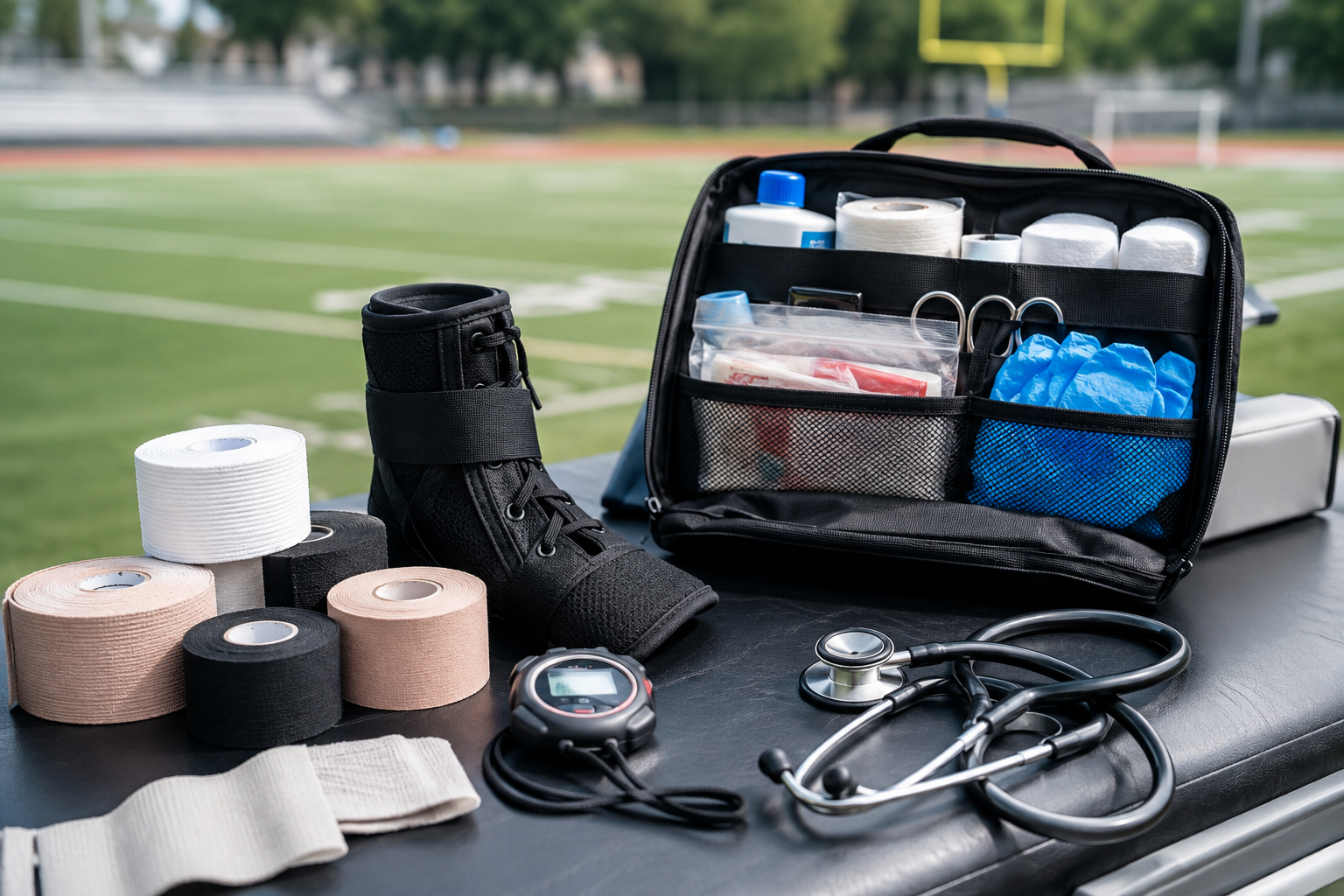
How to Become an Athletic Trainer in the USA: The Essential Steps
The standard route in is a professional master’s degree from a program accredited by the Commission on Accreditation of Athletic Training Education, or CAATE. The pathway usually takes four years of undergraduate preparation plus about two years of graduate study, although some applicants complete prerequisites after earning a different bachelor’s degree. How to Become an Athletic Trainer in the USA: A Complete Guide can be reduced to these seven milestones:
- Complete prerequisite education. Take required science and health courses, earn observation hours, and verify each program’s minimum grade rules.
- Apply to a CAATE-accredited professional program. Compare prerequisites, clinical sites, tuition, graduation outcomes, and student support.
- Complete supervised clinical education. Build competence in evaluation, emergency care, rehabilitation, prevention, and documentation.
- Graduate. Confirm that your degree and clinical records satisfy current Board of Certification requirements.
- Pass the BOC examination. Certification is separate from graduation.
- Obtain state authorization. Apply for a license, registration, permit, or other credential required where you will work.
- Maintain credentials. Complete BOC continuing education, CPR/AED renewal, and state renewal duties.
A practical timeline looks like this: years 1–4 cover undergraduate courses and observation; years 5–6 cover the master’s curriculum and clinical rotations; the final semester includes BOC preparation; the following 1–3 months often cover examination, background checks, and state application. We recommend creating one spreadsheet with deadlines for transcripts, prerequisite verification, recommendation letters, clinical competency records, BOC registration, fingerprints, and state applications.
Direct-entry master’s programs suit students who already have the required courses. Post-baccalaureate coursework may be better for career changers. Based on our analysis, students avoid costly delays when they ask admissions staff to review unofficial transcripts before applying. How to Become an Athletic Trainer in the USA: A Complete Guide becomes much simpler when every document has a named deadline and owner.
Choose the Right Education Path for How to Become an Athletic Trainer in the USA: A Complete Guide
Your bachelor’s degree does not always need to be called athletic training. Exercise science, kinesiology, biology, health science, and sports medicine are common preparation routes. What matters most is prerequisite compatibility. Programs often require anatomy and physiology, biology, chemistry, physics, psychology, statistics, nutrition, and medical terminology. Some also require courses in exercise physiology, biomechanics, or public health.
A professional master’s program combines classroom instruction, laboratory practice, patient-care simulations, evidence-based decision-making, and supervised clinical education. Before applying, verify accreditation in the official CAATE program directory. Graduation from a CAATE-accredited program is central to BOC eligibility under current rules; never rely only on a college’s marketing page.
| Path | Length | Typical cost example | Admission and clinical factors |
|---|---|---|---|
| Public bachelor’s preparation | 4 years | $35,000–$100,000 tuition and fees | Science prerequisites; limited professional clinical exposure |
| Post-baccalaureate prerequisites | 6–24 months | $5,000–$25,000 | Useful for career changers; confirm course age rules |
| Professional master’s | Usually years | $30,000–$100,000 tuition | Graduate science, patient care, and supervised rotations |
Figures vary by institution and year. GPA expectations commonly fall near 3.0, but competitive programs may admit applicants with higher averages. Ask whether prerequisites expire after 5, 7, or years, especially anatomy and physiology. Transfer students and applicants with non-science degrees should request a written course review. Recommendation letters should come from science faculty, supervisors, or clinicians who can describe reliability and patient-centered behavior.
Shadowing is not a substitute for clinical education, but 20–50 observation hours can help you test the career. We found that applicants make better choices after observing both a busy high school setting and a clinic. This is the practical core of How to Become an Athletic Trainer in the USA: A Complete Guide, not simply choosing a sports-related major.
Complete Clinical Education and Gain Hands-On Experience
Supervised clinical education turns academic knowledge into safe patient care. Under a qualified preceptor, you may evaluate an ankle injury, tape a wrist, fit a brace, perform emergency response, teach rehabilitation exercises, use therapeutic modalities, document care, and explain restrictions to a patient, coach, parent, or physician.
Rotations may include high schools, colleges, orthopedic clinics, physician practices, hospitals, performing arts groups, and sites serving non-sport populations. That variety matters. A student who sees only healthy college athletes may have fewer opportunities to manage diabetes, asthma, heat illness, concussion, cardiac emergencies, mental health concerns, and chronic conditions.
Compare clinical sites with a written scorecard. Rate each site from to for:
- Patient volume and injury variety.
- Preceptor credentials and teaching availability.
- Emergency equipment and documented action plans.
- Student-to-preceptor supervision ratio.
- Rotation variety and progressive responsibility.
- Commute, parking, housing, and public transport.
Keep a portfolio with competency checklists, case reflections, certifications, feedback, and measurable experiences such as “assisted with injury evaluations” or “taught rehabilitation sessions.” Employers respond better to evidence than broad claims.
A major cost issue receives too little attention. Clinical requirements may be unpaid or low-paid. Childcare, transportation, housing near a rotation, and lost part-time work can add thousands of dollars. We recommend asking programs how many weekly hours are required, whether rotations are paid, and whether sites can accommodate employment or family duties. How to Become an Athletic Trainer in the USA: A Complete Guide must include this financial reality because access affects who can finish the profession.
Pass the BOC Exam and Become a Certified Athletic Trainer
Graduating from a professional program does not automatically make you a certified athletic trainer. You must meet BOC eligibility rules, apply during the correct period, schedule the examination, and pass it. Check the current BOC examination information for application windows, identification rules, fees, testing locations, score reporting, and retesting policies.
The exam tests clinical reasoning rather than simple memorization. Review risk reduction, assessment and diagnosis, critical incident management, therapeutic intervention, and healthcare administration. Expect questions involving patient-centered care, emergency management, rehabilitation planning, prevention, professional responsibility, communication, and documentation.
Use this six-week plan:
- Week 1: Read the current BOC content outline and take a diagnostic test.
- Weeks 2–3: Review your two weakest domains and refresh anatomy, mechanisms of injury, and contraindications.
- Week 4: Complete timed, scenario-based questions and explain each answer aloud.
- Week 5: Join peer sessions focused on emergency algorithms and differential thinking.
- Week 6: Take two full practice exams, review errors, and protect sleep.
A graduating student might study minutes Monday through Thursday, complete timed questions Friday, and spend two hours Saturday on cases. In our experience, concise documentation and emergency decisions improve when you practice under a clock. If you do not pass, obtain the score report, target weak domains, confirm remediation and retesting rules, and check current fees. How to Become an Athletic Trainer in the USA: A Complete Guide requires current BOC policies, because rules can change.
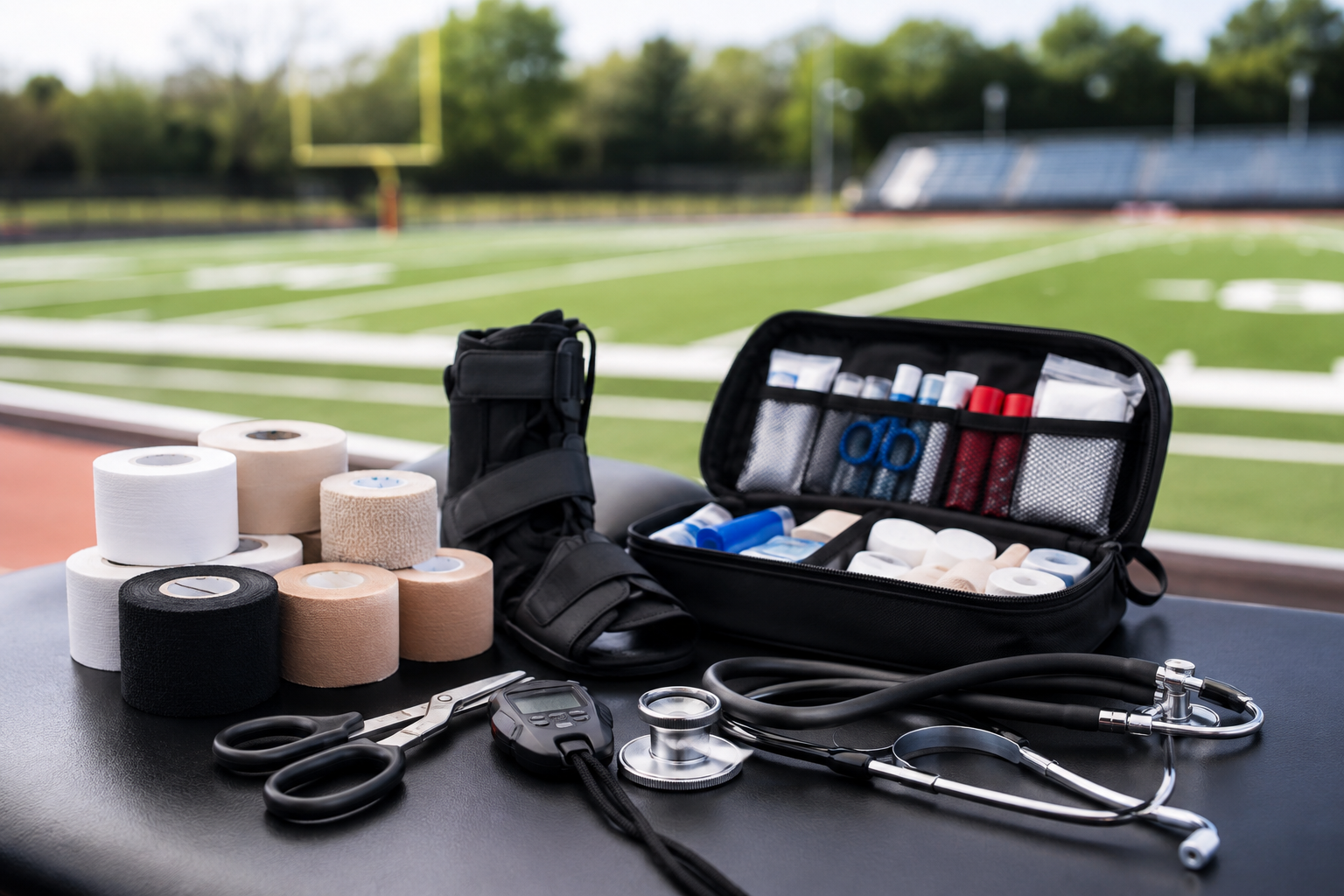
Meet State Licensure and Practice Requirements
BOC certification does not automatically authorize practice in every state. You must contact the athletic training board, health department, or professional licensing agency in the state where you plan to work. Each of the states can set different rules for licenses, registrations, permits, protected titles, supervision, and physician collaboration.
Common application materials include a BOC credential, official transcripts, an application fee, fingerprints, a background check, CPR/AED certification, a jurisprudence examination, and disciplinary disclosures. Some states request continuing education records or a verification letter sent directly from another licensing agency. Requirements may also differ for temporary permits, telehealth, delegation, and emergency coverage.
Use this relocation checklist:
- Identify the official state licensing website, not an old school page or job advertisement.
- Read the practice act and rules for scope, supervision, and title protection.
- Request BOC and license verification letters early.
- Record renewal dates, fingerprint rules, fees, and continuing education cycles.
- Ask whether compact, reciprocity, or endorsement provisions apply.
- Do not begin patient care until written authorization is confirmed.
For example, a certified trainer moving from Ohio to Texas may still need a new state application, background review, and state-specific education. We recommend saving PDF copies of every submission and confirmation. In 2026, How to Become an Athletic Trainer in the USA: A Complete Guide depends as much on state law as on national certification.
How Much Does It Cost, and How Much Can Athletic Trainers Earn?
Total cost includes more than tuition. Budget for undergraduate and graduate fees, application charges, textbooks, equipment, clinical travel, certification fees, state licensing, CPR training, and income lost during full-time clinical education. An example public-university pathway might include $48,000 for four years of in-state undergraduate tuition, $52,000 for a public master’s program, $2,500 for books and equipment, $1,800 for applications and exams, and $4,000 for travel and reduced work. That is about $108,300 before housing.
A private graduate program can add $25,000–$70,000 in tuition. These are planning examples, not national prices. Request a program-specific cost of attendance and compare it with the Federal Student Aid calculator.
The BLS reported a median annual wage of $57,930 for athletic trainers in May 2023, with the lowest 10% earning below $39,850 and the highest 10% above $80,000. The salary you receive may differ by region, experience, overtime, administrative work, and employer. Schools may offer summers off but lower annual pay. Hospitals and physician practices may provide steadier shifts. Professional sports can pay more but may require travel, relocation, and extreme seasonal hours.
Compare total compensation, not salary alone:
- Health insurance and retirement contributions.
- Paid summer work or guaranteed annual salary.
- Tuition assistance and professional development funding.
- Schedule stability, overtime, travel, and relocation support.
For a break-even test, estimate debt, a 10-year monthly payment, rent, transport, food, insurance, and take-home pay. We analyzed sample budgets and found that a $75,000 debt payment near $800 per month can change the best program choice. Scholarships may come from universities, hospitals, associations, employers, military programs, assistantships, and federal aid. How to Become an Athletic Trainer in the USA: A Complete Guide should end with a budget, not a hopeful salary estimate.
Find Your First Athletic Training Job and Build a Career
Start with university career centers, professional association job boards, hospital systems, school districts, sports organizations, and direct outreach to medical directors. Apply before graduation when possible. A strong application shows BOC eligibility or certification, state authorization, CPR/AED credentials, varied clinical experience, concussion management, emergency action planning, accurate documentation, communication, and reliability.
Build your résumé in this order:
- Professional summary and credentials.
- BOC certification, state license, CPR/AED, and other current training.
- Clinical rotations with patient populations and settings.
- Measurable responsibilities, such as injury evaluations or rehabilitation visits.
- Technology, electronic medical record, documentation, and scheduling skills.
- Relevant employment, leadership, research, and volunteer work.
Prepare three interview stories. Explain one emergency response, one difficult conversation with a parent, coach, or patient, and one rehabilitation or return-to-play decision. Use the situation, action, and result structure. For example, describe how you identified worsening concussion symptoms, removed the athlete, notified the physician, documented the event, and arranged follow-up.
Early roles include assistant athletic trainer, outreach trainer, physician-practice trainer, clinical rehabilitation specialist, and coordinator. Later options include director, educator, sports medicine administrator, performance specialist, researcher, professional-team trainer, or doctoral student. Work-life tradeoffs are real: evening games, weekends, travel, seasonal surges, emotional fatigue, and secondary employment may occur. We recommend asking about staffing ratios, comp time, summer duties, and emergency expectations before accepting an offer. How to Become an Athletic Trainer in the USA: A Complete Guide is also a guide to choosing sustainable work.
Specializations, Credentials, and Long-Term Professional Development
Maintaining BOC certification requires continuing education, and your state may impose separate renewal rules. Track both calendars. CPR/AED renewal, emergency medical response, concussion care, bloodborne-pathogen training, and mental health first aid are practical priorities. Strength and conditioning, nutrition, and ergonomic injury prevention can expand your value, but optional credentials do not replace a required license.
Advanced practice areas include orthopedics, rehabilitation, sports performance, occupational health, pediatrics, geriatrics, adaptive sports, and healthcare administration. An occupational specialist might redesign lifting tasks in a warehouse. A pediatric trainer may coordinate care for young athletes with asthma. A performing arts trainer may manage repetitive injuries in dancers.
Choose another graduate degree only when it solves a clear career problem. A clinical doctorate may support advanced patient care or teaching. An education doctorate fits academic leadership. Public health can support population injury prevention, while an MBA may help with operations. Physical therapy, physician assistant, and other clinical programs require separate admissions, education, and licensing paths.
A useful five-year plan is measurable:
- Year 1: master emergency skills and document patient outcomes.
- Year 2: earn one relevant optional credential and join a professional committee.
- Year 3: lead a quality-improvement project or teach students.
- Year 4: present research, negotiate compensation, or supervise staff.
- Year 5: choose leadership, education, specialization, or further study.
We recommend checking BOC, CAATE, and professional association pages before paying for a course. How to Become an Athletic Trainer in the USA: A Complete Guide includes lifelong credential management, not only the first job.
Common Mistakes and Better Decisions for New Applicants
The costliest mistake is enrolling before checking CAATE accreditation, prerequisite compatibility, graduation outcomes, clinical placement quality, and total debt. Ask for first-time BOC pass rates, retention data, average student debt, clinical site lists, faculty credentials, student support services, and graduate employment outcomes. Request answers in writing.
Do not confuse athletic training with personal training, physical therapy, or sports coaching. A personal trainer may design workouts. A physical therapist completes a different professional pathway and scope. A coach teaches sport. Athletic trainers assess injury, manage emergencies, coordinate healthcare, and document clinical decisions.
Create one calendar with prerequisite deadlines, applications, financial aid, recommendation requests, BOC registration, state licensing, and CPR renewal. Legal and ethical risks include practicing outside scope, poor documentation, ignoring emergency action plans, sharing protected health information, and treating patients without required state authorization.
| Situation | Better next decision |
|---|---|
| High school graduate | Compare bachelor’s prerequisites and arrange observation. |
| College graduate with missing science courses | Complete a verified post-baccalaureate plan. |
| Immediate income needed | Work while researching aid and clinical schedules. |
| Military interest | Compare service obligation, training, benefits, and deployment. |
| Uncertain clinical fit | Shadow an athletic trainer and a physical therapist. |
Safe care also requires disability access, cultural competence, language access, and patient trust. A patient who cannot understand discharge instructions or access an interpreter faces preventable risk. Based on our research, applicants who ask about these issues during interviews make stronger program choices. How to Become an Athletic Trainer in the USA: A Complete Guide should lead to ethical care, not just a credential.
Your 90-Day Action Plan to Start the Career
Use the first days to replace uncertainty with verified information. Requirements, fees, salaries, and licensing rules should be rechecked against official sources in before you borrow money or enroll.
Days 1–30:
- List CAATE-accredited programs and compare prerequisites, tuition, graduation data, and clinical policies.
- Confirm requirements with the state agency where you may work.
- Request official and unofficial transcripts.
- Arrange two informational interviews with practicing athletic trainers.
Days 31–60:
- Research missing prerequisites and course expiration rules.
- Schedule observation or volunteer hours in at least two settings.
- Update your résumé and request recommendations.
- Identify scholarships, assistantships, employer aid, and federal funding.
- Create a living-cost budget that includes travel and unpaid clinical hours.
Days 61–90:
- Submit applications and prepare structured interview answers.
- Verify clinical placement locations, supervision, commute, and emergency resources.
- Complete CPR/AED training if required.
- Map graduation, BOC, background-check, and state-license deadlines.
Ask admissions staff about first-time BOC pass rates and average debt. Ask current students about workload and clinical support. Ask preceptors about supervision and patient variety. Ask recent graduates about job offers, pay, and schedule. A high school student should prioritize science preparation and observation. A career changer should confirm prerequisites before quitting work. An internationally educated healthcare professional should request an individual evaluation of prior coursework and review English, immigration, and state rules. We recommend printing the checklist and updating it monthly. How to Become an Athletic Trainer in the USA: A Complete Guide becomes actionable when your next appointment is already on the calendar.
Turn Your Research Into a Confident Career Decision
You now have a practical route: verify prerequisites, choose a CAATE-accredited professional master’s program, complete supervised clinical education, graduate, pass the BOC exam, obtain state authorization, and maintain every credential. The strongest applicants also test the daily reality of the job through observation. A weekend game and a clinic shift can reveal more than a program brochure.
Before committing, compare three numbers side by side: total education cost, realistic first-year take-home pay, and the value of benefits and schedule stability. Then compare clinical quality, not just campus appearance. A lower-cost program with strong placements and manageable living expenses may be safer than a prestigious option that creates unmanageable debt.
In 2026, use BLS data for employment and wages, CAATE for accreditation, BOC for examination and maintenance rules, and your state licensing agency for practice requirements. We found that careful applicants avoid the most common delays by confirming these sources before submitting deposits.
Your next step is simple: choose three accredited programs, request transcript reviews, and schedule two conversations with practicing trainers this week. The profession rewards clinical judgment, calm emergency care, clear communication, and steady learning. Build those habits early, and your first credential becomes the beginning of a durable healthcare career.
How to Become an Athletic Trainer in the USA: A Complete Guide — Key Takeaways
Use these takeaways to guide your next decision:
- Choose accreditation first: Confirm CAATE status and BOC eligibility before comparing campus features.
- Plan the full pathway: Include prerequisite courses, a professional master’s degree, clinical education, the BOC exam, and state authorization.
- Budget honestly: Add travel, childcare, equipment, licensing, lost income, housing, and loan payments to tuition.
- Test the work: Observe more than one setting, including a school, clinic, hospital, or physician practice.
- Protect your future: Maintain BOC and state credentials, document carefully, follow scope rules, and build a five-year development plan.
Save official BOC, CAATE, BLS, and state licensing pages. Recheck them before every major financial or enrollment decision. The best career plan is not the fastest one; it is the one that prepares you to protect patients when the situation changes quickly.
Key Takeaways
- Confirm CAATE accreditation and prerequisite compatibility before applying.
- Expect the standard pathway to include a professional master’s degree, supervised clinical education, the BOC exam, and state authorization.
- Budget for clinical travel, unpaid hours, housing, childcare, fees, and lost income—not tuition alone.
- Use clinical rotations and informational interviews to test different work settings before graduation.
- Recheck BOC, CAATE, BLS, and state licensing requirements in before making financial decisions.
Frequently Asked Questions
How long does it take to become an athletic trainer in the USA?
Most students spend about four years completing undergraduate preparation and two years completing a professional master’s program. Clinical education, the BOC exam, background checks, and state licensing can add several months.
Do you need a master's degree to become an athletic trainer?
The standard entry route now requires a professional master’s degree in athletic training from a CAATE-accredited program. A bachelor’s degree alone generally does not meet current BOC eligibility requirements.
Is athletic training the same as physical therapy?
No. Athletic trainers and physical therapists are separate healthcare professions with different education, certification, and practice pathways. Athletic trainers often specialize in injury prevention, immediate care, and return-to-activity decisions, while physical therapists treat a broad range of movement and rehabilitation conditions.
How much do athletic trainers earn?
The BLS reported a median annual wage of $57,930 in May 2023, but earnings vary by location, experience, setting, overtime, and administrative duties. Hospitals, physician practices, professional sports, schools, and occupational health employers may offer very different salaries and benefits.
Can you become an athletic trainer without a sports-related bachelor's degree?
Yes, if you complete the prerequisite courses required by a CAATE-accredited professional program. Applicants with biology, health science, or unrelated degrees should request a transcript review and confirm whether older science courses must be repeated.
What exam do you take to become certified?
You take the Board of Certification for the Athletic Trainer examination after meeting eligibility requirements. The exam covers assessment, risk reduction, emergency management, therapeutic intervention, healthcare administration, and professional responsibilities.
Does BOC certification let you work in every state?
No. BOC certification does not replace state authorization. Each state sets its own rules for licensure, registration, permits, supervision, continuing education, and protected professional titles.
