A Comprehensive Guide to Becoming a Food Scientist in the USA: A practical path
A Comprehensive Guide to Becoming a Food Scientist in the USA starts with a simple question: what do you want to create, test, or improve in the food system? Food scientists use chemistry, biology, microbiology, engineering, nutrition, and sensory analysis to make food safer, more stable, nutritious, and appealing. You may need a bachelor’s degree, four years of study, and practical experience before your first professional role.
We researched the career path using information from the U.S. Bureau of Labor Statistics, the FDA, USDA, and the Institute of Food Technologists. Food science can lead to product development, quality assurance, food microbiology, regulatory affairs, sensory science, or food engineering. Salaries vary widely by specialty, region, education, and employer.
A food scientist may formulate a low-sugar beverage, while a food technologist scales that formula on a production line. A quality specialist verifies that the batch meets specifications. A food engineer designs the equipment, a dietitian evaluates nutrition for patient care, and a chef focuses on culinary preparation. Your roadmap includes high school preparation, a science degree, internships, laboratory work, entry-level employment, certification, and advancement. A Comprehensive Guide to Becoming a Food Scientist in the USA is most useful when you treat each stage as a practical skill-building decision.
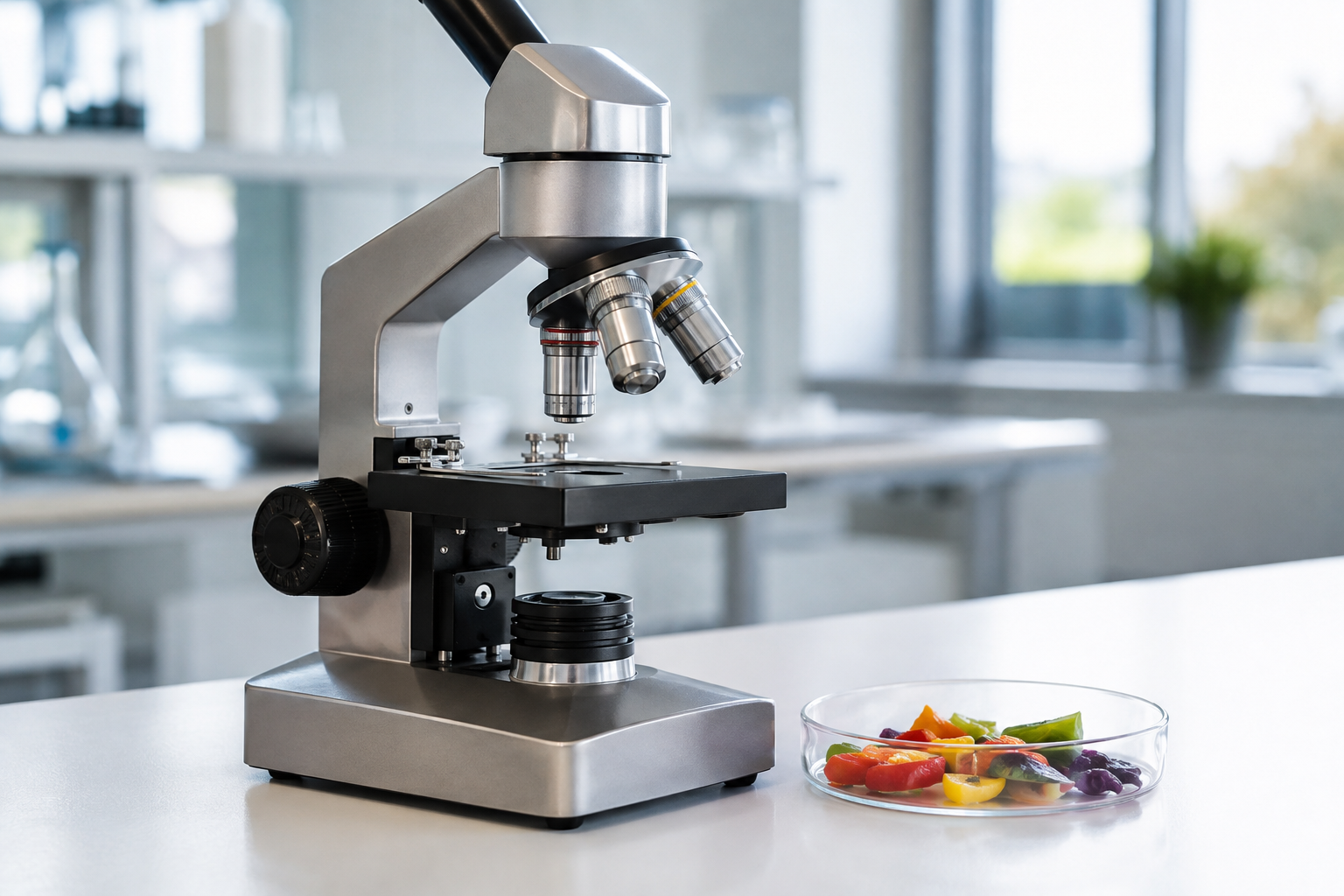
What does a food scientist do?
Food scientists solve problems from the ingredient bench to the factory floor. Typical duties include product formulation, ingredient testing, shelf-life studies, microbial control, sensory evaluation, packaging trials, nutrition labeling, regulatory documentation, and production troubleshooting. In our analysis of food science job descriptions, employers repeatedly requested laboratory documentation, statistical reasoning, and knowledge of good manufacturing practices.
Consider a refrigerated plant-based beverage. You might adjust protein and stabilizer levels, measure pH, test viscosity, monitor microbial growth, and compare several package materials. A pilot batch could require to formulation trials before the team selects one version. You would then prepare a process flow, confirm nutrition information, establish storage conditions, and support a pilot-scale run.
Employers include food manufacturers, beverage companies, ingredient suppliers, contract laboratories, universities, government agencies, and research organizations. Common specialties include food chemistry, microbiology, processing, packaging, sensory science, quality assurance, and regulatory affairs. Laboratory researchers may spend most days running assays, while plant-support scientists investigate failed batches under time pressure. Public-sector scientists may inspect facilities or study food risks. A Comprehensive Guide to Becoming a Food Scientist in the USA should therefore include both laboratory and manufacturing experience.
Education requirements and the best degree options
Most entry-level food scientist jobs require a bachelor’s degree in food science, food technology, chemistry, biology, microbiology, nutrition, agricultural science, or a related field. A typical bachelor’s program takes four years and includes chemistry, biology, physics, statistics, and laboratory courses. We recommend comparing total tuition, living costs, internship access, and laboratory facilities rather than choosing a program by name alone.
A master’s degree usually adds one to two years and supports advanced product development, sensory research, quality leadership, or specialized laboratory work. A doctorate commonly takes four to six additional years and suits research directors, university faculty, and scientists leading original studies. Graduate study can also help you enter food chemistry, advanced microbiology, or process modeling when a bachelor’s degree is not enough.
Look for general and organic chemistry, biochemistry, microbiology, calculus, statistics, physics, food chemistry, food processing, nutrition, packaging, sensory evaluation, and HACCP principles. Check whether the curriculum aligns with Institute of Food Technologists standards, offers a pilot plant, supports undergraduate research, and reports graduate employment outcomes. A realistic plan is four years of study, a paid internship during the summer, and an entry-level product development or quality role after graduation. A Comprehensive Guide to Becoming a Food Scientist in the USA should also explain that experience may sometimes compensate for a related degree, but regulated laboratory or research roles often require stronger credentials. A Comprehensive Guide to Becoming a Food Scientist in the USA is not a substitute for reviewing each employer’s degree requirements.
How to prepare before college and choose a strong program
Before college, take chemistry, biology, physics, algebra, statistics, computer science, and technical writing. These subjects build the foundation for formulation calculations, microbial testing, data analysis, and clear reports. A science fair project on fermentation, food oxidation, or preservation can give you a useful interview example.
Build a university checklist with these questions:
- Does the school offer an IFT-recognized food science program or a strong related science degree?
- Does it have a food pilot plant, sensory facility, research laboratories, and industry partnerships?
- What percentage of students complete internships, and where do graduates work?
- Are ABET-accredited engineering options available if you prefer processing or equipment design?
International students and career changers should compare prerequisite courses, credential evaluations, English requirements, transfer-credit rules, and visa restrictions. Ask admissions staff for a written review of your transcripts. A community-college laboratory course, food production job, 4-H project, or university research placement can close a skills gap before enrollment.
Build the laboratory and technical skills employers want
Employers want more than a list of science courses. They want evidence that you can produce reliable results. Core laboratory skills include aseptic technique, serial dilution, microbial plating, titration, moisture analysis, pH measurement, water activity testing, and basic chromatography. Water activity matters because it helps predict microbial stability; pH testing helps identify acidification and preservation risks.
Data skills are equally useful. Learn Excel, laboratory information management systems, sensory testing software, experimental design, regression analysis, statistical process control, and basic data visualization. A designed experiment can test three stabilizer levels and two processing temperatures with fewer prototypes than changing one variable at a time. Statistical process control can reveal a gradual filling-weight drift before it creates hundreds of nonconforming packages.
Create a portfolio with a formulation project, shelf-life plan, sensory test, process flow diagram, hazard analysis, and two-page technical report. Include assumptions, methods, results, limitations, and a recommendation. In our experience, communication separates promising candidates from technically capable candidates. You may need to explain a failed test to marketers, operators, purchasing teams, auditors, and executives. A Comprehensive Guide to Becoming a Food Scientist in the USA should treat documentation as a technical skill, not clerical work. A Comprehensive Guide to Becoming a Food Scientist in the USA becomes stronger when every project shows a measurable workplace outcome.
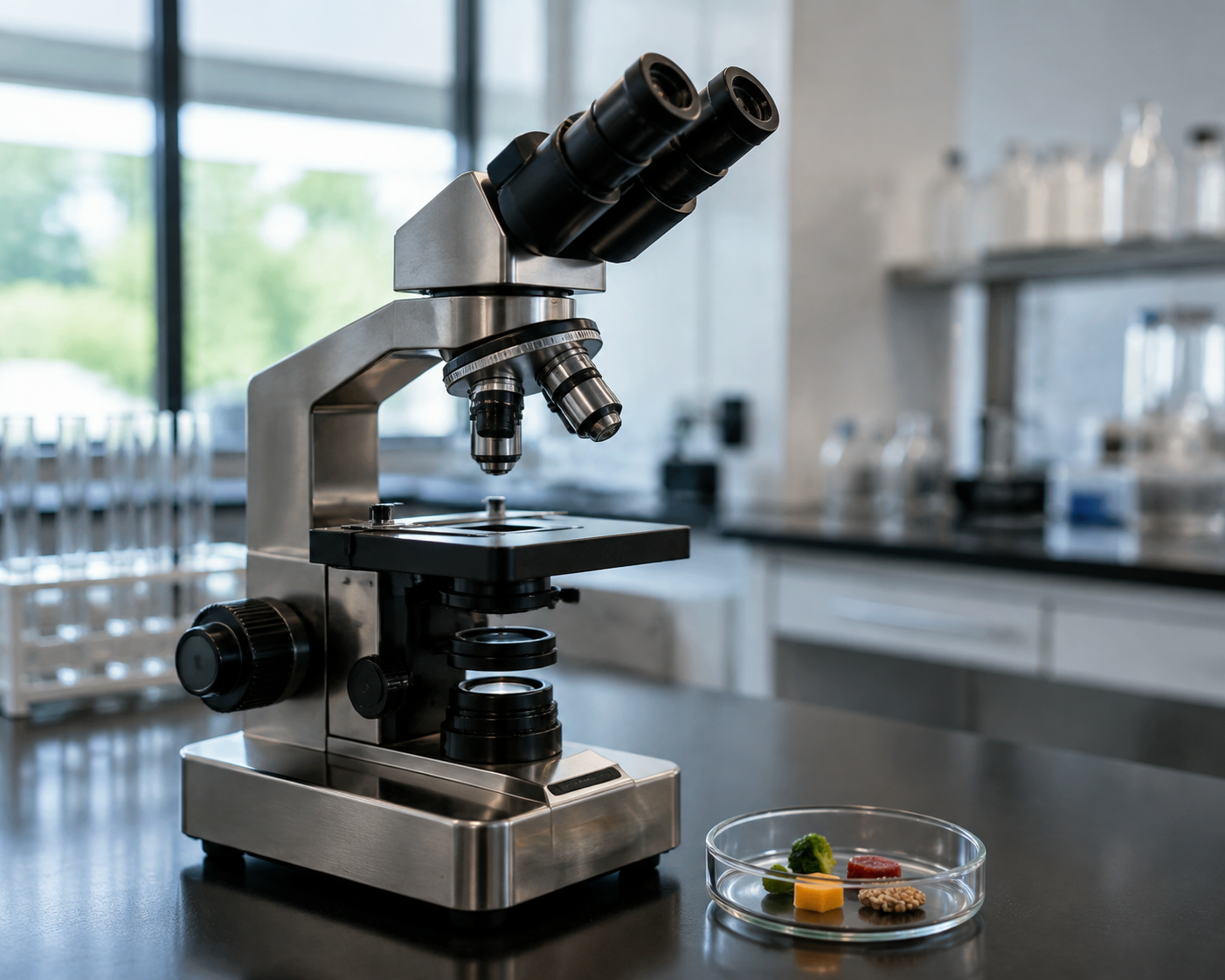
Gain experience through internships, research, and entry-level roles
Internships, cooperative education, undergraduate research, and part-time laboratory work can determine how quickly you land your first full-time position. Apply six to nine months early because large manufacturers often recruit before summer positions begin. Useful first jobs include quality control technician, laboratory technician, research assistant, sensory panel coordinator, production supervisor trainee, regulatory assistant, and food safety coordinator.
Use this internship plan:
- Prepare a one-page resume with laboratory methods, software, and course projects.
- Join IFT or your university food science club and attend local events.
- Contact faculty members about research and contact manufacturers or ingredient suppliers about placements.
- Practice technical questions on pH, water activity, contamination, allergens, and experimental design.
- Track applications and send a focused follow-up message after interviews.
Turn an internship into an offer by recording results. For example, document a 20% reduction in testing time, fewer customer complaints, better batch consistency, or successful completion of three pilot trials. One realistic route begins in quality assurance, adds HACCP training, supports an FDA audit, and moves into product development after two years. A Comprehensive Guide to Becoming a Food Scientist in the USA should show how each early role creates transferable evidence. A Comprehensive Guide to Becoming a Food Scientist in the USA is a career ladder, not one job title.
Understand FDA, USDA, HACCP, and food safety requirements
The FDA regulates most foods, while the USDA Food Safety and Inspection Service regulates meat, poultry, and processed egg products. Some companies operate under both systems. The EPA oversees pesticides and certain environmental requirements, while state health departments and local regulators enforce additional rules. The U.S. Food and Drug Administration, USDA Food Safety and Inspection Service, and Electronic Code of Federal Regulations are reliable starting points.
The Food Safety Modernization Act emphasizes prevention. Food scientists may support preventive controls, current good manufacturing practices, allergen control, sanitation, supplier approval, traceability, environmental monitoring, and recall planning. A facility may need records showing who checked a critical limit, when the check occurred, and what corrective action followed.
HACCP means Hazard Analysis and Critical Control Point. Use this seven-step sequence:
- Analyze biological, chemical, and physical hazards.
- Identify critical control points.
- Set measurable critical limits.
- Define monitoring procedures.
- Specify corrective actions.
- Verify that the system works.
- Maintain accurate records.
Training in these areas improves employability in quality assurance, auditing, supplier quality, regulatory affairs, and product development. A Comprehensive Guide to Becoming a Food Scientist in the USA must connect science with compliance. A Comprehensive Guide to Becoming a Food Scientist in the USA is more practical when you can explain how a laboratory result changes a preventive-control decision.
Salary, job outlook, and the best places to work
Food science pay depends on job title, education, industry, location, experience, and specialty. Review current figures from the U.S. Bureau of Labor Statistics because occupational categories differ between food scientists, agricultural scientists, technicians, chemists, and engineers. In 2026, an entry-level technician may earn substantially less than a product developer or regulatory scientist with several years of experience.
Early-career roles often include food technologist, quality technician, research assistant, or sensory coordinator. Mid-career paths can include product developer, quality manager, regulatory scientist, sensory scientist, or process specialist. Senior scientists and research directors may manage budgets, intellectual property, teams, and external partnerships. Graduate credentials, allergen expertise, statistical design, regulatory submissions, and leadership duties can improve advancement potential, but no national salary figure is guaranteed.
Major hubs include California, New Jersey, Illinois, Texas, Minnesota, Wisconsin, North Carolina, Massachusetts, and Washington. Compare salary with housing, relocation costs, shifts, tuition assistance, retirement benefits, laboratory access, and promotion pathways. Food science offers practical impact and relatively stable demand, but some roles involve early shifts, plant noise, protective clothing, or limited remote work. A Comprehensive Guide to Becoming a Food Scientist in the USA should help you judge the whole employment package. A Comprehensive Guide to Becoming a Food Scientist in the USA is a good career choice when you value applied science and can accept manufacturing realities.
Certifications, professional associations, and continuing education
Certification can strengthen an existing education-and-experience profile, but it rarely replaces a science degree or laboratory background. The Institute of Food Technologists offers the Certified Food Scientist credential, which recognizes professional knowledge and experience. HACCP training, Preventive Controls Qualified Individual training, PCQI for Human Food, SQF practitioner training, BRCGS training, and internal auditor credentials may help you qualify for specific roles.
Choose training based on your target job. A quality professional may benefit from HACCP, PCQI, SQF, or BRCGS instruction. A regulatory specialist may need stronger labeling and FDA knowledge. A product developer may gain more from sensory science, experimental design, and process scale-up. Confirm that the course provider has credible industry or regulatory recognition before paying.
Join the Institute of Food Technologists, attend local section events, and ask experienced members about hiring trends. We recommend a yearly learning plan with one food safety course, one statistics or data course, one regulatory update, and one communication or project-management course. Spending even hours per year on structured learning can keep your methods current. A Comprehensive Guide to Becoming a Food Scientist in the USA should frame certification as evidence of commitment, not a shortcut. A Comprehensive Guide to Becoming a Food Scientist in the USA also requires continuing education because regulations, ingredients, testing tools, and consumer expectations change.
How to get hired: resume, portfolio, and interview strategy
Tailor your resume to each posting. Put relevant laboratory methods, instruments, regulations, software, product categories, and project results near the top. Replace “helped with testing” with a measurable statement such as “reduced a microbial testing workflow by 20% through revised sample preparation.” Other strong examples include extending shelf life by three weeks or completing sensory evaluations.
Your portfolio should contain a product development brief, ingredient specification, process flow chart, HACCP plan, statistical analysis, sensory results, and one-page executive summary. Remove confidential company data. Explain the business decision, your method, the result, and the next test. Hiring managers can then see how you think, not just what courses you completed.
Prepare for questions about contamination risk, pH, water activity, allergen cross-contact, failed batches, sensory bias, experimental design, and communicating bad news to production. Many roles require on-site work because laboratories, pilot plants, sensory panels, and factories cannot be moved online.
Use this 30-day routine: apply to five targeted jobs each week, send three networking messages, complete one informational interview, practice two technical interviews, and track every follow-up. A Comprehensive Guide to Becoming a Food Scientist in the USA is most effective when your materials prove job readiness. A Comprehensive Guide to Becoming a Food Scientist in the USA should appear through your work, not only through a title.
A 12-month roadmap for becoming a food scientist in the USA
A 12-month plan turns a broad goal into trackable actions. During months and 2, assess your education, choose a specialty, review prerequisites, calculate tuition and living costs, and list gaps in chemistry, biology, mathematics, or laboratory work. Decide whether product development, quality assurance, microbiology, sensory science, regulatory affairs, food engineering, or academic research fits your interests.
During months and 4, shortlist programs and employers, contact admissions offices and faculty, join IFT, update LinkedIn, and begin a technical portfolio. In months and 6, complete a laboratory or food safety course, apply for internships or research placements, and practice Excel analysis with a small formulation or shelf-life dataset.
During months through 9, gain hands-on experience and conduct informational interviews with at least five professionals. Build an application list by industry and location. During months through 12, apply for jobs or graduate programs, rehearse interviews, compare offers, and create a first-year development plan with three technical goals.
Track progress monthly using evidence: completed courses, applications, interviews, portfolio pieces, and laboratory hours. A Comprehensive Guide to Becoming a Food Scientist in the USA works best as a decision system. A Comprehensive Guide to Becoming a Food Scientist in the USA should end with a clear choice about your next credential, experience, or application.
Your next steps and long-term career plan
You need six core assets: relevant science education, laboratory competence, food safety knowledge, practical experience, clear communication, and measurable evidence of your work. A perfect first job is not required. A quality technician role can teach sanitation, specifications, audits, and corrective actions before you move into formulation or research.
Complete these actions this week:
- Compare three degree or certificate programs, including cost and laboratory access.
- Read FDA and USDA food safety career resources.
- Contact one working food scientist with a specific question.
- Enroll in a basic HACCP course if it fits your budget and target role.
- Revise your resume with three measurable accomplishments.
Set a 90-day target with one education milestone, one experience milestone, one networking milestone, and one portfolio deliverable. After your first professional year, review what you actually enjoy. You may prefer bench chemistry, plant troubleshooting, supplier audits, sensory panels, regulatory writing, or team leadership.
As of 2026, food science rewards people who combine scientific discipline with curiosity about ingredients, processes, safety, consumer needs, and the business of food. A Comprehensive Guide to Becoming a Food Scientist in the USA should lead to action within seven days. A Comprehensive Guide to Becoming a Food Scientist in the USA becomes meaningful when you test your interests in real work and keep building from the results.
Key Takeaways
- A bachelor’s degree in food science or a related science is the usual entry point, while graduate study supports advanced research and leadership.
- Laboratory methods, statistics, HACCP, preventive controls, and technical communication make you more competitive.
- Internships, research placements, and quality or laboratory roles provide the evidence employers want from early-career candidates.
- Compare salary with location, shifts, benefits, tuition support, laboratory access, and promotion opportunities.
- Choose one action this week: review three programs, contact a food scientist, start HACCP training, or build your first technical portfolio project.
Frequently Asked Questions
What degree do you need to become a food scientist in the USA?
Most entry-level positions require a bachelor’s degree in food science, food technology, chemistry, biology, microbiology, nutrition, agricultural science, or a related field. A master’s or doctorate may be needed for advanced research, university teaching, or senior specialist roles.
How long does it take to become a food scientist?
A bachelor’s degree usually takes four years. You can often enter an entry-level role after graduation, although internships and laboratory research can improve your prospects before then.
How much does a food scientist earn in the USA?
Compensation varies by title, location, employer, education, and experience. Technicians and assistants generally earn less than product developers, regulatory scientists, quality managers, and research directors, so you should review current BLS data and compare total benefits.
Is HACCP certification required for food scientists?
It is not required for every food science position, but HACCP knowledge is highly useful in quality, food safety, manufacturing, and regulatory roles. PCQI, SQF, BRCGS, or internal auditor training may also help, depending on the facility and job description.
Can you become a food scientist without a food science degree?
Sometimes. A related science degree plus laboratory, manufacturing, or quality experience may qualify you for selected roles, but many employers still require a specific bachelor’s-level science background. A Comprehensive Guide to Becoming a Food Scientist in the USA should help you compare your existing coursework with each employer’s requirements.
Do food scientists work remotely?
Some regulatory, documentation, data, and project-management tasks can be performed remotely. However, many jobs require on-site access to laboratories, pilot plants, sensory panels, or manufacturing facilities, so fully remote positions are less common.
