A Comprehensive Guide to Becoming an Orthodontist in the USA: Essential Steps
Becoming an orthodontist usually takes to years after high school. You first complete college and dental school, then undertake two or three years of accredited specialty training. A Comprehensive Guide to Becoming an Orthodontist in the USA starts with understanding the full commitment: orthodontists diagnose and correct malocclusions, crowded or misaligned teeth, and jaw problems with braces, clear aligners, expanders, retainers, and other appliances.
Based on our research for 2026, the major decisions are choosing prerequisite courses, preparing for the Dental Admission Test (DAT), financing dental school, competing for residency, passing licensing examinations, and building a compliant practice. The U.S. Bureau of Labor Statistics reports a median annual wage of at least $239,200 for dentists in its latest published wage table, while employment is projected to grow 4% from to 2033. Orthodontists are a specialty within dentistry, so their income can differ widely from general dentist data.
The American Dental Association (ADA) and American Association of Orthodontists (AAO) provide useful career context. The AAO represents more than 19,000 orthodontists, residents, and students. A Comprehensive Guide to Becoming an Orthodontist in the USA must therefore cover both clinical training and business realities, including insurance, staffing, patient communication, and record privacy.
We found that applicants who plan several years ahead make better choices about debt and residency fit. This A Comprehensive Guide to Becoming an Orthodontist in the USA gives you a practical route from high school preparation to licensed specialty practice.
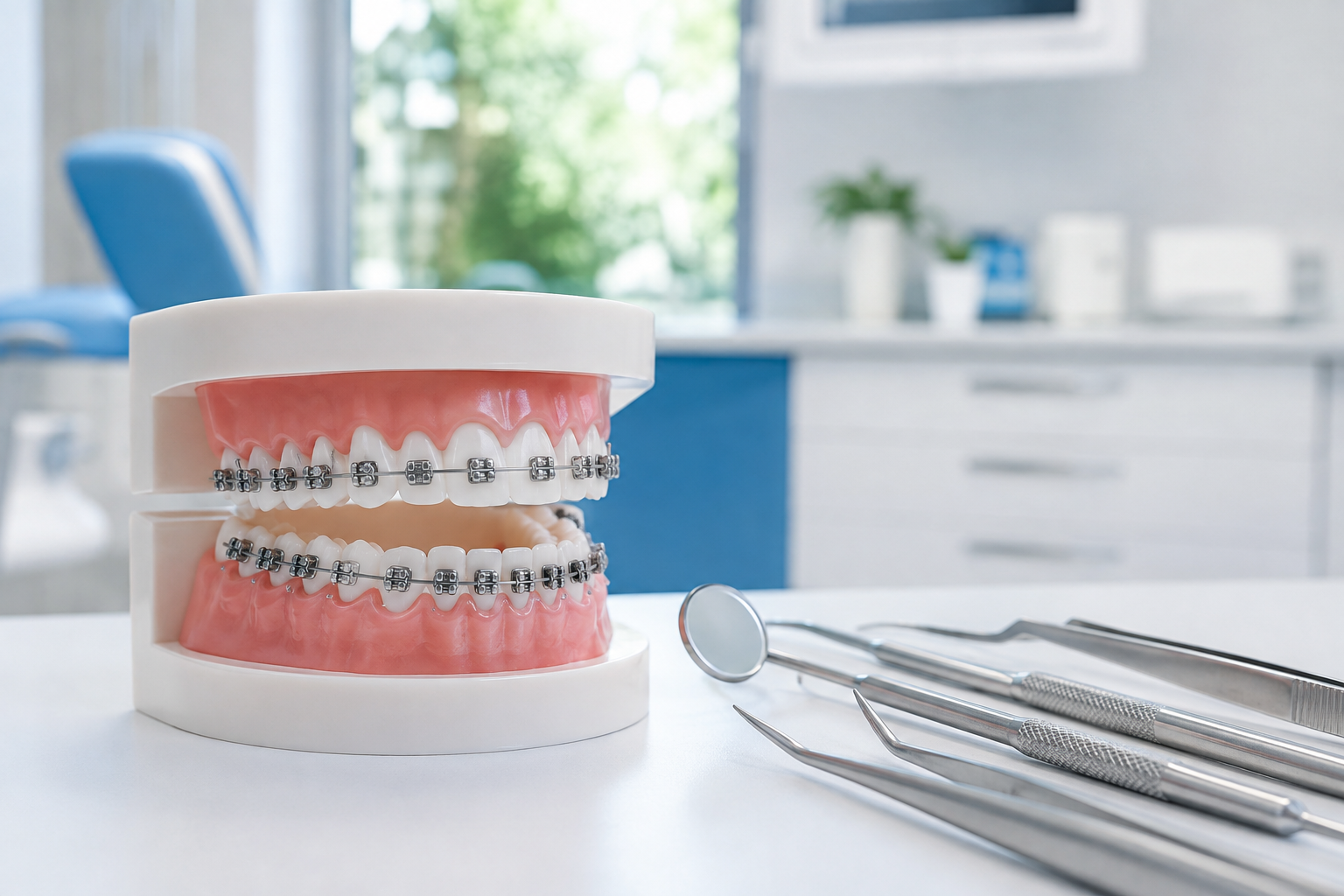
What Does an Orthodontist Do?
Orthodontists are dentists who complete additional specialty education in tooth movement, facial growth, jaw relationships, and bite function. A general dentist provides preventive care, fillings, crowns, periodontal treatment, and routine diagnosis. An orthodontist focuses on malocclusion, biomechanics, growth modification, retention, and long-term alignment.
A typical day may begin with digital intraoral scans and cephalometric or panoramic imaging. You might then place brackets for a 13-year-old, review aligner progress for a 32-year-old, repair a loose wire, and explain an expander to a parent. Consultations can involve mild crowding, impacted teeth, open bite, crossbite, skeletal discrepancies, or temporomandibular concerns requiring referral and coordination.
Common treatment options include traditional metal braces, ceramic brackets, clear aligners, palatal expanders, fixed and removable retainers, and surgical orthodontic preparation. For a patient with a severe jaw discrepancy, you may coordinate treatment timing with an oral and maxillofacial surgeon. Treatment planning depends on growth stage, bone support, oral hygiene, facial profile, patient goals, and medical history.
A Comprehensive Guide to Becoming an Orthodontist in the USA should also recognize the relationship-based nature of this work. Patients may return every four to eight weeks for two years or longer. In our experience, successful clinicians explain each adjustment in plain language and document risks, alternatives, consent, and follow-up carefully. A Comprehensive Guide to Becoming an Orthodontist in the USA is not only about appliances; it is about making precise decisions over time. That is why A Comprehensive Guide to Becoming an Orthodontist in the USA includes diagnosis, communication, retention, and teamwork.
Education Requirements: The 7-Step Path to Orthodontics
The usual route has seven stages. You do not need a particular undergraduate major, but you must complete each dental school’s required courses before applying. Verify every requirement directly with the school and review standards from the Commission on Dental Accreditation (CODA), the American Dental Education Association (ADEA), and the ADA.
- Earn a bachelor’s degree. Most students take four years, although some complete prerequisites faster.
- Complete prerequisites. Common courses include biology, general chemistry, organic chemistry, physics, biochemistry, English, and statistics.
- Take the DAT. Dental schools use results with grades, experiences, recommendations, and interviews.
- Attend a CODA-accredited dental school. The professional curriculum generally lasts four years.
- Earn a DDS or DMD. Both are equivalent U.S. dental degrees and qualify graduates to seek orthodontic residency.
- Complete orthodontic residency. Most programs last two to three years.
- Obtain state licensure and specialty credentials. Board certification is voluntary, while state licensure is legally required.
| Stage | Typical time | Milestones and approximate costs |
|---|---|---|
| College | 4 years | Prerequisites, experiences, and applications; tuition may range from $10,000 to more than $60,000 annually. |
| DAT and applications | 3–12 months | Study materials, DAT fee, transcripts, and application fees; budget roughly $1,000–$3,000. |
| Dental school | 4 years | Clinical training and DDS/DMD; tuition often exceeds $50,000 per year before living costs. |
| Orthodontic residency | 2–3 years | Certificate or master’s degree; costs and stipends vary significantly. |
| Licensure | Several months | Written and clinical testing, jurisprudence, background checks, and fees. |
A Comprehensive Guide to Becoming an Orthodontist in the USA must account for both time and opportunity cost. Based on our analysis, students should compare accredited programs before assuming the least expensive option is always best. A Comprehensive Guide to Becoming an Orthodontist in the USA also requires you to check whether your intended residency accepts your degree, examination history, and visa status. Use the ADA licensure resources and CODA directory before paying an application fee.
How to Prepare for College and the DAT
High school students can build a useful foundation through advanced biology, chemistry, physics, mathematics, patient-facing volunteering, dental shadowing, research, and leadership. Shadowing does not need to be excessive. A focused experience that helps you describe sterilization, informed consent, digital records, and patient anxiety is more useful than a large unverified hour count.
The DAT covers natural sciences, perceptual ability, reading comprehension, and quantitative reasoning. We recommend beginning structured preparation three to six months before testing. Start by taking a diagnostic exam, then divide study time into short daily blocks. Complete timed practice tests under realistic conditions and review every missed question.
ADEA application data and dental-school class profiles show why a single score rarely determines admission. Competitive applicants usually present strong science grades, a balanced academic record, meaningful service, credible recommendations, and a personal statement with specific reflection. Your application should explain what you learned from experiences, not simply list them.
- Confirm prerequisite rules for every target school.
- Schedule the DAT only after completing core science courses.
- Use weekly timed practice and track errors by topic.
- Request recommendation letters at least six weeks before deadlines.
- Prepare the AADSAS application with accurate dates, hours, and descriptions.
A first-generation college student, for example, might combine a community dental clinic placement with biology research and a campus leadership role. That combination shows service, scientific curiosity, and reliability. Those qualities matter later in A Comprehensive Guide to Becoming an Orthodontist in the USA, because residency programs want evidence that you can learn, communicate, and persist.
Dental School: What to Expect Before Orthodontic Residency
A DDS or DMD program normally spans four years. Early coursework covers anatomy, physiology, microbiology, pathology, pharmacology, biochemistry, and other biomedical sciences. Preclinical courses then teach operative technique, impressions, radiology, infection control, diagnosis, and treatment planning. Later clinical rotations add patient care, ethics, communication, and practice management.
Dental students can strengthen orthodontic residency applications by choosing orthodontic electives, presenting cases, joining research, completing externships, and developing relationships with faculty. A student who helps evaluate craniofacial growth in a research project can discuss methods and limitations during an interview. A student who presents a case can demonstrate organized clinical reasoning.
There is no universal grade or class-rank cutoff. Programs review dental-school grades, class position, clinical evaluations, research, recommendations, interviews, National Board results, and the overall pattern of improvement. The National Board Dental Examination (NBDE) has transitioned to the Integrated National Board Dental Examination (INBDE), which combines foundational and clinical content. Confirm current examination rules with your school and state board.
Costs require early planning. ADA reporting shows that dental education can create very high debt, and EducationData.org estimates average dental-school debt at more than $300,000 in recent analyses. Annual tuition exceeds $50,000 at many institutions, before instruments, fees, housing, transportation, and insurance. A Comprehensive Guide to Becoming an Orthodontist in the USA should therefore include a written budget, not just an admissions timeline.
Our research found that the strongest applicants treat each clinical rotation as an extended audition. Arrive prepared, ask for feedback, record improvements, and keep examples for future recommendation letters. A Comprehensive Guide to Becoming an Orthodontist in the USA is ultimately a plan for becoming a safe dentist first and a specialist second. That distinction is central to A Comprehensive Guide to Becoming an Orthodontist in the USA.
Orthodontic Residency: Admission, Training, and Daily Work
Orthodontic residencies generally last two to three years and must satisfy CODA standards. Depending on the university, you may receive a certificate, a master’s degree, or both. Programs differ in tuition, stipends, clinical volume, research expectations, faculty expertise, technology, location, and graduate outcomes.
Many applicants use the ADEA Postdoctoral Application Support Service (PASS). Programs may also participate in the National Matching Service, although procedures and participating programs can change. Read each program’s instructions carefully. A missed document or late transcript can remove an otherwise qualified applicant from consideration.
Training commonly includes craniofacial growth, orthodontic biomechanics, diagnosis, treatment planning, cephalometrics, digital workflows, evidence-based care, pediatric and adult treatment, retention, and surgical orthodontics. A representative day may include patient appointments from a.m. to noon, a treatment-planning conference, afternoon seminars, an emergency visit, literature review, research work, and an interdisciplinary discussion about a cleft or orthognathic-surgery case.
Residency checklist:
- Official transcripts and dental-school records
- INBDE or other required board scores
- Curriculum vitae and focused personal statement
- Letters from orthodontic, clinical, and academic faculty
- Research abstracts, publications, or a case portfolio
- Interview preparation and a deadline calendar
- Questions about tuition, stipend, call duties, benefits, and graduate placement
We recommend comparing actual patient numbers and case types rather than relying on a program’s reputation alone. A Comprehensive Guide to Becoming an Orthodontist in the USA should help you judge whether a program fits your learning style and financial position. A Comprehensive Guide to Becoming an Orthodontist in the USA also means asking how residents receive feedback. The best fit is the program where supervision, responsibility, and support grow together. That is a practical principle in A Comprehensive Guide to Becoming an Orthodontist in the USA.
Licensing and Becoming a Board-Certified Orthodontist
Every state requires dental licensure. Typical requirements include graduation from an accredited dental school, a written examination, clinical or patient-based testing, jurisprudence education, background checks, and continuing education. Some states recognize regional clinical examinations; others offer alternative pathways or additional conditions.
Specialty rules vary. Before accepting patients or advertising orthodontic services, verify requirements with the relevant state dental board. The ADA state licensing directory, American Board of Orthodontics, and American Association of Dental Boards can direct you to current information in 2026.
Legal authority and board certification are different. A state license gives you legal authority to practice dentistry within that jurisdiction. American Board of Orthodontics certification is a voluntary professional credential. Its pathway includes case documentation, a written assessment, a clinical case examination, and periodic renewal or maintenance requirements. Confirm the current sequence because examination policies can change.
Keep a compliance file with your license, jurisprudence completion, continuing-education certificates, CPR training, malpractice policy, radiology records, informed-consent forms, and advertising review. A new graduate who moves from Ohio to Texas, for example, cannot assume the first state’s rules transfer automatically.
Based on our analysis, early verification prevents expensive delays. A Comprehensive Guide to Becoming an Orthodontist in the USA must distinguish certification from licensure so you do not misrepresent your credentials. A Comprehensive Guide to Becoming an Orthodontist in the USA also requires checking renewal dates, sedation rules, records retention, and telehealth limits. Those details make A Comprehensive Guide to Becoming an Orthodontist in the USA useful after graduation, not only before it.
How Much Do Orthodontists Earn and What Does the Career Cost?
Orthodontic compensation varies by location, experience, ownership status, patient volume, insurance mix, and associate or owner role. BLS wage data group orthodontists with dentists in several public tables, so those figures should not be treated as a guaranteed orthodontist salary. ADA Health Policy Institute research and industry compensation reports also use different samples, which explains why reported ranges can differ substantially.
Costs begin before dental school. Budget for undergraduate tuition, DAT preparation, application fees, dental-school tuition, instruments, technology, housing, transportation, health insurance, residency expenses, licensing, continuing education, malpractice coverage, and eventual practice setup. A startup orthodontic office may require hundreds of thousands of dollars for leasehold improvements, chairs, imaging, scanners, laboratory supplies, software, payroll, and working capital.
| Career path | Typical financial pattern | Key trade-off |
|---|---|---|
| Associate orthodontist | Salary or production-based compensation with limited startup cost | Less control but faster income |
| Group practice clinician | Shared systems and benefits; compensation varies by contract | Support versus less independence |
| Academic orthodontist | University salary, teaching, research, and possible clinical work | Mission and variety versus lower private-practice upside |
| Military orthodontist | Benefits and possible education support in exchange for service | Service obligation and relocation |
| Community clinic provider | Mission-driven work with possible loan programs | Access needs and operational limits |
| Practice owner | Highest control and risk; income depends on operations | Equity potential versus debt and management |
- Estimate total debt at graduation, including accrued interest.
- Compare federal repayment options with professional advice.
- Model base pay, bonuses, benefits, and restrictive covenants.
- Build an emergency fund before buying a practice.
- Consult a qualified tax or financial professional.
A Comprehensive Guide to Becoming an Orthodontist in the USA should treat income as a range, not a promise. We analyzed career budgets and found that ownership decisions can matter as much as clinical production. A Comprehensive Guide to Becoming an Orthodontist in the USA is financially strongest when you delay major commitments until you understand cash flow. Use A Comprehensive Guide to Becoming an Orthodontist in the USA to compare net income, not impressive gross revenue.
Where Orthodontists Work and How Demand Is Changing
Orthodontists work in private offices, dental service organizations, hospitals, universities, federally supported clinics, military settings, and rural or mobile care models. Private practice may offer control over scheduling and technology. A university role adds teaching and research. A community clinic may provide strong public-service impact but face staffing, reimbursement, and equipment limits.
Demand is shaped by population growth, adult treatment, clear-aligner use, digital scanning, referral patterns, and access gaps. The U.S. Census Bureau projects continued population change through 2060, with older adults forming a larger share of the population. Adult patients often seek discreet treatment, while children and adolescents remain major parts of orthodontic practice. The AAO has reported that millions of Americans receive orthodontic treatment each year, including children, teenagers, and adults.
BLS projects 4% growth for dentists from to 2033, with about 5,500 openings per year across dentistry from employment change and replacement needs. That does not guarantee equal opportunity in every city. Rural communities may have fewer specialists, longer travel distances, and difficulty recruiting staff.
Public-service opportunities can include National Health Service Corps sites, state loan repayment programs, military service, and federally supported clinics. Check eligibility before relying on an incentive. Recruitment can still be difficult because a rural office may lack referral networks, orthodontic assistants, imaging infrastructure, or a large enough patient base.
Artificial intelligence and remote monitoring can flag missed appointments, compare scans, and support follow-up. They do not replace diagnosis, consent, treatment planning, or professional judgment. In 2026, A Comprehensive Guide to Becoming an Orthodontist in the USA must prepare you to use technology while protecting patient data. We found that access, not software alone, will determine whether digital tools improve care. A Comprehensive Guide to Becoming an Orthodontist in the USA therefore includes rural service and privacy decisions. Those issues belong in A Comprehensive Guide to Becoming an Orthodontist in the USA because clinical opportunity depends on community need.
Common Challenges and How to Strengthen Your Application
Orthodontic residency admission is competitive. Other obstacles include high debt, demanding schedules, limited clinical exposure, weak science grades, repeated examinations, and uncertainty about specialty fit. You can reduce risk by building a timeline before application season and requesting feedback from faculty who understand residency selection.
A lower grade or DAT score does not automatically end your plans. Create an academic improvement plan with additional upper-level science courses, tutoring, and measurable goals. Add meaningful clinical experience, document what changed, and explain the situation briefly and honestly. Do not make excuses or hide a repeated examination.
Build professional relationships through shadowing, research, organized dentistry, and prepared informational interviews. Ask an orthodontist about case selection, retention failures, staff management, and patient communication. A specific recommendation letter from someone who observed your clinical judgment is more useful than a generic letter based on one brief meeting.
Consider this example: Maya earned a modest DAT score and had limited orthodontic exposure. Over months, she completed a craniofacial research project, presented a poster at a student meeting, gained pediatric clinical experience, and secured recommendations from an orthodontic faculty mentor and a clinical supervisor. Her application then showed improvement, specialty knowledge, and verified patient contact.
Avoid these mistakes:
- Applying without checking each school’s prerequisites.
- Using a generic personal statement.
- Exaggerating shadowing hours or responsibilities.
- Ignoring state licensing rules.
- Choosing a residency only because it is near home.
Our experience reviewing professional applications shows that specificity builds credibility. A Comprehensive Guide to Becoming an Orthodontist in the USA should help you turn setbacks into documented growth. A Comprehensive Guide to Becoming an Orthodontist in the USA also rewards honest self-assessment: you need patience, precision, and resilience. Use A Comprehensive Guide to Becoming an Orthodontist in the USA as a checklist for evidence, not as a substitute for reflection.
A Action Plan for Becoming an Orthodontist
Your next action depends on your current stage. High school students should take advanced science courses, seek patient-facing service, and arrange ethical dental shadowing. College students should audit prerequisites, protect science grades, prepare for the DAT, and build relationships with prehealth advisers. Dental students should pursue orthodontic electives, research, case presentations, and faculty recommendations.
Dental graduates should verify residency deadlines, examination rules, licensure requirements, and financing. Practicing dentists considering specialization should speak with residents and program directors, compare the opportunity cost of leaving practice, and confirm whether their academic record and board status meet program rules.
Your next days:
- Review CODA-accredited orthodontic programs.
- Audit prerequisites against each school’s published requirements.
- Contact two practicing orthodontists for informational interviews.
- Create a spreadsheet for tuition, debt, fees, living costs, and lost income.
- Check your state dental board’s requirements.
- Schedule a prehealth or specialty advising appointment.
Your next months:
- Complete missing prerequisite courses.
- Prepare for or retake the DAT with timed practice.
- Obtain verified shadowing, service, research, or pediatric experience.
- Request detailed recommendations early.
- Submit accurate applications before every deadline.
- Prepare interview answers using specific clinical examples.
Use this decision test: do you enjoy detailed problem-solving, patient communication, long treatment relationships, clinical precision, and business responsibilities? If several answers are no, shadow an orthodontist for a full workday before committing.
We recommend verifying every requirement with the school, licensing board, CODA, ADEA, ADA, and American Board of Orthodontics because policies and deadlines can change during 2026. A Comprehensive Guide to Becoming an Orthodontist in the USA is most useful when you convert it into dates, documents, and conversations. A Comprehensive Guide to Becoming an Orthodontist in the USA should lead to one immediate step: schedule an advising meeting this week. The final lesson from A Comprehensive Guide to Becoming an Orthodontist in the USA is simple: plan carefully, train fully, and let patient safety guide every decision.
Your Next Step Toward Orthodontic Practice
Orthodontics offers a structured but demanding professional path. You will need roughly four years of college, four years of dental school, and two to three years of specialty residency. You must also manage examinations, state licensure, continuing education, debt, and the clinical responsibility that comes with moving teeth and influencing facial development.
Start with facts rather than assumptions. Compare CODA-accredited programs, list prerequisites, calculate the full cost of attendance, and speak with orthodontists in both associate and ownership roles. Then create a calendar for the DAT, dental applications, residency applications, licensure, and board-certification milestones.
Before you commit, spend enough time observing the work to understand its pace. Watch how the orthodontist handles an anxious child, a broken appliance, an unhappy adult patient, and a treatment plan that needs revision. Those moments reveal more than a salary estimate.
Based on our research, the applicants who progress most confidently are those who combine strong academics with verified service, thoughtful clinical exposure, financial planning, and honest reflection. If you can accept the long training period and still enjoy the details, orthodontics may be a strong fit. Your first appointment with an adviser can turn that interest into a workable plan.
Key Takeaways
- Plan for to years after high school: college, dental school, and two to three years of orthodontic residency.
- Complete each dental school’s prerequisites, prepare carefully for the DAT, and build verified clinical, service, research, and leadership experience.
- Compare residency programs by training quality, patient volume, faculty support, research expectations, cost, stipend, and graduate outcomes.
- State licensure is legally required; American Board of Orthodontics certification is voluntary and does not replace a license.
- Create a full financial model before enrolling, then verify every deadline and requirement with CODA, ADEA, the relevant state board, and the American Board of Orthodontics.
Frequently Asked Questions
How long does it take to become an orthodontist in the USA?
The usual timeline is to years after high school: about four years for a bachelor’s degree, four years of dental school, and two to three years of orthodontic residency. Additional time may be needed for application delays, a master’s thesis, examinations, or licensing.
Do you need a specific major to become an orthodontist?
No. Dental schools accept many majors, provided you complete required courses such as biology, general and organic chemistry, physics, biochemistry, English, and statistics. Check each school because prerequisite rules differ.
Is a DDS different from a DMD for orthodontic residency?
DDS and DMD degrees are equivalent U.S. dental degrees. Graduates of either degree can apply for orthodontic residency if they meet the program’s academic, examination, and application requirements.
How much does orthodontic residency cost?
Costs vary widely. Some programs charge tuition, some provide stipends, and some combine a certificate with a master’s degree and additional fees. Ask each program for tuition, benefits, stipend, insurance, research costs, and expected living expenses before ranking it.
Do orthodontists have to be board-certified?
State licensure is required to practice, while American Board of Orthodontics certification is voluntary. Board certification can demonstrate professional achievement, but it does not replace a state dental license or alter that state’s scope-of-practice rules.
What is the salary of an orthodontist in the USA?
Income varies by geography, experience, ownership, patient volume, insurance mix, and employment model. BLS public data group orthodontists with dentists in some wage tables, so you should compare several sources and evaluate net compensation, benefits, debt, and business expenses.
What does A Comprehensive Guide to Becoming an Orthodontist in the USA include?
It includes the education timeline, prerequisite courses, DAT preparation, dental school, orthodontic residency, state licensing, board certification, costs, income, work settings, application strategy, and a action plan. You should still verify current rules with each school and licensing authority.
