Introduction: Is Optometry a Good Career in the USA?
You want to understand education requirements, daily work, salary, job outlook, licensing, costs, and long-term options before choosing optometry. This Optometrist Career Overview in the USA gives you the practical information needed to make that decision, rather than treating the profession as a simple comparison of salary and school length.
An optometrist is a Doctor of Optometry (OD) who examines eyes, diagnoses and manages many vision conditions, prescribes corrective lenses, and may provide medical treatment depending on state scope-of-practice laws. The U.S. Bureau of Labor Statistics reported a $131,860 median annual wage in May 2024 and projects 9% employment growth from to 2033.
Our research shows that the strongest decision factors are educational debt, the state where you expect to practice, preferred patient population, schedule, and interest in ownership or specialization. We also compare optometry with ophthalmology and other health professions so you can judge clinical autonomy, lifestyle, surgical exposure, and earning potential.
This Optometrist Career Overview in the USA also addresses residency training, rural opportunities, retail-volume pressures, and the difference between guaranteed compensation and total compensation. The profession can offer meaningful relationships and predictable outpatient work, but it still requires years of science-heavy training and responsibility for detecting serious disease.
What Does an Optometrist Do? Daily Duties and Scope of Practice
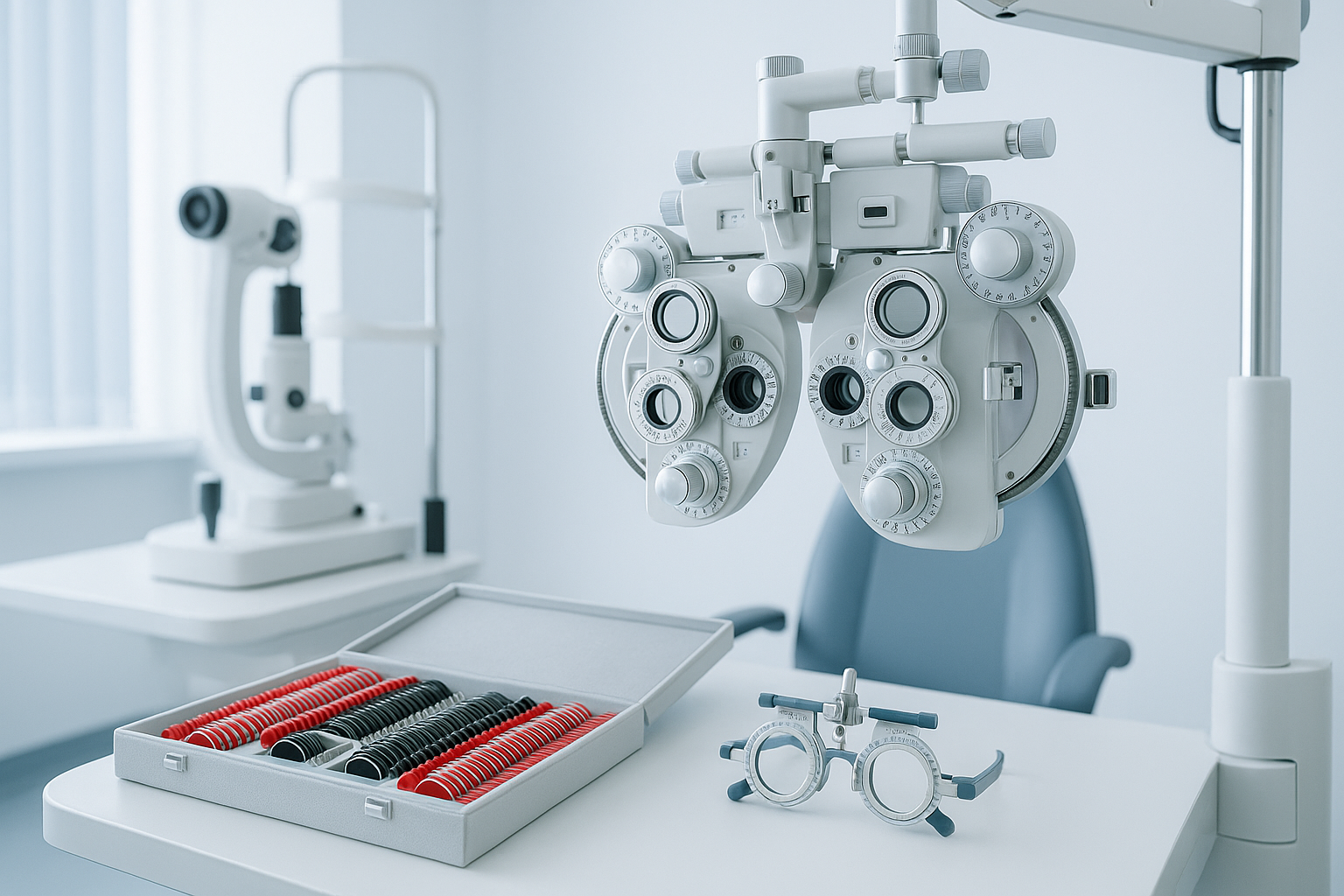
The daily work starts with a patient history: symptoms, medications, diabetes status, family history, visual demands, and contact-lens habits. You then measure visual acuity, perform refraction, examine the anterior eye with a slit lamp, measure intraocular pressure, evaluate the retina, document findings, explain the diagnosis, prescribe treatment, and arrange follow-up.
Common conditions include myopia, hyperopia, astigmatism, presbyopia, dry eye disease, glaucoma detection and management, diabetic eye disease, age-related macular degeneration monitoring, binocular vision problems, and contact-lens complications. The U.S. Bureau of Labor Statistics describes examination, diagnosis, treatment, and referral as central duties, while the American Optometric Association provides condition-management context.
Routine vision care focuses on refraction and eyewear prescriptions; medical eye care involves disease detection, medication, and coordination with other clinicians. State law determines whether you may prescribe topical or oral drugs, provide injections, use lasers, or perform advanced procedures. In our analysis, this state-by-state difference is one of the most overlooked parts of an Optometrist Career Overview in the USA.
For example, you might discover retinal hemorrhages consistent with diabetic retinopathy during an annual examination. You would document the severity, explain the finding, communicate with the patient’s primary-care physician, and refer to an ophthalmologist when treatment or surgical assessment is needed. That responsibility makes this Optometrist Career Overview in the USA relevant to anyone who wants both preventive care and medical decision-making.
How to Become an Optometrist in the USA: Education Path
The standard route follows six steps: complete undergraduate prerequisites, take the Optometry Admission Test (OAT) or an accepted alternative, earn a four-year Doctor of Optometry degree, pass National Board of Examiners in Optometry examinations, obtain state licensure, and consider optional residency training. Applicants generally complete at least three years of college prerequisites, although many earn a four-year bachelor’s degree first.
Typical prerequisites include biology, general and organic chemistry, physics, microbiology, psychology, and statistics. Requirements differ by school, so you should verify course expiration rules, laboratory requirements, minimum grades, and accepted online coursework before registering. The application process commonly uses the Optometry Centralized Application Service (OptomCAS).
Optometry school combines biomedical science, optics, ocular anatomy, pharmacology, clinical techniques, communication, externships, and supervised rotations. Your application may include recommendation letters, prerequisite and science GPA, OAT scores, observation experience, patient-facing employment, a personal statement, service, research, leadership, and interviews.
We recommend creating a school-by-school spreadsheet before applying. Include deadlines, prerequisites, median academic measures, clinical sites, resident and nonresident tuition, and board-pass information. The Association of Schools and Colleges of Optometry can help you verify programs. A careful Optometrist Career Overview in the USA should include these admissions details, not just the OD title and salary.
Based on our research, successful applicants also demonstrate that they understand patient communication. Shadowing an OD for 20–40 hours, working in a clinic, or volunteering with a vision program can help you test whether examination repetition, close observation, and difficult conversations suit you. That experience makes your Optometrist Career Overview in the USA more personal and financially useful.
Optometry School Length, Admissions, and Cost
The professional OD curriculum is typically four academic years after prerequisite college coursework. Counting three to four years of college, the full pathway commonly takes 7–8 years after high school. In addition to tuition, budget for fees, instruments, technology, board examinations, professional liability coverage, housing, transportation, health insurance, and lost income during clinical training.
Admissions factors you can control include prerequisite GPA, science GPA, OAT performance, shadowing, patient-facing work, service, research, leadership, and communication. A strong application does not erase financial risk, however. Public programs may charge substantially different resident and nonresident rates, while private programs can require higher borrowing even when clinical education is comparable.
For an informed Optometrist Career Overview in the USA, calculate return on investment before accepting an offer. First compare each school’s net price, not its advertised tuition. Next estimate monthly loan payments at several interest rates, model public-service repayment eligibility, limit unnecessary living costs, and compare expected income in private practice, corporate care, hospitals, and government settings.
- Request a complete four-year cost of attendance from every school.
- Estimate borrowing after scholarships, savings, and family support.
- Model payments using conservative—not best-case—income.
- Ask whether your desired location supports the salary you expect.
- Consider how ownership or residency would affect timing and cash flow.
We found that the best financial choice is not always the school with the lowest tuition: clinical quality, residency access, location, and scholarship terms also matter. Still, an additional $40,000 or $60,000 of borrowing can materially change your early-career choices. This Optometrist Career Overview in the USA therefore treats debt as a career variable, not an afterthought.
Optometrist Salary in the USA: Pay by Setting and Experience
The BLS reported a $131,860 median annual wage in May 2024. That national figure is useful, but it is not a guaranteed individual salary. The BLS Occupational Employment and Wage Statistics should be read alongside location, years of experience, patient volume, specialty, ownership, benefits, and employer type.
Private practices may offer mentorship and a path to partnership. Corporate optical chains can provide centralized operations and marketing but may set productivity targets. Hospitals and Veterans Health Administration facilities can expose you to complex disease; academic clinics may pay differently while supporting teaching. Military optometry can offer structured benefits, while independent ownership creates greater control and financial risk.
Separate salary from total compensation. Add bonuses, production incentives, retirement contributions, health insurance, paid time off, relocation assistance, licensing fees, malpractice coverage, and continuing-education support. A new OD might accept a lower guaranteed salary for strong mentorship and benefits, while an experienced OD may earn more through production bonuses or practice equity.
To evaluate an offer, calculate guaranteed annual pay and then ask:
- How many patients are expected per day, and how long are appointments?
- How exactly is the bonus calculated, and when is it paid?
- Are evenings or weekends required?
- Who pays malpractice, licensing, and continuing education?
- Does the contract include noncompete terms or loan-repayment benefits?
Our salary analysis shows why an Optometrist Career Overview in the USA must distinguish headline pay from workload. In the same way, this Optometrist Career Overview in the USA should encourage you to request a sample pay statement and patient schedule before signing.
Job Outlook, Demand, and Best Places to Work
The BLS projects 9% optometrist employment growth from to 2033, faster than the average for all occupations. Demand is supported by population aging, diabetes and other chronic disease, screen-related complaints, rising myopia, and the need for accessible primary eye care. The projected growth is encouraging, but it does not mean every city offers high pay or low competition.
Rural and underserved communities may provide stronger hiring demand, broader clinical responsibilities, loan-repayment programs, and less competition than major metropolitan markets. You may also gain earlier exposure to disease management. The trade-off can include fewer ophthalmology referrals, longer travel distances, limited specialty services, and difficulty recruiting staff.
Private practice often provides autonomy, corporate practice operational support, hospitals complex medical exposure, and government roles structured benefits. Before choosing a location, review population growth, Medicaid reimbursement, ophthalmology access, local competition, housing costs, school districts, commute time, and state scope-of-practice rules.
- Compare three job offers using expected net income after housing.
- Call local referral partners and ask about access and wait times.
- Review the workforce and geographic information in the Data USA optometrist workforce profile.
- Spend at least one weekday in the community before accepting.
In our experience, quality of life can outweigh a nominally higher salary. A $15,000 pay increase may disappear through rent, commuting, childcare, or excessive appointment volume. That is a central conclusion of this Optometrist Career Overview in the USA, and it is why the Optometrist Career Overview in the USA should assess both demand and daily livability.
Optometrist vs. Ophthalmologist vs. Optician
These roles overlap in patient care but are not interchangeable. An optometrist earns an OD degree and provides comprehensive vision and eye care; an ophthalmologist completes medical school and residency and can perform eye surgery; an optician fits and dispenses eyewear based on prescriptions.
| Role | Education and license | Primary work | Prescribing and surgery | Typical settings |
|---|---|---|---|---|
| Optometrist | Four-year OD program; state OD license | Exams, diagnosis, medical eye care, vision correction | Prescribing varies by state; generally no major surgery | Private practice, retail, hospitals, government |
| Ophthalmologist | Medical school plus residency; physician license | Medical and surgical eye care | Prescribes and performs eye surgery | Hospitals, surgical centers, specialty practices |
| Optician | State credentialing varies | Fits and dispenses glasses and contact lenses | Uses prescriptions; does not diagnose or operate | Optical shops, retail, private practices |
Suppose a patient reports blurred vision, glare, and difficulty driving at night. An OD may identify cataract symptoms, measure vision, assess the eye, explain options, and refer the patient to an ophthalmologist. The ophthalmologist evaluates surgical treatment, while the optician helps fulfill the resulting glasses prescription.
When comparing careers, consider training length, debt, income, autonomy, surgical exposure, lifestyle, and patient relationship time. Based on our analysis, an Optometrist Career Overview in the USA suits someone seeking longitudinal eye care without surgical residency, whereas this Optometrist Career Overview in the USA may point you toward ophthalmology if operating-room work is essential.
Specialties, Residency, and Career Advancement
Optional one-year residencies include ocular disease, primary care, cornea and contact lenses, pediatric optometry, low-vision rehabilitation, geriatric optometry, and family practice. Residency is particularly useful for hospital-based practice, academic teaching, medically complex patients, specialty referrals, competitive metropolitan positions, or advanced clinical preparation.
Advanced skills may include therapeutic prescribing, specialty contact lenses, myopia management, low-vision devices, vision therapy, dry-eye treatment, and co-management of surgical patients where state rules allow. You can also pursue practice ownership, clinical director work, education, research, public health, consulting, industry, military optometry, or health-system administration.
A practical five-year plan begins with choosing a clinical niche and identifying two mentors. Next, complete targeted continuing education, track outcomes such as contact-lens success or myopia progression, build referral relationships, and reassess income and work-life goals annually. You do not need to pursue every credential; choose skills that match your patient population and market.
Our research found that career growth does not require ownership or residency. Employment may offer lower risk and predictable hours; ownership can increase autonomy and income potential but adds payroll, inventory, compliance, and debt risk. A specialty role may improve clinical satisfaction while narrowing geographic options.
That flexibility is a major benefit identified in this Optometrist Career Overview in the USA. The same Optometrist Career Overview in the USA also shows why you should compare autonomy, risk, earning potential, and schedule before selecting a five-year direction.
Work-Life Balance, Challenges, and Personal Fit
A typical day may include examinations, charting, referrals, staff supervision, optical coordination, and continuing education. Depending on the setting, you may work four weekdays, evenings, or Saturdays. A four-day medical practice might schedule 20–25 carefully paced examinations per day, while a high-volume retail location may expect 35–45 brief encounters plus documentation and optical coordination.
The benefits include meaningful patient relationships and generally predictable outpatient work. Pressures include prolonged sitting or standing, fine visual tasks, documentation, insurance constraints, productivity targets, and business responsibilities. You need careful observation, fine-motor coordination, patience, communication, technology comfort, ethical judgment, and the ability to explain findings clearly.
Try this self-assessment before applying:
- Can you tolerate science-heavy training and repeated examinations?
- Do you enjoy patient-facing work, including anxious or frustrated patients?
- Would you manage staff, inventory, and finances if ownership appealed to you?
- Can you accept responsibility for detecting disease that may threaten vision?
- Does your preferred schedule include evenings, Saturdays, or emergency calls?
Burnout prevention starts with protected breaks, manageable appointment templates, peer consultation, delegation, boundaries around after-hours work, and early professional support. We recommend asking current ODs how often they finish charting after hours, because that answer may reveal more than a recruitment brochure.
For this Optometrist Career Overview in the USA, personal fit matters as much as compensation. The best Optometrist Career Overview in the USA comparison is the one that shows how the same OD degree can produce radically different daily experiences.
Licensing, Regulations, and the Practice Environment
The general licensing sequence is straightforward: graduate from an accredited OD program, pass required national examinations, complete state-specific clinical or jurisprudence requirements, submit an application, and maintain continuing-education credits. The National Board of Examiners in Optometry provides examination information through its official resource, while the Association of Regulatory Boards of Optometry helps you locate regulatory information.
Optometry is regulated state by state. Medication authority, laser procedures, injections, telehealth, advanced procedures, and co-management rules can differ substantially. Do not rely on an old school webpage, job advertisement, or informal online discussion; check the relevant state board before accepting a role or relocating.
Professional duties include informed consent, HIPAA privacy, accurate documentation, infection control, urgent referral decisions, accessibility, and safe contact-lens prescribing. In 2026, you should also verify telehealth rules, electronic health-record requirements, artificial intelligence-assisted imaging policies, myopia-management products, and evolving scope-of-practice legislation.
We recommend saving the state board’s license checklist and renewal calendar in your application folder. Confirm examination scores, background checks, fingerprints, fees, continuing-education categories, and prescribing registration. This Optometrist Career Overview in the USA is most useful when paired with current state guidance, and the Optometrist Career Overview in the USA should never substitute for the rules governing your intended practice location.
Conclusion: A Practical Decision Plan for Future Optometrists
Choosing optometry requires more than liking eye exams. You should assess training length, admissions readiness, education cost, projected pay, location, preferred patient population, scope of practice, and desired work-life structure. A strong demand forecast cannot compensate for unaffordable debt or a practice environment that conflicts with your values.
Use the next days deliberately:
- Compare three OD programs by total cost, clinical sites, prerequisites, and outcomes.
- Audit your prerequisite coursework and identify missing laboratory classes.
- Schedule shadowing with at least one primary-care OD and one specialty or hospital OD.
- Review licensing rules in the state where you may practice.
- Build a realistic education budget including living costs, examinations, and lost income.
Create a decision matrix and score each factor from to 5: clinical interest, financial tolerance, geographic flexibility, schedule preferences, patient-relationship goals, and interest in ownership or specialization. Then speak with at least three practicing ODs in different settings. Ask about appointment volume, documentation time, compensation, mentorship, burnout, patient relationships, and career regrets.
Based on our research, an Optometrist Career Overview in the USA points to a career with strong demand and meaningful patient care, but the fit depends on informed financial planning and an honest view of daily practice. Use this Optometrist Career Overview in the USA to test the career in real clinics before investing years and significant money. The clearest next step is simple: observe the work, verify the numbers, and choose the practice life you actually want.
Key Takeaways
- The standard path typically requires 7–8 years after high school, including a four-year Doctor of Optometry program and national and state licensing requirements.
- The BLS reported a $131,860 median annual wage in May and projected 9% employment growth from to 2033, but individual pay depends heavily on setting, location, workload, and ownership.
- State scope-of-practice rules differ for medications, procedures, telehealth, and co-management, so verify requirements with the relevant state board before relocating or accepting a position.
- Compare total education cost, expected loan payments, benefits, patient volume, schedule, mentorship, and quality of life—not salary alone.
- Shadow at least three optometrists in different settings and use a scored decision matrix before applying to programs.
Frequently Asked Questions
How long does it take to become an optometrist in the USA?
The standard path usually takes 7–8 years after high school: approximately 3–4 years of college prerequisites followed by a four-year Doctor of Optometry program. You must also pass national and state licensing requirements before practicing independently.
How much does an optometrist earn in the USA?
The U.S. Bureau of Labor Statistics reported a median annual wage of $131,860 for optometrists in May 2024. Individual earnings vary according to location, experience, patient volume, ownership, specialty, benefits, and employer type.
Is optometry a good career in the USA?
Yes, optometry can be a strong career if you enjoy science, patient care, and detailed clinical work. The profession offers a projected 9% employment increase from to 2033, but you should compare education debt, local pay, schedule expectations, and scope-of-practice rules before enrolling.
What is the difference between an optometrist, ophthalmologist, and optician?
Optometrists earn a Doctor of Optometry degree and provide comprehensive vision and eye care, while ophthalmologists attend medical school, complete residency, and can perform eye surgery. Opticians generally fit and dispense glasses and contact lenses according to a prescription.
Do optometrists need to complete a residency?
A residency is optional, but it can be valuable for hospital practice, ocular disease, academic teaching, specialty referrals, or medically complex patients. Many primary-care optometrists build successful careers without residency by developing targeted clinical skills and continuing education.
What should you research before choosing optometry as a career?
Use the Optometrist Career Overview in the USA as a starting point, then verify each requirement with your target school and state board. Compare prerequisites, costs, clinical training, licensure rules, expected compensation, and the daily work environment before committing.
