Exploring A Career As A Plumber In The USA: Essential Facts for 2026
If you want solid pay, hands-on work, and a path that doesn’t require a four-year degree, Exploring a Career as a Plumber in the USA is a smart place to start. Many people research plumbing because they want stable demand, room to move up, and work that stays useful in every economy. Pipes fail, water heaters break, drains clog, and buildings still need safe water and waste systems.
Plumbers work in residential, commercial, industrial, and municipal settings. That can mean installing fixtures in a new home, maintaining piping in a hospital, diagnosing a slab leak in an occupied house, or helping a city maintain water distribution equipment. Based on our research, plumbing offers unusual career mobility: you can begin as a helper, become a licensed journeyman, move into estimating or inspection, or open a contracting business later.
According to the U.S. Bureau of Labor Statistics, plumbers, pipefitters, and steamfitters earned a median annual wage of $61,550 in May 2024, with employment at about 482,700 jobs. The BLS projects 6% job growth from to 2033, which is faster than average for all occupations. Exploring a Career as a Plumber in the USA also means facing trade-offs: the work is physical, emergency calls can disrupt your schedule, and safety risks are real. Still, we found that long-term earning potential, paid apprenticeships, and strong demand make the trade worth serious attention in 2026.
What Does a Plumber Do on a Typical Day?
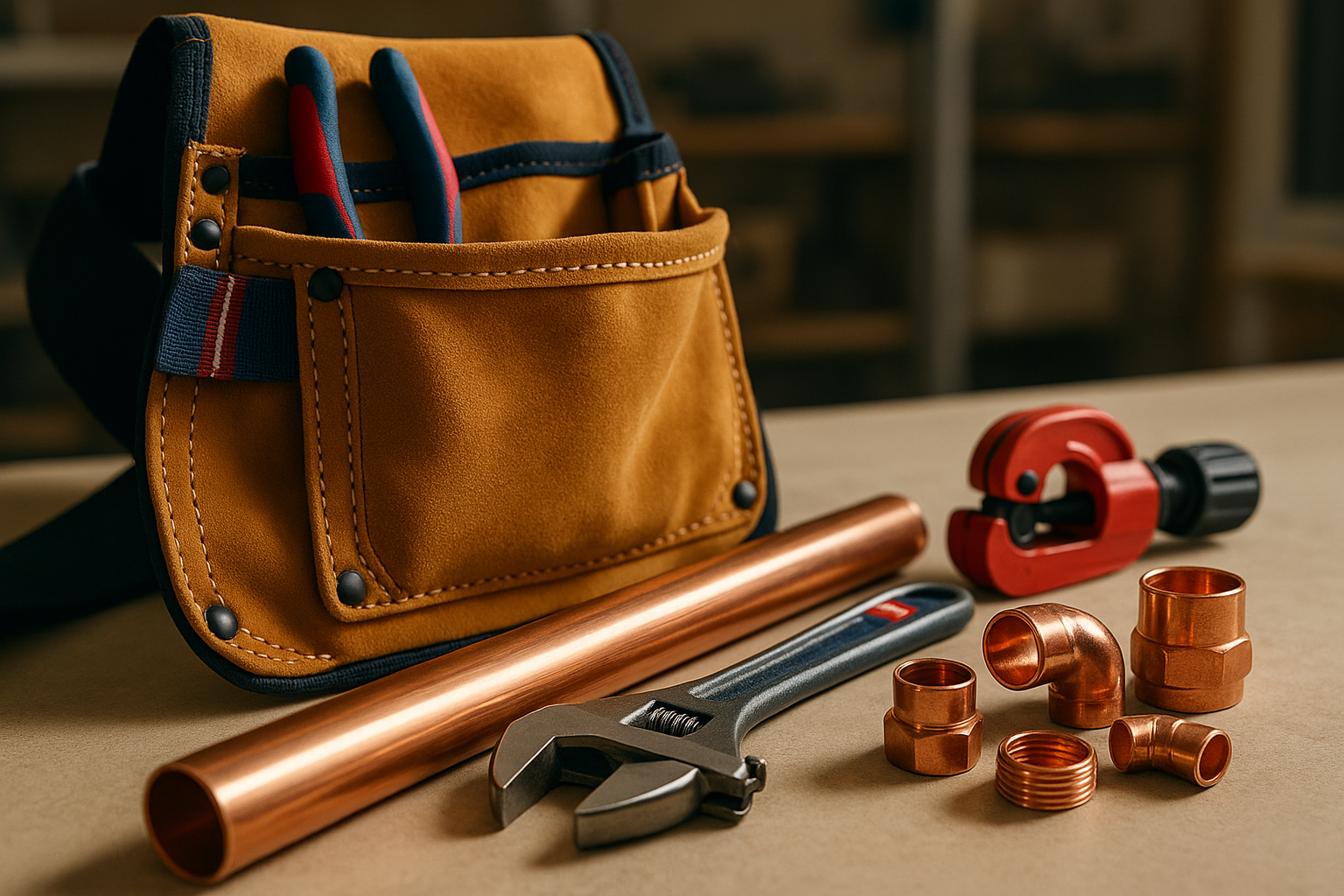
A plumber’s day often starts before a.m. You may review work orders, read blueprints, load fittings, and confirm which code rules apply before leaving the shop. On a service call, you might measure and cut pipe, install a faucet or toilet, test water pressure, document repairs with photos, and explain repair options to a customer in plain language.
Exploring a Career as a Plumber in the USA gets easier when you understand the job boundaries. Plumbers focus on potable water, drainage, venting, fixtures, and related gas or specialty systems where allowed. Pipefitters and steamfitters usually work with high-pressure pipe systems in industrial or commercial settings. HVAC technicians focus on heating and cooling equipment. Maintenance technicians handle general building repairs. General contractors manage broader construction scopes and subcontract trades.
Work sites vary a lot. You could spend Monday in a new apartment project, Tuesday in an occupied home with a failed water heater, Wednesday in a school restroom replacing flush valves, and Thursday in a factory troubleshooting a process-water line. Hospitals and municipal water systems often have stricter documentation, infection control, or security procedures.
Real examples matter. A service plumber may use acoustic equipment to help diagnose a slab leak, then isolate the line and plan a reroute. Another day may involve installing backflow prevention so contaminated water cannot reverse into a drinking-water system. On new construction, you may connect a full drain-waste-vent system and pressure-test it before walls are closed. In our experience, Exploring a Career as a Plumber in the USA becomes far more appealing to people who like solving new problems each day rather than repeating the same desk task for years.
How to Become a Plumber in the USA: The Training Path
The most reliable path is simple, but not always short. First, verify your state and local rules. Then build basic classroom readiness, secure an apprenticeship, pass required exams, earn journeyman status, and later pursue master plumber or contractor licensing if your area uses those tiers. Exploring a Career as a Plumber in the USA works best when you treat training as a step-by-step process instead of guessing your way in.
- Check state requirements. Some states regulate plumbing heavily at the state level, while others leave more authority to cities or counties.
- Meet entry standards. Most programs require you to be at least 18, hold a high school diploma or GED, and show basic algebra readiness.
- Gather practical documents. A valid driver’s license, work authorization, and sometimes a drug screening are common requirements.
- Apply for an apprenticeship. You may go through a union, open-shop employer, trade association, or state-approved sponsor.
- Complete paid on-the-job training. Registered apprentices commonly work several thousand hours while also attending classes.
- Pass exams and apply for your next license level.
The U.S. Department of Labor Registered Apprenticeship system is one of the most useful places to start. Registered programs combine paid job training with structured instruction, which is very different from private schools that charge tuition but may not place you directly with an employer. According to federal apprenticeship data, hundreds of thousands of active apprentices train across occupations each year, and construction trades remain a major part of that pipeline.
Union apprenticeships often provide stronger wage schedules, negotiated benefits, and formal classroom hours. Nonunion programs may offer more flexible entry dates and a wider range of small-employer options. Community colleges and trade schools can help with fundamentals such as blueprint reading, math, safety, and code basics, but they are not always a substitute for required field hours. Based on our analysis, Exploring a Career as a Plumber in the USA is usually most affordable when you can earn while you learn instead of paying the full cost upfront.
Plumbing Licenses, Certifications, and State Requirements
Licensing is local first, national second. That’s one of the biggest facts people miss. Texas, Florida, California, and New York all handle plumbing regulation differently, and counties or cities may add their own permit or registration rules. If you rely on a generic online summary, you can waste months following the wrong path. We recommend checking your state board directly before spending money on training.
Common roles include:
- Apprentice plumber: learning under supervision, often with limited independent work authority.
- Journeyman plumber: licensed to perform broader plumbing work after required hours and exams.
- Master plumber: a higher license level, often tied to supervision, plan review, or contracting authority.
- Plumbing contractor: a business license classification that may require insurance, bonding, and a qualifying individual.
- Responsible managing employee: in some jurisdictions, the person whose license supports the company’s lawful operation.
Exam preparation usually covers the International Plumbing Code or Uniform Plumbing Code, local amendments, blueprint reading, trade math, safety rules, and sometimes business law. California and parts of the West often use UPC-based systems, while many other jurisdictions use IPC-based rules. Texas and Florida have state-level licensing structures, while New York can involve stronger local variation depending on the city.
Extra credentials can improve job options. OSHA or OSHA training helps on construction sites. Backflow tester certification matters for water protection work. Medical gas credentials matter in hospitals. Gas piping, water treatment, and cross-connection control can expand your value. When plumbing overlaps with HVAC, refrigerant work may trigger EPA Section 608 requirements. Exploring a Career as a Plumber in the USA becomes much smoother when you verify every rule with the correct licensing board. In 2026, that step still saves applicants from the most common and costly mistakes. Exploring a Career as a Plumber in the USA is promising, but your legal authority to work depends on the rules where you plan to live.
Plumber Salary, Benefits, and Job Outlook in 2026
Pay is one of the main reasons people consider this trade, and the numbers are strong. The BLS reports a $61,550 median annual wage for plumbers, pipefitters, and steamfitters in May 2024. The top 10% earned more than $101,190, while the lowest 10% earned under $40,000. Those national figures matter, but they don’t tell the whole story.
Apprentices often start around 40% to 50% of journeyman wages and then receive scheduled increases as they complete hours and classroom benchmarks. Journeymen can move into higher-paying service roles, foreman positions, or specialty work. Master plumbers, estimators, service managers, inspectors, and business owners may earn substantially more, especially in dense metro markets or emergency service operations.
Benefits can be a major differentiator. Union and larger-company jobs often include:
- Health insurance
- Retirement contributions or pension plans
- Paid training
- Paid leave
- Tool or boot allowances
Regional pay can look impressive in California, Washington, Massachusetts, and New York, but compare wages with rent, fuel, tolls, and commute times. A higher hourly rate in San Francisco or Seattle may not stretch as far as a lower rate in a mid-cost market. We analyzed wage patterns and found that overtime, service-call commissions, and specialty credentials can change annual earnings faster than base pay alone.
Demand remains strong because the work can’t be outsourced. Aging water lines, housing construction, water-efficiency retrofits, skilled-trade retirements, and emergency repairs all support hiring. The BLS projects about 42,600 openings each year on average over the decade due to growth and replacement needs. In our experience, Exploring a Career as a Plumber in the USA makes the most financial sense when you compare total compensation, not just hourly wage. Exploring a Career as a Plumber in the USA in also means watching local construction cycles and population growth, because both can affect your opportunities quickly.
The Skills, Tools, and Technology Successful Plumbers Need
Good plumbers combine technical skill with reliability. Technical skills include pipe joining, soldering, brazing, fixture installation, drainage diagnosis, leak isolation, blueprint reading, and code compliance. Workplace skills matter just as much: punctuality, clear communication, clean documentation, basic estimating, and the ability to stay calm when a customer’s floor is wet and panic is high.
A practical starter tool list should be modest, not excessive. New apprentices often need:
- Pipe wrench
- Adjustable wrench
- Basin wrench
- Tubing cutter
- Tape measure
- Level
- Inspection mirror
- Drain machine access or training
- Multimeter
- Personal protective equipment
Modern plumbing uses more technology than many newcomers expect. Sewer cameras help locate root intrusion or broken lines. Electronic leak detection tools improve accuracy before opening floors or walls. Press-connect systems can reduce install time compared with some traditional methods. Thermal imaging can help identify hidden moisture patterns. Digital work-order platforms track photos, signatures, parts, and invoices in the field. Smart water-monitoring devices can alert owners to leaks before damage gets severe.
Still, technology doesn’t replace judgment. A camera may show a problem, but you still need to decide whether to clear, patch, reroute, or replace. If access is limited, or if a drain issue overlaps with venting and fixture design, human diagnosis matters more than gadgets. Based on our research, that is where many articles fall short: they mention tools but ignore decision-making under messy real conditions. Exploring a Career as a Plumber in the USA rewards people who can think with their hands, not just buy expensive devices. We recommend a staged tool-buying plan so you do not spend $3,000 to $5,000 too early. Exploring a Career as a Plumber in the USA should begin with employer-required basics, then expand once you know whether service, construction, or a specialty fits you best.
Choosing a Plumbing Specialty and Building Career Options
Plumbing is not one job. It is a family of specialties with different schedules, stress levels, and income patterns. Residential service often means diagnostics, customer interaction, and emergency calls. Commercial construction usually follows project timelines and blueprint-driven installs. Industrial maintenance can involve process piping, shutdowns, and stricter safety controls. Municipal water and wastewater work may connect you to public systems, treatment facilities, and cross-connection standards.
Other specialties include medical gas, fire sprinklers, hydronics, gas fitting, green plumbing, and trenchless sewer work. Some require extra licensing, manufacturer certifications, confined-space procedures, or stronger math skills. Medical gas work, for example, often demands strict documentation because hospitals cannot tolerate mistakes. Trenchless work may require camera inspection knowledge, locating equipment, and patching or lining methods.
Your career does not have to stay in field installation forever. Many plumbers move into:
- Foreman
- Project manager
- Estimator
- Plumbing inspector
- Instructor
- Facilities manager
- Sales representative
- Code official
Here is a simple decision framework. If you like customer contact and problem-solving, residential service may fit. If you prefer predictable builds and larger teams, commercial construction may suit you better. If you want public-sector stability, municipal work is worth exploring. If you dislike middle-of-the-night calls, avoid emergency-heavy service roles. Exploring a Career as a Plumber in the USA becomes easier when you match the specialty to your tolerance for physical work, irregular hours, and income goals. We found that people who choose based only on hourly pay often switch later. Exploring a Career as a Plumber in the USA is usually more satisfying when you first decide what kind of workday you actually want.
Starting a Plumbing Business: Costs, Risks, and First Steps
Working as a licensed employee is very different from operating a plumbing company. A contractor may need a qualifying license, business registration, permits, bonding, insurance, tax accounts, and a system for dispatch, invoicing, and payroll. If you plan to start a shop later, build field skill first. Technical mistakes can be expensive, but business mistakes can sink you even faster.
A realistic startup checklist includes:
- Choose a legal structure such as an LLC or corporation after getting local advice.
- Open a business bank account and separate personal and company funds.
- Secure general liability and commercial auto insurance.
- Confirm workers’ compensation rules if you hire anyone.
- Set service-call pricing and minimum charges.
- Select field-service software for scheduling, estimates, and invoices.
- Create written safety procedures for tools, driving, lifting, and hazardous work.
Startup costs vary widely, but a used service van may cost $15,000 to $40,000, while a newer outfitted van can run much higher. Insurance, fuel, inventory, drain equipment, licensing fees, and payment-processing charges add up fast. Even a modest launch can push well beyond $10,000 to $25,000 before payroll pressure appears. That is why cash flow matters more than vanity growth.
Ethical customer service is a real business advantage. Use written estimates, transparent pricing, clear emergency-call policies, and documented warranty terms. Pull permits when required. Protect floors, clean up debris, and explain what you did. Based on our analysis, one major gap in competing content is weak advice on late-payment controls, review management, and overhiring. Exploring a Career as a Plumber in the USA may eventually lead you into ownership, but growth before you have qualified staff can damage your reputation fast. Exploring a Career as a Plumber in the USA is often safer when you learn dispatch, pricing, and callback control under an established company first.
Physical Demands, Safety, and Work-Life Reality
Plumbing can pay well because it is not easy work. You may kneel for long periods, crawl under structures, lift heavy water heaters, work in heat or cold, and enter tight mechanical spaces. The job can expose you to sewage, sharp metal, power tools, chemical drain cleaners, and electrical hazards near wet areas. Ladder work and trench risks are real, especially on construction sites.
OSHA guidance matters here. Practical controls include eye protection, gloves suited to the task, respiratory protection when required, safe ventilation, trench protection, and lockout/tagout awareness around equipment. The NIOSH safety resources also stress hazard recognition, proper lifting, and exposure control. We recommend treating PPE as standard gear, not optional gear.
Schedules also deserve honesty. Many plumbers start early. Construction crews may work around inspections and deadline pressure. Service plumbers may get night calls, weekend emergencies, or sudden schedule changes during freezes, storms, or holiday backups. Travel between jobs can add unpaid stress if your employer does not plan routes well.
Injury prevention is where long careers are built. Strengthen your core and legs, not just your grip. Use dollies, lifting straps, and mechanical aids. Rotate repetitive tasks when possible. Stay hydrated. Inspect cords, cutters, and ladders before each use. Report hazards early. A small leak around live electrical equipment can become a major incident fast.
If you have back, knee, respiratory, or claustrophobia concerns, compare roles carefully. Residential service may involve crawlspaces and awkward positions. Commercial construction may involve bigger lifts and ladders. Inspection or supervisory roles may be less physical later in your career. Exploring a Career as a Plumber in the USA should include an honest self-check, not just a pay comparison. In our experience, Exploring a Career as a Plumber in the USA is best for people who respect safety enough to build habits before an injury teaches the lesson the hard way.
Is Plumbing a Good Career for You? A 30-Day Action Plan
Plumbing is a good career if you want job security, practical skills, and a path to strong income without a bachelor’s degree. It may not be a good fit if you hate physical work, struggle with unpredictable hours, or want a low-stress customer-facing job. The right answer depends on your priorities: income, independence, job stability, schedule control, and tolerance for messy environments.
Use this 30-day plan to test fit before making a costly decision:
- Week 1: Research your state licensing rules and print the requirements.
- Week 1: Make a shortlist of three local plumbing companies, one union option, and one trade school or community college.
- Week 2: Interview three working plumbers. Ask what they wish they knew at the start.
- Week 2: Tour a trade school or community college lab.
- Week 3: Contact union and nonunion apprenticeship programs and compare application dates, wages, and benefits.
- Week 3: Complete a basic algebra refresher focused on fractions, measurement, and angles.
- Week 4: Shadow a plumber, volunteer on a repair project where legal, or take an entry-level helper role if available.
Ask employers direct questions: starting pay, raise schedule, tool list, tuition help, overtime expectations, benefits, mentorship, safety record, and advancement path. Ask how many apprentices completed the program in the last year and how often helpers become registered apprentices. Those answers reveal far more than recruiting slogans.
A simple decision matrix helps. Choose an apprenticeship if you want paid training and long-term trade credentials. Choose trade school if you need structure before applying. Choose a community college program if you want credit-bearing coursework and broader fundamentals. Choose an immediate helper position if money and fast entry matter most. Based on our research, Exploring a Career as a Plumber in the USA becomes much clearer once you compare real employers, not just training brochures. Exploring a Career as a Plumber in the USA is a practical test of fit, and days is enough time to gather useful evidence.
Exploring a Career as a Plumber in the USA: Next Steps
The smartest takeaway is simple: plumbing can offer stable demand, paid skill-building, and room to specialize, but the rules are local and the work is demanding. Apprenticeships usually provide the strongest start because they combine wages with supervised training. Specialties such as backflow, medical gas, industrial systems, and trenchless work can raise your value over time. Safety should guide every step, from your first tool purchase to your long-term career plan.
Take these next steps in order:
- Identify the correct state agency or local licensing authority.
- Gather your education records, ID, and driver’s license.
- Prepare a short résumé that shows reliability, math readiness, and any construction experience.
- Apply to at least five programs or employers, not just one.
- Schedule informational interviews with working plumbers or apprenticeship coordinators.
For planning, verify wages and openings with official sources, not message boards. Use the U.S. Bureau of Labor Statistics for wage and employment data, OSHA for safety guidance, and the U.S. Department of Labor for apprenticeship information. We found that readers who spend even two hours checking state rules avoid the most common entry mistakes.
Exploring a Career as a Plumber in the USA is not about chasing a quick paycheck. It is about building technical skill, earning trust, and becoming the person who can solve urgent building problems under pressure. If you show up on time, keep learning, communicate clearly, and protect the customer’s property, you can build a durable career. Exploring a Career as a Plumber in the USA starts with one concrete move: contact the right licensing authority and apply to your first serious training path this week.
Key Takeaways
- Check your state and local plumbing rules first, because licensing and work authority vary widely across the USA.
- Paid apprenticeships are often the best entry path since they combine classroom learning with real jobsite experience.
- Earnings can grow well beyond entry-level pay when you add licenses, overtime, strong customer skills, or a specialty like backflow or medical gas.
- Technology helps plumbers work faster and diagnose better, but hands-on judgment and safety habits still drive long-term success.
- Your best next step is practical: verify requirements, talk to working plumbers, and apply to multiple apprenticeship programs or employers.
Frequently Asked Questions
How long does it take to become a plumber in the USA?
Most people can start with a paid apprenticeship or helper job after earning a high school diploma or GED. Many employers and apprenticeship sponsors want you to be at least 18, have basic algebra skills, a driver’s license, and the ability to pass a drug screening.
Do you need a license to work as a plumber?
In many states, yes. Some areas register apprentices but do not require a full license until the journeyman or contractor level. Because rules vary by state, county, and city, we recommend checking your state plumbing board before you apply.
Is plumbing a good career in 2026?
Yes, plumbing can be a strong career if you want stable demand, practical work, and a path to solid earnings without a four-year degree. Exploring a Career as a Plumber in the USA makes the most sense for people who can handle physical work, problem-solving, and occasional schedule changes.
What is the difference between union and nonunion plumbing apprenticeships?
Union apprenticeships often offer structured wage increases, strong benefits, and formal classroom training. Nonunion paths may give you faster hiring, more local employer options, and different specialty exposure, but benefits and pay progression can vary more by company.
How much do plumber apprentices make?
Apprentices often start around 40% to 50% of journeyman pay, but actual wages differ by region and employer. Nationally, licensed plumbers and related tradesworkers can earn much more with overtime, specialty credentials, and experience.
What tools should a new plumber buy first?
A basic starter kit often includes a pipe wrench, adjustable wrench, basin wrench, tubing cutter, tape measure, torpedo level, inspection mirror, multimeter, and personal protective equipment. New apprentices should avoid overspending early and buy tools in stages based on employer requirements.
