Introduction: What It Takes to Become a Mining Engineer in the USA
If you want to design safer mines, manage production, and support the supply of critical minerals, How to Become a Mining Engineer in the USA: A Complete Guide starts with one fact: a bachelor’s degree is usually the entry point, but field experience and safety judgment often determine who advances. Mining engineering applies geology, engineering, economics, and safety principles to mineral exploration, mine design, extraction, processing, and reclamation.
In 2026, employers need engineers who can support copper, lithium, rare earth, uranium, aggregate, and domestic energy projects while adopting automation and improving worker protection. The U.S. Bureau of Labor Statistics reports occupational data for mining and geological engineers, while the Society for Mining, Metallurgy & Exploration provides professional development and industry connections. The Mine Safety and Health Administration establishes federal mine-safety requirements.
Based on our research, your strongest route combines an ABET-accredited program, internships, software proficiency, communication skills, and eventual professional licensure. How to Become a Mining Engineer in the USA: A Complete Guide also means understanding tuition, salaries, remote-site work, regulations, and the practical steps from high school through your first job.
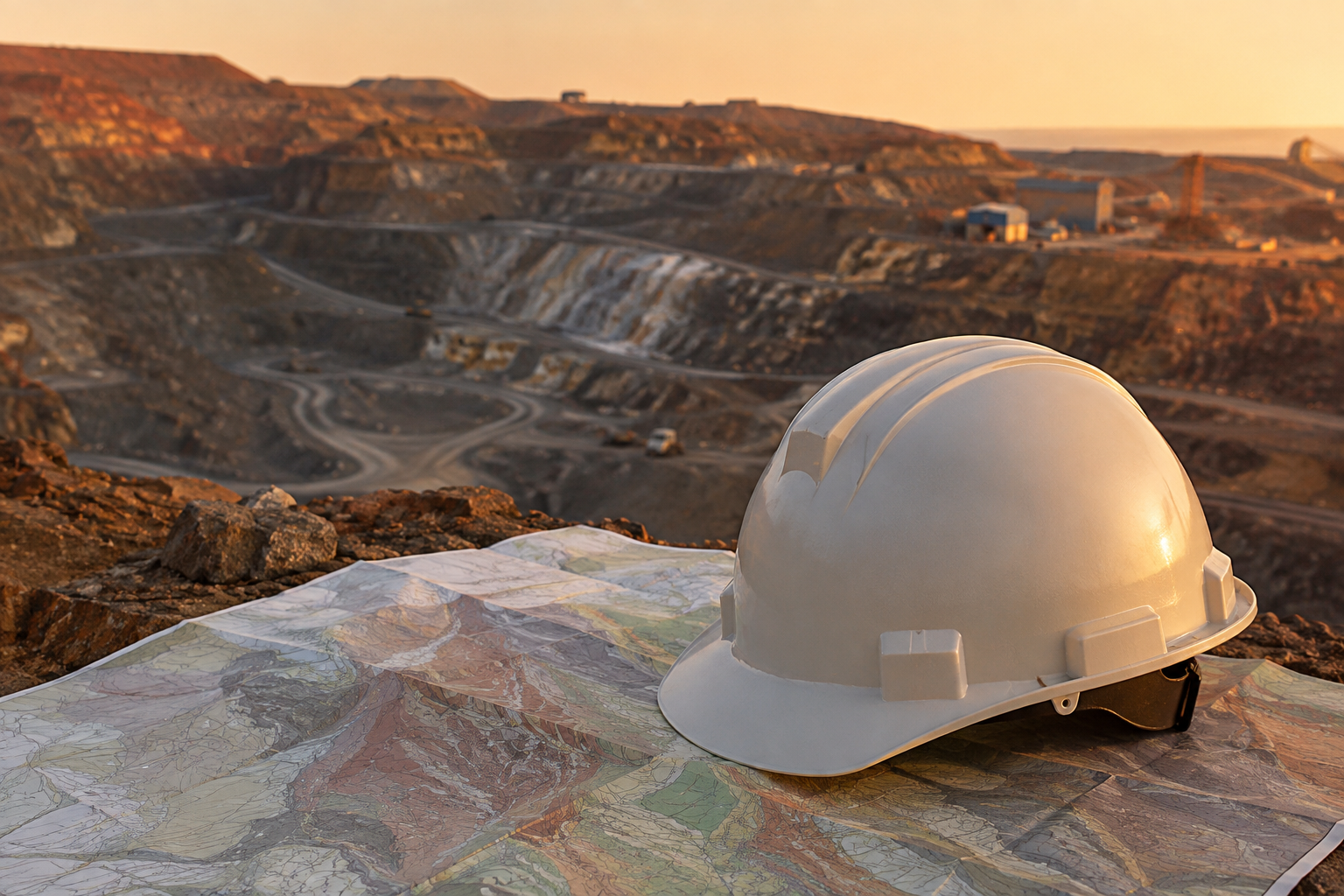
What Does a Mining Engineer Do?
A mining engineer turns a mineral deposit into a safe, financially workable operation. Your responsibilities may include mine planning, production scheduling, ventilation, blasting, equipment selection, slope stability, cost analysis, environmental compliance, and reclamation. A geological engineer focuses more on rock, groundwater, and site conditions; a geologist interprets deposits; a metallurgical engineer improves mineral recovery; and a safety professional manages hazard controls, training, and compliance.
Your daily work changes by operation. An open-pit engineer may analyze haul roads and bench stability, while an underground engineer studies ground support, ventilation circuits, and stope sequencing. Quarry, oil sands, aggregate, laboratory, and processing-facility roles bring different equipment, regulations, and schedules. Remote sites commonly use rotations such as days on and days off.
For example, when evaluating a copper expansion, you might compare ore grades, reserves, haulage distances, truck productivity, operating costs, water needs, ventilation, and worker-exposure controls. We found that the best career decisions weigh compensation against travel, physical conditions, commodity cycles, environmental duties, and advancement. This is the practical meaning of How to Become a Mining Engineer in the USA: A Complete Guide, not simply choosing a major. In our experience, How to Become a Mining Engineer in the USA: A Complete Guide should include a realistic conversation with someone who has worked at a mine site.
Step 1: Choose the Right High School Preparation
Build your foundation before college with advanced mathematics, physics, chemistry, computer science, and technical writing. Calculus supports optimization and equipment calculations; statistics helps you interpret production and safety data; mechanics supports ground-control decisions; programming enables automation; and spatial reasoning helps with mine layouts and surveying.
A practical four-year plan might look like this:
- Year 1: algebra, geometry, technical writing, and a geology or environmental club.
- Year 2: trigonometry, chemistry, computer science, and robotics or surveying projects.
- Year 3: calculus, physics, CAD, construction work, or an engineering summer program.
- Year 4: advanced calculus or statistics, introductory geology, mechanics, and a capstone project.
Volunteer with an environmental organization, join a geology club, or seek summer work involving construction, equipment, mapping, or laboratory testing. Community college courses can reduce tuition, but verify transfer equivalencies before enrolling. Based on our analysis, students should confirm that every calculus, physics, and engineering course transfers into an ABET-accredited university pathway. That planning is central to How to Become a Mining Engineer in the USA: A Complete Guide. Keep a project record because How to Become a Mining Engineer in the USA: A Complete Guide is easier to follow when you can show evidence of technical curiosity.
Step 2: Earn an ABET-Accredited Mining Engineering Degree
A bachelor’s degree in mining engineering or mining and minerals engineering is the standard route to entry-level professional work. ABET accreditation indicates that a program meets established standards for curriculum, faculty, facilities, assessment, and student outcomes. Before applying, verify the exact program in the official ABET program database; do not rely only on a university brochure.
Expect a four-year program covering calculus, differential equations, physics, chemistry, geology, mineralogy, rock mechanics, mine ventilation, explosives, surveying, economics, environmental engineering, and mine design. Laboratory work and field camps may add equipment, travel, and safety costs. Programs worth researching include Colorado School of Mines, Virginia Tech, University of Arizona, South Dakota Mines, University of Kentucky, and Pennsylvania State University.
Mining engineering is more specialized than civil or mechanical engineering, while geological engineering emphasizes subsurface conditions and mineral processing focuses on recovery after extraction. We recommend comparing graduation rates, employer partnerships, internship placement, faculty specialties, field equipment, aid packages, and access to operating mines. Tuition may range from lower-cost in-state public rates to more than $40,000 annually at some private or out-of-state institutions, before living expenses. Co-ops and work-study can reduce the net cost. These checks are essential to How to Become a Mining Engineer in the USA: A Complete Guide, and they make How to Become a Mining Engineer in the USA: A Complete Guide more useful than choosing a school by reputation alone.
Step 3: Build the Technical Skills Employers Want
Employers value engineers who can connect software outputs to field conditions. Learn mine-planning tools such as Deswik, Vulcan, Surpac, and Datamine, plus AutoCAD, ArcGIS, ventilation-modeling systems, and scheduling applications. You should also become highly capable with Excel and develop working knowledge of Python, SQL, statistics, data visualization, GIS, and basic automation.
Technical practice should include surveying, drilling and blasting, rock mechanics, geotechnical analysis, ventilation modeling, equipment productivity, cost estimation, and production reconciliation. Create a portfolio with a pit-optimization exercise, underground stope design, haul-road calculation, ventilation model, reclamation plan, or production-data analysis. Explain your assumptions, safety controls, uncertainty, and final recommendation.
Professional communication matters just as much. Practice incident reporting, technical presentations, contractor coordination, conflict resolution, and discussions with regulators and local communities. In our experience, employers often value field readiness and safety judgment as much as software familiarity. A polished project cannot compensate for ignoring a ground-control concern. Use How to Become a Mining Engineer in the USA: A Complete Guide to organize your software and field priorities, then apply How to Become a Mining Engineer in the USA: A Complete Guide through projects that prove you can make responsible engineering decisions.
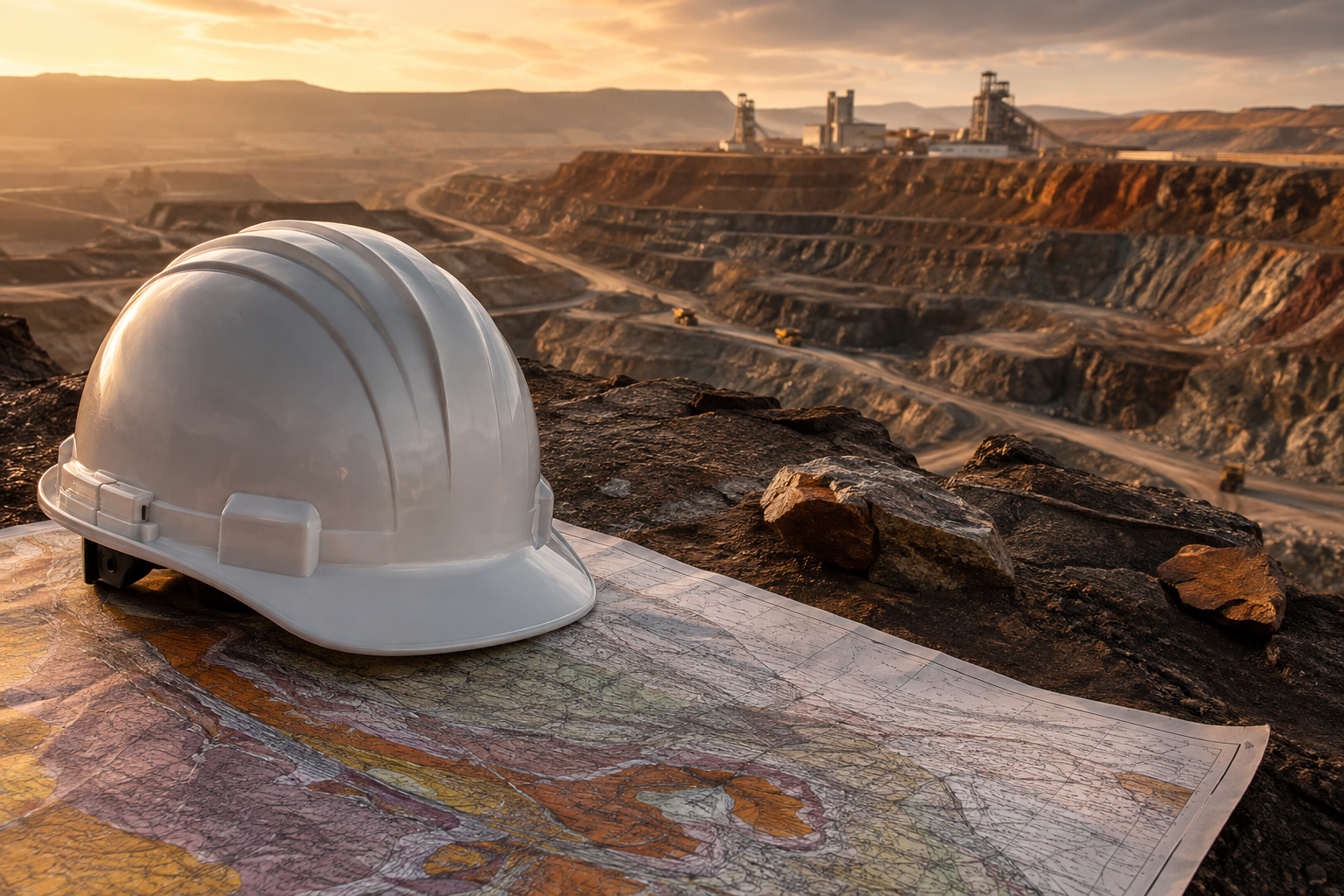
Step 4: Get Internships, Co-ops, and Mine-Site Experience
Paid internships and co-ops turn classroom concepts into decisions involving production, drilling, maintenance, geology, ventilation, or safety teams. Target Rio Tinto, Freeport-McMoRan, Newmont, Barrick, Hecla Mining, aggregate producers, engineering consultants, equipment manufacturers, and federal agencies. Smaller operations can provide broader responsibility than a famous employer.
Apply six to nine months early. Prepare a one-page technical resume, attend Society for Mining, Metallurgy & Exploration and university career events, contact alumni, and practice behavioral and technical interviews. Typical duties include collecting field measurements, reconciling production data, observing blasting, updating mine plans, monitoring ventilation, and supporting safety audits.
Before accepting remote work, confirm housing, transportation, paid travel, personal protective equipment, medical requirements, internet access, work rotation, and emergency procedures. A strong internship can produce measurable results: improved haul-cycle data, fewer equipment delays, faster survey updates, or better dust-monitoring records. Join SME, pursue scholarships, enter student competitions, attend mine tours, and seek a mentor. We recommend treating every placement as a test of reliability. That is a central lesson in How to Become a Mining Engineer in the USA: A Complete Guide, while How to Become a Mining Engineer in the USA: A Complete Guide becomes actionable when your experience includes real operating constraints.
Step 5: Learn U.S. Mine Safety, Environmental, and Regulatory Requirements
The Mine Safety and Health Administration regulates U.S. mines under the Federal Mine Safety and Health Act, while OSHA generally covers workplaces outside MSHA jurisdiction. Training can include new miner instruction, experienced miner training, annual refresher training, and site-specific hazard instruction. Review requirements directly through MSHA training resources, because course obligations vary by mine type and job.
Major hazards include ground falls, mobile equipment, blasting, respirable dust, toxic gases, fires, water inflows, and electrical energy. Environmental work may involve the Environmental Protection Agency, state agencies, reclamation permits, water quality, tailings, waste rock, habitat disturbance, and closure planning. The EPA’s NPDES program is one example of federal water-protection oversight.
Consider a decline expansion: you may need to increase production while maintaining a ground-control plan, ventilation capacity, dust monitoring, emergency access, and reclamation funding. Review fatality reports, complete first-aid or emergency-response training, and treat stop-work authority as a professional responsibility. We analyzed safety guidance and found that production targets never remove the engineer’s duty to control foreseeable hazards. That principle belongs in How to Become a Mining Engineer in the USA: A Complete Guide and in How to Become a Mining Engineer in the USA: A Complete Guide as a daily professional standard.
Professional Licensure: FE, PE, and State Requirements
The Fundamentals of Engineering exam is usually the first licensing milestone. After passing, you may use an Engineer-in-Training designation, depending on state rules. You then gain qualifying supervised experience and take the Principles and Practice of Engineering exam before applying for a Professional Engineer license through the relevant state board.
The typical sequence is: graduate from an ABET-accredited program, pass the FE, document supervised engineering experience, pass the PE, submit references and verification, and meet continuing-education requirements. Rules differ by state and may include discipline-specific experience, character references, transcripts, and mobility procedures. Consult the National Council of Examiners for Engineering and Surveying for current exam and licensing information.
A PE is especially valuable when you approve designs, prepare consulting reports, sign engineering documents, work in the public sector, or pursue chief engineer and management roles. Take the FE near graduation, maintain detailed experience records, identify a licensed supervisor, and verify rules in Arizona, Colorado, Nevada, Utah, West Virginia, and Wyoming. In 2026, early documentation still prevents avoidable licensing delays. This planning belongs in How to Become a Mining Engineer in the USA: A Complete Guide, and How to Become a Mining Engineer in the USA: A Complete Guide should always direct you to the state board before relying on general advice.
Mining Engineering Salary, Job Outlook, and Career Paths
The BLS groups mining and geological engineers together, so use its current wage and employment tables as a benchmark rather than a promise. Compensation varies by commodity, location, experience, employer, rotation, and risk. A practical framework is approximately $65,000–$90,000 for many entry-level roles, $90,000–$135,000 for mid-career engineers, $125,000–$180,000 for senior specialists, and higher totals for operations managers, consultants, and executives. Bonuses and remote-site premiums can materially change these ranges.
Career paths include mine planning, production, drill-and-blast, ventilation, geotechnical, project, safety, environmental, and chief engineering positions. Housing, travel allowances, health insurance, retirement contributions, paid rotations, and annual bonuses may add 10% or more to the value of a package, although schedules can involve 12-hour shifts and extended remote assignments.
Nevada, Arizona, Colorado, Utah, Wyoming, Alaska, Minnesota, Kentucky, West Virginia, and Pennsylvania offer notable opportunities. In 2026, copper, lithium, rare earth elements, uranium, aggregates, coal, industrial minerals, automation, and domestic critical-mineral supply chains influence hiring. A master’s degree helps with research, geotechnical specialization, mineral economics, teaching, and advanced technical work; otherwise, two years of field experience may provide a better return. Based on our analysis, How to Become a Mining Engineer in the USA: A Complete Guide should evaluate total compensation, not salary alone. How to Become a Mining Engineer in the USA: A Complete Guide also requires honest consideration of travel and working conditions.
Costs, Scholarships, and Financial Planning for Students
Budget for tuition, housing, laboratory fees, field camps, software, transportation, safety equipment, professional memberships, exam fees, and relocation. One-time costs might include a laptop, boots, hard hat, eye protection, and field gear; recurring costs include rent, food, travel, textbooks, and association dues. Field camps can add hundreds or several thousand dollars depending on distance and duration.
Reduce the total through in-state tuition, community-college transfer, co-op income, employer sponsorship, military benefits, and paid internships. Research SME Foundation awards, university departmental scholarships, state mining associations, professional societies, and company-sponsored programs. Apply early, document financial need, emphasize STEM coursework and leadership, request faculty references, and tailor essays to responsible resource development and safety.
Compare net price rather than advertised tuition. A school charging $38,000 may cost less than one charging $24,000 if grants, housing, and paid co-op terms differ. Confirm whether awards renew for all four years and whether you must maintain a particular GPA. We recommend building a four-column budget for tuition, living costs, field expenses, and earnings. This financial discipline strengthens How to Become a Mining Engineer in the USA: A Complete Guide, while How to Become a Mining Engineer in the USA: A Complete Guide is incomplete if it ignores debt and graduation affordability.
A Four-Year Roadmap to Your First Mining Engineering Job
Year 1: Complete calculus, chemistry, physics, and introductory geology. Join SME, attend employer presentations, and build a basic technical resume. Year 2: Study mineralogy, surveying, programming, and mechanics; learn Excel and CAD or GIS; attend a mine tour; and apply for a field or laboratory role.
Year 3: Complete rock mechanics, ventilation, blasting, mine design, and economics. Secure a substantial internship or co-op and begin FE preparation. Year 4: Finish your capstone, collect portfolio evidence, apply for full-time jobs, request references, and sit for the FE when prepared.
Use a job-search checklist: quantify resume results, update LinkedIn or professional profiles, rehearse technical explanations, compare salary and benefits, confirm relocation support, and ask about rotation, housing, shift length, training, and promotion. For example, write “reconciled 1,200 haul cycles, identified a 7% data gap, and improved weekly dispatch reporting,” rather than “helped with production.” We recommend applying to 15–25 targeted roles instead of sending identical applications everywhere. This is the practical structure of How to Become a Mining Engineer in the USA: A Complete Guide. Keep improving How to Become a Mining Engineer in the USA: A Complete Guide with evidence from every project and placement.
Conclusion: Your Next Three Actions
Your next three actions are specific: shortlist three ABET-accredited programs, contact two mining professionals, and apply for one relevant internship or scholarship within the next days. Verify requirements through ABET, MSHA, NCEES, state engineering boards, the BLS, and university financial-aid offices before committing money or time.
The strongest candidates combine accredited education, safe field habits, technical software skills, communication ability, and evidence of real project work. Create a personal timeline covering admission, coursework, internships, FE preparation, graduation, entry-level employment, and eventual PE licensure. Track deadlines in a spreadsheet and review your progress monthly.
In 2026, engineers who understand automation, data analysis, environmental compliance, critical minerals, and worker safety will be better positioned for durable opportunities. We recommend choosing the program that gives you the best combination of affordability, mine access, field training, and employer relationships. That is the clearest answer to How to Become a Mining Engineer in the USA: A Complete Guide, and the lasting lesson from How to Become a Mining Engineer in the USA: A Complete Guide is simple: responsible production begins with prepared people.
Key Takeaways
- Choose an ABET-accredited mining engineering or mining and minerals engineering bachelor’s program and compare net cost, field training, graduation outcomes, and employer partnerships.
- Build practical ability in mine planning, rock mechanics, ventilation, blasting, GIS, Excel, Python, and production analysis rather than relying on classroom grades alone.
- Complete paid internships, co-ops, mine tours, and field projects while learning MSHA training and hazard-control expectations.
- Take the FE exam near graduation, keep detailed experience records, and investigate PE requirements through NCEES and your state engineering board.
- Within days, shortlist three programs, contact two professionals, and apply for one internship or scholarship.
Frequently Asked Questions
What degree do you need to become a mining engineer in the USA?
A bachelor’s degree in mining engineering or mining and minerals engineering is the usual entry requirement. Choose an ABET-accredited program when possible because accreditation supports employment and the professional-licensure pathway.
Is mining engineering a good career?
It can be a strong career if you accept remote work, rotating schedules, physical site conditions, commodity cycles, and substantial safety responsibility. Compensation, technical variety, advancement, and demand related to critical minerals are major advantages.
Do mining engineers need a PE license?
Not every entry-level mining engineer needs a PE license, but it becomes valuable for consulting, public-sector work, design approval, signed engineering documents, and senior leadership. The usual route includes the FE exam, supervised experience, the PE exam, and state-board approval.
How much does a mining engineer earn in the United States?
Many entry-level positions fall roughly between $65,000 and $90,000, while mid-career and senior roles can exceed $100,000 and $125,000 respectively. Actual compensation depends on location, commodity, rotation, bonuses, housing, travel benefits, and employer.
How to Become a Mining Engineer in the USA: A Complete Guide—what is the fastest practical route?
Complete the required mathematics and science preparation, earn a bachelor’s degree from an ABET-accredited program, gain an internship or co-op, learn mine-planning and data tools, and take the FE exam near graduation. Then document supervised experience and pursue the PE when your state and career goals make it worthwhile.
