Aircraft Mechanic Requirements: What You Need to Know First
If you want to become an aircraft mechanic in the United States, you generally need FAA certification, documented maintenance experience or approved training, and the ability to pass knowledge, oral, and practical examinations. Aircraft Mechanic Requirements: How to Start Your Career in the USA begins with understanding the two FAA ratings: Airframe and Powerplant.
The Airframe rating covers aircraft structures, electrical systems, hydraulics, flight controls, landing gear, and related systems. The Powerplant rating covers engines, engine accessories, propellers, fuel systems, and ignition. Most airlines and maintenance, repair, and overhaul facilities prefer the combined A&P certificate because it permits broader work assignments.
Your main routes are an FAA-approved Aviation Maintenance Technician School, documented civilian experience, qualifying military training, or an employer pathway that helps you build supervised experience. Under 14 CFR Part 65, the legal minimum differs from what competitive employers may request. Our research found that employers often add aircraft-specific training, shift flexibility, drug-test eligibility, and prior shop experience.
In 2026, the U.S. Bureau of Labor Statistics reports a large national technician workforce and continuing annual openings. Aircraft Mechanic Requirements: How to Start Your Career in the USA therefore means meeting FAA rules while building evidence that you can work safely, accurately, and productively.
What Does an Aircraft Mechanic Do?
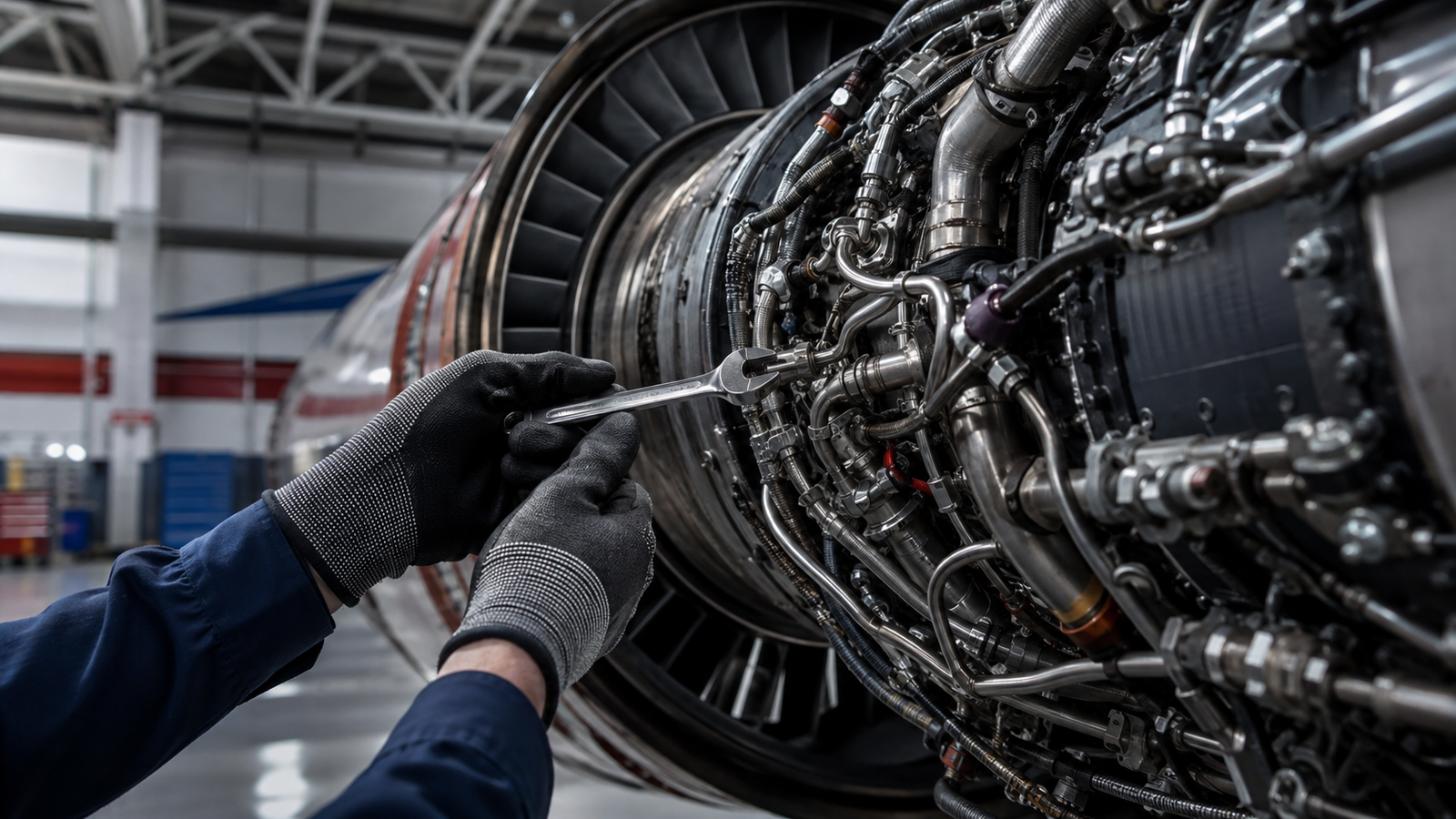
An aircraft mechanic inspects, troubleshoots, repairs, replaces, tests, and documents aircraft components. A normal assignment may include reading an aircraft maintenance manual, checking a reported defect, isolating the cause, replacing a component, completing an operational test, and recording the work so an authorized person can determine whether the aircraft can return to service.
Line maintenance happens at an airport, often between flights. You may handle tire changes, fluid servicing, deferred defects, walk-around inspections, and quick troubleshooting outdoors in rain, heat, or cold. Base maintenance takes place in hangars or MRO facilities and may involve heavy checks, structural repairs, wiring modifications, engine changes, and interior removal. General aviation shops, cargo operators, helicopter companies, repair stations, manufacturers, military contractors, and business-aviation departments each use different equipment and procedures.
An aircraft mechanic or aviation maintenance technician performs maintenance; an avionics technician focuses heavily on communications, navigation, radar, and digital systems; a repairman usually holds a limited employer- or task-specific authorization; and an aerospace engineer designs or analyzes aircraft rather than routinely maintaining them.
For example, a new airline mechanic might work a p.m. to a.m. shift, wear hearing protection near running auxiliary power units, work in confined panels, climb stands, and complete every handoff in writing. We found that understanding these realities before enrollment is as valuable as comparing tuition. Aircraft Mechanic Requirements: How to Start Your Career in the USA includes physical stamina, disciplined documentation, and safety judgment—not only a certificate.
FAA Aircraft Mechanic Requirements and Eligibility Rules
FAA Part establishes the core eligibility rules. You must be at least 18 years old, be able to read, write, speak, and understand English, and show qualifying aviation maintenance experience or graduate from an FAA-approved AMT school. You typically need months of practical experience for one rating or months of experience performing the duties of both ratings for an A&P certificate.
A college degree is not required. A high school diploma or GED is generally not an FAA mechanic-certification requirement, although employers and schools may request one. U.S. citizenship is not automatically required for the certificate, but employment can involve immigration authorization, security screening, export-control rules, or airport-access requirements. Prior aviation employment is also not mandatory if your school or other qualifying experience satisfies the rule.
The FAA evaluates whether your experience involved appropriate tasks, equipment, and supervision. Keep employer letters, dates, job descriptions, task lists, pay records, military training documents, and supervisor contact information. Military applicants may need service records and a detailed explanation of their occupational specialty. Your local Flight Standards District Office or an FAA-designated representative can explain acceptable evidence.
Based on our research, applicants lose time when they assume an informal logbook is enough. Check the current FAA mechanic certification guidance and regulations before paying for exams. Aircraft Mechanic Requirements: How to Start Your Career in the USA are legal standards first, but successful applicants also prepare for employer screening. Aircraft Mechanic Requirements: How to Start Your Career in the USA should be verified with the FAA when your circumstances are unusual.
How to Become an Aircraft Mechanic: The Step-by-Step Process
Use this seven-step pathway to keep your progress measurable. First, confirm your age, English ability, and likely experience route. Second, choose an FAA-approved Part school, military pathway, or supervised work route. Third, build documented practical experience. Fourth, study for the FAA knowledge examinations. Fifth, pass the required written tests. Sixth, complete the oral and practical examinations with an FAA inspector or Designated Mechanic Examiner. Seventh, apply for jobs with a resume and evidence portfolio.
- Compare schools: verify approval, program length, tuition, graduation outcomes, laboratory aircraft, instructor backgrounds, employer partnerships, and whether both ratings are taught.
- Document work: record dates, aircraft, systems, task descriptions, tools, supervision, and signatures. Preserve pay stubs and employment letters; undocumented gaps can delay approval.
- Prepare intelligently: use FAA handbooks, practice questions, wiring diagrams, maintenance manuals, and hands-on troubleshooting rather than memorization alone.
- Schedule testing: confirm application paperwork, testing-center rules, fees, identification, and retake waiting periods before booking.
We recommend comparing each option against schedule, total cost, aircraft access, transportation, job placement, benefits, and time to eligibility. A school may be faster; work experience may cost less; military training may combine instruction with benefits. Aircraft Mechanic Requirements: How to Start Your Career in the USA become manageable when every step has a document and deadline. Aircraft Mechanic Requirements: How to Start Your Career in the USA should be converted into a personal checklist before you enroll.
A&P License Explained: Airframe, Powerplant, and Testing
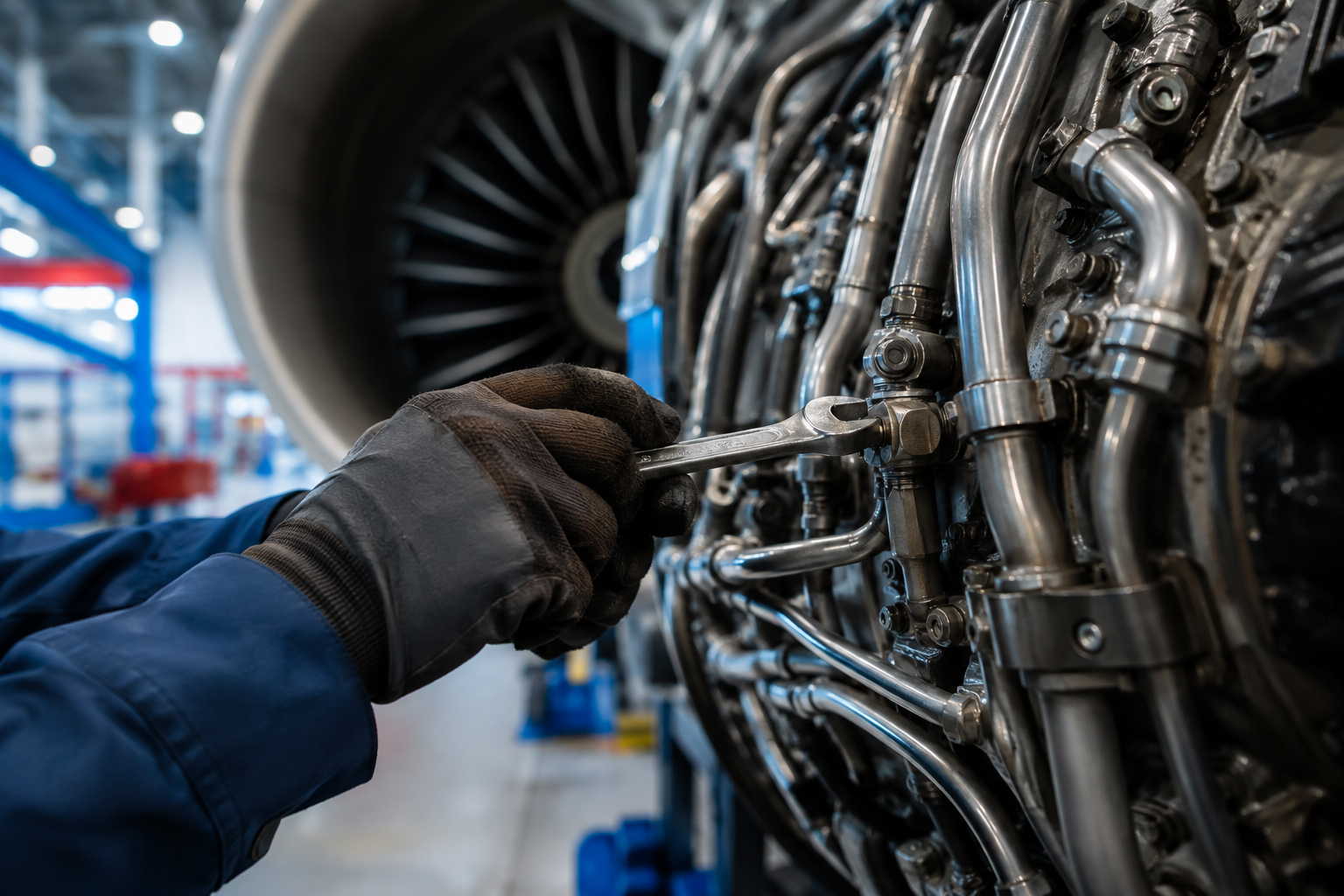
The Airframe rating applies to aircraft structures and systems such as flight controls, landing gear, hydraulics, environmental systems, electrical distribution, and cabin components. The Powerplant rating applies to engines, propellers, engine controls, fuel and oil systems, ignition, and accessories. Holding both produces the A&P certificate most commonly requested by airlines and large MRO employers.
FAA knowledge testing covers general maintenance, regulations, tools, materials, electricity, mathematics, airframe systems, powerplant systems, propulsion, and related safety practices. Applicants normally present eligibility paperwork through the FAA process or an approved school, then test at an authorized center. Oral and practical testing follows the written examinations and may involve troubleshooting, inspection, component removal, safety wiring, measurements, and explaining maintenance decisions.
Before testing, study FAA handbooks, school materials, manufacturer manuals, and realistic practice questions. Retakes may require a waiting period or an authorized endorsement, so confirm current rules with the testing provider. In our experience, candidates who can explain why a fault occurs perform better than candidates who only remember answer patterns.
An A&P holder may perform and approve maintenance within the certificate’s privileges and applicable regulations, but an A&P is not automatically an Inspection Authorization holder. Performing a repair and approving an annual inspection are different responsibilities. You may work under supervision before certification, but your employer controls which tasks you may perform or sign. Aircraft Mechanic Requirements: How to Start Your Career in the USA are broader than passing tests. Aircraft Mechanic Requirements: How to Start Your Career in the USA should be understood as a practical safety standard, not a memorization exercise.
Choosing the Best Training Route: School, Military, or Experience
FAA-approved AMT schools and community-college programs commonly take about to months, although schedules vary. Example tuition may range from $15,000 to $40,000 before living costs; tools can add $1,500 to $4,000, books and uniforms $500 to $1,500, and written, oral, and practical testing several hundred dollars. These are planning figures, not national prices.
Technical institutes may offer evening classes, while military aviation maintenance can provide structured training, benefits, aircraft access, and employer connections. Your DD-214, service training records, occupational specialty, and duty history may support FAA experience credit, but the FAA must review whether the work matches Airframe, Powerplant, or both. Airline apprenticeships can be attractive when they provide paid supervision and a clear path to certification.
Civilian work experience is often the least expensive route, but it can take longer and requires unusually careful records. Ask whether you will touch aircraft, receive task sign-offs, work under qualified supervision, and see varied systems rather than repetitive cleaning or warehouse duties.
- Choose school when you need a defined timeline and structured exam preparation.
- Choose work experience when you already have access to qualifying maintenance tasks.
- Consider military service when training, benefits, and long-term obligations fit your goals.
We analyzed program comparisons and found that transportation, night-class availability, instructor experience, aircraft condition, placement rates, and both-rating coverage can matter more than advertised tuition. Aircraft Mechanic Requirements: How to Start Your Career in the USA should guide your comparison. Aircraft Mechanic Requirements: How to Start Your Career in the USA are easier to meet when the route produces reliable records.
Aircraft Mechanic Costs, Salary, and Career Outlook in 2026
Your budget should include tuition, tools, books, uniforms, transportation, FAA written exams, oral and practical testing, housing, meals, and income lost during training. A realistic example might total $22,000 in tuition, $2,500 in tools, $1,000 in testing and study materials, and $8,000 in living and transportation costs over a year. At a $31,500 total investment and $4,000 in monthly gross starting pay, subtract taxes and living costs before estimating recovery.
The BLS occupational data lists median annual pay of roughly $78,000 for aircraft and avionics equipment mechanics and technicians in its latest available release, with more than 170,000 jobs and projected growth near 5% over the decade. It also reports thousands of annual openings. Pay varies by employer: major airlines, cargo carriers, defense contractors, and specialized MROs often differ from regional airlines, general aviation shops, and small repair stations.
Entry-level wages may rise through overtime, night differentials, travel assignments, per diem, union contracts, health coverage, retirement contributions, relocation assistance, and tuition reimbursement. Experienced A&Ps can progress to lead technician, quality-control inspector, maintenance supervisor, avionics specialist, or IA mechanic.
Calculate break-even months as: training investment divided by monthly after-tax income available after essential expenses. In 2026, we recommend comparing total compensation rather than hourly pay alone. Aircraft Mechanic Requirements: How to Start Your Career in the USA have financial consequences. Aircraft Mechanic Requirements: How to Start Your Career in the USA are worth evaluating with a written budget, not an optimistic salary promise.
How to Get Hired After Earning Your A&P
Search airline career pages, cargo carriers, MRO companies, airports, aircraft manufacturers, defense contractors, Part repair stations, business-aviation operators, helicopter companies, and aviation staffing firms. Apply even when a posting requests experience if you can show recent school work, military maintenance, internships, or documented supervised tasks.
Your resume should state Airframe and Powerplant ratings near the top, followed by aircraft types, systems, inspection tasks, maintenance software, safety training, tools, and measurable results. “Performed maintenance” is weak; “completed supervised brake inspections with zero documentation discrepancies” gives an employer useful evidence. Include wiring, hydraulics, sheet metal, engine work, troubleshooting, technical publications, and foreign-object-damage prevention where accurate.
Build a portfolio containing your FAA certificate, school transcript, training records, task logs, letters of recommendation, military documents, safety certificates, and examples of accurate redacted maintenance documentation. Never include protected aircraft data or an employer’s confidential material.
Prepare for scenario questions: explain how you would isolate a hydraulic leak, manage fatigue before a critical task, control tools, respond to damaged wiring, report FOD, conduct a shift handoff, and stop work when the manual or condition is unclear. We found that calm safety judgment often outweighs polished interview language. Aircraft Mechanic Requirements: How to Start Your Career in the USA continue after certification through employability. Aircraft Mechanic Requirements: How to Start Your Career in the USA are best presented as evidence, not claims.
Career Challenges New Aircraft Mechanics Often Miss
Aircraft maintenance is safety-critical physical work. You may face rotating shifts, fatigue, loud engines, chemicals, sealants, extreme temperatures, awkward postures, ladders, scaffolds, confined spaces, and work at height. Use hearing protection, gloves, eye protection, fall protection, respirators when required, and the exact personal protective equipment specified by your employer. OSHA aviation guidance addresses hazards that basic career descriptions often omit.
Maintenance human factors include fatigue, time pressure, poor communication, confirmation bias, inadequate shift handoffs, and interruptions. Read the aircraft maintenance manual, follow work cards, verify tool control, and document discrepancies immediately. The FAA and National Transportation Safety Board repeatedly emphasize accurate records and effective communication because an undocumented task can become a hidden safety risk.
Employers may require drug testing, background checks, airport badging, security access, and verification of employment history. Falsifying a maintenance record can damage your certificate, career, and coworkers’ safety. English communication, technical writing, teamwork, and respectful assertiveness may not all be formal licensing requirements, but they strongly affect performance and promotion.
Use a first-year plan: find two mentors, maintain a personal training log, learn where information lives in the maintenance manual, ask questions before guessing, and never sign work you did not personally complete or properly supervise. Based on our experience, reliable habits formed during the first days often separate safe technicians from rushed ones. Aircraft Mechanic Requirements: How to Start Your Career in the USA include these professional behaviors. Aircraft Mechanic Requirements: How to Start Your Career in the USA are only the starting line.
How to Advance Beyond the A&P Certificate
A typical progression moves from entry-level mechanic to senior technician, lead, inspector, quality-assurance specialist, maintenance controller, supervisor, manager, or technical representative. Advancement depends on safe work, aircraft knowledge, documentation quality, leadership, and the ability to solve problems without bypassing procedures.
Inspection Authorization is a significant step. FAA rules generally require an A&P holder to meet an experience period—commonly three years of active experience exercising both ratings—along with other eligibility conditions and an examination or approval process. Confirm the current regulation and application instructions before planning around that timeline.
Specialties can improve mobility and pay: avionics, composite repair, nondestructive testing, engine overhaul, helicopter maintenance, unmanned aircraft systems, aircraft records, welding, electrical troubleshooting, and manufacturer-specific courses. Human-factors training, type courses, language skills, and familiarity with computerized maintenance systems may also distinguish candidates.
Create a five-year plan with five columns: target aircraft, preferred employer, desired salary, location, and training needed. For example, you might target wide-body cargo work in Dallas, complete an A&P, gain two years of heavy-maintenance experience, take a manufacturer engine course, and pursue IA eligibility. We recommend reviewing that plan every six months. Aircraft Mechanic Requirements: How to Start Your Career in the USA should support a long career rather than a first job only. Aircraft Mechanic Requirements: How to Start Your Career in the USA become more valuable as your specialty deepens.
Your 90-Day Action Plan to Start an Aircraft Mechanic Career
Days 1–15: Confirm that you are at least and can meet the FAA English requirement. Read Part 65, list nearby FAA-approved schools and aviation employers, and estimate tuition, tools, transportation, housing, testing, and lost income. Write down whether you want Airframe, Powerplant, or both.
Days 16–30: Request catalogs and graduation information from at least three programs. Verify Part approval, inspect laboratories, ask about aircraft access and evening classes, and speak with current students and graduates. Ask local employers whether they prefer A&P graduates, internships, military experience, or specific aircraft training.
Days 31–60: Apply for school, an apprenticeship, military aviation training, or entry-level aviation work. Start an organized experience file with dates, aircraft, tasks, supervisors, signatures, pay records, and training certificates. Buy only essential tools after learning the employer or school’s approved list, and begin studying general subjects.
Days 61–90: Meet an adviser, build a technical resume, contact airports and MROs, identify a mentor, and finalize financing and transportation. We recommend making three calls this week: one school, one employer, and one FAA-authorized representative. Aircraft Mechanic Requirements: How to Start Your Career in the USA become actionable when you select one qualifying pathway now. Aircraft Mechanic Requirements: How to Start Your Career in the USA should end with verified details, not assumptions. Choose one route this week, contact three programs or employers, and confirm licensing requirements before spending money.
Key Takeaways
- Choose one qualifying route—FAA-approved school, documented civilian experience, military training, or a supervised employer pathway—and verify it with the FAA before committing money.
- Plan for both ratings when possible: the combined Airframe and Powerplant certificate is preferred by many airline, cargo, MRO, and repair-station employers.
- Keep detailed evidence of every task, supervisor, date, aircraft, training record, and employment period because undocumented experience can delay certification.
- Budget for tuition, tools, testing, transportation, living costs, and lost income, then compare total compensation rather than hourly pay alone.
- Start this week by contacting three programs or employers, arranging an advising meeting, and building a career file that proves your maintenance ability.
Frequently Asked Questions
How long does it take to become an aircraft mechanic in the USA?
An FAA-approved AMT program commonly takes about to months, though schedules vary. The practical-experience route generally requires months for one rating or months for both Airframe and Powerplant ratings.
Do you need a college degree to become an aircraft mechanic?
No. FAA certification does not generally require a college degree, high school diploma, or GED, but a school or employer may set its own education standard. You must meet the applicable age, English, experience or training, and examination requirements.
Can you work on aircraft before earning an A&P certificate?
Yes, you may perform certain maintenance tasks under employer supervision and within the privileges allowed by the employer’s procedures and applicable regulations. You cannot independently exercise privileges you do not hold, so confirm exactly what you may perform or sign.
Is the Airframe or Powerplant rating easier to complete first?
Neither rating is universally easier. Airframe may suit you if you prefer structures and aircraft systems, while Powerplant may fit an interest in engines and propulsion; many students pursue both through the same approved program because employers often prefer the combined A&P certificate.
What are the Aircraft Mechanic Requirements: How to Start Your Career in the USA?
They include meeting FAA Part eligibility rules, completing qualifying training or documented experience, passing the required written examinations, and completing oral and practical testing. Employers may also expect aircraft-specific training, shift flexibility, background screening, and strong maintenance documentation.
How much do aircraft mechanics earn in 2026?
Pay depends on aircraft type, location, employer, shift, overtime, and experience. The BLS reports median pay of roughly $78,000 for aircraft and avionics equipment mechanics and technicians in its latest available data, while entry-level wages may be lower and major-airline or specialized roles may be higher.
