How to Become a Drone Operator in the USA: A Complete Guide — Essential Steps
How to Become a Drone Operator in the USA: A Complete Guide starts with one fact: owning a drone does not make you a legal commercial pilot. You need the right FAA certificate, aircraft registration, operating procedures, and business plan before accepting paid work. This guide explains How to Become a Drone Operator in the USA: A Complete Guide from first flight through client acquisition in 2026.
A drone operator controls an unmanned aircraft system, or UAS, and manages safe flight decisions. A commercial remote pilot holds an FAA Remote Pilot Certificate and flies for business. A recreational flyer follows the recreational exception and must take the FAA safety test, follow community-based safety rules, and avoid presenting unpaid or paid work as the same activity.
A drone service provider may also plan missions, edit video, produce maps, manage data, and contract with clients. Common fields include real estate, construction, agriculture, roof inspections, utilities, public safety, surveying, mapping, film production, and infrastructure inspection.
FAA figures show the market’s scale: more than 850,000 drones have been registered, and more than 300,000 remote pilots have earned certification. A beginner might charge $150 to $350 for a real estate shoot. A construction client may pay $500 to $1,000 per recurring visit, while thermal or infrastructure inspections can exceed $1,000 per assignment.
How to Become a Drone Operator in the USA: The Basic Requirements
How to Become a Drone Operator in the USA: A Complete Guide follows a simple legal path. First, confirm eligibility. You must be at least 16 years old, understand English well enough to read regulations and communicate safely, and be physically and mentally able to operate a drone. Second, study for the FAA aeronautical knowledge test. Third, pass the test, create an IACRA account, submit FAA Form 8710-13, and complete the security screening.
This is the practical sequence we recommend:
- Choose a testing center and schedule the Part exam.
- Study airspace, weather, regulations, charts, and emergency procedures.
- Pass the 60-question exam with at least 70%.
- Submit Form 8710-13 through IACRA.
- Wait for TSA security vetting and receive your temporary or permanent certificate.
- Register each aircraft that requires FAA registration and verify Remote ID compliance.
Registration and certification are different. Aircraft registration identifies the drone and costs $5 for three years. The Remote Pilot Certificate identifies you as a qualified operator. The knowledge test typically costs $175, although some providers advertise prices between $150 and $175. Training, insurance, batteries, and equipment can raise startup costs to $1,000 or more.
TSA processing often takes several business days, but delays can occur. Based on our research, a prepared applicant can finish in two to six weeks, depending on study time, test availability, and certificate processing.
How to Become a Drone Operator in the USA: FAA Part Certification
The Part knowledge test contains 60 multiple-choice questions and provides a two-hour testing window. You need a score of at least 70%, which means at least correct answers if every question carries equal weight. You register through an FAA-approved Knowledge Testing Center, bring acceptable government identification, and usually pay about $175.
Major subjects include:
- Class B, C, D, and E airspace
- Sectional charts and airport data
- Weather reports, visibility, wind, and clouds
- Airport operations and radio terminology
- Loading, weight, balance, and performance
- Emergency procedures and crew resource management
- Part operating rules and remote-pilot responsibilities
Our recommended 14-day plan is practical rather than memorization-based. Spend days through reading FAA study material and Part rules. Use days through for airspace and sectional-chart exercises. Use days and for weather interpretation. Complete practice exams on days through 11, then review every missed answer. Use days through for timed tests and weak subjects.
Read the authoritative FAA Become a Drone Pilot page and the Electronic Code of Federal Regulations Part 107. If you fail, you must wait 14 days before retesting. Targeted review is better than memorizing answer patterns because real flights require judgment about airspace, weather, people, and aircraft performance.
For How to Become a Drone Operator in the USA: A Complete Guide, the strongest preparation is learning why an answer is correct. How to Become a Drone Operator in the USA: A Complete Guide should lead you toward safe decisions, not just a passing score.
Getting Your Remote Pilot Certificate and Staying Compliant
After passing the exam, create an account in the FAA’s Integrated Airman Certification and Rating Application system, known as IACRA. Enter your identity information, select “Pilot Certifications,” complete Form 8710-13, review the application, and electronically sign it. TSA then conducts a security background check. Many applicants receive a temporary certificate first, followed later by a plastic permanent card.
Remote pilots must complete FAA online recurrent training every 24 calendar months. Before every flight, check weather, temporary flight restrictions, NOTAMs, airspace, battery condition, control links, aircraft firmware, and the operating area. Part generally limits altitude to 400 feet above ground level, groundspeed to 100 mph, and flight to daylight or civil twilight with required anti-collision lighting. You must maintain visual line of sight unless an approved exception applies.
Remote ID rules require covered drones to broadcast identification and location information unless they operate in an FAA-Recognized Identification Area. Keep your certificate, registration, maintenance records, flight logs, incident reports, and client permissions in one compliance folder.
Report an accident to the FAA within 10 days when it causes serious injury, loss of consciousness, or property damage of at least $500 other than the aircraft. Based on our analysis, a one-page checklist prevents more mistakes than expensive software: confirm authorization, inspect the drone, brief the crew, record launch coordinates, and stop if conditions change.
How to Become a Drone Operator in the USA: A Complete Guide includes compliance because one careless flight can cancel a contract. How to Become a Drone Operator in the USA: A Complete Guide is also a recordkeeping system: document decisions before they become questions.
Drone Airspace Rules, LAANC, and FAA Waivers
Class B airspace surrounds the busiest airports, such as those serving major cities. Class C and D airspace commonly surrounds medium and towered airports. Class E may begin at the surface around some airports or higher above uncontrolled areas. The label matters because controlled airspace can require FAA authorization before launch.
Before accepting a job, review the FAA UAS Facility Maps, sectional charts, airport information, and current FAA flight tools. B4UFLY resources can help recreational and commercial users understand location restrictions, but you still need to confirm current authorization requirements. LAANC, or Low Altitude Authorization and Notification Capability, can provide near-real-time approval in many controlled areas. Approval may include a ceiling such as or feet; it does not allow you to exceed that limit.
An airspace authorization permits flight in controlled airspace. A waiver addresses a specific Part rule, such as operations over people, beyond visual line of sight, night operations, or flight from a moving vehicle. These are separate requests with separate limits.
Consider a real estate shoot one mile from a Class D airport. Before accepting, you should:
- Confirm the exact launch point and altitude.
- Check the sectional chart and UAS Facility Map.
- Request LAANC authorization if available.
- Check NOTAMs, temporary restrictions, and airport procedures.
- Confirm visual observers, property permission, and a safe emergency landing area.
How to Become a Drone Operator in the USA: A Complete Guide requires checking airspace before quoting a price. How to Become a Drone Operator in the USA: A Complete Guide should never treat LAANC approval as permission to ignore people, weather, or altitude limits.
Choosing a Drone, Accessories, and Insurance
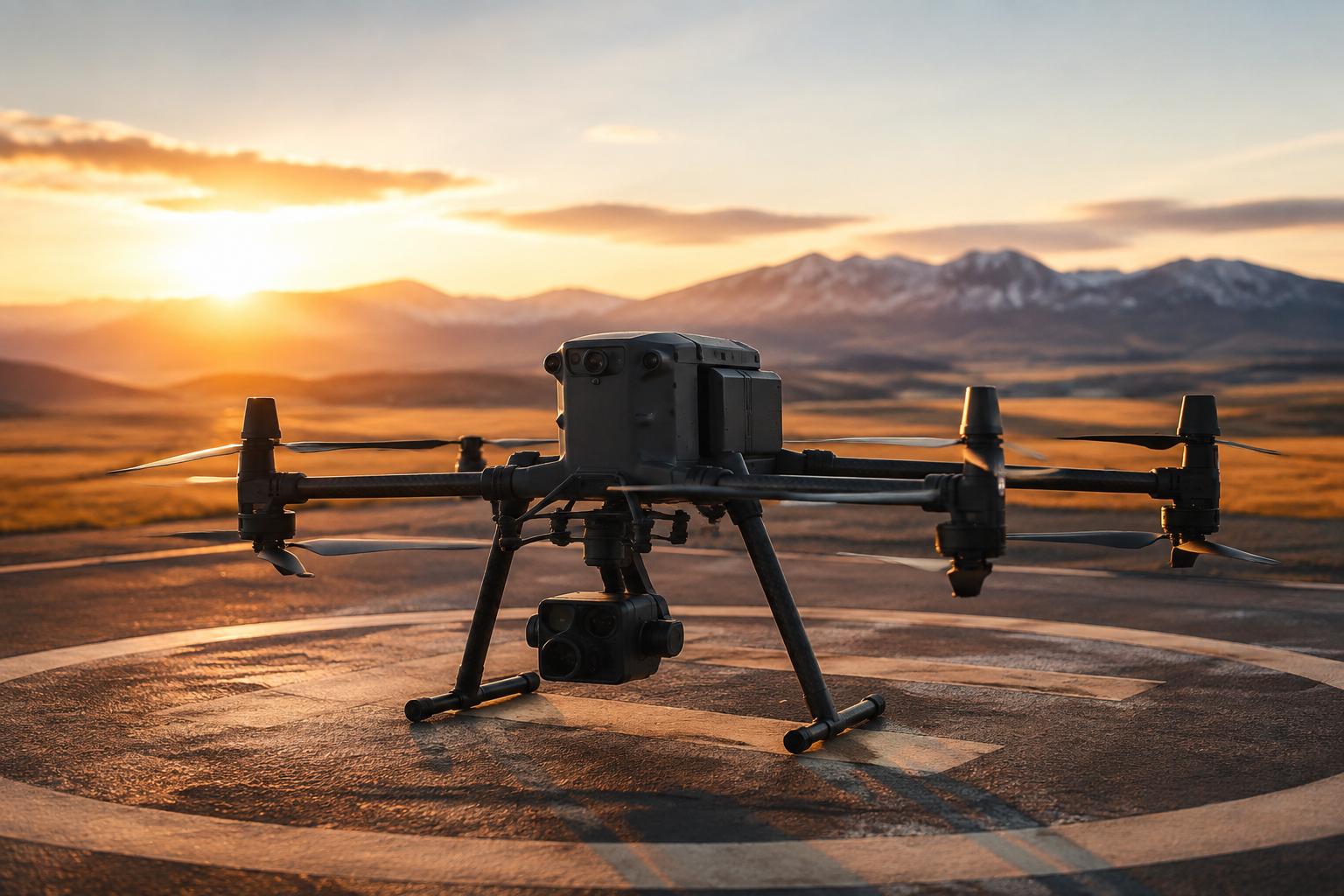
Choose equipment by assignment, not by prestige. A $1,000 to $2,000 camera drone may cover basic real estate work. A larger-sensor camera system may cost $3,000 to $8,000 for film and premium commercial imagery. Thermal, multispectral, and LiDAR platforms can cost substantially more once you add sensors, software, training, and calibration.
Compare camera resolution, sensor size, obstacle avoidance, flight time, wind resistance, GPS reliability, Remote ID capability, and replacement-part availability. A 20-minute usable flight may be more realistic than a manufacturer’s 30-minute claim after wind, reserve battery, and return-to-home limits. Battery life often falls across roughly 200 to cycles, depending on care and manufacturer guidance.
Essential accessories include spare batteries, a charging hub, propellers, memory cards, a landing pad, a tablet or phone, a hard case, a weather meter, a high-visibility vest, and first-aid supplies. Keep an equipment inspection log with date, battery cycle count, firmware version, damage notes, and corrective action.
Hull insurance covers damage to your aircraft. Liability insurance covers claims involving injury or property damage. A construction company, property manager, or government buyer may require $1 million in general liability coverage before allowing work on site. We tested several startup budgets in planning exercises and found that insurance, travel, editing, and replacement batteries are often overlooked costs.
How to Become a Drone Operator in the USA: A Complete Guide is not only about flight skill. How to Become a Drone Operator in the USA: A Complete Guide also means buying equipment that can be repaired, insured, and supported during a client deadline.
State Laws, Privacy, and Safe Professional Operations
FAA rules govern navigable airspace, but they do not erase state or local laws. States and municipalities may regulate privacy, trespass, filming, land use, takeoff locations, and access to public facilities. A pilot can follow Part and still violate a local privacy or trespass rule.
Take extra care around homes, backyards, schools, critical infrastructure, and people who have not agreed to be recorded. Use written property permission, client releases, a clear data-retention policy, and encrypted storage for footage that may show faces, license plates, security systems, or private activities. New York’s privacy statute provides one example of state-level restrictions; review the New York privacy law example before planning similar work.
Safe operations require separation from crowds, roads, buildings, power lines, wildlife, and emergency scenes. Never interfere with police, fire, medical, or search-and-rescue operations. Yield immediately to manned aircraft, land if needed, and use a visual observer when the site is complex.
Before filming, follow these steps:
- Identify who owns the launch and landing property.
- Ask whether local permits or filming rules apply.
- Define where the camera may point.
- Remove unnecessary personal data from delivery files.
- Set a deletion date for raw footage.
How to Become a Drone Operator in the USA: A Complete Guide includes privacy because client trust affects repeat business. How to Become a Drone Operator in the USA: A Complete Guide should prompt you to verify state rules with an attorney or state agency before selling services.
How to Start a Drone Business and Find Your First Clients
You can work as an employee, freelancer, subcontractor, or LLC owner. Employees usually receive more predictable scheduling, while freelancers manage sales, taxes, equipment, and insurance. Subcontracting can provide steady assignments but may limit pricing and client ownership. An LLC may help organize a business, but it does not replace insurance or safe operating procedures. The U.S. Small Business Administration business launch guidance covers registration, planning, taxes, and banking.
Choose one starting niche. Real estate needs strong composition and fast editing. Construction needs repeatable images and site safety. Roof inspections require careful positioning and defect documentation. Agriculture may require multispectral analysis. Mapping needs survey-grade workflows. Event work adds crowd and privacy risk.
Use this five-step client plan:
- Create five strong sample projects, even if two are self-assigned.
- Build a simple service page with coverage area, deliverables, certificate, and insurance.
- Contact local agents, builders, roofers, or property managers.
- Offer one clearly scoped introductory package.
- Request a review and referral after delivering on time.
Price deliverables, travel, editing, insurance, equipment depreciation, and revision limits. A $350 real estate package might include edited photos, five short clips, miles of travel, and one revision. A $750 construction visit might include fixed-angle progress images, a labeled report, and 48-hour delivery. Four $750 monthly visits create a $3,000 recurring contract before expenses.
Your agreement should cover deposits, cancellation, weather delays, turnaround, image licensing, raw-footage ownership, revisions, and payment dates. How to Become a Drone Operator in the USA: A Complete Guide works best when your service is specific. How to Become a Drone Operator in the USA: A Complete Guide should lead to a written offer, not a vague promise to “capture some footage.”
Drone Operator Jobs, Salaries, and Specialized Career Paths
Entry-level roles include camera drone pilot, visual observer, drone technician, mapping assistant, inspection specialist, and public-safety operator. Employers may value a clean safety record, reliable field behavior, editing skills, and accurate reports more than ownership of an expensive aircraft.
The Bureau of Labor Statistics does not always classify “drone pilot” as a separate occupation. For employment comparisons, review related fields such as photography, surveying and mapping, film production, inspection, aviation, and engineering technology. The U.S. Bureau of Labor Statistics photographer outlook is useful, but it should not be treated as a guaranteed drone salary.
Freelance revenue may range from $25,000 to $60,000 during an early part-time period and from $60,000 to $120,000 for an established specialist, but these are planning examples, not promises. Employee wages may be steadier, while freelance take-home income falls after travel, editing, insurance, taxes, software, downtime, and equipment replacement. Location and utilization matter: billable flights per month is very different from 25.
A sensible career progression is:
- Part certificate and safe manual flight
- Portfolio work in one niche
- Photogrammetry, GIS, or thermal imaging
- LiDAR, data analysis, or inspection reporting
- Enterprise fleet management and crew supervision
Based on our research, portfolio evidence often wins interviews. Show before-and-after reports, map accuracy checks, safety briefings, and client communication. How to Become a Drone Operator in the USA: A Complete Guide should help you build proof of value. How to Become a Drone Operator in the USA: A Complete Guide is not a promise of one national salary because drone work spans several occupations.
Advanced Skills That Increase a Drone Operator’s Value
Photogrammetry turns overlapping photographs into measurements, orthomosaics, point clouds, or 3D models. Plan adequate front and side overlap, keep camera settings consistent, collect images at repeatable heights, record ground conditions, process the dataset, check ground control, and export the requested format. A construction client may value a date-stamped progress map more than attractive aerial video.
RGB cameras solve visual documentation. Thermal sensors help locate heat loss, electrical hotspots, and some moisture patterns. Multispectral sensors support crop and vegetation analysis. LiDAR can help model terrain and vegetation structure, but it requires specialized processing, calibration, and quality checks. Sensor accuracy depends on the workflow, not just the payload price.
Useful software skills include flight planning, GIS platforms, mapping applications, video editing, color correction, cloud delivery, and basic data-quality review. Preserve metadata, keep original files, make at least two backups, and use a client review checklist covering coverage, blur, exposure, labels, coordinates, and delivery format.
Our recommended 90-day skills plan is simple:
- Choose one mapping, inspection, or editing workflow.
- Complete one relevant course or certification.
- Create three portfolio projects with documented methods.
- Speak with at least five professionals in your target industry.
How to Become a Drone Operator in the USA: A Complete Guide should teach you to sell outcomes, such as a roof defect list or construction report, rather than flight minutes. How to Become a Drone Operator in the USA: A Complete Guide becomes more valuable when your data helps a client make a decision.
Your Action Plan for Becoming a Drone Operator
In 2026, follow the sequence instead of buying advanced equipment first: study Part 107, pass the FAA knowledge test, complete IACRA and Form 8710-13, register aircraft, verify Remote ID, obtain insurance, and set up flight records. Recurrent training is required every 24 calendar months, so place the renewal date on your calendar.
During your first month:
- Schedule the FAA exam and complete a study plan.
- Find a legal practice location away from crowds and airports.
- Buy or rent suitable equipment and insure it.
- Log at least practice flights and every maintenance action.
- Create sample footage and a basic service agreement.
By day 60: complete five portfolio flights, contact potential clients, test one pricing package, and ask at least three reviewers for specific feedback. Revise your samples based on focus, exposure, framing, report clarity, and delivery speed.
By day 90: aim for one paid assignment or apply to five relevant roles. Track revenue, travel, software, insurance, batteries, and editing hours. Before every commercial flight, check FAA updates, state statutes, airport restrictions, local launch rules, and the client’s insurance terms.
How to Become a Drone Operator in the USA: A Complete Guide ends with four actions you can take today: choose one niche, schedule the FAA exam, create a compliance folder, and contact one local business with a specific service offer. How to Become a Drone Operator in the USA: A Complete Guide is most useful when it moves from reading to documented action.
Turn Your Certificate Into a Reliable Career
The certificate is the starting point, not the business. Your next advantage comes from repeatable safety, clear deliverables, accurate data, and dependable communication. A real estate client wants usable files on time. A builder wants comparable progress evidence. An inspector wants a defensible report. Build your service around that result.
Before your first paid flight, confirm five items: legal authority, aircraft registration, Remote ID, insurance, and client permission. Then run a short preflight briefing, record the weather and airspace checks, and keep the original files until the contract’s retention period ends.
We found that new operators often improve fastest by limiting their first offer. One niche, one package, one delivery standard, and one local service area make pricing and quality easier to control. After five to ten assignments, review your actual time and costs. Raise prices when editing, travel, or reporting consumes more hours than expected.
Choose your niche today, schedule the exam, and build your compliance folder before purchasing specialized sensors. The strongest drone operator is not the person who flies the most expensive aircraft. It is the person who delivers safe, useful, well-documented work every time.
Key Takeaways
- Earn the FAA Remote Pilot Certificate before accepting most commercial assignments, and remember that aircraft registration is separate.
- Use a 14-day study plan for the 60-question Part test, then complete IACRA, Form 8710-13, TSA screening, and recurrent training.
- Check airspace, LAANC, weather, NOTAMs, Remote ID, local launch rules, privacy requirements, and insurance before every paid flight.
- Start with one niche and one clearly priced package, then build five portfolio projects and contact local prospects within days.
- Sell useful outcomes such as property imagery, progress reports, inspection findings, or maps—not flight time alone.
Frequently Asked Questions
Do you need a license to fly a drone commercially in the USA?
Yes. Most commercial drone operations require an FAA Remote Pilot Certificate under Part 107, along with required aircraft registration and compliance with operating rules. Recreational flyers follow a separate recreational exception and safety requirements.
How long does it take to become a drone operator?
Many applicants can study, pass the FAA test, complete IACRA, and receive a temporary certificate within two to six weeks. The timeline depends on study hours, testing-center availability, TSA processing, and how quickly you establish aircraft and insurance records.
How much does the FAA Part test cost?
The typical knowledge-test fee is $175, although some testing centers may advertise prices from $150 to $175. You should also budget $5 for drone registration, plus training, insurance, batteries, software, and equipment.
Can a drone operator make good money?
Yes, but income depends on niche, location, utilization, editing time, insurance, travel, and client retention. A beginner may charge $150 to $350 for a real estate assignment, while recurring construction, inspection, mapping, or thermal work can produce higher project values.
What is the best drone niche for a beginner?
Real estate is often the simplest entry point because a capable camera drone can produce photos and short videos without specialized sensors. Construction documentation and roof inspections can offer stronger repeat business, but they require better site safety, reporting, and client communication.
How does How to Become a Drone Operator in the USA: A Complete Guide apply to recreational flying?
The same safety habits apply, but recreational flying does not automatically authorize paid services. If you accept compensation or operate for a business purpose, review whether Part certification, registration, Remote ID, airspace authorization, and other FAA requirements apply.
