Exploring the Hydrologist Career Path in the USA: Essential Facts to Know
If you want a science career with real public impact, Exploring the Hydrologist Career Path in the USA gives you a clear route into water, climate, and environmental work. Most readers come here with the same questions: What does a hydrologist do each day, what degree do you need, how much can you earn, and are there enough jobs to make this a smart career move in 2026?
A hydrologist is a water-science professional who studies the movement, distribution, quality, and availability of surface water and groundwater. That can mean measuring streamflow, tracing groundwater contamination, modeling flood levels, or advising cities on drought planning. Based on our research, this field sits at the intersection of earth science, data analysis, public safety, and infrastructure planning.
Exploring the Hydrologist Career Path in the USA also means understanding how it differs from nearby jobs. Hydrogeologists focus more on groundwater and geologic formations. Hydrologic technicians often support monitoring, sampling, and equipment work. Environmental scientists cover broader pollution and compliance issues. Civil engineers design systems such as drainage, dams, and stormwater infrastructure, while hydrologists analyze the water behavior those systems must handle.
Employment is spread across federal agencies, consulting firms, utilities, research institutions, municipalities, and state environmental departments. The U.S. Bureau of Labor Statistics, U.S. Geological Survey, and American Geosciences Institute all point to steady demand tied to drought, flood risk, water quality, and aging infrastructure. We found that in 2026, employers value people who can work in the field and handle GIS, modeling, and data tools.
Exploring the Hydrologist Career Path in the USA is ultimately about fit. You need to know the work settings, the pay realities, the education path, and the day-to-day tasks before you commit. That’s what the rest of this guide covers in practical terms.
What Does a Hydrologist Do? Core Duties and Work Settings
The short answer is simple: hydrologists study how water moves, where it goes, what it carries, and how people can manage it safely. In practice, the job is broad. You may collect streamflow measurements, test groundwater samples, analyze precipitation data, model flood behavior, assess drought conditions, and write technical reports for agencies, developers, or communities.
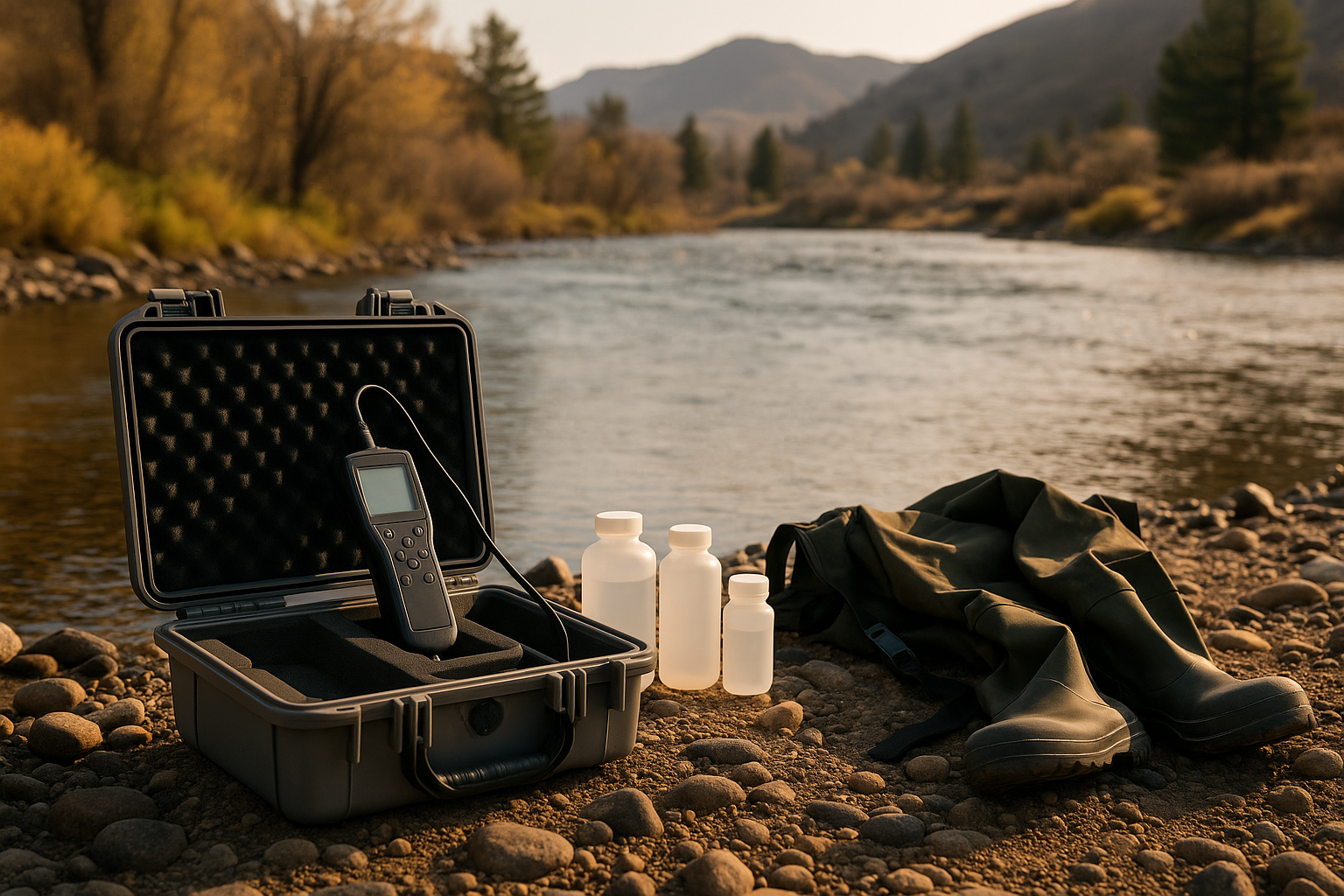
A typical week can be mixed. One day you might wade into a stream to measure discharge and inspect a pressure transducer. The next day you could clean datasets in Excel or Python, build watershed maps in ArcGIS Pro, run a flood scenario in HEC-RAS, and join a regulatory meeting about permit impacts. Exploring the Hydrologist Career Path in the USA often surprises people because the work is not just outdoor science; it is also computer-heavy and communication-heavy.
Real projects make the role easier to picture. A consulting hydrologist may evaluate a proposed manufacturing site by reviewing soil conditions, nearby wells, groundwater gradients, and contamination pathways. A federal hydrologist may update flood forecasts near a fast-growing city after a 3-inch rainfall event. A municipal hydrologist may help size stormwater controls for a neighborhood where impervious cover has risen by 20% over a decade.
Major employers include the USGS, NOAA, EPA, U.S. Army Corps of Engineers, state water agencies, local utilities, universities, mining and energy companies, and environmental consulting firms. According to the USGS water science program, streamgages, groundwater networks, and water-quality monitoring remain core functions across the country. Exploring the Hydrologist Career Path in the USA means accepting that some roles involve heat, mud, remote travel, steep banks, and storm response. During flood events or emergency sampling, schedules can extend beyond normal work hours.
We analyzed job listings and found a repeated pattern: employers want people who can collect valid field data, document methods clearly, and explain findings to nontechnical audiences. Exploring the Hydrologist Career Path in the USA works best for you if you like a job where science informs public decisions, not just academic theory.
How to Become a Hydrologist in the USA: Education Path
The clearest route starts with a relevant bachelor’s degree and builds from there. For most entry-level jobs, employers expect a four-year degree in hydrology, geology, environmental science, geoscience, civil engineering, earth science, or natural resources. If you want research, advanced modeling, university work, or senior government roles, a master’s degree or doctorate can make a major difference.
Here is the most practical step-by-step path:
- Earn a bachelor’s degree in a related field, usually over about years.
- Choose core courses carefully: calculus, chemistry, physics, geology, groundwater hydrology, surface-water hydrology, statistics, GIS, remote sensing, and programming.
- Build technical skills early through labs, field camps, and software-based projects.
- Complete internships or faculty research with water agencies, consulting firms, or university labs.
- Apply for entry-level roles such as hydrologic technician, environmental field scientist, water resources analyst, or junior hydrogeologist.
- Consider graduate study, usually to additional years for a master’s, if you want specialization or stronger promotion potential.
According to the U.S. Office of Personnel Management, federal hydrology positions require specific coursework in physical science, engineering, or natural science. That matters because many students assume any environmental degree will qualify. It may not. We recommend checking federal and state job requirements before you choose electives.
Exploring the Hydrologist Career Path in the USA also means planning for specialization. Groundwater-focused roles often favor hydrogeology classes. Flood-modeling jobs prefer stronger hydraulics and GIS preparation. Water-quality roles value chemistry and contaminant transport. Based on our analysis of job postings in 2026, Python, statistics, and mapping skills often separate top candidates from the rest.
Exploring the Hydrologist Career Path in the USA is easier when you start gaining evidence of competence before graduation. A senior project using years of streamflow data, an internship with a county stormwater office, or field sampling work on monitoring wells can outweigh a generic résumé line. Exploring the Hydrologist Career Path in the USA is not only about degrees; it is about proving you can do the work.
Hydrologist Skills, Certifications, and Technology to Learn
If you want to stand out, build both technical skills and workplace skills. Technical ability gets you interviews. Clear communication and project judgment help you advance. The strongest candidates can collect data in the field, process it correctly, and explain why it matters to clients, regulators, or the public.
Essential technical skills include:
- Field sampling for streamflow, groundwater, and water quality
- GIS mapping with ArcGIS Pro or QGIS
- Hydrologic and hydraulic modeling with HEC-HMS, HEC-RAS, MODFLOW, SWMM, or watershed tools
- Data processing with Python, R, SQL, and Excel
- Statistics, calibration, quality assurance, and uncertainty review
- Remote-sensing interpretation and basic database management
Critical workplace skills include:
- Scientific writing
- Oral communication
- Project management
- Critical thinking
- Safety judgment in changing field conditions
- Client and regulator communication
Exploring the Hydrologist Career Path in the USA often leads people to credentials. The American Institute of Hydrology offers the Professional Hydrologist certification. In some roles, a Professional Geologist or Professional Engineer license may be useful, especially if your work supports regulated reports, groundwater investigations, or infrastructure decisions. State rules vary, so check local licensing boards.
We found that beginners learn faster when they build a small portfolio. Start with one local watershed. Map land cover, slope, streams, and outfalls. Then download to years of public streamflow data from the USGS National Water Information System, graph peaks and seasonal lows, and create a simple flood-risk visualization. Finish with a 2- to 4-page methods summary. Exploring the Hydrologist Career Path in the USA becomes much more concrete when you can show real work.
Exploring the Hydrologist Career Path in the USA in also means getting comfortable with larger datasets. NOAA precipitation records, satellite imagery, and sensor feeds can involve thousands of rows. Based on our research, even basic SQL and Python scripting can save hours each week. Exploring the Hydrologist Career Path in the USA rewards people who can move smoothly from muddy boots to clean datasets.
Hydrologist Salary in the USA: Pay by Experience and Employer
Pay is one of the first questions people ask, and the right answer is more detailed than a single number. According to the BLS, hydrologists earn a national median annual wage of about $88,770. That figure is useful, but it is not the same as starting pay, regional pay, or compensation in specialized roles. Salaries also change year to year, so you should verify current data when you apply.
A realistic pay picture looks more like this:
- Entry-level hydrologists: often about $55,000 to $70,000, depending on location and employer
- Experienced consultants: commonly $80,000 to $110,000+
- Federal hydrologists: often tied to GS pay grades, with strong benefits and structured raises
- Project managers and senior specialists: can reach $110,000 to $140,000+ in high-cost or highly technical markets
- Hydrogeologists and modeling specialists: often earn more when they bring regulatory or software expertise
Exploring the Hydrologist Career Path in the USA means understanding what drives compensation. Graduate education can help. So can strong programming ability, HEC-RAS or MODFLOW experience, a professional credential, security clearance eligibility, willingness to travel, or responsibility for permit, floodplain, or infrastructure decisions. In our experience, people who can both model water systems and explain risk to decision-makers often move up faster.
Public-sector and private-sector jobs feel different. A new graduate at a state environmental agency may earn less than a consultant in the first year, but receive better health insurance, retirement contributions, paid leave, and more predictable hours. A consultant may start higher and advance faster, but project deadlines, billable-hour pressure, and travel can be more intense. Exploring the Hydrologist Career Path in the USA requires you to compare total compensation, not salary alone.
Exploring the Hydrologist Career Path in the USA in also means looking at cost of living. A $72,000 offer in Denver or Seattle may not stretch like a $62,000 offer in a smaller inland market. Exploring the Hydrologist Career Path in the USA is smartest when you compare wage, benefits, commute, field demands, and promotion path together.
Hydrologist Career Outlook, Demand, and Best States for Jobs
Job demand is being shaped by a simple fact: the United States needs better water management. The BLS projects about 6% growth for hydrologists from to 2033, which is faster than average for all occupations, with roughly 700 openings each year from growth and replacement needs. Some hydrology-related roles are grouped inside broader geoscience categories, so you should read both hydrologist and related geoscientist postings when you assess the market.
Why is demand holding up? Drought, groundwater depletion, flood risk, wildfire runoff, stricter water-quality regulation, and aging infrastructure all create work. The EPA reports increases in heavy precipitation in many U.S. regions, while western states continue to deal with long-term water stress. The NOAA climate resources also show why flood planning and drought resilience remain active areas.
Strong job markets often include California, Texas, Colorado, Arizona, Washington, Florida, New York, and Virginia. These states combine population growth, major water systems, research institutions, coastal risk, or large federal water programs. Exploring the Hydrologist Career Path in the USA becomes easier when you match geography to specialty. If you prefer groundwater, the Southwest is strong. If you want coastal flooding, Florida is logical. If snowpack and watershed operations interest you, look at Colorado or Washington. For stormwater planning and infrastructure, the Northeast has solid options.
We recommend a focused job search process:
- Search USAJOBS for hydrologist, physical scientist, geologist, and water-resources titles.
- Check state environmental and water agency career pages weekly.
- Review USGS, university lab, and municipal water department vacancies.
- Use associations such as AWRA and AGI for career boards and events.
Exploring the Hydrologist Career Path in the USA is not just about finding any job. It is about finding the right regional problem set. Exploring the Hydrologist Career Path in the USA pays off most when your interests line up with local water issues. Exploring the Hydrologist Career Path in the USA in remains promising for candidates who bring data skills and flexibility on location.
Hydrology Specializations and Career Paths to Consider
Hydrology is not one narrow job. It is a family of specialties, and each one has different tools, employers, and work rhythms. Choosing the right path early can save you years of trial and error.
Here are the main specialties and where they usually lead:
- Surface-water hydrology: streamflow, rivers, reservoirs, runoff; common in USGS, flood agencies, and water utilities.
- Groundwater hydrology: aquifers, recharge, wells, contamination transport; common in consulting, agriculture, mining, and state agencies.
- Water quality: nutrients, metals, pathogens, permit compliance; common in EPA-related work, utilities, and environmental firms.
- Flood-risk analysis: floodplains, hydraulic models, warning support; common in municipalities, FEMA-related planning, and consulting.
- Watershed management: land use, erosion, habitat, runoff reduction; common in counties, nonprofits, and conservation programs.
- Urban stormwater: drainage, detention, green infrastructure; common in cities and engineering firms.
- Ecohydrology: links between water, ecosystems, wetlands, and habitat restoration; common in universities and conservation agencies.
- Hydroinformatics: sensors, cloud data, real-time systems, machine learning, dashboards; common in research labs, utilities, and advanced consultancies.
- Climate-water research: drought, snowpack, long-term watershed shifts; common in universities, NOAA-linked work, and federal labs.
Exploring the Hydrologist Career Path in the USA often starts with support roles such as hydrologic technician, field assistant, or junior analyst. From there, you may advance to hydrologist, project scientist, senior hydrologist, program manager, principal consultant, or research professor. Based on our analysis, hydroinformatics is one of the most undercovered tracks in 2026. Employers increasingly want people who can combine sensor networks, GIS, cloud workflows, and predictive models.
A simple decision framework helps. If you like outdoor work, choose groundwater, surface water, or watershed monitoring. If you prefer computer-heavy work, flood modeling and hydroinformatics fit better. If you enjoy public meetings, stormwater planning and utility roles may suit you. If laboratory work appeals to you, water quality can be a strong match. Exploring the Hydrologist Career Path in the USA becomes less confusing once you sort by work style, not just job title.
Exploring the Hydrologist Career Path in the USA also means accepting overlap. A single role can involve policy, fieldwork, GIS, and sampling in the same month. Exploring the Hydrologist Career Path in the USA rewards people who can specialize without becoming too narrow.
A Day in the Life: Fieldwork, Data Analysis, and Public Impact
Picture a real field day after heavy rain. At 6:30 a.m., you review radar, road access, and safety notes before driving to a streamgage. At the site, you check sensor readings, inspect whether debris affected the stage recorder, and measure stream velocity across the channel. Then you collect water samples for sediment or nutrient testing and photograph bank conditions for the project file.
Back at the office, the work shifts fast. You upload measurements, compare them with historical peaks, clean outliers, and update a flood model used by emergency planners. If a town downstream has roads that flood at a stage of 12.4 feet, your revised model may shape local warnings that same day. That public impact is one reason many people stay in the profession.
Office days are different. You may calibrate HEC-RAS runs, build GIS maps, review permits, summarize groundwater trends, or present findings to engineers and city staff. Exploring the Hydrologist Career Path in the USA is often less cinematic than people expect. Some jobs are 70% desk-based, especially in consulting or planning, while others are field-heavy during spring runoff or storm seasons.
Safety matters more than many students realize. Standard practices include weather checks, buddy systems, personal protective equipment, communication plans, vehicle preparation, and awareness of contaminated water or unstable banks. According to the Occupational Safety and Health Administration, field work around water and remote areas requires hazard planning, not just technical skill. We recommend learning safety decision-making as early as your first internship.
Exploring the Hydrologist Career Path in the USA shows you how water science affects drinking-water protection, drought allocations, wetland restoration, culvert sizing, and flood warnings. Exploring the Hydrologist Career Path in the USA also requires honesty about work-life balance. Travel can be seasonal. Emergency response can mean long days. Exploring the Hydrologist Career Path in the USA is rewarding, but it is not a constant hike in scenic places.
How to Get Your First Hydrology Job: A Practical Plan
Breaking in is easier when you work from a 12-month plan instead of applying randomly. Most hiring managers want proof that you can handle data, field methods, and written communication. If you build all three, your odds improve fast.
Use this plan:
- Months 1-2: choose one target area such as groundwater, flood modeling, or water quality.
- Months 2-4: complete one technical course in GIS, HEC-RAS, Python, or statistics.
- Months 3-6: get field or lab experience through a professor, utility, conservation program, or seasonal technician role.
- Months 5-8: build a portfolio with one watershed map, one data analysis, and one short technical memo.
- Months 7-10: contact professionals for informational interviews and attend one event through the Geological Society of America or American Water Resources Association.
- Months 9-12: apply consistently to targeted roles and track responses in a spreadsheet.
Your résumé should show measurable evidence, not vague claims. Replace “assisted with research” with details such as sampled monitoring wells, processed years of streamflow data, mapped a 38-square-mile watershed, or improved model calibration error by 9%. Numbers help employers picture your actual contribution.
Good early experience can come from university research labs, internships, AmeriCorps or conservation corps programs, municipal water departments, volunteer watershed groups, and seasonal field positions. Exploring the Hydrologist Career Path in the USA becomes much easier when your first role is adjacent to the field, even if the title is technician rather than hydrologist.
For interviews, prepare to discuss sampling protocols, chain of custody, QA/QC, GIS workflows, groundwater basics, safety choices in bad weather, and how you explain a technical result to a nontechnical audience. We found that candidates stand out when they can walk through one complete project from question to method to result. Exploring the Hydrologist Career Path in the USA rewards preparation more than perfect credentials. Exploring the Hydrologist Career Path in the USA also rewards respectful networking; two well-written outreach emails can matter more than generic ones. Exploring the Hydrologist Career Path in the USA starts with visible evidence that you can do useful work now.
Is Hydrology a Good Career? Challenges, Rewards, and Next Steps
For many people, yes. Hydrology offers meaningful environmental work, strong public value, and a wide mix of employers. You can combine field science, technology, policy, and data analysis in one career. But it is not ideal for everyone. Entry-level pay can be modest, field hazards are real, some jobs require relocation, and research careers may involve grant pressure.
The rewards are concrete. Your work can help protect drinking water, improve flood warnings, guide drought allocation, support wetland restoration, or shape infrastructure design. According to the USGS Water Resources Mission Area, reliable water data supports communities, ecosystems, and economic planning across the country. Based on our research, that mission is a major reason professionals stay in the field long term.
If you are unsure whether the fit is right, test it directly:
- Take an introductory hydrology or water-resources course.
- Spend at least one day in field sampling, stormwater inspection, or watershed volunteering.
- Read five current job postings and list repeated requirements.
- Speak with at least three working professionals in different sectors.
The right next step depends on where you are. High school students should prioritize math, chemistry, physics, and earth science. College students should add GIS practice, internships, and a data project. Career changers should look at technician roles, certificate courses, and local water-monitoring experience. In our experience, small practical moves beat abstract long-term planning.
For the next days, keep it simple and measurable:
- Study BLS and USGS career information
- Map one local watershed
- Update your résumé with quantified project details
- Contact two professionals for informational interviews
- Submit at least three targeted applications
Exploring the Hydrologist Career Path in the USA becomes much less overwhelming once you compare real postings and build one solid project. Exploring the Hydrologist Career Path in the USA is a smart option if you want science work that affects real places and real decisions. Exploring the Hydrologist Career Path in the USA starts not with a perfect plan, but with your first dataset, your first map, and your first serious application.
Key Takeaways
- A hydrologist studies water movement, quality, and availability, and the career spans federal agencies, consulting firms, utilities, universities, and state environmental departments.
- Most entry-level roles require a bachelor’s degree, but stronger advancement often comes from GIS, programming, modeling skills, internships, and sometimes graduate study.
- Median U.S. pay is about $88,770, but actual compensation varies widely by employer, region, specialization, credentials, and benefits.
- Job demand is supported by drought, flooding, groundwater stress, water-quality regulation, and aging infrastructure, with strong markets in states such as California, Texas, Colorado, Arizona, Florida, and Virginia.
- Your best next step is practical: review five job postings, build one portfolio project using public water data, contact professionals, and apply to targeted roles within the next days.
Frequently Asked Questions
Do you need a master’s degree to become a hydrologist in the USA?
Many entry-level hydrology jobs accept a bachelor’s degree in hydrology, geology, environmental science, geoscience, civil engineering, or a related field. A master’s degree often helps if you want research roles, advanced modeling work, or higher-level federal and university positions.
How much does a hydrologist make in the USA?
According to U.S. Bureau of Labor Statistics data, the median annual pay for hydrologists is typically higher than many general environmental roles, but starting salaries vary by employer and region. State agencies may start lower than consulting firms, while federal jobs often offer stronger benefits and stable advancement paths.
Which states are best for hydrologist jobs?
States with strong water-management demand include California, Texas, Colorado, Arizona, Washington, Florida, New York, and Virginia. These states have major needs tied to drought, flooding, groundwater use, coastal risk, watershed management, and federal research activity.
What is the difference between a hydrologist and a hydrogeologist?
Hydrologists study water movement, quality, and availability in rivers, lakes, soil, snow, and aquifers. Hydrogeologists focus more narrowly on groundwater systems and geologic formations, though the two fields overlap in consulting and environmental cleanup work.
How can a college student prepare for Exploring the Hydrologist Career Path in the USA?
You can start preparing in college by taking GIS, statistics, chemistry, geology, and programming courses, then adding field or lab experience through internships or research. Based on our research, employers respond well when you can show a portfolio with maps, streamflow analysis, and a short report explaining your methods.
Do hydrologists work outdoors a lot?
Yes, but it depends on the role. Some hydrologists spend 30% to 50% of their time in the field during sampling seasons, storm events, or site investigations, while others are mostly office-based and work on models, maps, permits, and technical reports.
