Introduction: Why Mining Engineering Is a Strong Career Choice in 2026
If you want to know how to become a mining engineer in the United States, you’re choosing a profession that combines geology, engineering, technology, economics, and safety science to extract minerals responsibly and economically. A Guide to Pursuing a Career as a Mining Engineer in the USA starts with a practical question: can you build the technical judgment required to protect people, control costs, and deliver materials society needs?
Mining engineers design and operate systems for recovering metals, industrial minerals, coal, aggregates, and construction materials. Copper supports electrical systems, lithium and graphite support batteries, rare earth elements support electronics and defense equipment, and aggregates support roads and buildings. In 2026, domestic supply-chain policy and mine modernization are adding attention to these resources.
The latest available U.S. Bureau of Labor Statistics data places median annual pay for mining and geological engineers at approximately $101,000, with employment of about 7,600 and projected growth of roughly 1% over the 2023–2033 period. That outlook is modest rather than explosive, but replacement hiring, commodity cycles, infrastructure demand, and scarce technical expertise create opportunities in particular regions and specialties.
Based on our research, your main decisions are straightforward: choose a strong engineering program, verify ABET status, gain field experience, prepare for the FE exam, understand state PE rules, and select a specialization such as mine planning, ventilation, geotechnical engineering, automation, processing, or reclamation. A Guide to Pursuing a Career as a Mining Engineer in the USA is ultimately a plan for combining engineering fundamentals with field judgment and ethical responsibility.
What Does a Mining Engineer Do? Core Duties and Work Settings
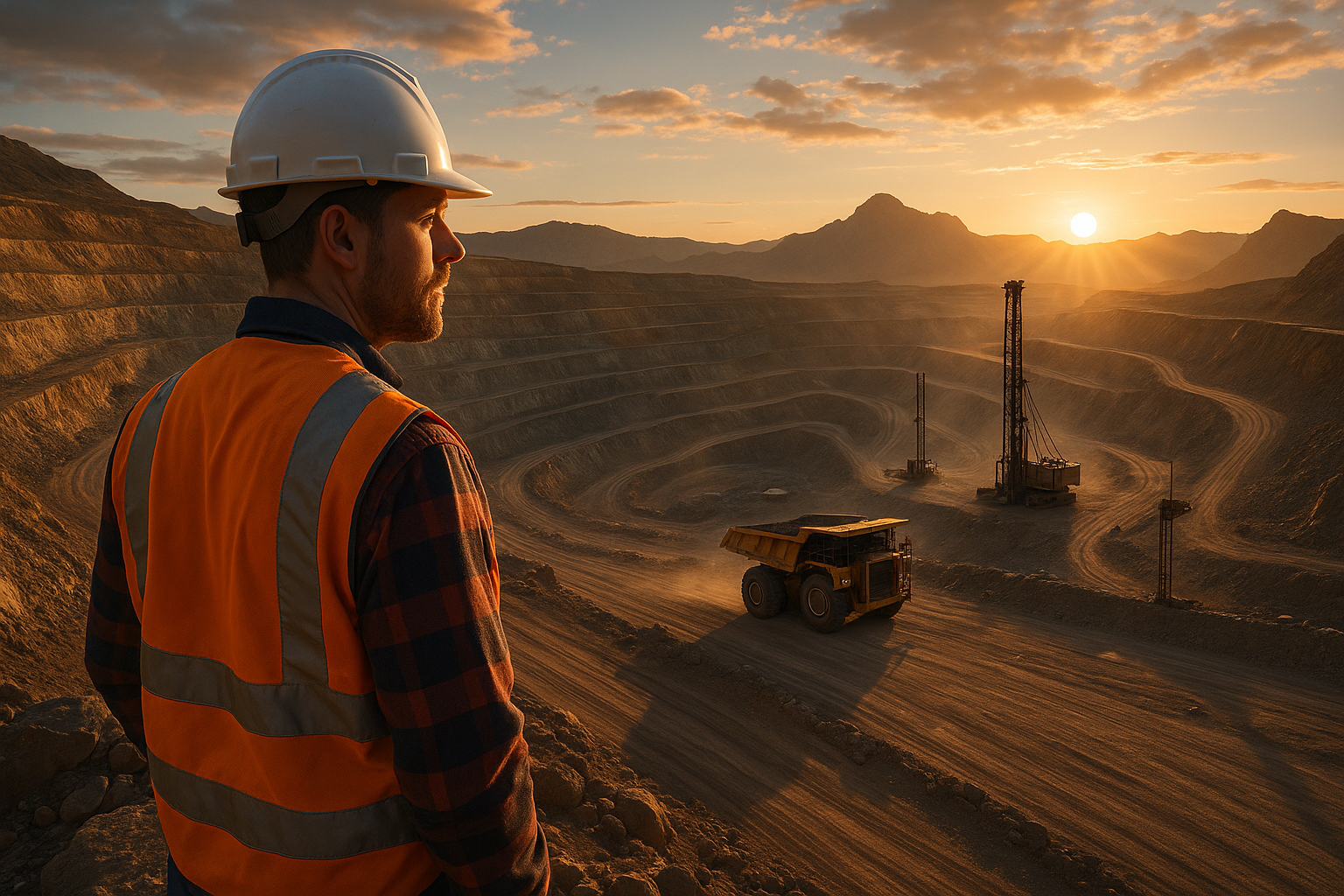
A mining engineer turns a mineral deposit and a set of safety, environmental, and financial constraints into an operating plan. Daily work can include mine design, production scheduling, drilling and blasting, ventilation, ground control, equipment selection, haul-road design, mineral-processing coordination, water management, and reclamation planning.
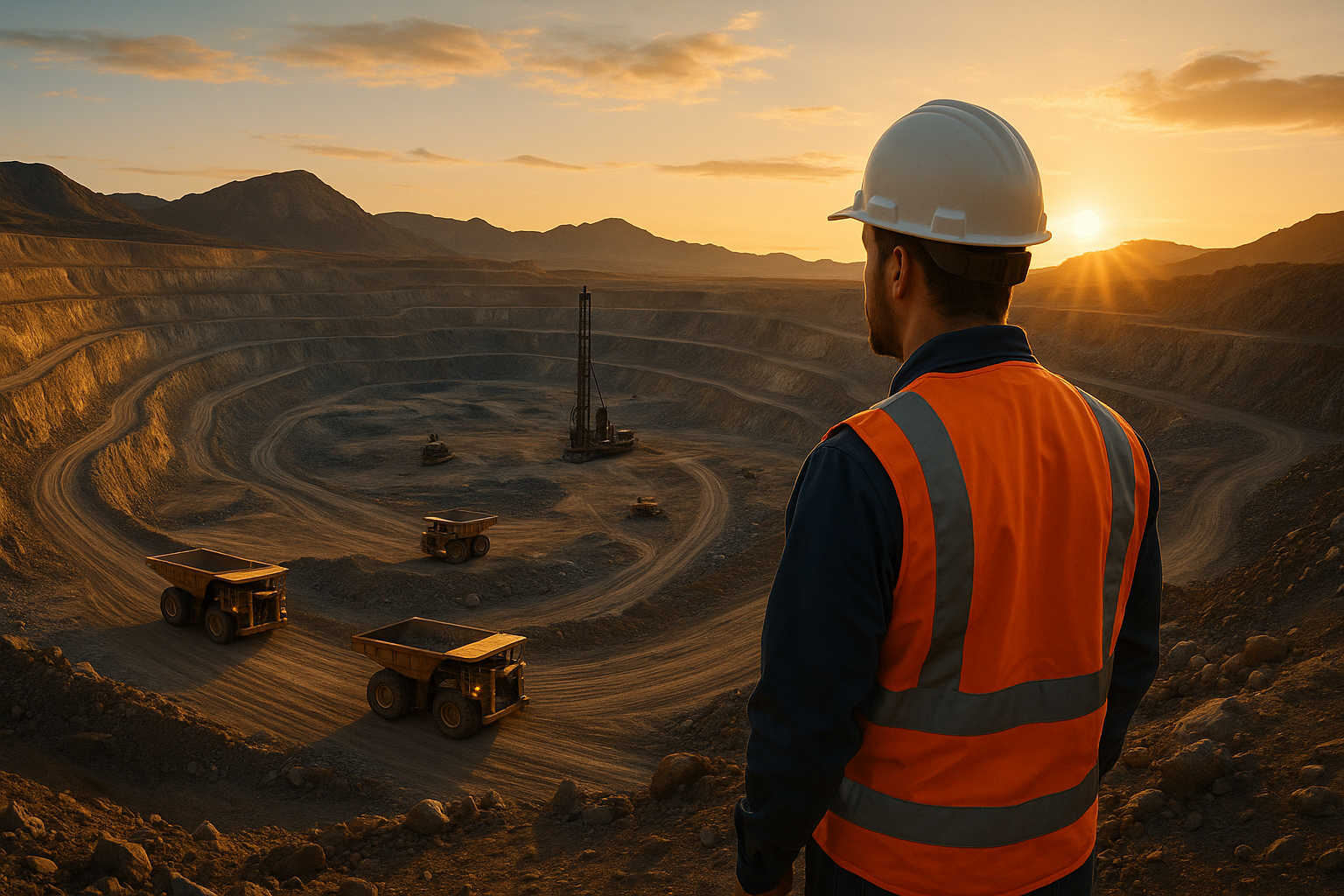
Your work setting depends on the commodity and operation. Surface mining and quarrying often involve large haul trucks, benches, shovels, crushers, and extensive earthworks. Underground metal mining requires attention to shafts, declines, ground support, ventilation circuits, backfill, and emergency egress. Coal, aggregates, exploration, and mineral-processing roles use different equipment and risk controls. Major employers and industry participants include Freeport-McMoRan, Rio Tinto, Newmont, Komatsu, Caterpillar, and specialist engineering consultancies.
At a copper mine, for example, you might compare two haul-road designs: one lowers truck cycle time by 8%, while the other reduces water runoff and rollover exposure. You would coordinate with geologists on ore boundaries, surveyors on elevations, metallurgists on recovery, environmental scientists on water quality, safety professionals on controls, operators on practicality, and regulators on compliance. Production targets cannot be separated from worker safety or long-term closure obligations.
Do mining engineers spend most of their time in an office? Early-career engineers commonly divide time between field inspections, shift meetings, data analysis, drawings, and reports. Remote mines may use seven-days-on/seven-days-off or fourteen-days-on/fourteen-days-off rotations, while consultants travel between sites. In our experience, candidates who expect only computer work are often surprised by weather, dust, noise, stairs, vehicle travel, and irregular hours. Industry organizations such as the National Mining Association and the Society for Mining, Metallurgy & Exploration are useful for understanding the profession.
A Guide to Pursuing a Career as a Mining Engineer in the USA should therefore be read as a field-and-office career plan, not a desk-only engineering path. The work can be demanding, but you can see the physical results of your designs in a road, drift, pit, ventilation circuit, or reclamation project. A Guide to Pursuing a Career as a Mining Engineer in the USA also means learning to communicate with everyone from equipment operators to senior managers.
Education Requirements for Becoming a Mining Engineer
The typical entry requirement is a bachelor’s degree in mining engineering, mining and mineral engineering, geological engineering, or a closely related discipline. Core preparation normally includes calculus, physics, chemistry, geology, mechanics, fluid mechanics, surveying, rock mechanics, mine ventilation, mineral processing, engineering economics, and computer-aided design.
ABET accreditation matters because it signals that a program has been evaluated against recognized engineering education standards. Before enrolling, verify the program through ABET’s official program search; don’t rely only on a university marketing page. Accreditation can also support employer confidence and the education requirements used by many state licensing boards.
Research programs at Colorado School of Mines, Pennsylvania State University, Virginia Tech, the University of Arizona, the University of Nevada–Reno, South Dakota Mines, and Missouri S&T. A dedicated mining program is valuable, but a geological, civil, mechanical, or environmental engineering degree can work if you deliberately add mining coursework, field experience, and industry contacts.
Traditional four-year study is not the only route. You can complete mathematics, chemistry, physics, and introductory engineering at a community college and transfer, pursue a co-op degree, or use a related engineering program if you live far from a mining school. Check transfer equivalencies before registering; losing two semesters of credits can cost more than choosing a slightly higher-tuition program initially.
Use this college checklist:
- Confirm ABET accreditation and review the most recent program outcomes.
- Compare total tuition, housing, fees, scholarships, and paid co-op options.
- Ask about mining-industry partnerships, laboratory equipment, field camps, and placement results.
- Check whether employers recruit on campus and whether the school is near operating mines.
- Review software access, senior design projects, research laboratories, and SME student activity.
A Guide to Pursuing a Career as a Mining Engineer in the USA begins with choosing education that gives you both theory and evidence of application. We recommend comparing at least three programs using the same checklist rather than choosing solely by reputation. A Guide to Pursuing a Career as a Mining Engineer in the USA becomes much easier when your transcript, projects, and internships point toward the same occupational goal.
A Step-by-Step Path to Becoming a Mining Engineer in the USA
You can organize the route into seven practical steps:
- Complete high school prerequisites: take algebra, trigonometry, calculus, physics, chemistry, computer science, and technical writing where available.
- Earn an engineering degree: select mining, mineral, geological, civil, mechanical, or another relevant ABET-aligned program.
- Build technical skills: practice CAD, spreadsheets, GIS, statistics, surveying, programming, and technical reporting.
- Complete internships or co-ops: gain exposure to production, safety, equipment, geology, processing, or environmental work.
- Pass the FE exam: register through NCEES and prepare during your final year or soon after graduation.
- Enter an engineer-in-training role: work under appropriate supervision and document qualifying experience.
- Pursue the PE license: meet your state board’s education, experience, examination, references, and continuing-education rules.
Readiness can be demonstrated before college graduation. Join an SME student chapter, attend a mine-visit program, build a small CAD or mine-design project, participate in robotics, complete field geology, or take summer work around heavy equipment. Employers often respond better to a documented project than to a résumé filled with unsupported claims.
The FE is administered by NCEES and is commonly the first licensing milestone. After passing, you may use an Engineer-in-Training designation where your jurisdiction permits it. PE requirements vary: some states require a specific number of supervised years, while others assess education, experience, references, and the applicable PE examination differently.
A sample four-year timeline looks like this:
- Year 1: calculus, physics, chemistry, introductory geology, CAD, and an SME event.
- Year 2: mechanics, surveying, programming, field camp, and applications for summer placements.
- Year 3: rock mechanics, ventilation, mineral processing, and a paid internship or co-op.
- Year 4: mine-design capstone, FE preparation, employer interviews, graduation, and a full-time engineering offer.
Based on our analysis, A Guide to Pursuing a Career as a Mining Engineer in the USA works best when you treat licensing and experience as a sequence, not paperwork left until graduation. A Guide to Pursuing a Career as a Mining Engineer in the USA should include a written timeline for your target state, because a board’s rules—not a generic internet checklist—control your eligibility.
Internships, Co-Ops, and Entry-Level Experience That Employers Want
When several applicants hold similar degrees, practical experience can decide who receives the interview. Employers want evidence that you understand site safety, can work with crews, recognize imperfect field data, communicate during shift handovers, and make decisions using measurements rather than assumptions.
Target mine operators, engineering consultancies, equipment manufacturers, government agencies, laboratories, environmental firms, and mineral-processing companies. Useful entry-level titles include graduate mining engineer, junior mine engineer, drilling and blasting engineer, ventilation engineer, geotechnical engineer, production engineer, and mineral-processing engineer.
Use this internship strategy:
- Build a one-page technical résumé with software, coursework, safety training, projects, and availability.
- Attend SME meetings, university recruiting events, mine tours, and employer presentations.
- Contact mine-site recruiters with a short message tied to a specific operation or role.
- Apply six to nine months before the intended start date; some large employers recruit earlier.
- Prepare for behavioral questions and technical questions about safety, haulage, blasting, geology, and teamwork.
During a placement, document production improvements, cost observations, safety findings, scheduling work, software used, and measurable outcomes. Never claim ownership of a team result you only supported. A credible statement might read: “Analyzed truck haul cycles in Excel, identified a 6.5% avoidable delay pattern, and presented recommendations adopted for a two-week trial under the production engineer’s supervision.”
We found that this level of specificity helps hiring managers understand your actual contribution. A short placement can produce three strong résumé bullets if you record baseline conditions, your method, your role, and the result. A Guide to Pursuing a Career as a Mining Engineer in the USA is therefore not complete without field evidence. A Guide to Pursuing a Career as a Mining Engineer in the USA becomes competitive when your experience shows safe judgment, measurable analysis, and respect for operating crews.
Skills, Software, and Certifications That Improve Employability
Essential technical skills include mine planning, surveying, rock mechanics, ventilation, blasting principles, Excel modeling, statistics, GIS, CAD, data visualization, and technical report writing. Differentiators include programming, database work, machine-learning awareness, optimization, drone or LiDAR data, and experience interpreting production-control systems.
You may encounter Deswik, Vulcan, Surpac, MineSight, AutoCAD, ArcGIS, Python, SQL, and specialized ventilation or scheduling software. Software names alone have limited value. Demonstrate competence through a mine-design exercise, capstone, internship analysis, spreadsheet model, GIS map, or portfolio video that explains assumptions and limitations.
Employers also assess hazard identification, communication across crews, public speaking, conflict management, shift handovers, ethical judgment, and decision-making under pressure. A technically correct design that operators cannot safely execute is not a successful design. Practice explaining a complex calculation in two minutes to a superintendent and in ten minutes to a nontechnical community audience.
MSHA training is another practical consideration. The Mine Safety and Health Administration regulates mine health and safety, and required training depends on your role, mine type, and site. General awareness is not the same as site-specific task or new-miner training; your employer determines what must be completed before exposure to particular hazards.
We recommend SME membership, technical conferences, short courses, mine-rescue activities, and mentoring from licensed engineers. In 2026, mine-automation and data skills are especially useful because fleet tracking, dispatch systems, remote operation, and sensor data increasingly influence production decisions. A Guide to Pursuing a Career as a Mining Engineer in the USA should include a skills portfolio, not just a transcript. A Guide to Pursuing a Career as a Mining Engineer in the USA is stronger when every listed tool connects to a real project or operating problem.
Mining Engineer Salary, Job Outlook, and Career Progression
The most transparent starting point is the U.S. Bureau of Labor Statistics, supplemented by O*NET’s occupational profile. The latest BLS profile reports median annual pay of approximately $101,000 for mining and geological engineers, about 7,600 jobs, and projected employment growth near 1% from to 2033. These figures describe an occupation, not a guaranteed offer, and may not reflect the newest employer salary tables.
Entry-level compensation can differ substantially from median pay. Bonuses, overtime, travel premiums, remote-site allowances, housing, meals, relocation, and rotation schedules may add value that a base-salary comparison misses. A surface aggregate role in Pennsylvania, an underground gold role in Nevada, and a corporate equipment role in Illinois may have different pay, costs, schedules, and advancement even when the job title is similar.
Career progression commonly moves from graduate engineer to project or production engineer, senior engineer, technical services manager, mine manager, corporate engineering leader, consultant, regulator, or executive. Scarce underground experience, PE licensure, major-project exposure, automation skills, leadership, and willingness to work rotations can raise earnings. Salary surveys should be compared carefully because they use different job definitions, regions, experience bands, and reporting years.
Mining employment is concentrated in Nevada, Arizona, Colorado, Utah, Wyoming, Minnesota, Alaska, West Virginia, and Pennsylvania, although consulting and equipment careers may be based elsewhere. In 2026, critical-mineral policy, battery-material demand, infrastructure construction, and mine modernization are supporting investment discussions even as commodity prices remain cyclical.
Based on our research, A Guide to Pursuing a Career as a Mining Engineer in the USA should evaluate total compensation and career durability, not just a headline salary. A Guide to Pursuing a Career as a Mining Engineer in the USA also requires accepting that a strong year for a commodity does not eliminate operational, permitting, or market risk.
Licensing, Safety, Ethics, and Environmental Responsibilities
The FE-to-PE route generally involves an engineering degree, FE examination, supervised experience, PE examination where applicable, professional references, continuing education, and an application to a state engineering board. Requirements differ by jurisdiction. A PE may be required when you approve engineering designs, sign or seal documents, make public-safety decisions, or move into a position involving responsible charge.
MSHA operates under the Federal Mine Safety and Health Act and establishes requirements for miner health and safety. Your professional duty extends beyond passing an inspection. You must consider ground stability, ventilation, blasting, water quality, tailings, dust, noise, reclamation, emergency planning, and workers’ ability to report hazards without retaliation.
Consider a ground-control scenario: mapping shows new fractures near an active stope, and the production schedule calls for an advance that evening. You should stop or redesign the plan, involve geotechnical and operations leaders, install or revise controls, document the decision, and communicate it to the crew. If ventilation monitoring shows contaminated air moving toward a work area, production must wait while the circuit and controls are corrected. A target tonnage never overrides an unacceptable life-safety risk.
Responsible mining also includes environmental permitting, land reclamation, community engagement, Tribal consultation, water stewardship, and transparent communication about impacts. Engineering ethics apply when the decision is unpopular or expensive. The NSPE Code of Ethics states the principle plainly: engineers must hold public safety, health, and welfare paramount.
A Guide to Pursuing a Career as a Mining Engineer in the USA must include ethics because technical authority carries consequences. A Guide to Pursuing a Career as a Mining Engineer in the USA is not merely a route to higher production; it is preparation to make defensible decisions when people, communities, and the environment depend on your judgment.
Career Challenges and How to Decide Whether Mining Engineering Fits
Mining engineering can involve remote locations, severe weather, variable shifts, travel, noisy and dusty conditions, high-consequence decisions, and time away from family. Underground work may require confined-space awareness and strict procedural discipline; surface work can involve heavy mobile equipment, traffic controls, steep terrain, and extreme temperatures.
The benefits are substantial but specific: technical variety, visible project results, strong compensation potential, outdoor work, international mobility, and the opportunity to improve safety and environmental performance. A mine engineer may redesign a ventilation circuit, reduce truck idling, improve ground support, or help reclaim disturbed land. Those results are tangible and measurable.
Compare majors carefully. Geological engineering emphasizes earth materials and site conditions; civil engineering focuses on structures, transportation, and infrastructure; petroleum engineering centers on reservoirs and wells; metallurgical engineering focuses on extraction and material properties; environmental engineering addresses pollution control, water, permitting, and remediation. Mining engineering sits at the intersection of several of these fields.
Ask yourself:
- Are you comfortable with fieldwork, machinery, mathematics, geology, and strict safety rules?
- Can you lead respectfully during a difficult shift and explain decisions clearly?
- Do you enjoy solving practical problems with incomplete data?
- Would you relocate to Nevada, Arizona, Colorado, Utah, Alaska, or another mining region?
Test the fit before committing through a mine tour, informational interview, job shadow, introductory geology class, student organization, or summer field position. Two less-discussed paths deserve attention: mine automation and data roles for technically oriented candidates, and reclamation, permitting, and sustainability roles for candidates drawn to environmental outcomes. A Guide to Pursuing a Career as a Mining Engineer in the USA should help you test the lifestyle, not just admire the salary. A Guide to Pursuing a Career as a Mining Engineer in the USA is a good choice when the challenges match your interests and values.
How to Build a Competitive Mining Engineering Career Plan
Use the next days to turn interest into evidence. First, identify three target roles—for example, graduate mine engineer, ventilation engineer, and geotechnical engineer. Then review job descriptions, create a list of missing skills, contact five professionals, and apply for at least one relevant internship, site visit, research placement, or technician role.
Create a portfolio containing a mine-design project, spreadsheet model, CAD or GIS sample, safety analysis, technical memo, and a concise explanation of assumptions and results. Include file dates, your individual contribution, software versions, and what you would improve with better data. A portfolio can show sound judgment even when you have no full-time experience.
Tailor your résumé by leading with field experience, measurable outcomes, software, safety training, relevant coursework, and willingness to work at site locations. Replace “familiar with Excel” with “modeled haul cycles using pivot tables and identified a 6.5% delay pattern.” Don’t overstate responsibility; supervised work is still valuable when described accurately.
Network without relying on family connections. Attend SME chapter events, university fairs, professional webinars, alumni sessions, mining conferences, and employer presentations. A thoughtful LinkedIn message might reference a published project, ask one specific career question, and request minutes—not a job.
Prepare for interviews covering haul-road design, ventilation, blast safety, rock mechanics, production scheduling, ethical dilemmas, teamwork, and shift work. Track applications, certifications, contacts, interview lessons, and monthly skill development in a simple spreadsheet. We recommend reviewing it on the first day of every month. A Guide to Pursuing a Career as a Mining Engineer in the USA becomes actionable when each week produces a deliverable. A Guide to Pursuing a Career as a Mining Engineer in the USA should end with a calendar, not a vague intention to “network more.”
Conclusion: Your Next Steps Toward a Mining Engineering Career
The practical sequence is clear: choose an accredited engineering program, gain field experience, develop software and safety skills, pass the FE exam, secure an entry-level role, document supervised experience, and plan for licensure. You don’t need to know your final specialization on day one, but you do need evidence that you can learn safely and apply engineering fundamentals.
If you’re in high school: prioritize mathematics, physics, chemistry, computer science, technical writing, and a mine tour or engineering activity. If you’re in college: join SME, build a project portfolio, attend recruiting events, and apply for internships six to nine months early. If you’re a recent graduate: register for the FE, target graduate engineering roles, and learn your state board’s PE pathway. If you’re changing careers: compare prerequisite courses, transferable skills, field conditions, and the cost of returning to school before enrolling.
Within the next days, research three ABET-accredited programs, contact two working mining engineers, apply for one internship or site visit, and review the relevant state licensing board. Compare total compensation rather than salary alone: housing, rotations, travel, benefits, safety culture, training, supervision, and advancement may change the value of an offer by thousands of dollars and many hours each year.
In 2026, A Guide to Pursuing a Career as a Mining Engineer in the USA points toward work connected to infrastructure, copper, lithium, rare earth elements, aggregates, energy systems, and domestic supply chains. A Guide to Pursuing a Career as a Mining Engineer in the USA can be demanding, but candidates who combine engineering fundamentals, field judgment, communication, and ethical responsibility can build durable careers in the USA. The strongest engineers do more than move rock—they make difficult work safer, more useful, and more accountable.
Key Takeaways
- Choose an ABET-accredited mining, geological, civil, mechanical, or closely related engineering program and compare field facilities, co-ops, scholarships, and employer partnerships.
- Gain practical evidence through internships, mine visits, field geology, design projects, software portfolios, and measurable safety or production analysis.
- Use the FE exam as an early licensing milestone, then review your state board’s supervised-experience and PE requirements before graduation.
- Build skills in mine planning, rock mechanics, ventilation, surveying, Excel, GIS, CAD, data analysis, communication, and hazard identification.
- Compare mining offers by total compensation and working conditions, including rotations, housing, travel, benefits, safety culture, training, and advancement.
Frequently Asked Questions
What degree do you need to become a mining engineer in the USA?
A bachelor’s degree in mining engineering, mining and mineral engineering, geological engineering, or a closely related engineering field is the usual starting point. An ABET-accredited program can make the FE exam, employer screening, and later PE licensure easier to navigate.
Do mining engineers need a professional engineering license?
The FE exam is commonly the first licensing milestone after graduation. It is administered through NCEES, while the PE license is issued by the engineering board in the state where you seek licensure.
Do mining engineers work at a mine site or in an office?
Mining engineers may work underground, at surface mines, in quarries, processing facilities, corporate offices, laboratories, or consulting firms. Early-career roles often involve a mixture of site work, office analysis, travel, and rotating shifts.
How much does a mining engineer earn in the United States?
The latest U.S. Bureau of Labor Statistics figures available for mining and geological engineers report median annual pay of roughly $101,000, although entry-level compensation varies by location, commodity, employer, overtime, bonuses, housing, and rotation premiums.
How can you become a mining engineer in the USA?
A Guide to Pursuing a Career as a Mining Engineer in the USA usually includes an ABET-aligned engineering degree, internships or co-ops, technical software practice, the FE exam, supervised engineering experience, and—where required or beneficial—a PE license.
What skills help a mining engineering student get hired?
Good preparation includes algebra, trigonometry, calculus, physics, chemistry, computer science, technical writing, and field geology. Mine tours, robotics, CAD projects, SME student activities, and summer employment can also demonstrate practical interest.
