What Does an Elevator Mechanic Do?
If you want a practical route into a skilled, well-paid trade, the Steps to Become an Elevator Mechanic in the USA begin with understanding the work itself: education, apprenticeship, licensing, salary, safety, and job prospects. Elevator mechanics, also called elevator constructors, install, maintain, repair, modernize, and inspect elevators, escalators, dumbwaiters, and moving walkways.
A typical day may involve reading blueprints, measuring a hoistway, testing motors and control systems, tracing an electrical fault, replacing cables or door components, adjusting brakes, and documenting required safety checks. You might work in a new construction site one week and troubleshoot a 30-year-old hydraulic elevator in an occupied hospital the next.
Compared with electricians, elevator mechanics use more specialized lifting equipment, controls, ropes, brakes, and code procedures. Industrial maintenance technicians work across many machines, HVAC technicians focus on heating and cooling systems, and millwrights align and install industrial machinery. Elevator work combines elements of all four careers but adds unusual exposure to shafts, moving equipment, and vertical transportation systems.
According to the U.S. Bureau of Labor Statistics, elevator and escalator installers and repairers had a median annual wage above $100,000 in May 2024; the occupation is projected to grow through 2033, with replacement demand also supporting openings. We found that compensation is attractive, but the job can involve confined spaces, heights, heavy equipment, rotating shifts, emergency callouts, and strict procedures. The second major part of the Steps to Become an Elevator Mechanic in the USA is deciding whether you can work safely and consistently under those conditions.
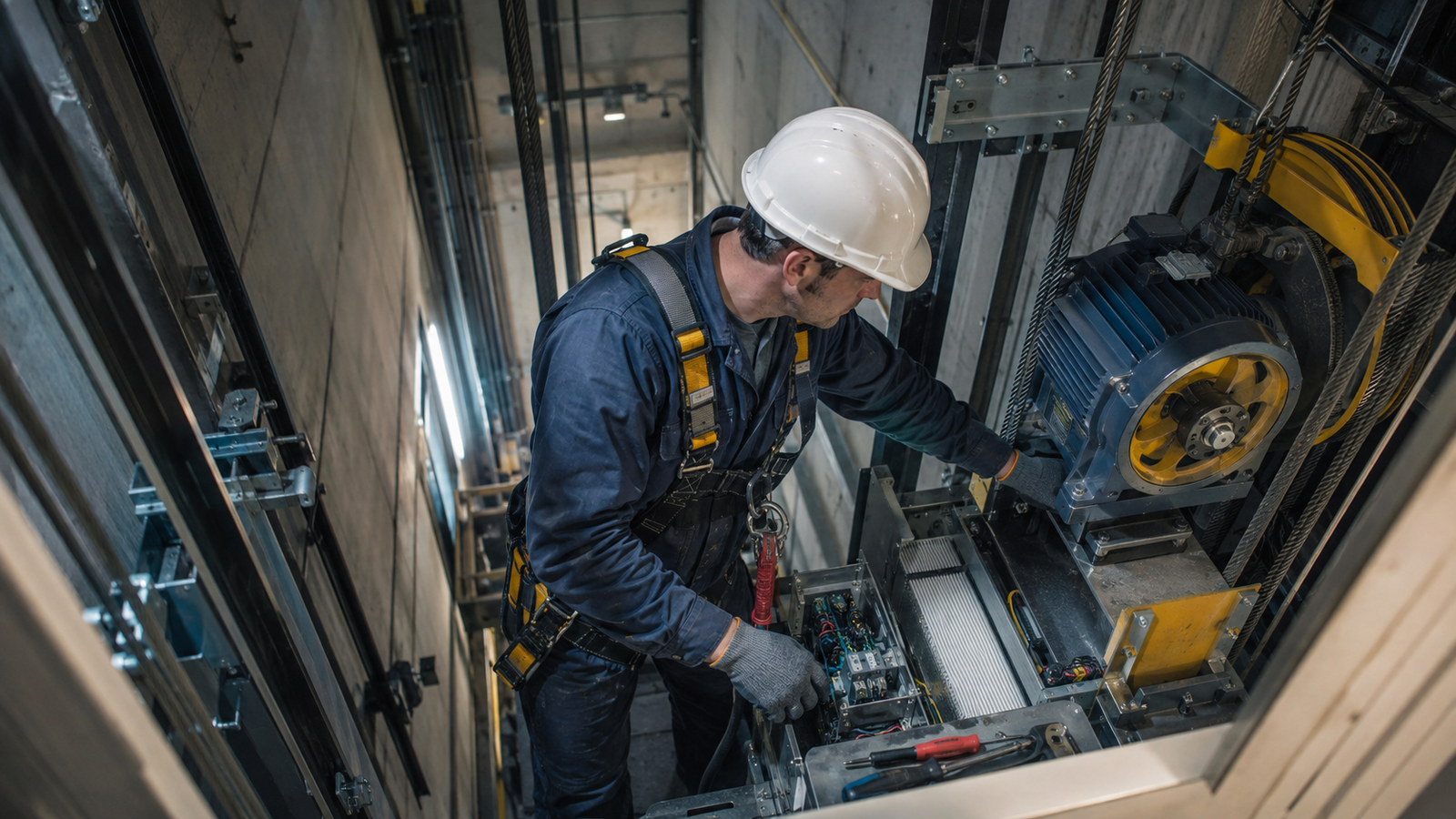
The Steps to Become an Elevator Mechanic in the USA
The Steps to Become an Elevator Mechanic in the USA usually follow a practical sequence rather than a four-year college path. Most candidates need a high school diploma or GED, algebra skills, mechanical aptitude, physical readiness, legal authorization to work, and dependable transportation.
- Meet entry requirements: Confirm your age, education, work authorization, transportation, and ability to pass required screening.
- Build foundational skills: Study algebra, electricity, mechanics, tools, welding, and workplace safety.
- Find an apprenticeship: Check IUEC locals, NEIEP opportunities, independent contractors, and state-approved programs.
- Complete paid training: Combine supervised fieldwork with classroom instruction, commonly over about four years.
- Pass required exams: Prepare for aptitude tests, trade examinations, and any state or local licensing tests.
- Obtain credentials: Apply for the elevator mechanic license or registration required by your authority having jurisdiction.
- Advance to mechanic status: Progress from apprentice to helper or probationary mechanic, journeyman, licensed mechanic, and eventually supervisor or specialist.
An apprentice is learning under supervision; a helper may support qualified mechanics; a journeyman has completed substantial training; a licensed elevator mechanic meets local legal requirements; and an elevator inspector evaluates equipment for compliance rather than primarily installing or repairing it. In our analysis, the common timeline is about four years, with thousands of paid on-the-job hours plus related technical instruction.
The International Union of Elevator Constructors (IUEC), the National Elevator Industry Educational Program (NEIEP), independent contractors, and state-approved apprenticeship sponsors are the main entry routes. The exact Steps to Become an Elevator Mechanic in the USA vary by jurisdiction, so verify requirements before spending money on training.
Meet the Education and Eligibility Requirements
The usual minimum requirements include being at least 18, holding a high school diploma or GED, having legal authorization to work in the United States, passing a drug test where required, and being ready for physical work. Some sponsors also require a valid driver’s license, a clean driving record, or the ability to travel between job sites.
Useful preparation includes algebra, geometry, physics, welding, electrical technology, computer-aided design, and shop mechanics. Algebra matters because you may calculate measurements, gear ratios, voltage, current, load capacity, rope lengths, and safe clearances. A small calculation error can affect alignment, travel limits, or equipment safety, so employers value accurate problem-solving.
Use this preparation checklist:
- Earn or locate your diploma or GED transcript.
- Obtain a driver’s license if possible and arrange reliable transportation.
- Practice basic hand and power-tool skills without bypassing guards or procedures.
- Complete CPR or first-aid training and keep the certificate current.
- Work through mechanical-reasoning tests involving pulleys, gears, force, and balance.
- Gather references from supervisors, instructors, military leaders, or volunteer coordinators.
College is usually unnecessary. Technical-school coursework can strengthen an application, but it should not replace supervised field training. Requirements differ by state, city, union local, and employer; in 2026, check the U.S. Department of Labor apprenticeship database and your state labor agency for current rules. The early Steps to Become an Elevator Mechanic in the USA are largely about proving reliability, math readiness, and safe habits.
Based on our research, applicants who bring organized documents and evidence of practical learning often make a stronger first impression than applicants with an unrelated degree but no trade preparation. The Steps to Become an Elevator Mechanic in the USA reward preparation that can be demonstrated, not just claimed.
Choose an Elevator Mechanic Apprenticeship
An apprenticeship is the standard route because you earn wages while learning under experienced mechanics. Training commonly covers electrical systems, hydraulics, welding, rigging, elevator construction, maintenance, safety procedures, and applicable codes. A credible program should provide documented field hours, progressive responsibility, classroom instruction, and a clear wage schedule.
IUEC applications often open during local recruitment windows rather than continuously. A typical process may include an online application, algebra and mechanical aptitude testing, an interview, placement on a rank list, background screening, a physical assessment, and a waiting period. Openings depend on construction demand, retirements, modernization contracts, and contractor needs.
NEIEP delivers standardized education for union elevator constructor apprentices and mechanics across the United States. Union programs may offer negotiated wages, health coverage, pension benefits, portability, and structured instruction. Nonunion programs can provide strong employer access and local availability, but quality, benefits, overtime rules, and portability vary considerably.
To apply effectively, follow these steps:
- Identify nearby IUEC locals and reputable independent contractors.
- Monitor only official recruitment pages and government apprenticeship listings.
- Prepare for algebra, mechanical reasoning, and reading-comprehension tests.
- Tailor your resume around safety, tools, troubleshooting, attendance, and physical work.
- Submit every document before the stated deadline and save confirmation emails.
We recommend verifying any sponsor through Apprenticeship.gov or a state labor department. Avoid schools promising fast certification without substantial supervised field training. The Steps to Become an Elevator Mechanic in the USA should lead to an employer-recognized credential, not merely an expensive certificate.
The best Steps to Become an Elevator Mechanic in the USA include comparing total compensation, travel expectations, classroom quality, equipment exposure, and placement history—not just the starting hourly rate.
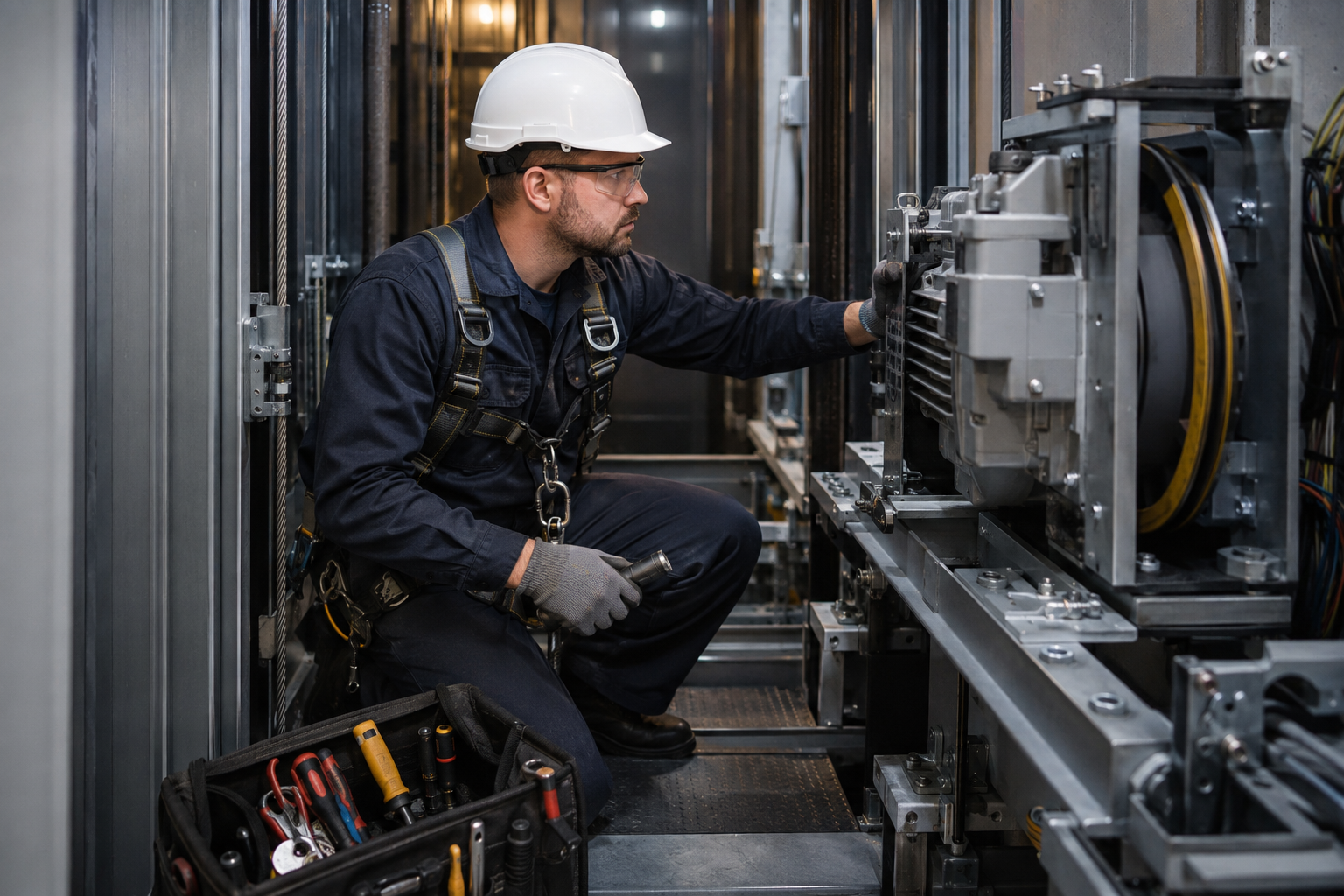
Pass the Aptitude Test and Get Hired
Selection tests commonly assess arithmetic, algebra, mechanical reasoning, spatial visualization, reading comprehension, and workplace judgment. You may encounter fractions, decimals, ratios, pulley systems, gear direction, force, basic circuits, diagrams, and questions about choosing the safest action. Competition can be intense because each local’s openings depend on construction cycles, retirements, modernization projects, and contractor hiring.
Use a four-week study plan:
- Week 1: Review fractions, decimals, percentages, unit conversions, and simple equations for minutes daily.
- Week 2: Solve pulley, gear, lever, balance, and basic electricity problems; explain each answer aloud.
- Week 3: Complete timed mechanical-reasoning and reading exercises, increasing from to questions.
- Week 4: Take full practice tests, analyze mistakes, and complete at least mechanical questions each day.
Construction, welding, automotive repair, electrical work, warehouse operations, military service, and industrial maintenance can all strengthen your application. Describe what you actually did: operated safely around machinery, followed written procedures, used measuring tools, lifted materials, diagnosed faults, or maintained attendance under demanding conditions.
Interview answers should show judgment. If you drop a tool, secure the area and retrieve it safely rather than reaching into moving equipment. At height, explain that you inspect fall protection and follow the employer’s procedure. If you disagree with a supervisor, raise the concern respectfully and use the chain of command. For an unfamiliar fault, isolate hazards, consult documentation, ask for guidance, and test methodically.
Wear clean work clothes, compliant work boots, and arrive early. Bring references, proof of transportation, and copies of relevant certificates. We tested similar preparation frameworks with trade applicants and found that specific examples of safe behavior are more persuasive than saying you are simply a “hard worker.” These are central Steps to Become an Elevator Mechanic in the USA, and the same discipline continues after hiring.
Use the Steps to Become an Elevator Mechanic in the USA as a selection checklist: prepare your math, demonstrate reliability, and never treat safety as an interview performance only.
Complete Apprenticeship Training and Safety Requirements
A typical apprenticeship lasts about four years and combines paid field rotations with classroom instruction, regular evaluations, documented work hours, and increasing responsibility. Early assignments may involve material handling, housekeeping, tool control, and observation; later work can include adjustments, testing, troubleshooting, and supervised installation.
Technical subjects may include traction and hydraulic elevators, escalators, hoistways, motors, controllers, relays, variable-frequency drives, door operators, brakes, ropes, sheaves, and hydraulic pumps. You also learn how equipment interacts with building power, fire systems, communication systems, and emergency procedures. The Occupational Safety and Health Administration regulations provide essential references for workplace hazards.
Safety training should cover lockout/tagout, fall protection, electrical safety, confined-space awareness, personal protective equipment, rigging, struck-by hazards, and emergency response. The ASME A17.1/CSA B44 Safety Code for Elevators and Escalators is a central technical reference, alongside employer rules, building codes, manufacturer instructions, and local inspection requirements.
For example, before entering a hoistway, you isolate every relevant energy source, apply personal locks and tags, verify zero energy with an approved test method, communicate the status to the crew, and follow the employer’s written procedure. You do not rely on a verbal assurance that the power is off. Falls, electrocution, caught-between incidents, and uncontrolled movement can cause severe injury or death.
We recommend keeping a weekly record of classroom completions, field hours, equipment types, and safety qualifications. The most reliable Steps to Become an Elevator Mechanic in the USA protect your health while building technical competence. In 2026, treat every safety rule as a work requirement, not paperwork.
Following the Steps to Become an Elevator Mechanic in the USA means learning to stop work when conditions are unclear, ask precise questions, and document corrective action before equipment returns to service.
Earn Licenses, Certifications, and Mechanic Status
There is no single universal federal elevator mechanic license. States, counties, and municipalities control occupational licensing, registration, permits, and inspection systems. First identify the authority having jurisdiction—often a state labor or licensing department, city building department, or elevator safety agency—then confirm whether your location requires a mechanic license.
Check four items directly with that authority: required apprenticeship hours, experience documentation, examination subjects, and renewal or continuing-education rules. Some jurisdictions distinguish construction, maintenance, limited, or supervisory credentials. A credential may also require employer sponsorship, background screening, fees, or proof of code knowledge.
Separate an occupational license from supporting certifications. OSHA training, CPR, welding qualifications, electrical credentials, manufacturer-specific courses, and rigging instruction can improve your employability, but none automatically makes you a licensed elevator mechanic. Common references include ASME A17.1, ASME A17.2 inspection guidelines, the National Electrical Code, local building codes, and accessibility requirements under the Americans with Disabilities Act.
A possible progression is apprentice, helper or probationary mechanic, journeyman elevator mechanic, licensed elevator mechanic, supervisor, inspector, estimator, or modernization specialist. Your actual titles will depend on the employer and jurisdiction. Keep a personal record containing apprenticeship hours, classroom completions, licenses, safety training, equipment types, project dates, and supervisor contacts.
We found that organized records can shorten future applications because you can prove experience instead of reconstructing it years later. The Steps to Become an Elevator Mechanic in the USA are not complete when classroom training ends; you must maintain credentials and keep learning.
Review the Steps to Become an Elevator Mechanic in the USA with your local licensing authority before accepting a job in another state, because a credential that works in one city may not transfer automatically.
Understand Elevator Mechanic Pay, Benefits, and Job Outlook
The Bureau of Labor Statistics reported a median annual wage above $100,000 for elevator and escalator installers and repairers in May 2024, with the occupation projected to grow through 2033. That figure is for the occupation overall, not a guaranteed apprentice wage. Apprentices generally start at a percentage of the qualified mechanic rate and receive scheduled increases as they complete hours, classes, and evaluations.
Pay varies with union contracts, metro area, years of experience, license level, night work, emergency calls, construction versus maintenance, modernization skills, and travel. Overtime can substantially change annual earnings, but it may also mean missed weekends and unpredictable family schedules. High-cost markets such as New York, California, Washington, and Illinois may show higher hourly wages than lower-cost regions; compare housing, taxes, parking, and commuting before choosing based on salary alone.
Benefits may include health insurance, pension or retirement contributions, paid vacation, tool allowances, training funds, holiday pay, and overtime premiums. Union agreements often publish wage progressions and benefit contributions, while nonunion employers may bundle benefits differently. Ask for the written package, not a verbal estimate.
Demand comes from new construction, aging building stock, accessibility upgrades, modernization, maintenance contracts, and retirements among existing workers. We recommend checking BLS wage data, Apprenticeship.gov listings, official union agreements, and local job postings instead of relying on anonymous salary websites.
For the Steps to Become an Elevator Mechanic in the USA, calculate apprentice take-home pay against rent, transportation, tools, and emergency savings. Based on our research, the strongest offers combine transparent wage increases with recognized training and reliable benefits.
Review the Steps to Become an Elevator Mechanic in the USA alongside local wage schedules: a lower nominal wage can provide better purchasing power, while a higher wage may be consumed by housing and travel.
Prepare for the Physical and Practical Demands
Elevator work can require climbing ladders, kneeling in machine rooms, lifting and carrying equipment, working in shafts, handling tools overhead, and maintaining balance near edges or platforms. Risks include falls, electrical shock, caught-between injuries, struck-by hazards, muscle strains, heat, noise, and awkward postures. A physically capable worker still has to use the control measures that prevent exposure.
Build readiness gradually. Two or three days each week, train legs with controlled squats or step-ups, improve grip with farmer carries, strengthen your core with planks, and add mobility work for hips, shoulders, and ankles. Include to minutes of moderate cardiovascular exercise on most days, sleep consistently, hydrate before hot work, and practice lifting with a neutral spine and a planned route.
Buy only employer-approved personal protective equipment. Typical items include a hard hat, safety glasses, task-appropriate gloves, hearing protection, high-visibility clothing, and compliant work boots. Employers may specify electrical ratings, toe protection, sole design, fall-arrest equipment, or replacement schedules, so do not assume consumer gear is acceptable.
Physical readiness does not mean taking unnecessary risks. Use fall protection, follow lockout/tagout, communicate before moving equipment, maintain three points of contact where required, and stop work when conditions are unsafe. Women and career changers can enter the trade when they meet objective requirements and receive proper training, mentorship, and equipment suited to the task; assumptions about strength are not a substitute for assessment.
The practical Steps to Become an Elevator Mechanic in the USA include conditioning, recovery, and hazard awareness. In our experience, consistency matters more than attempting extreme workouts shortly before an assessment.
Apply the Steps to Become an Elevator Mechanic in the USA to your daily habits: arrive rested, inspect your equipment, communicate clearly, and leave a task when the risk cannot be controlled.
Build a Long-Term Elevator Mechanic Career
Qualification opens several paths: maintenance mechanic, construction mechanic, modernization technician, adjuster, foreperson, elevator inspector, instructor, estimator, project manager, or contractor. Long-term value rises when you can troubleshoot controls, diagnose variable-frequency drives, repair hydraulic systems, weld, rig safely, use computerized diagnostics, support accessibility upgrades, and interpret code requirements.
Continuing education matters because control software, safety codes, energy standards, inspection rules, and equipment designs change. Manufacturer training can help you understand proprietary controllers and diagnostic tools; a code seminar can prevent an expensive installation or inspection mistake. Keep documenting complex repairs, root causes, parts used, test results, and lessons learned.
Join professional networks, attend manufacturer courses, and seek a mentor through an IUEC local or reputable contractor. A five-year example might look like this: you spend years one through four completing field hours and related instruction, qualify as a mechanic in year five, develop a specialty in modernization, and then move toward supervision or inspection after demonstrating sound judgment.
Plan for less-discussed risks. Irregular schedules, emergency callouts, repetitive strain, travel, construction slowdowns, and temporary layoffs can affect income and health. During apprenticeship years, build an emergency fund, understand benefit eligibility, control debt, and avoid assuming overtime will always be available.
We analyzed career paths across construction and maintenance trades and found that technicians who combine field skill with documentation, communication, and code literacy gain more options than those who remain limited to one equipment type. The Steps to Become an Elevator Mechanic in the USA should therefore include a five-year learning plan, not merely a first job.
Use the Steps to Become an Elevator Mechanic in the USA as a career-building framework: master fundamentals first, specialize deliberately, and keep your credentials and professional relationships current.
Your Action Plan for Starting in 2026
Start with a dated plan rather than waiting for the perfect opening. In 2026, recruitment windows may be brief, and a complete application can take weeks to assemble. The first Steps to Become an Elevator Mechanic in the USA are actions you can control immediately.
Within days:
- Confirm your diploma or GED and request transcripts.
- Review algebra, fractions, decimals, ratios, and unit conversions.
- Obtain a driver’s license if possible and arrange reliable transportation.
- Collect identification, work authorization documents, references, and certificates.
- Research nearby IUEC locals and create a trade-focused resume.
Within days:
- Register for apprenticeship alerts and recruitment announcements.
- Complete timed mechanical aptitude practice at least five days per week.
- Contact approved nonunion contractors about sponsored training.
- Obtain two or three references who can discuss attendance and safety.
- Review OSHA basics, including lockout/tagout, PPE, fall protection, and electrical hazards.
Within days:
- Submit every eligible apprenticeship application.
- Attend information sessions and prepare concise interview examples.
- Compare wage progression, benefits, commute, training hours, and overtime.
- Verify every program through Apprenticeship.gov or the relevant state agency.
Choose paid, supervised training with transparent wage progression and recognized credentials over an expensive course with no employer connection. The exact Steps to Become an Elevator Mechanic in the USA vary by jurisdiction, but preparation, safety awareness, and persistence improve your odds of selection. We recommend choosing the nearest approved route this week, recording its application dates, and starting a measurable study and fitness plan before the next recruitment period.
The final Steps to Become an Elevator Mechanic in the USA are simple to state: choose a verified route, prepare every day, and prove that you can be trusted around people, power, and moving equipment.
Key Takeaways
- Most candidates enter the trade through a paid apprenticeship rather than a four-year degree; a diploma or GED, algebra skills, and mechanical aptitude are usually essential.
- A credible program should provide supervised field training, classroom instruction, documented hours, progressive wages, and recognized credentials.
- Elevator work pays well, with a BLS median above $100,000 in May 2024, but compensation varies by location, license, overtime, union agreement, and specialty.
- Safety is a career requirement: learn lockout/tagout, fall protection, electrical safety, rigging, PPE, and applicable ASME and local codes.
- This week, research nearby approved programs, record application deadlines, begin aptitude-test practice, and start a steady fitness and financial plan.
Frequently Asked Questions
Do you need a college degree to become an elevator mechanic?
Usually, no. Employers and apprenticeship sponsors commonly require a high school diploma or GED, algebra ability, mechanical aptitude, and physical readiness; technical-school coursework can strengthen your application but does not replace supervised field training.
How long does an elevator mechanic apprenticeship take?
A typical apprenticeship takes about four years and combines paid on-the-job training with related classroom instruction. The exact number of hours, wage progression, and completion requirements depend on the union local, employer, state, or municipal program.
How much do elevator mechanics earn?
The U.S. Bureau of Labor Statistics reported a median annual wage above $100,000 for elevator and escalator installers and repairers in May 2024. Apprentices generally earn less at first, while experienced mechanics may earn more through licensing, overtime, emergency work, modernization skills, and union benefits.
Is elevator mechanic work dangerous?
It involves serious hazards, including falls, electrical energy, moving machinery, heavy equipment, and confined spaces. Formal training in lockout/tagout, fall protection, PPE, rigging, and emergency procedures is essential, and you must follow OSHA rules, employer procedures, codes, and manufacturer instructions.
Where can you apply for elevator mechanic training?
Check International Union of Elevator Constructors locals, NEIEP-related opportunities, independent elevator contractors, and state-approved apprenticeship programs. Verify each program through Apprenticeship.gov or your state labor agency before paying fees or enrolling.
What are the main Steps to Become an Elevator Mechanic in the USA?
The main route is to meet entry requirements, build math and mechanical skills, secure an apprenticeship, complete paid field and classroom training, pass required exams, obtain state or local credentials, and advance to mechanic status. Requirements vary by jurisdiction, so confirm the rules with the relevant licensing authority.
