Orthodontist Career Overview in the USA: What to Expect
If you are asking what orthodontists do, how long training takes, how much they earn, and whether the profession fits your plans in 2026, the short answer is this: orthodontics is a highly specialized dental career requiring roughly to years of education after high school. An orthodontist diagnoses, prevents, and treats irregular bites, crowded teeth, jaw discrepancies, and alignment problems.
This Orthodontist Career Overview in the USA examines the decisions that matter most: dental school admission, residency competition, state licensure, earning potential, patient communication, practice ownership, technology, and employment demand. Based on our research, the profession suits people who enjoy precise clinical work and long-term relationships rather than those choosing dentistry only for income.
- Typical training: four years of college, four years of dental school, and two to three years of residency.
- Work settings: private practices, dental groups, universities, hospitals, community clinics, military facilities, and public programs.
- Patients: children, teenagers, adults, and patients with complex jaw or craniofacial conditions.
- Demand: the U.S. Bureau of Labor Statistics projects 4% growth for dentists from to 2034, while specialty demand varies considerably by community.
The American Dental Association reports more than 200,000 professionally active dentists in the United States, but that total includes all dental specialties. Your local opportunity will depend on population growth, household income, provider competition, insurance access, and the number of retiring clinicians. This Orthodontist Career Overview in the USA gives you a practical way to assess those variables before committing.
U.S. Bureau of Labor Statistics and American Dental Association Health Policy Institute data are useful starting points, but neither replaces state-level research.
What Does an Orthodontist Do Every Day?
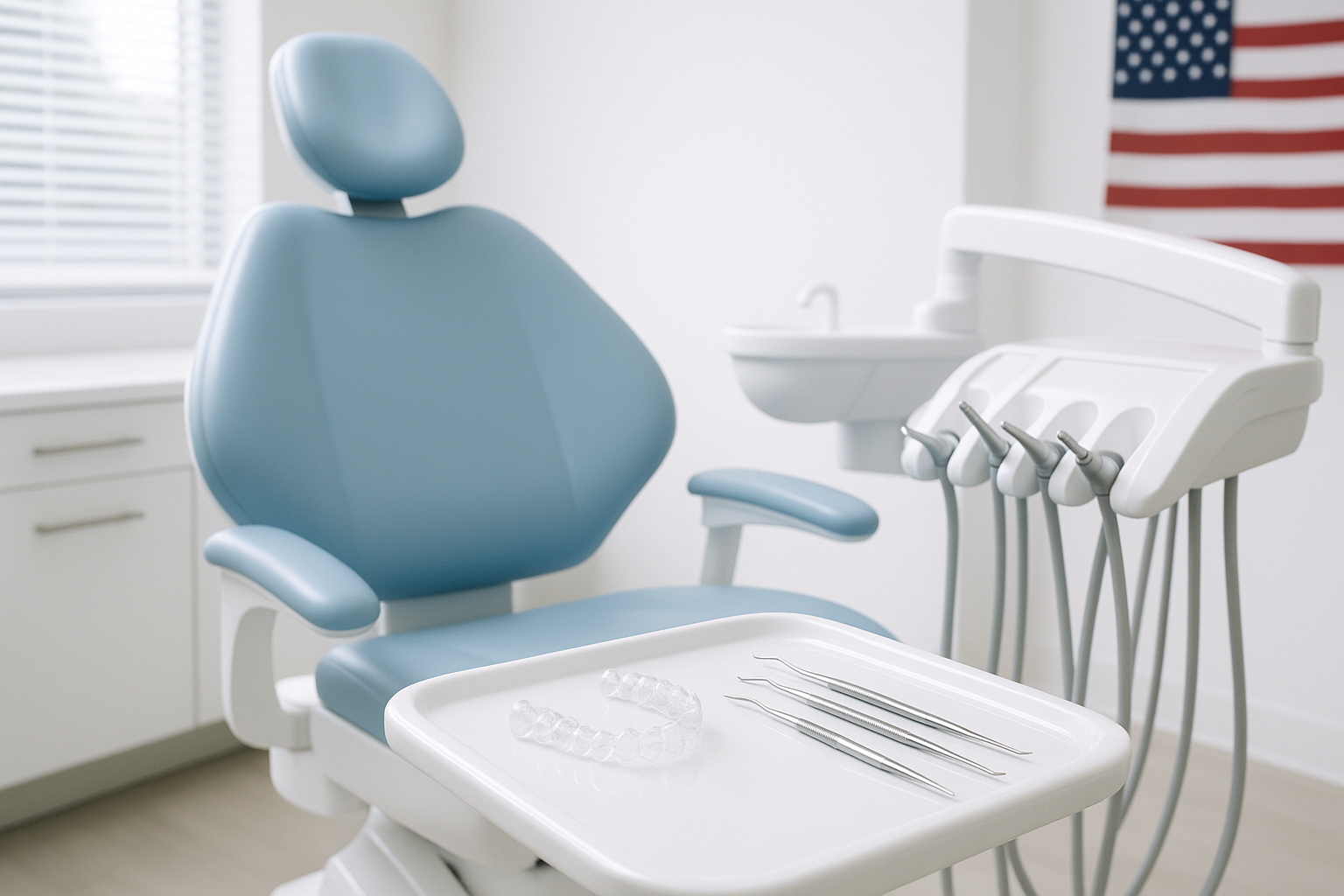
In this Orthodontist Career Overview in the USA, the daily work begins with diagnosis. You may review medical and dental histories, perform an examination, order panoramic or cephalometric X-rays, capture intraoral scans, assess growth patterns, and determine whether a patient needs braces, clear aligners, palate expansion, bite correction, or observation.
A typical appointment includes documenting tooth movement, checking appliance condition, making adjustments, and updating the treatment plan. You may coordinate with a general dentist before restorative work, refer a complex extraction to an oral surgeon, consult a pediatric dentist about early intervention, or work with a periodontist when gum health affects tooth movement.
A realistic day might include two new-patient consultations from 8:00 to 10:00 a.m., adjustment visits before lunch, treatment-plan reviews after lunch, and a staff meeting followed by payroll, supply ordering, insurance questions, and marketing decisions. Orthodontists often see dozens of patients in a day, but each treatment plan may last to months.
The roles around you differ. A general dentist provides broad oral care; an orthodontic assistant prepares rooms and supports appliance procedures; a dental hygienist focuses on preventive cleaning and periodontal education; and a dental laboratory technician fabricates appliances from clinical prescriptions. The orthodontist remains responsible for diagnosis and treatment decisions.
Children and parents need plain explanations about discomfort, missed appointments, oral hygiene, and realistic results. We found that trust often depends less on technical vocabulary than on explaining why a treatment takes months instead of promising an unrealistic six-month result. The phrase Orthodontist Career Overview in the USA should therefore include communication skill, not just clinical procedures.
Where Orthodontists Work and Who They Treat
Your work setting strongly affects autonomy, income, and daily pace. Private orthodontic practices may offer the greatest control over scheduling and treatment philosophy, while multi-location dental groups can provide centralized billing, marketing, human resources, and purchasing. University clinics emphasize teaching and complex cases; hospitals and craniofacial centers treat medically complicated patients; community health centers and public programs focus on access.
This Orthodontist Career Overview in the USA includes a broad patient mix. Teenagers remain a major group, but adults increasingly seek clear aligners or fixed appliances. Younger children may receive interceptive care for crossbites or severe crowding, while patients with cleft lip and palate, skeletal discrepancies, or impacted teeth may require multidisciplinary treatment.
Ownership offers schedule control and the possibility of building an asset, but you assume responsibility for rent, payroll, compliance, equipment, collections, and staffing. Employment may provide health insurance, retirement contributions, paid leave, and predictable compensation. In 2026, many new specialists choose employment first to learn operations before buying or starting a practice.
Geography matters. Urban markets can contain many specialists competing for the same families, whereas suburban areas may support a family-focused practice. Rural communities often have fewer specialists and longer travel distances. A county with 40,000 school-age children, rising household income, and no nearby orthodontist may be more attractive than a large city with established offices.
Digital impressions, 3D printing, remote check-ins, and artificial intelligence-assisted planning can reduce some visits, but they do not replace examination, diagnosis, informed consent, or professional accountability. Based on our analysis, Orthodontist Career Overview in the USA decisions should weigh technology as an operating tool, not as a substitute for clinical judgment.
How to Become an Orthodontist in the USA
The standard pathway in this Orthodontist Career Overview in the USA is sequential and demanding:
- Complete undergraduate prerequisites, usually including biology, general and organic chemistry, physics, biochemistry, statistics, and psychology.
- Take the Dental Admission Test and apply through the appropriate dental school application service.
- Earn a Doctor of Dental Surgery or Doctor of Dental Medicine degree, normally over four years.
- Pass required national and clinical examinations.
- Complete a two- or three-year Commission on Dental Accreditation-accredited orthodontic residency.
- Apply for state dental licensure and meet renewal requirements.
- Consider American Board of Orthodontics certification after meeting examination and case requirements.
After high school, the pathway commonly takes to years: about four years of college, four years of dental school, and two to three years of specialty training. Some students complete prerequisites through a nontraditional route, but shortening the calendar rarely means reducing the academic workload.
Admission committees review grades, science preparation, DAT performance, recommendation letters, shadowing, research, leadership, and community service. We recommend observing an orthodontist before applying so you understand the repetitive clinical work and patient-management demands. State licenses are mandatory; board certification is optional. Always verify rules with your state dental board because clinical examinations, jurisprudence tests, background checks, and continuing education requirements differ.
The Orthodontist Career Overview in the USA pathway rewards early planning. Create a prerequisite spreadsheet, schedule the DAT months ahead, request letters before application season, and maintain evidence of service and dental exposure.
Orthodontic Education, Residency, and Licensure Requirements
Dental school provides the broad foundation required before specialty training. You study anatomy, physiology, pathology, pharmacology, radiology, dental materials, oral surgery, restorative dentistry, ethics, and supervised patient care. During the four-year DDS or DMD program, your clinical evaluations and class performance matter because orthodontic residencies can receive many more applications than available positions.
Orthodontic residency adds focused training in growth and development, cephalometric analysis, biomechanics, craniofacial anomalies, interceptive orthodontics, fixed appliances, clear aligners, retention, and interdisciplinary care. A resident may manage a child with a posterior crossbite, an adolescent with impacted canines, and an adult with periodontal limitations in the same week.
In this Orthodontist Career Overview in the USA, realistic competitiveness matters. The American Dental Education Association has reported dental school applicant pools commonly exceeding 10,000 people nationally in recent cycles, while orthodontic programs offer far fewer positions than dental schools. Strong grades, clinical evaluations, research, orthodontic faculty letters, and a clear explanation of your goals can all help.
Licensure may include the Integrated National Board Dental Examination, a regional or state clinical assessment, a background check, a jurisprudence examination, continuing education, and renewal every one to three years depending on the jurisdiction. Requirements can change.
Use this checklist: (1) compare CODA-accredited programs, (2) confirm rules with each target state board, (3) calculate application deadlines, (4) arrange shadowing, and (5) speak with at least two practicing orthodontists. We recommend checking ADA licensure information and each board’s official website rather than relying on forum advice.
The phrase Orthodontist Career Overview in the USA is most useful when it leads to verified requirements, not assumptions based on another state or graduating class.
Orthodontist Salary, Benefits, and Career Costs
Income figures require careful interpretation. The Bureau of Labor Statistics reported a median annual wage of $170,910 for dentists in May 2023, but that occupation-wide figure includes general dentists and several specialties. Orthodontist compensation reports often show higher averages, yet private-practice owner earnings are not equivalent to salary because owners pay overhead and may retain business profit.
This Orthodontist Career Overview in the USA shows why compensation differs. Region, years in practice, patient volume, treatment fees, payer mix, specialty credentials, hours worked, and ownership status can move annual earnings substantially. An employed orthodontist may receive a base salary, production bonus, health insurance, retirement contributions, paid time off, and malpractice coverage. An owner may have greater upside but must pay rent, payroll, supplies, laboratory fees, software, equipment financing, insurance, and marketing.
Education costs can be significant. Public dental school tuition may exceed $50,000 per year for tuition alone, while private programs can exceed $80,000 annually; undergraduate tuition, living costs, relocation, licensing fees, and interest add to the total. Four years of dental school can therefore produce well over $200,000 in tuition before interest, and many graduates owe more than $300,000 overall.
Consider a simple example. Suppose you owe $350,000 at a blended 6.5% rate; a 10-year repayment schedule is roughly $3,980 per month before tax. An employed orthodontist taking home $11,000 monthly after taxes and benefits would retain about $7,020 before personal expenses. A $600,000 practice purchase requiring $120,000 down could improve long-term equity, but it adds debt, payroll risk, and collection uncertainty.
We analyzed these trade-offs and recommend comparing three scenarios: employment, practice purchase, and startup. Include loan payments, emergency reserves, taxes, benefits, equipment replacement, and a conservative patient-volume estimate. The version of an Orthodontist Career Overview in the USA should never present the highest owner income as guaranteed personal pay.
Job Outlook and Demand for Orthodontists
The latest broad federal projection is for dentist employment to grow 4% from to 2034, according to the Bureau of Labor Statistics. The BLS does not always publish a separate projection for orthodontists, so you should not confuse the dentist-wide estimate with a precise specialty forecast. The American Association of Orthodontists represents more than 19,000 members, illustrating both the size and competitiveness of the specialty.
Demand drivers include population growth, adult treatment, clear aligner adoption, cosmetic dentistry, insurance coverage, early-intervention awareness, and replacement of retiring practitioners. Adult patients may seek treatment at or 50, while parents increasingly ask about evaluation before all permanent teeth erupt. We found that replacement demand can matter more than national growth in a small community.
This Orthodontist Career Overview in the USA should also address constraints. Local competition, treatment affordability, reimbursement, economic downturns, technology changes, and scope-of-practice rules can limit new-patient flow. A high-income suburb may offer excellent fees but intense competition; a rural region may offer unmet need but lower reimbursement and a smaller referral base.
Compare communities using population-to-provider ratios, household income, school-age population, Medicaid participation, travel distance, and access-to-care measures. Review state dental society reports, university workforce studies, the U.S. Department of Labor, and American Association of Orthodontists resources. In 2026, a spreadsheet mapping competing offices within a 10-, 20-, and 30-mile radius can reveal more than a national average.
The practical lesson from our research is simple: demand exists, but opportunity is local. The strongest decision combines workforce data with conversations among referring dentists, school administrators, and established specialists. That is the difference between a hopeful projection and a defensible career plan.
Skills, Personality Traits, and Work-Life Balance
Successful orthodontists need more than a high science grade. Technical abilities include diagnostic reasoning, spatial visualization, fine hand skills, biomechanics, digital workflow knowledge, precise documentation, and evidence-based treatment planning. You must understand how a small bracket or aligner attachment affects movement over several months, not merely perform a single procedure.
This Orthodontist Career Overview in the USA also depends on interpersonal skill. You may explain treatment to a nervous eight-year-old, negotiate expectations with parents, resolve a complaint about a broken appliance, and discuss cost alternatives without pressure. Patience, cultural competence, leadership, and conflict resolution matter because treatment often lasts to months and depends on cooperation.
Many clinics operate Monday through Friday, with some early morning or evening appointments. Emergency work is usually more limited than in many medical specialties, although loose wires, lost retainers, and unexpected pain still require attention. Owners must also manage staffing, collections, compliance, training, and performance reviews.
Physical strain can include prolonged standing, repetitive hand movements, neck flexion, and back discomfort. Emotional pressures include difficult outcomes, cancellations, staffing shortages, dissatisfied families, and burnout. We recommend adjustable stools and loupes, scheduled microbreaks, delegated tasks for trained staff, protected administrative time, peer mentoring, and boundaries for after-hours messages.
Track your schedule for four weeks before choosing ownership. Record clinical hours, administrative hours, interruptions, and time spent on unresolved problems. In our experience, this exercise exposes whether you want to run a business or prefer a focused clinical role. A realistic Orthodontist Career Overview in the USA includes both patient impact and the work required behind the chair.
Technology, Ethics, and Access Gaps in Orthodontic Care
Digital workflows now affect nearly every stage of care. Intraoral scanners can replace many physical impressions, cone-beam 3D imaging can clarify impacted teeth and skeletal anatomy, and digital simulations can help patients visualize possible movement. Cloud-based records, 3D-printed models, automated reminders, and remote monitoring may reduce visits, but they also create training, cybersecurity, and quality-control obligations.
In this Orthodontist Career Overview in the USA, ethical responsibility remains with the orthodontist. You must obtain informed consent, confirm diagnostic accuracy, protect health information, evaluate advertising claims, disclose alternatives, and avoid overtreatment. Direct-to-consumer aligners and artificial intelligence recommendations may be useful in limited circumstances, but neither removes the need for examination, radiographs when indicated, periodontal assessment, and professional review.
Access is an equally serious issue. A rural family may drive minutes for an appointment, while a low-income patient may lack transportation, paid time off, or adequate insurance. Medicaid coverage differs by state and may not cover every orthodontic indication. School partnerships, sliding-scale programs, mobile clinics, residency clinics, Medicaid participation, and referral networks can narrow these gaps.
Use a five-step technology test: (1) confirm peer-reviewed clinical evidence, (2) assess cybersecurity and data ownership, (3) calculate purchase, subscription, maintenance, and training costs, (4) train staff and audit results, and (5) retain professional judgment. We tested this framework against common digital purchasing decisions and found that the cheapest scanner is rarely the cheapest system after software, service, and workflow time are included.
As of 2026, a responsible Orthodontist Career Overview in the USA must treat innovation and access as linked responsibilities rather than separate business topics.
How to Decide Whether Orthodontics Is Right for You
Start with your reasons. Do you enjoy dentistry, precise repetitive work, long-term patient relationships, and visible changes over time? Can you tolerate to years of education, delayed full-time earnings, and the possibility of substantial debt? Do you want to manage a business, or would you rather concentrate on clinical care as an employee?
This Orthodontist Career Overview in the USA recommends a four-step reality check: first, shadow an orthodontist for at least two full clinic days; second, interview one resident and one established practice owner; third, calculate tuition, interest, repayment, and income scenarios; and fourth, volunteer or work in a dental setting. Two days of observation can reveal more than months of online research.
Investigate warning signs. Choosing the specialty only for perceived income, disliking patient communication, underestimating debt, avoiding science prerequisites, or assuming technology eliminates clinical responsibility should prompt further reflection. Ask professionals how often patients miss appointments, what cases are emotionally difficult, how overhead has changed, and what they do after hours.
Compare related paths. General dentistry offers broader procedures; pediatric dentistry emphasizes children and behavior management; oral and maxillofacial surgery involves longer surgical training and more acute care; dental hygiene and assisting require shorter programs; dental laboratory technology focuses on appliance fabrication and digital design.
We recommend asking practicing orthodontists: What does your real schedule look like? What percentage of revenue goes to overhead? How do reimbursement and cancellations affect you? Would you buy a practice again? What causes burnout? Which part of the job did you misunderstand before training? Your answers will make the Orthodontist Career Overview in the USA personal and financially realistic.
Next Steps for Building an Orthodontic Career
Use the next days deliberately. First, review CODA-accredited dental and orthodontic programs. Second, compare your completed prerequisite courses with each school’s requirements. Third, contact the dental boards in states where you may eventually practice. Fourth, arrange orthodontic shadowing. Fifth, create an academic and financial timeline that includes tuition, living costs, examination fees, relocation, interest, and an emergency reserve.
- If you are in college: strengthen science grades, begin DAT preparation early, gain dental exposure, build sustained service experience, and ask a pre-dental advisor to review your course plan.
- If you are in dental school: join orthodontic organizations, pursue research or case presentations, develop relationships with orthodontic faculty, and track residency requirements well before application season.
- If you trained internationally: investigate credential evaluation, English-language requirements, advanced standing DDS or DMD programs, state-specific licensure, and immigration or work-authorization resources. The ADA resource for foreign-educated dentists is a useful starting point.
This Orthodontist Career Overview in the USA supports action based on verified information, not salary advertisements or assumptions from another state. Call programs directly when requirements conflict, and ask practicing specialists how current rules affect their work.
Orthodontics can offer professional autonomy, durable patient relationships, and meaningful outcomes, but it deserves firsthand exposure and a clear financial plan. We recommend shadowing before applying, building a conservative loan model before enrolling, and choosing a community where your skills meet a real need. The strongest career decision is not the one with the biggest promise; it is the one you understand well enough to sustain.
That is the practical conclusion of this Orthodontist Career Overview in the USA: observe the work, verify the numbers, and let evidence—not assumptions—decide your next step.
Key Takeaways
- Becoming an orthodontist typically requires to years after high school, including dental school and a two- to three-year accredited residency.
- State licensure is mandatory, while American Board of Orthodontics certification is optional and should not be confused with legal authorization to practice.
- Income varies sharply according to location, ownership, patient volume, payer mix, debt, benefits, and practice overhead.
- Shadowing for at least two full clinic days and interviewing both a resident and practice owner can expose the profession’s real demands.
- Before applying, verify requirements with CODA programs, the Dental Admission Test pathway, and the dental boards in states where you may practice.
Frequently Asked Questions
How many years does it take to become an orthodontist in the USA?
After high school, becoming an orthodontist usually takes about to years: approximately four years of undergraduate study, four years of dental school, and two to three years in an orthodontic residency. Licensure requirements vary by state and should be confirmed with the relevant dental board.
How much does an orthodontist earn in the USA?
Orthodontist pay varies widely by experience, location, patient volume, ownership status, and payer mix. Employee compensation may include benefits and bonuses, while practice owners may earn more but must cover payroll, rent, equipment, laboratory expenses, insurance, and marketing.
Is orthodontics a good career in 2026?
Yes. Orthodontics can provide strong income, predictable clinical schedules, long-term patient relationships, and opportunities for practice ownership. However, the education is lengthy, dental school debt can be substantial, and business ownership carries financial and administrative risk.
What does an orthodontist do every day?
Orthodontists diagnose and treat irregular bites, crowded teeth, jaw discrepancies, and alignment problems. They use braces, clear aligners, expanders, retainers, digital scans, radiographs, and treatment-planning software to guide tooth and jaw development.
Do orthodontists need a dental degree?
The standard route includes a bachelor’s degree or equivalent prerequisites, a DDS or DMD degree, required dental examinations, an accredited orthodontic residency, and state licensure. American Board of Orthodontics certification is an optional professional credential, not a substitute for a state license.
How long is orthodontic residency?
Most orthodontic residencies last two to three years after dental school. Training includes growth and development, biomechanics, fixed appliances, clear aligners, craniofacial conditions, interceptive treatment, radiographic analysis, and retention.
