Introduction: What to Expect From a Geologist Career in the USA
Geologist Career Overview in the USA gives you a practical picture of the work, education, salary, licensing, and long-term prospects behind this science-based profession. You may be asking whether geologists spend most of their time outdoors, whether a bachelor’s degree is enough, and which specialties offer the best fit.
Based on our research of U.S. Bureau of Labor Statistics information available in 2026, geoscientists had about 29,500 jobs, median annual pay of roughly $99,240, projected employment growth of 5% from to 2034, and approximately 2,000 openings per year. Those figures describe the broad geoscientist category, not a guaranteed salary for every geology graduate.
A Geologist Career Overview in the USA now reaches well beyond oil and mining. Environmental consulting, groundwater protection, engineering projects, climate-risk planning, construction, government research, geospatial technology, carbon storage, and critical-mineral development all need earth-science skills.
You should also expect a mixed work pattern: field observations, laboratory analysis, GPS or GIS mapping, technical reports, client meetings, and safety training. An entry-level geologist generally works under supervision, while a licensed professional geologist may be authorized to sign or take responsible charge of public geologic work. The difference affects duties, liability, and career progression.
For current employment definitions and wage methodology, consult the U.S. Bureau of Labor Statistics. We recommend treating national figures as a starting point, then comparing actual postings in the state and specialty you want.
What Does a Geologist Do in the United States?
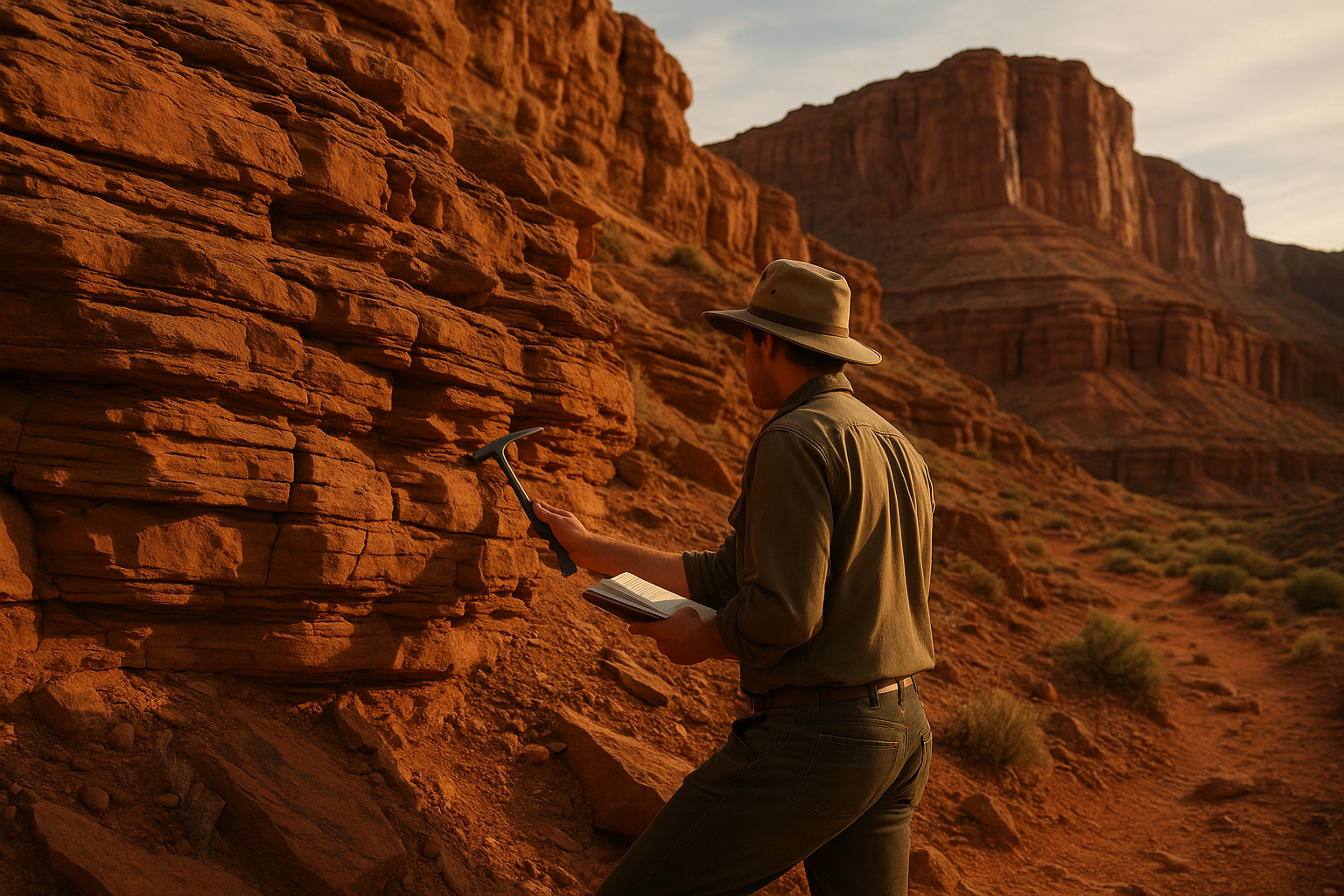
A geologist studies Earth materials, processes, history, and hazards, then applies that knowledge to decisions involving water, energy, construction, environmental protection, and natural resources. In practice, you may examine a rock core in a laboratory one day and explain landslide risk to a county planning department the next.
A typical project starts with maps, aerial imagery, prior reports, permits, and historical records. You then plan sampling, collect rock or soil, record GPS locations and field observations, preserve chain-of-custody documentation, analyze samples or laboratory results, build a conceptual model, and write a technical report with conclusions and limitations.
Field geologists spend more time mapping outcrops, measuring sections, logging cores, or sampling soil and groundwater. Laboratory geologists use microscopes, geochemical instruments, and quality-control procedures. Consulting geologists manage schedules, budgets, clients, and regulations, while research scientists develop hypotheses and publish findings. Government specialists may monitor hazards, manage public data, or review permits.
Concrete assignments include mapping landslide risk for a county, testing contaminated soil at a former industrial facility, evaluating municipal groundwater wells, or logging hundreds of feet of drill core at a mine. Each requires careful documentation; a missed sample location or incorrect unit conversion can change a project decision.
Is geology a good career? Our analysis suggests it suits people who enjoy science, outdoor work, technical writing, and changing project conditions. Job stability is often strongest where infrastructure, water, environmental compliance, or public hazards create ongoing demand, but regional hiring can vary sharply with commodity prices and construction cycles. This Geologist Career Overview in the USA should therefore be read as a range of paths rather than one standard job.
In our experience, students who test the work through field camp or an internship make better decisions than those who choose a specialty from a job title alone.
Geologist Career Paths and Specializations
The best geology specialty depends on the problems you want to solve. Environmental geologists assess contamination, brownfields, wetlands, remediation plans, and regulatory compliance. A project may involve groundwater sampling, soil vapor data, risk assessment, and coordination with the U.S. Environmental Protection Agency framework.
Engineering geologists and geotechnical specialists evaluate foundations, tunnels, dams, highways, slope stability, earthquakes, and construction materials. Their tools may include borehole logs, rock-mass classifications, laboratory strength tests, GIS, and 3D subsurface models. Hydrogeologists study aquifers, well yields, groundwater flow, drought, saltwater intrusion, and drinking-water protection. For example, a municipal water team might use pumping-test results and recharge estimates to decide whether a new well field can support a town during a two-year drought.
Petroleum and energy geologists interpret seismic data and reservoir models, while newer energy work includes carbon storage, geothermal systems, and subsurface hydrogen research. Mining and economic geologists identify ore deposits, estimate resources, manage exploration programs, and address reclamation and mine safety. Demand may shift with oil prices, permitting, battery supply chains, and federal policy.
Less familiar routes include planetary geology, coastal geology, paleontology, volcanology, seismology, geohazards, climate adaptation, and geological data science. In 2026, GIS, remote sensing, drone imagery, Python, machine learning, LiDAR, and automated 3D modeling increasingly distinguish applicants with otherwise similar degrees.
A useful Geologist Career Overview in the USA must include both established and emerging work. We found that students who combine one physical specialty with one digital capability—such as hydrogeology plus Python or engineering geology plus GIS—can apply across more employer types.
To choose a direction, compare three real job postings, identify repeated tools and credentials, and ask a practicing geologist what the job actually involves during a busy month.
Education Requirements: Degrees, Courses, and Field Skills
Many entry-level roles accept a bachelor’s degree in geology, geoscience, earth science, environmental science, or a closely related discipline. Your transcript should normally include physical and historical geology, mineralogy, petrology, structural geology, sedimentology, stratigraphy, geomorphology, geophysics, hydrology, chemistry, calculus, statistics, and GIS.
A master’s degree can improve your prospects in specialized environmental consulting, hydrogeology, engineering geology, petroleum research, university laboratories, and competitive government positions. It is not automatically better than work experience; a graduate degree with no field or software practice may be less useful than an undergraduate degree paired with a strong internship.
Field camp, undergraduate research, laboratory experience, and an applied capstone matter because employers need evidence that you can observe, measure, document, and explain. We recommend saving a field notebook page, geologic map, cross-section, sample log, and final report rather than relying only on a transcript.
Useful additions include OSHA safety training, HAZWOPER for applicable hazardous-waste work, ArcGIS or QGIS, Excel, AutoCAD, Python, geochemical software, and technical writing. The American Geosciences Institute and university geology departments can help you compare curricula, field requirements, and professional pathways.
Do you need a Ph.D.? Usually not for consulting, applied industry, environmental work, government operations, or most field positions. A doctorate is more relevant to university teaching, principal research roles, and advanced scientific leadership. This Geologist Career Overview in the USA therefore favors practical experience unless your target role specifically requires doctoral research.
Based on our review of employer requirements, prioritize field competence, data handling, clear writing, and safety awareness alongside grades. Those four signals frequently appear together in early-career postings.
How to Become a Geologist: A 7-Step Career Plan
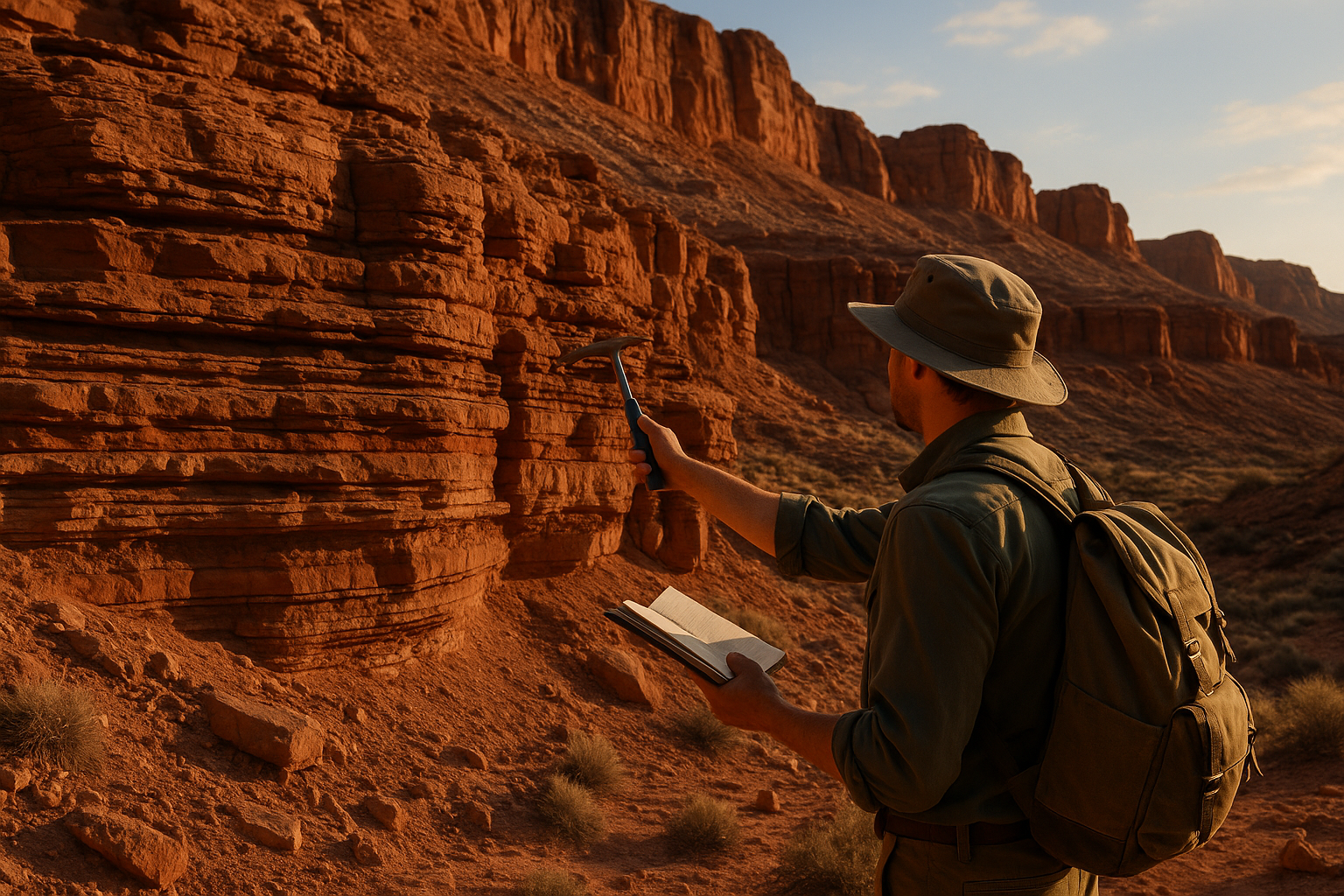
Use this seven-step plan to turn interest into employable evidence:
- Build science and math skills. In high school or community college, take geology, chemistry, physics, calculus, statistics, GIS, and technical writing. Outdoor leadership or environmental volunteering can also build practical confidence.
- Earn an appropriate degree. Compare geology departments for field camp, laboratory facilities, internships, faculty research, and course coverage.
- Complete field and laboratory experience. Learn mapping, compass and GPS use, sampling, microscopy, chain of custody, and quality assurance.
- Choose a specialty. Test environmental, water, engineering, hazards, energy, mining, or data-focused work before committing to graduate school.
- Develop software and communication skills. Practice GIS, spreadsheets, Python, technical figures, presentations, and concise reports.
- Gain supervised experience. Seek internships with environmental firms, state geological surveys, engineering companies, energy firms, museums, universities, or the U.S. Geological Survey.
- Apply for targeted roles. Tailor each resume to field methods, software, safety credentials, and measurable project outcomes.
Create a portfolio containing a geologic map, field-notebook sample, GIS map, cross-section, laboratory analysis, and a two-page technical report. For interviews, prepare one technical example and one teamwork example using the situation, action, and result format.
A realistic timeline is freshman year for core science courses, sophomore year for GIS and a first field experience, junior year for research or an internship, senior year for capstone and applications, and the first two years after graduation for supervised work, specialization, and licensing research. This Geologist Career Overview in the USA becomes actionable when each year produces a visible skill or work sample.
In our experience, contacting five alumni and attending two professional association events can produce more useful career information than sending identical applications to fifty employers.
Geologist Salary in the USA: Pay by Role, State, and Experience
The latest BLS figures accessible in place geoscientist median annual pay at about $99,240, with roughly 29,500 employed workers, a projected 5% growth rate from through 2034, and close to 2,000 annual openings. Wage tables also show a broad spread between lower-paid and higher-paid workers; the national median is not an offer guarantee and does not represent every geology title.
Pay varies by specialty, industry, education, field hardship, travel, overtime, security clearance, software ability, and professional licensure. Environmental consulting often offers steady entry-level hiring but may begin below specialized engineering, mining, or energy roles. Federal and state government jobs can trade a lower starting salary for pensions, predictable schedules, and strong benefits. Oil and gas, mining, and rotational energy work may pay more when remote conditions, extended travel, or commodity risk are involved.
Geographic patterns matter. Texas has energy and environmental markets; Colorado has mining, water, and geoscience technology; California has environmental, infrastructure, seismic, and groundwater work; Alaska and Wyoming support resource and remote-field positions; Washington has hazards, environmental, and infrastructure demand. Major metropolitan areas often have more consulting jobs but also higher housing costs.
Total compensation may include health insurance, retirement contributions, bonuses, per diem, travel reimbursement, tuition support, paid field rotations, and relocation assistance. Evaluate an offer by calculating effective hourly pay, unpaid travel time, overtime eligibility, field allowances, benefits, advancement, and cost of living.
For example, a local environmental role might pay less but keep you home most nights, while a mining or energy rotation may pay substantially more yet require two weeks away, difficult weather, and limited schedule control. We recommend comparing the whole package, not just base salary. A useful Geologist Career Overview in the USA distinguishes statistical medians from the lived cost of earning them.
Where Geologists Work and What the Job Is Really Like
Geologists work at outdoor field sites, laboratories, offices, drilling locations, construction projects, mines, government facilities, universities, and remote camps. A realistic workweek may begin with early site access and a safety briefing, continue with GPS measurements or sample collection, and end with chain-of-custody checks, data cleanup, engineering meetings, client communication, and report deadlines.
Do geologists travel a lot? It depends on the employer. A local environmental sampler may drive within one region and return home nightly. A federal survey, petroleum program, mining exploration team, or remote field assignment may involve weeks away. Seasonal fieldwork can create intense spring and summer schedules followed by office-heavy winter months.
Physical demands include hiking uneven terrain, carrying equipment, working in heat or cold, wearing steel-toe boots and other protective equipment, and entering active industrial sites. Safety is not a formality: job hazard analyses, confined-space rules, respirators, heat-illness prevention, communication plans, and HAZWOPER requirements may apply.
Work-life fit deserves as much attention as salary. Government roles may offer predictable schedules; consulting can bring client deadlines and sudden travel; seasonal field programs may concentrate work into several months; remote rotations can provide long blocks of time off but reduce control over location and routine.
Before accepting, ask how many nights away are typical, whether travel time is paid, who supplies safety equipment, how overtime works, and what happens when weather delays a project. This Geologist Career Overview in the USA is most useful when you match the job’s schedule to your actual life rather than assuming every geology position feels like field camp.
We found that candidates who ask these questions early are less likely to leave during the first year because of unexpected travel or safety expectations.
Professional Geologist Licensing and Certifications by State
Licensing rules vary by state, and a Professional Geologist or Licensed Geologist credential may be required when you sign reports, offer geologic services to the public, or take responsible charge of regulated work. An employer may hire an unlicensed graduate because the work is performed under a licensed professional’s supervision; that does not authorize independent practice.
The common path includes approved education, documented supervised experience, professional references, application review, and passage of examinations administered or recognized by the National Association of State Boards of Geology. Requirements can include specific coursework, an experience log, ethics provisions, and continuing education.
California, Texas, Washington, and other states do not necessarily define education, experience, examinations, or responsible charge in the same way. Never assume a neighboring state’s rules transfer automatically. Before applying, visit the relevant state board, verify approved coursework, document supervisors and dates, check exam eligibility, and record continuing-education obligations.
Related credentials may include Certified Professional Geologist through the American Institute of Professional Geologists, OSHA training, HAZWOPER, and specialty certifications connected with environmental, safety, or technical work. These credentials may strengthen an application but do not replace a state license where one is legally required.
In 2026, confirm application fees, exam windows, experience definitions, electronic submission rules, and acceptable references directly with the state board. Keep transcripts, employment records, project descriptions, and supervisor contact details organized before you need them.
This Geologist Career Overview in the USA separates employability from legal authority: you can begin building experience before licensure, but you should understand exactly what work you may perform and sign.
Geologist Job Outlook, Technology, and Industry Changes Through 2034
BLS projections available in indicate approximately 5% geoscientist employment growth from to 2034 and about 2,000 openings annually, including replacement needs. Overall demand does not mean every specialty will grow equally; local hiring can be stronger in groundwater, infrastructure, environmental compliance, or hazards than in a shrinking commodity segment.
Durable demand drivers include aging infrastructure, groundwater management, environmental regulation, critical minerals, coastal hazards, wildfire and landslide risk, carbon storage, geothermal energy, and climate adaptation. The U.S. Geological Survey mineral-resource information covers lithium, copper, rare earth elements, and other materials tied to electricity, transportation, and manufacturing.
Artificial intelligence, automated mineral analysis, satellite imagery, drones, LiDAR, cloud GIS, and 3D subsurface models can speed interpretation and improve coverage. They do not remove the need for field judgment, sample validation, professional ethics, or regulatory accountability. A model can identify a pattern; you still need to decide whether the data are representative and defensible.
Climate and resilience work creates additional routes. Geologists may support floodplain mapping, managed-retreat studies, groundwater-stress assessments, infrastructure siting, post-wildfire landslide analysis, and disaster recovery. Transferable skills include statistics, data visualization, coding, project management, public communication, regulatory interpretation, and interdisciplinary collaboration.
Our analysis suggests that the strongest long-term profile combines one domain skill with one technical skill—for example, coastal hazards plus remote sensing or critical minerals plus Python. A modern Geologist Career Overview in the USA must account for both field science and digital evidence management.
How to Choose the Right Geology Career Path
Start with six questions: Do you prefer office, laboratory, or field work? How much travel can you tolerate? Do you want public service or commercial work? Are you comfortable with physical conditions? How important is maximum salary? Are you willing to pursue licensure or graduate school?
Match interests to roles. Water and chemistry point toward hydrogeology; structures and construction toward engineering geology; maps and coding toward GIS and geologic data; natural resources toward mining or energy; hazards toward seismology, volcanology, coastal work, or resilience planning. Then complete at least three informational interviews across different sectors and seek job shadowing, volunteering, or a short internship before committing to graduate school.
Compare job descriptions using five criteria: required degree, field percentage, software stack, licensing expectations, and advancement path. Warning signs include unclear field schedules, vague overtime policies, unpaid travel, missing safety details, and “entry-level” language paired with several years of required experience.
Use a simple scorecard from to for compensation, mentorship, geographic flexibility, mission, technical growth, and work-life fit. Weight the categories that matter most to you, then compare at least three opportunities rather than choosing from one offer in isolation.
In our experience, students often overvalue the specialty name and undervalue the supervisor. A supportive manager who teaches sampling, reporting, and client communication can accelerate your development faster than a prestigious title with no feedback. This Geologist Career Overview in the USA should help you test fit systematically instead of guessing from salary tables.
Conclusion: Your Next Steps Toward a Geology Career
Geology offers several U.S. career routes, from environmental consulting and groundwater to engineering, hazards, energy, mining, government research, and geological data science. The strongest candidates combine earth-science knowledge with field competence, digital tools, clear writing, safety awareness, and professional networking.
For the next days, review three job postings, list the skills you lack, contact one practicing professional, enroll in a relevant software or field course, and research the licensing board for the state where you want to work. Save every project artifact that demonstrates what you can do.
Over the next six to twelve months, complete an internship or supervised field project, build your portfolio, join a professional association, attend a conference or local section meeting, and apply for targeted entry-level roles. Use the BLS, USGS, National Association of State Boards of Geology, American Geosciences Institute, and your state geological survey for reliable follow-up information.
We recommend revisiting this Geologist Career Overview in the USA after each internship or interview and updating your plan with evidence. You do not need to select one lifelong specialty immediately. You do need to test the work deliberately through coursework, field experience, software practice, and conversations with practicing geologists.
Based on our research, the most durable advantage is not predicting the perfect specialty; it is becoming useful across several earth-science problems. Start with one skill you can demonstrate, one professional conversation, and one real project.
Key Takeaways
- A geology career can lead to environmental, groundwater, engineering, hazards, energy, mining, government, research, and geospatial roles—not only oil and mining.
- A bachelor’s degree is common for entry-level work, while field experience, internships, GIS, technical writing, and safety training strongly affect employability.
- BLS data available in indicate about 29,500 geoscientist jobs, median pay near $99,240, 5% projected growth through 2034, and roughly 2,000 annual openings.
- Licensing is state-specific; verify education, supervised experience, examinations, fees, and digital application rules directly with the relevant board.
- Use informational interviews, a project portfolio, and a 30-day skills plan to test career fit before committing to a specialty or graduate degree.
Frequently Asked Questions
What degree do you need to become a geologist in the USA?
Most entry-level geology jobs require a bachelor’s degree in geology, geoscience, earth science, environmental science, or a related field. A master’s degree can improve prospects in hydrogeology, engineering geology, research, and specialized consulting.
How much do geologists make in the USA?
The national median pay for geoscientists was approximately $99,240 in the latest BLS data available in 2026. Actual offers vary by specialty, location, experience, industry, travel, overtime, and professional licensing.
Is geology a good career?
Yes, geology can be a strong career if you enjoy science, fieldwork, problem-solving, and technical writing. Your experience may include outdoor sampling, laboratory analysis, travel, safety procedures, and project deadlines, so the fit depends on your preferred work style.
Do geologists travel a lot?
Some geologists travel frequently, particularly those working in mining, petroleum, federal surveys, environmental field programs, and remote camps. Local environmental and government roles may involve mostly regional travel with predictable overnight requirements.
Do geologists need a Ph.D.?
A Ph.D. is usually not required for applied industry, consulting, government, or environmental geology roles. It is more commonly needed for university teaching, independent research leadership, and highly specialized scientific positions.
Do geologists need a professional license?
Licensing requirements differ by state. Many states require approved education, documented supervised experience, references, and an examination before you may sign reports or take legal responsibility for public geologic work.
