Exploring A Career As An Auto Body Technician In The USA: Essential Facts for 2026
If you want a skilled trade with visible results, steady repair demand, and room to grow, Exploring a Career as an Auto Body Technician in the USA makes sense in 2026. You’re probably asking a simple question: can collision repair give you stable work, practical training, and decent pay without spending four years in college? For many people, the answer is yes.
Auto body technicians restore damaged vehicles after crashes, hail, vandalism, and other impacts. That includes documenting damage, removing broken parts, measuring frames, repairing panels, refinishing surfaces, and returning the vehicle to manufacturer standards. Based on our research, this work sits at the intersection of craftsmanship, safety, and technology.
The market supports that need. The U.S. had more than million registered vehicles in recent years, according to Bureau of Transportation Statistics. The U.S. Bureau of Labor Statistics reports thousands of job openings each year from growth and retirements. Insurance-backed repairs remain common, and newer cars now include cameras, radar, and lightweight materials that require trained hands.
Exploring a Career as an Auto Body Technician in the USA fits you well if you like hands-on work, visual problem-solving, precision tools, and seeing a damaged car look right again. In our experience, people who enjoy both physical work and technical detail often do best. As of 2026, EV growth and advanced safety systems are also creating fresh demand for technicians who can keep learning.
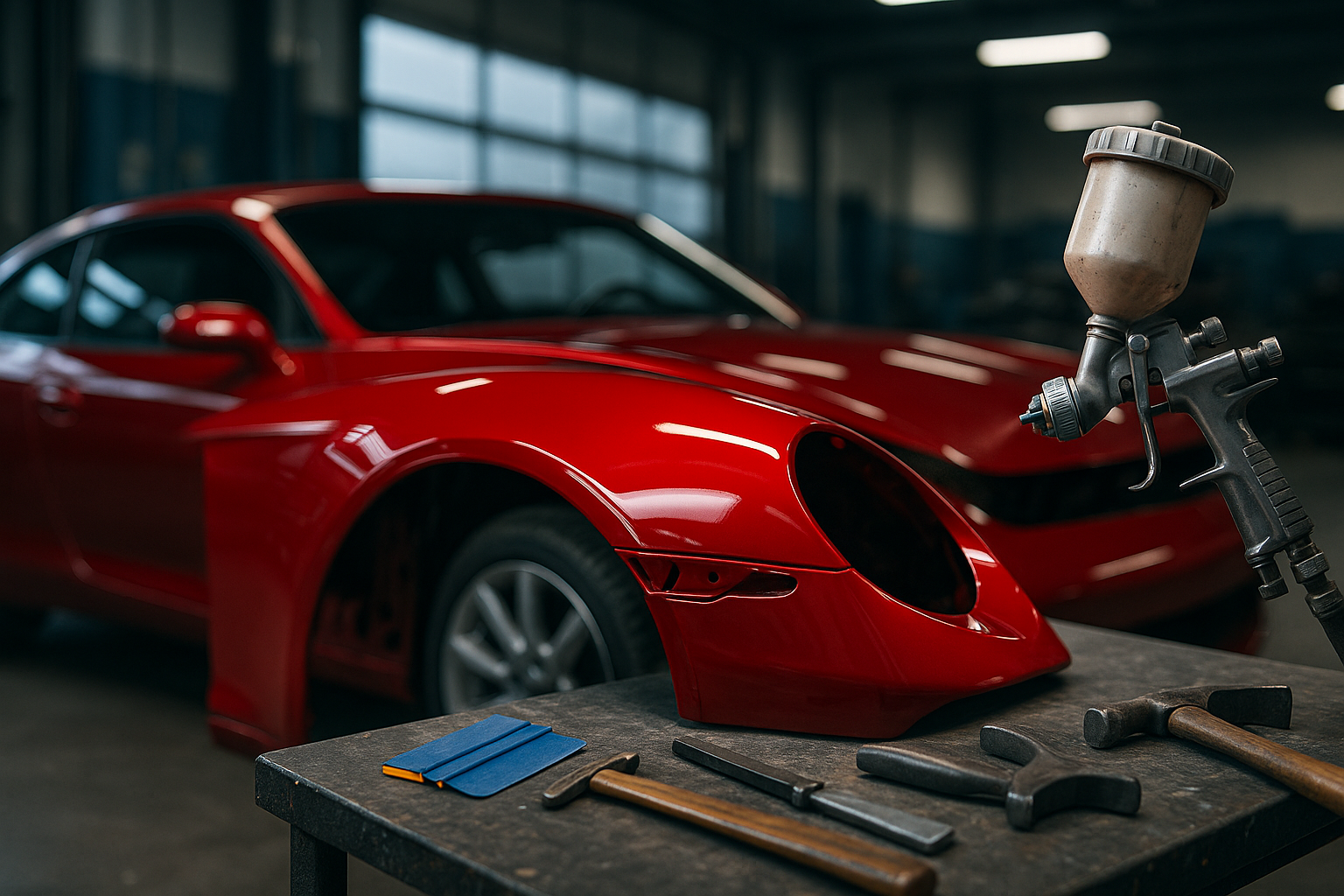
What Does an Auto Body Technician Do? Exploring a Career as an Auto Body Technician in the USA Through Daily Work
An auto body technician is a collision-repair professional who restores a vehicle’s structure, exterior panels, paint surfaces, and safety-related components to factory standards. That sounds broad because it is. On one repair, you may replace a fender and blend paint. On the next, you may measure structural damage, weld in a panel section, apply corrosion protection, and verify scan results.
Common duties include:
- Damage assessment and teardown
- Frame and body measurement using computerized systems
- Dent repair, panel straightening, and plastic repair
- Welding, panel replacement, and bonding
- Sanding, masking, and refinishing prep
- Reassembly, post-repair scans, and final inspection
It helps to separate this role from nearby jobs. Auto mechanics focus on engines, drivetrains, brakes, and mechanical systems. Paint technicians specialize in spray application and finish quality. Glass technicians replace windshields and windows. Estimators write repair plans and costs. Collision repair managers keep work flowing through the shop.
Here’s a realistic example. A late-model SUV comes in after a highway collision. The front bumper cover is torn, the right fender is folded, one headlamp mount is broken, and a parking sensor is misaligned. A radar bracket may also be out of spec. The technician starts with teardown, scans the vehicle, checks manufacturer repair procedures, measures the front structure, replaces the damaged parts, repairs mounting points, prepares surfaces, and documents every step for the insurer and shop records.
That’s why Exploring a Career as an Auto Body Technician in the USA means more than learning how to pull dents. Modern work depends on digital estimating systems, photo documentation, scan tools, and OEM procedures. We found that shops repairing late-model vehicles increasingly expect technicians to read repair documents and understand electronic workflows, not just swing a hammer.
Exploring a Career as an Auto Body Technician in the USA also means understanding responsibility. A cosmetic mistake looks bad. A structural or sensor mistake can affect safety. According to NHTSA, driver-assistance systems rely on proper function and calibration. That raises the skill level of the job in and beyond.
How to Become an Auto Body Technician in the USA
The clearest path is simple: finish basic education, get hands-on training, build experience, learn tools, add certifications, and apply to shops that repair modern vehicles. You do not need one perfect route. Many good technicians start in different places and meet in the middle after to years of steady learning.
- Earn a high school diploma or GED. Most employers expect it. Math, shop, welding, and drafting classes help.
- Choose a training path. Certificate programs often take to months. Associate degrees usually take about years.
- Get supervised experience. Start as a helper, detailer, prep technician, or disassembly technician.
- Build tool knowledge. Learn hand tools, air tools, measuring systems, welders, sanders, and scan tools.
- Pursue certifications. I-CAR and ASE can strengthen your résumé.
- Apply strategically. Target shops with strong training, OEM procedures, and modern equipment.
Training options vary. Community colleges often cost less than private trade schools and may qualify for aid. Employer-sponsored training can reduce out-of-pocket cost, but you may start with lower pay. Apprenticeships provide live shop exposure, though they may be less structured. Entry-level shop jobs can get you earning faster, but your learning depends heavily on the shop’s culture.
Based on our analysis, Exploring a Career as an Auto Body Technician in the USA works best when you compare cost, time, and shop access before enrolling anywhere. Ask each program about lab hours, student-to-instructor ratios, refinishing booths, frame machines, and employer placement rates. We recommend getting those answers in writing.
There are also practical requirements. Many shops want a valid driver’s license because you may move customer vehicles. Some employers run background checks, especially dealership groups and insurance-linked facilities. OSHA-style safety training matters early, and a clean work record helps when you’re trusted with expensive cars and detailed repair documentation.
Exploring a Career as an Auto Body Technician in the USA often starts with modest tasks. Don’t dismiss them. Sweeping, masking, parts handling, and teardown teach workflow, repair order discipline, and shop pace. In our experience, technicians who master the basics first make fewer mistakes when they move into structural and refinishing work.
Education, Certifications, and Skills Employers Want for Exploring a Career as an Auto Body Technician in the USA
Employers want proof that you can work safely, follow repair procedures, and produce consistent results. Two names matter most: I-CAR and ASE. I-CAR training is widely used in collision repair and covers areas such as non-structural repair, structural repair, refinishing, and vehicle technology. ASE, through the National Institute for Automotive Service Excellence, offers recognized credentials that can signal technical knowledge to employers and customers.
Technical skills matter just as much as certificates. Shops often look for ability in:
- MIG welding and safe weld testing
- Aluminum repair and panel isolation
- Plastic repair for bumper covers and trim
- Paint mixing and color matching
- Frame-machine operation and measuring systems
- Corrosion prevention and seam sealing
- Basic electrical diagnosis after impact damage
Soft skills are not optional. Estimating accuracy, clear notes, time management, and teamwork with insurers and parts staff can make or break repair quality. We found that rework often traces back to poor communication, not just weak hands-on skill. A missed note about a broken bracket or sensor mount can delay delivery by days.
Modern vehicles raise the bar. High-strength steel, aluminum, carbon fiber, hybrid systems, EV battery areas, cameras, and radar all change how you repair a vehicle. According to the U.S. Department of Energy, electric vehicle adoption has expanded quickly over the last several years. That means more technicians need safe shutdown procedures and better documentation habits in 2026.
Exploring a Career as an Auto Body Technician in the USA is easier when you follow a sequence. First, master safety, parts identification, and disassembly. Next, learn measuring and repair planning. Then build refinishing prep, panel fitting, and corrosion-control skills. Last, add scans, calibrations, and post-repair inspections. Exploring a Career as an Auto Body Technician in the USA becomes far more realistic when your skill plan is ordered instead of random.
Auto Body Technician Salary, Benefits, and Earning Potential
Pay is one of the biggest reasons people consider this trade, but you need to read wage numbers carefully. According to the U.S. Bureau of Labor Statistics, the median annual wage for automotive body and related repairers was $51,680 in May 2024, or about $24.85 per hour. The lowest 10% earned under $37,000, while the highest 10% earned over $82,000. Those figures don’t tell the full story because shop pay systems vary a lot.
You may be paid hourly, flat rate, salary plus bonus, or a commission-style structure tied to billed labor. Some shops offer overtime, production bonuses, tool allowances, health insurance, 401(k) plans, paid OEM training, or tuition reimbursement. Others offer a high flat-rate promise but weak repair volume, which can cut your real earnings fast.
A realistic pay ladder looks like this:
- Entry-level helper: often $15 to $20 per hour, depending on region
- Mid-career non-structural technician: commonly $22 to $30 per hour equivalent
- Experienced structural technician: often $30+ per hour equivalent, higher in busy metro markets
- Estimator or production manager: can exceed technician pay with bonuses tied to shop output
Exploring a Career as an Auto Body Technician in the USA pays better when you develop scarce skills. Aluminum repair, frame work, luxury-brand procedures, paint expertise, and ADAS calibration knowledge can raise your value. Dealership body shops, fleet operations, and high-volume certified collision centers often pay more for those strengths.
When you compare offers, use a simple formula. Add base pay, likely bonuses, and average overtime. Then subtract unpaid waiting time, commute cost, and your own tool expense. Ask how many labor hours the shop writes per repair order and how often technicians wait on supplements or parts. Based on our research, Exploring a Career as an Auto Body Technician in the USA becomes much more profitable when the shop’s workflow is organized and repair volume is steady.
Job Outlook and Where Auto Body Technicians Work
You can build this career in more places than most people think. Auto body technicians work in independent collision centers, dealership body shops, national repair chains, manufacturer-linked facilities, fleet operations, insurance-owned repair networks, restoration shops, and mobile cosmetic repair businesses. The setting shapes your day. A dealership may offer more OEM procedures and branded training, while an independent shop may expose you to a wider mix of repairs.
The labor picture is more nuanced than older career guides suggest. Safer cars may reduce some collision frequency, but repairs are often more complex and more expensive when crashes happen. The BLS projects about 14,300 openings per year for automotive body and related repairers over the decade, largely from retirements and worker transitions. At the same time, insurers continue handling millions of claims yearly, and parts plus calibration requirements have pushed repair planning to a higher level.
Location matters. Major metro areas usually offer more shops, more dealership groups, and more specialization. Rural regions may have fewer employers, but technicians who can handle both cosmetic and structural work can become especially valuable. States with heavy hail, snow, ice, flooding, or dense commuter traffic often produce steady repair demand. High vehicle ownership rates also support long-term opportunities.
Exploring a Career as an Auto Body Technician in the USA also means choosing a lane. Collision repair differs from cosmetic dent repair, classic-car restoration, commercial truck repair, and insurance estimating. Restoration work can be slower and detail-heavy. Fleet repair may be faster and more standardized. Estimating can be less physical but requires strong documentation and insurer communication.
Use this job-search checklist before accepting an offer:
- Shop reputation: read reviews and ask local parts suppliers
- Training support: ask who pays for I-CAR or OEM courses
- Equipment quality: inspect welders, measuring systems, booths, and ventilation
- Repair volume: ask average car count and cycle time
- Certification partnerships: confirm OEM or industry affiliations
- Turnover: ask how long technicians usually stay
We analyzed common hiring patterns and found that shops with low turnover and written training plans usually produce better early-career growth. That matters when Exploring a Career as an Auto Body Technician in the USA is not just about getting hired, but about becoming highly employable.
A Typical Day, Work Environment, and Physical Demands
A normal day starts before the tools come out. Many shops begin with a short production meeting to review promised deliveries, parts status, supplements, and bottlenecks. After that, you check repair plans, verify parts, photograph damage if needed, and begin teardown or repair. On a busy day, you may switch between structural pulls, panel fitting, filler work, sanding, masking, reassembly, scanning, and quality checks.
A realistic workflow often looks like this:
- Morning meeting with estimator and production lead
- Repair-plan review and OEM procedure check
- Parts verification before major disassembly
- Structural or cosmetic repair during the main production block
- Refinishing prep and coordination with the painter
- Reassembly, scanning, and quality control before delivery
The work can be physically demanding. You’ll stand for long periods, kneel, bend, lift panels, and repeat fine hand motions. Shops can be noisy, and dust, fumes, solvents, and welding hazards are part of the environment. The OSHA auto repair safety resources emphasize ventilation, PPE, chemical handling, and fire prevention for good reason.
Safety practices are non-negotiable. You need respirators for paint and dust exposure, eye protection for grinding, gloves for chemicals and sharp edges, hearing protection for sustained noise, and proper battery and high-voltage isolation procedures on hybrid or EV work. We recommend asking any employer how they supply PPE and enforce lockout procedures.
Communication also affects your stress level and output. Picture a repair where the estimator misses a bracket, the parts specialist orders the wrong sensor mount, the painter isn’t told about a blend panel, and the adjuster approves a supplement late. Delivery slips. Rework grows. The customer gets frustrated. Exploring a Career as an Auto Body Technician in the USA is easier in shops where the technician, painter, parts staff, and front office talk clearly every day.
Is the work too physical? For some people, yes. But injury risk drops when you use lifts, panel stands, adjustable work tables, correct lifting habits, and scheduled breaks. In our experience, technicians who treat body mechanics seriously last longer. That matters if Exploring a Career as an Auto Body Technician in the USA is part of your long-term plan, not just a short-term job.
The Technology Gap: EVs, ADAS, and Manufacturer Repair Procedures
This is where the trade is changing fastest. Many older career descriptions still talk mainly about dent repair, filler, and paint prep. That’s no longer enough. In 2026, a bumper replacement on a late-model vehicle may also require pre- and post-repair scanning, sensor inspection, bracket measurement, aiming, calibration, and software verification before the vehicle is ready to return.
Advanced driver-assistance systems use cameras, radar, ultrasonic sensors, and control modules to support lane keeping, adaptive cruise control, parking assist, and automatic emergency braking. According to NHTSA, these systems can improve safety, but only when components are repaired and calibrated correctly. A bumper cover may look fine while a hidden bracket sits a few millimeters out of spec. That’s enough to create problems.
EVs raise the stakes further. High-voltage batteries, orange cables, isolation zones, and manufacturer shutdown steps require strict procedures. Repairing high-strength steel, aluminum, or EV structures without approved tools can weaken the vehicle or create safety risks. OSHA and OEM guidelines stress battery handling, fire prevention, and technician training because thermal incidents and improper repairs can be severe.
Exploring a Career as an Auto Body Technician in the USA today means learning digital repair work early. Start with OEM repair portals, scan-tool basics, calibration requirements, weld specifications, and EV shutdown steps. We found that entry-level technicians who understand even the basics of scans and documentation stand out faster than those who only know cosmetic prep.
Use authoritative resources when planning your training. Review safety information from OSHA, vehicle technology guidance from NHTSA, and certification pathways from ASE. Exploring a Career as an Auto Body Technician in the USA now rewards people who are comfortable with both metal repair and software-linked procedures. That technology gap is real, and it creates opportunity for newer technicians willing to learn it well.
How to Choose the Right Training Program or First Shop for Exploring a Career as an Auto Body Technician in the USA
The best option is not always the most expensive school or the shop with the flashiest website. You need a decision framework. Start by comparing accreditation, instructor experience, equipment quality, internship access, employer relationships, completion rates, and total tool costs. A low tuition number can still become expensive if the program has weak lab access or poor hiring connections.
When you visit a school or shop, verify specifics:
- Accreditation or recognized program standards
- Instructor background in modern collision repair
- I-CAR or manufacturer partnerships
- Frame equipment, welders, paint booths, and scan tools
- Graduation and placement outcomes
- Total expected tool cost in the first year
Ask direct interview questions. Is pay hourly or flat rate? Who pays for training? Are OEM procedures available at every workstation? How is rework handled? What protective equipment is supplied? Are scans and calibrations documented on every qualifying repair? Based on our research, the answers to those questions reveal more than a recruiting speech ever will.
Watch for warning signs. Poor ventilation, undocumented repairs, pressure to skip scans, broken equipment, high turnover, or vague pay terms are serious red flags. If a shop cannot explain its repair standards clearly, walk away. The same goes for programs that avoid discussing placement results or lab time.
Exploring a Career as an Auto Body Technician in the USA gets easier when you compare at least three options side by side. Create a simple scorecard for tuition, commute cost, training quality, benefits, advancement path, and culture. Then ask for written offers or written program outlines. We recommend taking notes during every visit and reviewing them one day later, when the sales pressure is gone. Exploring a Career as an Auto Body Technician in the USA should start with a smart first environment, not just the first available opening.
Career Advancement, Specializations, and Business Ownership
This trade has more upward paths than many newcomers expect. You might start as a helper or prep tech, then move to non-structural repair, structural repair, or refinishing support. From there, you can become a senior technician, estimator, quality-control specialist, paint technician, shop foreperson, production manager, trainer, field representative, or business owner.
Profitable specialties often include:
- Aluminum repair for brands using lightweight construction
- Luxury and exotic vehicle repair with strict OEM standards
- Classic restoration for high-detail custom work
- Heavy-duty truck repair and fleet operations
- Paintless dent repair for hail and minor damage
- ADAS calibration and electronic documentation
- EV collision repair and battery-safe procedures
If you want to own a shop, the skills go beyond repair quality. You need certifications, strong insurer and customer communication, equipment planning, local licensing, payroll discipline, and cash-flow control. A frame rack, welders, scan tools, ventilation systems, booth access, and calibration equipment can represent a major investment. We analyzed startup patterns in skilled trades and found that underestimating overhead is one of the fastest ways new owners struggle.
Use a 3-year development plan. In year one, master safety, teardown, parts handling, and basic non-structural work. In year two, add structural measurement, welding certifications, and better productivity targets. In year three, aim for low comeback rates, stronger documentation, a defined specialty, and one leadership task such as mentoring a helper or managing a repair plan. Track measurable milestones like billed hours, rework percentage, and tool purchases.
Exploring a Career as an Auto Body Technician in the USA can absolutely become a lifelong career. If your body wears down over time, you can shift into estimating, quality inspection, training, field support, or management. In our experience, technicians who build documentation and communication skills early have the easiest transition later. Exploring a Career as an Auto Body Technician in the USA is not a dead-end trade when you keep adding value beyond the stall.
Pros, Cons, and the Best Next Steps
Auto body repair has clear strengths. You get hands-on work, visible before-and-after results, varied repair challenges, national demand, and often the chance to earn while learning. For many people, that beats sitting in a classroom for years. The downsides are real too: physical strain, noise, tool costs, production pressure, and daily exposure to dust, chemicals, or welding hazards if safety is weak.
Use this personal fit checklist:
- Do you enjoy working with your hands?
- Can you stay patient with precision tasks?
- Do you notice small visual differences in gaps and finish?
- Will you follow safety rules every time?
- Can you work well with estimators, painters, and parts staff?
- Are you comfortable learning technology and scan procedures?
Here is a practical 30-day plan:
- Research local wages using BLS data and local job boards.
- Tour at least two collision shops.
- Contact one community college or trade program.
- Review I-CAR learning paths.
- Practice basic vehicle-part identification on real cars or diagrams.
- Update your résumé with mechanical, shop, or customer-service experience.
Then move into a 90-day plan:
- Apply for helper, detail, teardown, or prep roles.
- Complete basic workplace safety training.
- Gather two or three references.
- Compare hourly versus flat-rate offers carefully.
- Create a personal tool budget and buy only essentials first.
Exploring a Career as an Auto Body Technician in the USA should end with a decision, not more vague research. If you want fast hands-on learning, start with an entry-level shop role at a well-run facility. If you want structure and broader fundamentals, choose formal training first. Then build certifications as your experience grows.
Based on our research, the best next step is simple: visit real shops this month. Ask hard questions, inspect the work environment, and compare written paths forward. Exploring a Career as an Auto Body Technician in the USA becomes real the moment you step into a repair bay and see whether the work matches your strengths. That single visit can tell you more than hours of online reading.
Key Takeaways
- Auto body repair can be a strong career choice if you want hands-on work, visible results, and steady demand tied to collision claims, vehicle complexity, and technician retirements.
- The best entry path depends on your goals: start in a helper or prep role for faster shop exposure, or choose a 6- to 18-month certificate or 2-year degree for more structured training.
- Your earning potential rises when you learn high-value skills such as structural repair, aluminum work, refinishing, ADAS procedures, OEM documentation, and EV safety.
- Choose schools and employers carefully by checking equipment, training support, pay structure, ventilation, repair standards, and whether scans and calibrations are documented properly.
- Take action now: tour two or three shops, compare training options, build a starter tool budget, and apply to entry-level roles where safety, mentorship, and growth are clear.
Frequently Asked Questions
Is auto body repair a good career in 2026?
Yes. Collision repair can offer stable work because cars still get damaged in crashes, weather events, and parking-lot incidents. In 2026, shops also need technicians who can work with ADAS components, aluminum panels, and EV safety procedures.
How long does it take to become an auto body technician?
Most people can start in to months through a certificate program, or about years through an associate degree. Some begin faster by taking a helper or prep role and learning on the job while completing short safety and repair courses.
How much do auto body technicians make in the USA?
According to the U.S. Bureau of Labor Statistics, the median annual wage for automotive body and related repairers was $51,680 in May 2024. Pay can rise with certifications, structural repair skills, dealership work, ADAS knowledge, and strong flat-rate productivity.
Do auto body technicians need ADAS calibration skills?
Not always, but it is increasingly valuable. Many bumper, windshield, front-end, and side-impact repairs now affect cameras, radar, or sensors. Shops that handle late-model vehicles often prefer technicians who understand scanning, aiming, and documentation.
What certifications do employers look for in collision repair?
I-CAR training and ASE certifications are the most recognized starting points. They help show employers that you understand repair planning, structural work, refinishing, and vehicle safety systems while building credibility as you gain shop experience.
What is the best first step to start in this field?
Start by comparing local training options, touring at least three shops or programs, and asking how they handle safety, OEM procedures, and pay. If you are serious about Exploring a Career as an Auto Body Technician in the USA, the best first move is usually an entry-level shop visit plus a written training plan.
