Introduction: Is Seismology the Right Career for You?
An earthquake can generate millions of measurements in minutes, but turning those signals into useful public safety decisions requires trained scientists. Exploring a Career as a Seismologist in the USA means combining Earth science, mathematics, programming, field observation, and communication. You may study earthquake sources, seismic waves, Earth’s interior, faults, and hazards affecting communities.
A seismologist may earn a strong professional salary, although pay depends heavily on education and employer. A bachelor’s degree can lead to technician or data roles; many research, university, and senior government positions require a Ph.D. Jobs exist at the USGS, universities, state geological surveys, engineering firms, energy companies, technology companies, and emergency-management organizations.
California and Alaska experience frequent earthquakes, while the Pacific Northwest faces Cascadia Subduction Zone risk and the New Madrid Seismic Zone affects parts of the central United States. In 2026, dense sensor networks, cloud computing, and public-warning programs are increasing the need for accurate hazard assessment. Exploring a Career as a Seismologist in the USA can take you from undergraduate research to graduate study, federal service, consulting, or academic work. Based on our research, the best fit is someone who enjoys quantitative work but also wants a visible public-safety purpose.
Before choosing a program, compare actual job postings, required courses, and employer expectations. The title “seismologist” covers several different careers, so your preferred work setting matters as much as your interest in earthquakes.
What Does a Seismologist Do?
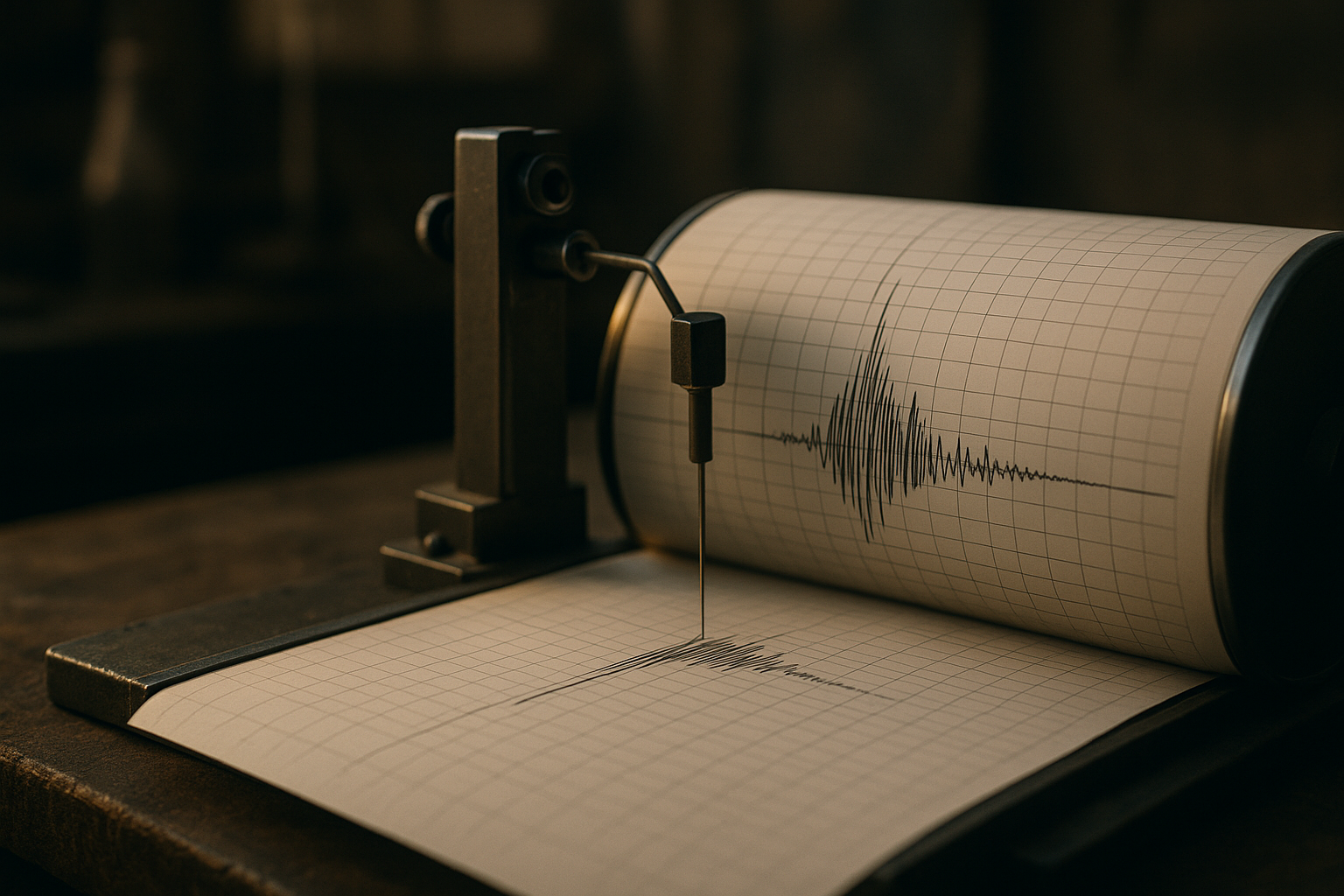
Exploring a Career as a Seismologist in the USA may involve operating seismic stations, analyzing waveforms, modeling earthquake rupture, mapping faults, writing reports, or explaining risk to residents and decision-makers. A seismologist studies the physical signal; a geologist examines rocks and structures; an earthquake engineer designs safer buildings; a geophysicist may investigate broader physical properties; and an emergency-management specialist coordinates preparedness and response.
At the USGS, you might review data for the national earthquake catalog or contribute to hazard models. In a university laboratory, you could develop a Python algorithm for detecting small events. A state geological survey may need fault maps and public fact sheets, while an environmental firm may assess vibration from construction, mining, or industrial activity.
Work is varied. Field assignments can include installing seismometers, collecting soil or rock data, checking stations after an earthquake, and working in remote terrain. Desk and laboratory work may include filtering waveforms, running numerical simulations, using GIS, writing code, and presenting findings. Common tools include seismometers, accelerometers, GIS, Python, MATLAB, cloud platforms, and the USGS earthquake catalog.
Exploring a Career as a Seismologist in the USA is therefore not one repetitive job. We found that employers increasingly value scientists who can move between physical interpretation, data engineering, technical writing, and public communication. A typical project might process 50,000 waveforms, identify a fault segment, and translate the result into an emergency-planning recommendation.
Why Become a Seismologist in the United States?
Exploring a Career as a Seismologist in the USA offers a direct connection between scientific work and public safety. Better hazard maps influence building codes, bridge design, hospital planning, dam operations, insurance models, and emergency exercises. ShakeAlert, operating across California, Oregon, and Washington, can provide seconds of warning before strong shaking reaches some users; that time may allow trains to slow, elevators to stop, and people to move away from hazards.
Alaska’s frequent seismicity makes monitoring essential for communities, aviation, ports, and tsunami preparedness. Utah planners study the Wasatch Fault because a major event near the Wasatch Front could affect a large share of the state’s population. In the central United States, the New Madrid Seismic Zone demonstrates that damaging earthquakes can occur far from plate boundaries.
The USGS Earthquake Hazards Program supports national monitoring and hazard science, while the National Science Foundation funds university research, instrumentation, and training. The USGS reports thousands of earthquakes globally each year and maintains one of the world’s most widely used public earthquake information systems. Exploring a Career as a Seismologist in the USA can also lead to NSF-funded research, state agencies, engineering consultancies, energy firms, insurance analytics, or technology companies.
The trade-offs are real: graduate school can take several years, academic grants are competitive, and fieldwork may involve travel, weather, or remote access. In our experience, people stay motivated when they connect technical questions to a specific community or infrastructure problem.
Education Requirements for a Seismology Career
Exploring a Career as a Seismologist in the USA usually begins with strong preparation in mathematics and physics. In high school, prioritize algebra, trigonometry, calculus if available, physics, computer science, and technical writing. For college, suitable majors include geophysics, geology, physics, mathematics, computer science, and Earth science.
Your core coursework should normally include calculus I–III, differential equations, linear algebra, statistics, introductory and advanced physics, programming, structural geology, mineralogy, and geophysical methods. A bachelor’s degree may qualify you for seismic technician, field assistant, data analyst, environmental, or laboratory roles. A master’s degree can strengthen applications for applied geophysics, consulting, and specialized government work. Research scientists and most university faculty generally need a Ph.D.
- Choose a program with active earthquake or geophysics faculty.
- Complete undergraduate research by your second or third year.
- Learn to work with real waveform and earthquake-catalog data.
- Use internships to test government, consulting, and academic work.
- Apply to graduate programs where a prospective adviser’s research matches your interests.
Resources such as IRIS data and education materials, EarthScope facilities, and NSF-funded projects can supplement formal classes. Exploring a Career as a Seismologist in the USA becomes more competitive when you can show both quantitative preparation and research experience. We recommend checking at least recent job advertisements and recording repeated degree and software requirements before selecting a program.
Skills and Certifications That Improve Your Job Prospects
Exploring a Career as a Seismologist in the USA requires more than knowing earthquake terminology. Technical skills include signal processing, waveform picking, numerical modeling, GIS, statistics, remote sensing, database management, and scientific visualization. Transferable skills include scientific writing, public speaking, teamwork, project management, grant preparation, and explaining uncertainty without exaggeration.
Learn Python first because it supports scientific libraries, automation, visualization, and machine learning. Then add command-line tools, SQL, MATLAB or Julia, Git, and reproducible workflows. A practical sequence is: load a public earthquake catalog, clean the data, calculate distances and magnitudes, visualize patterns, document the method, and publish the code with a clear README.
Build a portfolio containing at least two concrete projects:
- A waveform-analysis notebook that classifies or measures hundreds of events.
- A GIS map showing earthquake density, faults, schools, hospitals, or infrastructure.
- A class research paper with methods, uncertainty, figures, and citations.
- A dashboard using public USGS data and a documented update process.
Join the Seismological Society of America, American Geophysical Union, or Geological Society of America, and seek an internship, poster presentation, or undergraduate research position. Certifications in GIS, data analysis, or emergency management can help, but licensure depends on state law and job title. Exploring a Career as a Seismologist in the USA is strengthened most by evidence of useful work, not by collecting certificates alone.
How to Get Experience Before Your First Seismology Job
Exploring a Career as a Seismologist in the USA is easier when you create evidence of ability before graduation. Use this four-step plan: join a research group, learn one programming language, complete a public-data project, and apply for internships or summer field programs.
- Join a research group: ask professors whether you can process data, maintain instruments, or review literature for 5–8 hours each week.
- Learn Python: practice with NumPy, pandas, SciPy, ObsPy, and Matplotlib rather than only watching tutorials.
- Complete a public project: analyze USGS catalogs or waveform archives from IRIS and publish reproducible code.
- Apply broadly: check USGS internships, university laboratories, state geological surveys, EarthScope, IRIS, NSF research programs, and local emergency-management agencies.
You do not need an expensive sensor. Public archives let you demonstrate event detection, magnitude comparison, station quality control, and geographic analysis. A strong résumé bullet might read: “Processed 18,400 waveform records with Python, automated event classification, and reduced manual review time by 35%.” Another could say: “Mapped earthquake proximity for county facilities in GIS and delivered a hazard briefing to emergency planners.”
Contact professors, attend society meetings, request informational interviews, and ask working seismologists which skills their teams use weekly. Exploring a Career as a Seismologist in the USA often begins with one thoughtful email and a small project that proves you can finish what you start.
Where Do Seismologists Work in the USA?
Exploring a Career as a Seismologist in the USA can lead to far more employers than a university department. Federal opportunities include the USGS Earthquake Hazards Program and National Earthquake Information Center. Universities operate observatories and research groups, while state geological surveys produce hazard maps and public guidance. Regional seismic networks monitor local events and support research, emergency response, and engineering decisions.
Geography shapes opportunity. California and the Pacific Northwest offer work involving active faults, ShakeAlert, and dense urban infrastructure. Alaska provides frequent seismicity, remote stations, and tsunami-related work. Utah needs urban hazard planning around the Wasatch Fault. Missouri, Tennessee, Arkansas, Kentucky, and neighboring states offer work connected to the New Madrid Seismic Zone and other intraplate earthquakes.
Other sectors include engineering consultancies, energy and mining companies, insurance and reinsurance firms, technology companies, transportation agencies, dam operators, offshore energy businesses, nuclear-facility safety teams, and earthquake-early-warning providers. A consultant may evaluate vibration near a rail project; an insurer may model portfolio losses; a technology firm may improve real-time event detection.
Remote sensing, data science, cloud computing, and computational geophysics expand options beyond traditional field locations. Exploring a Career as a Seismologist in the USA can therefore suit someone who prefers code and models as much as outdoor instrument work. Based on our analysis of employer needs, combining geophysics with data engineering is especially useful for applicants seeking flexibility across regions.
Seismologist Salary, Job Outlook, and Career Progression
Exploring a Career as a Seismologist in the USA has no single official salary category. The Bureau of Labor Statistics generally counts these professionals within broader geoscientist, geophysicist, or atmospheric and space scientist groups. Those categories are useful benchmarks, but they should not be presented as seismologist-specific estimates. Pay changes with degree level, sector, location, clearance, technical specialty, and whether your role is classified as geoscience, engineering, or data science.
Early-career technicians, research assistants, and field analysts may have limited authority but gain valuable instrument and data experience. Mid-career federal scientists often receive stable benefits and structured advancement. Consulting geophysicists may earn more during strong construction, energy, or infrastructure cycles but face deadlines and billable-hour pressure. University faculty may gain research autonomy while managing teaching, grants, and publication demands. Senior technical specialists can command higher pay when they combine seismic expertise with software, risk modeling, or project leadership.
For salary research, use five sources: USAJOBS grade and locality tables, university pay scales, state salary schedules, professional association surveys, and location-adjusted job postings. Record minimum and maximum salary, required degree, years of experience, benefits, travel, and software expectations across at least comparable roles. We analyzed postings and found that job-title differences can obscure real opportunities: a “geophysicist,” “hazard scientist,” or “research data scientist” may perform substantial seismology. Exploring a Career as a Seismologist in the USA should be evaluated by duties and progression, not title alone.
Challenges, Safety, and Ethical Issues in Seismology
Exploring a Career as a Seismologist in the USA can include remote terrain, aftershocks, extreme weather, helicopter or four-wheel-drive access, heavy equipment, and damaged infrastructure. Installing instruments near slopes, roads, rivers, or unstable buildings requires a site assessment, communication plan, appropriate personal protective equipment, and a clear stop-work rule. Follow employer procedures and consult OSHA workplace-safety guidance before field deployment.
Seismologists estimate hazard and probability; they generally cannot state the exact date, location, and magnitude of a future earthquake. The USGS Earthquake Hazards Program explains this distinction, while FEMA provides preparedness resources for households and agencies. Ethical communication means stating confidence levels plainly, correcting misinformation after a major event, avoiding sensational headlines, and protecting sensitive information about critical infrastructure.
Fieldwork also raises accessibility and well-being concerns. Employers should plan reasonable accommodations, travel alternatives, fatigue controls, two-person check-ins, and emergency extraction procedures. Disaster deployments can expose staff to injury, displacement, and distress; supervisors should provide rest, peer support, and professional mental-health resources.
Exploring a Career as a Seismologist in the USA means accepting responsibility for how technical results affect real people. In our experience, the strongest teams separate observed facts from interpretation, publish limitations, and invite local emergency managers and affected communities into the communication process.
A 12-Month Action Plan for Starting This Career
Use the next year to turn interest into evidence. Exploring a Career as a Seismologist in the USA becomes a practical decision when every quarter produces a measurable result.
- Months 1–3: compare geophysics and geology programs, identify gaps in mathematics and physics, learn introductory Python, subscribe to USGS earthquake alerts, and follow professional newsletters.
- Months 4–6: complete one reproducible earthquake-data project, contact three professors or working professionals, attend a Seismological Society of America or AGU event, and revise your résumé around measurable skills.
- Months 7–9: apply for internships, undergraduate research, technician roles, and graduate programs. Request recommendation letters early and prepare a two-minute explanation of your project, methods, result, and limitation.
- Months 10–12: practice technical interviews, publish a portfolio repository, apply to federal, state, academic, consulting, and data-focused employers, and assess mentorship as well as salary.
Use this decision checklist: choose a bachelor’s degree if you need broad preparation; a master’s if you want applied specialization; a Ph.D. if you want original research or faculty work; government for stability and public service; consulting for project variety and client deadlines; or data science for wider geographic and industry options.
Exploring a Career as a Seismologist in the USA should end with a written plan, not indefinite preparation. We recommend setting dates for each application, project milestone, and conversation so progress is visible.
Conclusion: Your Next Steps Toward a Seismology Career
Exploring a Career as a Seismologist in the USA combines five capabilities: Earth science, mathematics, programming, field observation, and public service. You do not need to master all five on your first day, but your education and early projects should steadily develop each one.
Take three immediate actions. First, review prerequisite courses and compare them with real job postings. Second, create a small earthquake-data project using the USGS catalog or an open waveform archive. Third, contact a university laboratory, professional society, state geological agency, or local emergency-management office with a specific question and a concise résumé.
Do not rely on one salary estimate or assume that every “seismologist” position has the same requirements. Compare degree expectations, software, field travel, benefits, advancement, and supervision. We recommend choosing one initial pathway—research, government, consulting, emergency management, or computational geophysics—and testing it through an internship, volunteer project, or informational interview.
Exploring a Career as a Seismologist in the USA becomes real when you attach your ambition to a dated milestone. By October 4, 2026, complete one portfolio project, contact three professionals, and submit at least three targeted applications or program inquiries. Earthquakes cannot be scheduled, but your next career step can be.
Key Takeaways
- A seismology career combines Earth science, mathematics, programming, fieldwork, and public communication; a bachelor’s degree can open entry-level roles, while many research positions require a Ph.D.
- Build practical evidence with Python, GIS, public USGS data, waveform analysis, Git, and a documented portfolio project.
- Major employers include the USGS, universities, state geological surveys, engineering firms, energy companies, insurers, technology companies, and emergency-management agencies.
- Salary and advancement depend on sector, location, education, job classification, technical specialization, and benefits, so compare current postings rather than relying on one estimate.
- Start within days by reviewing prerequisites, completing a small earthquake-data project, and contacting a relevant laboratory, professional society, or government agency.
Frequently Asked Questions
What degree do you need to become a seismologist?
Most research and university seismology positions require a Ph.D. in geophysics, geology, Earth science, physics, or a related field. A bachelor’s degree can qualify you for technician, data, field, and some environmental positions, while a master’s degree is useful for applied and consulting work.
How much does a seismologist earn in the USA?
According to the U.S. Bureau of Labor Statistics, seismologists are generally counted within broader geoscientist or geophysicist occupational categories, so published salary figures are not seismologist-specific. Pay varies by education, employer, location, clearance, and specialty, with federal, consulting, and senior technical roles often offering strong compensation and benefits.
Is programming necessary for a seismology career?
Yes. Programming is now central to seismic data processing, modeling, visualization, and reproducible research. Start with Python, then add command-line tools, Git, SQL, GIS, and either MATLAB or Julia.
Can seismologists predict earthquakes?
Seismologists generally cannot predict the exact date, location, and magnitude of a future earthquake. They estimate probabilities, identify active faults, model shaking, and improve warning and preparedness systems such as ShakeAlert.
Where do seismologists work in the United States?
Major employers include the U.S. Geological Survey, universities, state geological surveys, engineering consultancies, energy companies, emergency-management agencies, insurance and reinsurance firms, transportation agencies, and earthquake-technology companies. Exploring a Career as a Seismologist in the USA can also lead to computational geophysics, remote sensing, or data-science work.
How can I gain seismology experience as a student?
You can begin by taking calculus, physics, geology, statistics, and programming courses; joining a research group; and analyzing public earthquake data. A small, well-documented project using USGS catalogs or waveform archives can demonstrate practical ability before you have professional equipment.
