A Comprehensive Guide to Becoming a Geologist in the USA
Geology can lead to work in groundwater, infrastructure, environmental protection, energy, minerals, and natural-hazard planning. A Comprehensive Guide to Becoming a Geologist in the USA must cover more than a degree. You also need field experience, technical software skills, professional credentials, and a realistic budget.
Geology is the study of Earth materials, processes, history, and hazards. Major specialties include environmental geology, petroleum geology, engineering geology, hydrogeology, economic geology, planetary geology, and geophysics. Your choice affects the courses you take, the places you work, and whether you need a license.
Most students spend about four years earning a bachelor’s degree. A master’s degree often adds two years. A research or university career may require four to six additional years for a PhD and postdoctoral work. Total undergraduate costs vary widely, from under $15,000 per year at some in-state public universities to more than $60,000 at private institutions.
Is geology a good career? It can be, if you enjoy changing work settings. Early roles may involve 60% to 80% field time during busy seasons, while experienced geologists often divide time among offices, laboratories, clients, and project sites. Government jobs usually offer stability and strong benefits; private consulting, mining, and energy can offer higher pay but more travel and industry cycles.
In 2026, demand is shaped by climate resilience, groundwater management, critical minerals, infrastructure renewal, and natural-hazard planning. We researched education, licensing, and labor data for this article and recommend checking the U.S. Bureau of Labor Statistics before making a financial decision. This A Comprehensive Guide to Becoming a Geologist in the USA gives you a practical route from high school preparation to your first professional role.
What Does a Geologist Do?
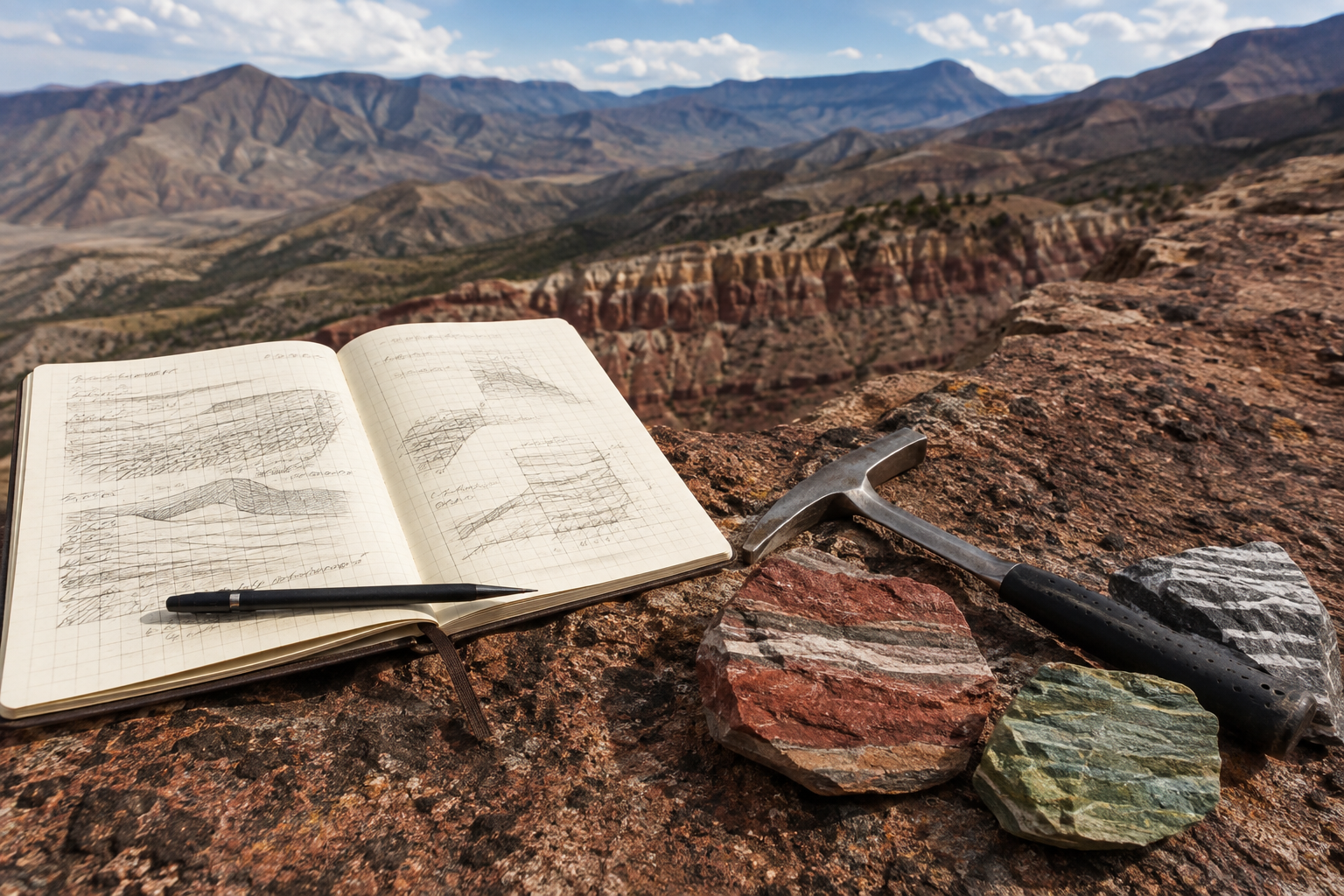
A geologist studies rocks, minerals, soil, groundwater, fossils, landforms, and Earth processes. The work helps solve practical problems, such as locating drinking water, assessing a landslide, selecting a tunnel route, cleaning contaminated soil, or evaluating a mineral deposit.
A representative workweek may include geological mapping on Monday, groundwater sampling on Tuesday, GIS analysis on Wednesday, report writing on Thursday, and a regulatory meeting on Friday. A field safety check can take minutes before a crew enters a steep slope, mine, construction trench, or remote desert site.
Work settings include environmental consulting firms, mining companies, oil and gas operators, engineering companies, universities, museums, state geological surveys, the USGS, and federal agencies. The U.S. Geological Survey employs geoscientists in water, hazards, ecosystems, mapping, and Earth resources. Museums and universities place more emphasis on collections, teaching, research, and public education.
Common tools include ArcGIS Pro, QGIS, GPS receivers, remote-sensing imagery, LiDAR, petrographic microscopes, geochemical instruments, seismic interpretation software, and core-logging systems. A field geologist may record rock observations in one day; a laboratory geologist may analyze dozens of samples under strict quality-control procedures.
Do geologists spend most of their time outdoors? Entry-level field assignments may require long days outside and overnight travel. With experience, you may spend 50% or more of your time reviewing data, managing budgets, writing reports, and advising clients. In our experience, the best preparation combines field confidence with careful office analysis. A Comprehensive Guide to Becoming a Geologist in the USA should therefore treat both settings as central parts of the job.
Your work also requires communication. A technically correct report can fail if a city manager, construction supervisor, or homeowner cannot understand the risk and recommended action. That is why technical writing and clear presentations matter as much as collecting samples.
Step 1: Choose the Right High School and College Preparation
Start with courses that build scientific and mathematical confidence. Take chemistry, physics, biology, algebra, trigonometry, calculus, statistics, computer science, and technical writing when available. Chemistry helps you understand minerals and water quality; physics supports geophysics and seismic work; statistics helps you judge uncertainty in field measurements.
Practical exposure can begin before college. Join an outdoor or science club, enter a science fair, volunteer with a watershed organization, identify local rocks and minerals, or take a community-college earth-science course. A one-week summer field program can reveal whether you enjoy heat, uneven ground, early mornings, and careful observation.
When comparing geology departments, ask for evidence rather than relying on a brochure. Check whether the program offers:
- Field methods and field camp courses with substantial outdoor practice.
- Laboratories for mineralogy, geochemistry, hydrology, geotechnical testing, and microscopy.
- GIS, remote sensing, programming, and data-analysis instruction.
- Undergraduate research, paid assistantships, internships, and employer partnerships.
- Graduation rates, typical completion time, and employment or graduate-school outcomes.
Affordability deserves equal attention. Compare total cost of attendance, not tuition alone. Include housing, transportation, field-camp fees, safety equipment, software, meals, and lost wages. In-state public tuition can reduce annual costs by tens of thousands of dollars compared with private enrollment. Transfer pathways, scholarships, work-study, paid research, and local field programs can reduce the gap further.
Use the American Geosciences Institute and university program directories to build a shortlist. We recommend contacting at least three departments and asking current students how many days they spend in the field. For A Comprehensive Guide to Becoming a Geologist in the USA, the best program is not always the most famous one; it is the program that gives you usable skills at a manageable cost.
Before enrolling, make a simple comparison table with tuition, field opportunities, laboratory access, internship placement, average class size, and four-year completion rate. This takes less than two hours and can prevent an expensive transfer later.
Step 2: Earn a Geology Degree That Employers Respect
A strong bachelor’s curriculum normally includes physical and historical geology, mineralogy, petrology, structural geology, sedimentology, stratigraphy, geomorphology, hydrogeology, field methods, and GIS. These courses teach you how rocks form, how structures deform, how groundwater moves, and how to interpret observations on a map.
A Bachelor of Science is usually preferable for technical consulting, engineering geology, geophysics, hydrology, and graduate study because it often requires more mathematics, chemistry, physics, and laboratory work. A Bachelor of Arts can work well for policy, communication, education, or interdisciplinary careers if you add technical electives and practical experience.
Field camp or an equivalent field-methods course is especially valuable. You may practice compass use, geological mapping, structural measurements, stratigraphic logging, sample collection, and field-notebook standards. A two-week project that produces a map, cross-section, and written interpretation gives employers evidence beyond course grades.
A typical four-year plan could look like this:
- Year one: introductory geology, chemistry, calculus, writing, and computer applications.
- Year two: mineralogy, physics, statistics, GIS, and a laboratory assistantship.
- Year three: structural geology, petrology, hydrogeology, remote sensing, and an internship.
- Year four: field methods, senior research, programming or data analysis, environmental law, engineering, or public policy.
A bachelor’s degree commonly leads to entry-level work. A master’s degree can qualify you for specialist roles in hydrogeology, geophysics, geotechnical analysis, or research. A PhD is generally needed for independent academic research and many university teaching positions. The BLS classifies many geologists under geoscientists, so check its latest education, wage, and outlook figures before choosing graduate school. For A Comprehensive Guide to Becoming a Geologist in the USA, the degree matters, but the courses and projects inside it matter more.
We found that students with one internship, one technical portfolio project, and GIS practice often explain their value more clearly than students who list only a high GPA. Build that evidence before graduation.
Step 3: Build Field, Laboratory, GIS, and Data Skills
Coursework gives you concepts. Employers also need proof that you can collect reliable data and explain it. Follow this sequence: complete introductory fieldwork, learn ArcGIS Pro or QGIS, practice Excel and basic statistics, add Python or R, and document each project in a professional portfolio.
GIS, remote sensing, geospatial databases, and data visualization now separate many competitive applicants from candidates with coursework alone. A map that displays sampling locations, contours, faults, and uncertainty can help a project manager make a decision in minutes. Automation also reduces repetitive work, such as converting field coordinates, checking missing values, or producing standardized figures.
Seek laboratory experience with X-ray diffraction, thin-section analysis, soil and water chemistry, grain-size analysis, isotope methods, or geotechnical testing. Even hours in a laboratory can teach sample labeling, calibration, contamination control, chain of custody, and quality assurance.
Record every project with:
- A one-page purpose statement and study-area map.
- Methods, instruments, sample counts, dates, and safety procedures.
- Photographs, data tables, results, uncertainty limits, and limitations.
- A short technical conclusion that states what the evidence supports.
For example, a student mapping landslide risk could combine drone imagery, LiDAR, rainfall records, slope measurements, and GIS. A useful case study might analyze slopes, compare rainfall totals over years, map scarps, and rank three areas for drainage inspection. That portfolio item demonstrates observation, data management, interpretation, and communication.
Safety cannot be an afterthought. Take first aid training, plan for heat and cold exposure, tell someone your route, inspect vehicles, understand wildlife risks, wear appropriate protective equipment, and collect samples responsibly. In our analysis, field mistakes often result from poor planning rather than weak geology. Practice these habits as part of A Comprehensive Guide to Becoming a Geologist in the USA, not after you receive your first job.
We recommend saving maps and scripts with clear file names, dates, coordinate systems, and readme files. Reproducible work makes it easier for a supervisor to review your conclusions and for you to explain them months later.
Step 4: Gain Experience Through Internships and Research
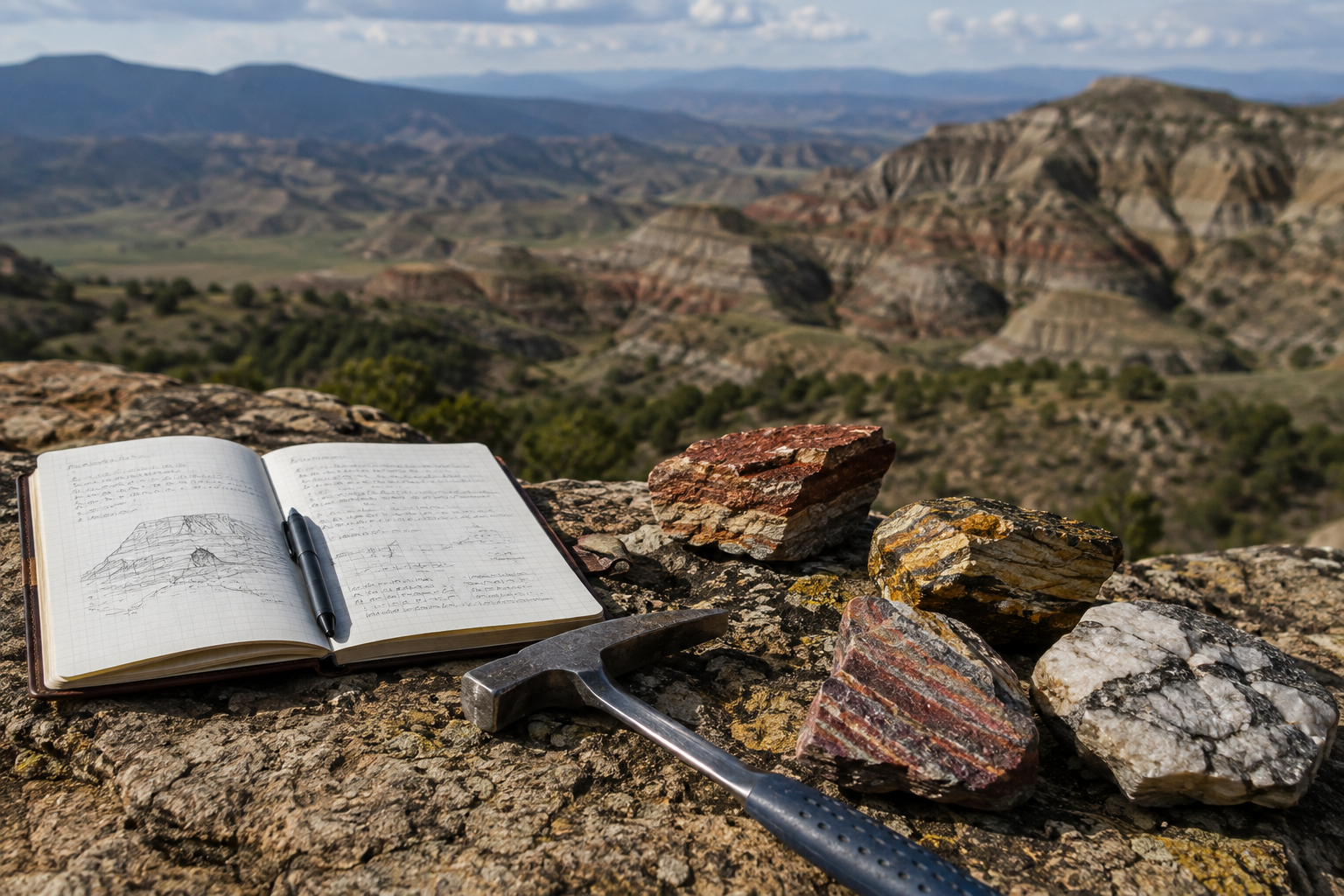
Look for internships with environmental consulting firms, state geological surveys, the USGS, national laboratories, mining companies, energy companies, engineering firms, and university research groups. Applications often open six to nine months before the work begins, so create a calendar in the fall for the following summer.
Tailor each résumé to the role. An environmental position should highlight groundwater sampling, chain of custody, soil data, and regulatory writing. A geotechnical role should emphasize rock-mass descriptions, borehole logs, slope measurements, and construction safety. A GIS role should name software, coordinate systems, datasets, and map outputs.
Formal internships are not the only route. Undergraduate research, a senior thesis, field camp, paid assistantships, and volunteer surveying can provide comparable evidence when opportunities are limited. A supervisor reference that confirms your reliability, sample handling, and communication may be more useful than another general club membership.
Use this portfolio structure for each major project:
- One-page project summary with your role and dates.
- Map or figure that shows the study area and key results.
- Methods section with instruments, sample counts, and limitations.
- Data table or small dashboard with clear units.
- Technical interpretation written for a non-specialist.
- Supervisor name and contact information, with permission.
Networking works best when you ask specific questions. Attend Geological Society of America events, Association of Environmental & Engineering Geologists meetings, Society of Economic Geologists programs, and campus geology-club sessions. A 20-minute informational interview can reveal hiring dates, field conditions, and useful software that a job posting omits.
Access is a real barrier. Unpaid travel placements can exclude capable students. We recommend prioritizing paid internships, transportation support, grants, local field sites, and university-funded assistantships. A Comprehensive Guide to Becoming a Geologist in the USA should include an affordable path, not assume every student can finance a distant field camp or unpaid summer.
Apply to at least well-matched placements rather than sending the same résumé to employers. Track application date, contact person, required skills, interview status, pay, location, and travel terms in a spreadsheet.
Step 5: Meet Geologist Licensing and Professional Requirements
Licensing rules vary by state. A license may be required when you offer geological services directly to the public, sign technical reports, supervise regulated work, or support engineering and environmental decisions. You can often begin in an entry-level role before becoming licensed, but you should understand the rules before accepting responsibility for public work.
The common pathway includes an approved education, supervised experience, the Fundamentals of Geology examination, Geologist-in-Training status where available, and the Practice of Geology examination. Requirements are not identical. Some states accept specific science credits, while others focus more heavily on documented experience.
The Association of State Boards of Geology, or ASBOG, develops widely used examination materials and supports state licensing systems. Always verify requirements with the board in the state where you plan to work. California, Texas, Florida, Pennsylvania, and Washington have professional geology licensing systems, but education, experience, references, fees, and examination rules differ.
Prepare a licensing file early. Keep:
- Official transcripts and course descriptions.
- Employment verification and detailed experience records.
- Professional references who can evaluate your geological work.
- Examination results, application forms, and ethics materials.
- Continuing-education certificates and renewal records.
Ethics are part of technical competence. You must protect public safety, report data honestly, disclose conflicts of interest, follow environmental requirements, and refuse work outside your training. Signing a report that you did not review, hiding unfavorable results, or overstating certainty can harm communities and lead to discipline, lawsuits, or loss of licensure.
Read your target board’s statute and rules twice: once before applying for jobs and again before signing documents. In our experience, this simple step prevents confusion when employers use titles such as staff geologist, project scientist, or environmental consultant. Licensing is a central checkpoint in A Comprehensive Guide to Becoming a Geologist in the USA because professional authority carries public responsibility.
Geologist Career Paths, Salaries, and Job Outlook
Geologists work in environmental consulting, hydrogeology, engineering geology, mining, petroleum, geotechnical investigation, government, academia, education, and planetary science. Entry-level titles include staff geologist, field geologist, geological technician, environmental scientist, and exploration geologist.
The BLS reports national wage data for geoscientists, but a median is not an entry-level promise. Recent BLS figures place the occupation’s median annual pay above $80,000, while the lowest-paid workers earn substantially less and the highest-paid workers earn well over $150,000. Check the live BLS occupational employment and wage table for the latest values, industry breakdowns, and projected growth.
Pay varies by industry, region, travel, and responsibility. A new environmental geologist may earn roughly $50,000 to $70,000, while a licensed project geologist may earn $80,000 to $115,000. Remote mining, petroleum, specialized geophysics, and technical management can exceed $120,000, but work may involve rotations, relocation, overtime, or industry downturns. Benefits, retirement contributions, health coverage, and public-sector pensions can change the real value of an offer by 20% to 35%.
A realistic progression may look like this:
- Years 0–2: field geologist or technician, learning sampling, mapping, safety, and reporting.
- Years 3–6: project geologist with client contact and supervised technical responsibility.
- Years 7–12: senior consultant, technical manager, or specialist.
- Later career: principal geologist, agency program leader, research director, or professor.
Strong regions include the arid West for groundwater and minerals, Texas and the Gulf Coast for energy and water, Florida and the Atlantic coast for coastal hazards, the Pacific Northwest for landslides and volcanoes, and fast-growing metropolitan areas for construction and environmental regulation. The USGS Water Resources Program and National Association of Colleges and Employers provide useful context. We analyzed these factors and found that A Comprehensive Guide to Becoming a Geologist in the USA must present both earning potential and lifestyle costs honestly.
Specializations Growing in Importance in 2026
Hydrogeology supports drinking-water planning, aquifer protection, contamination cleanup, drought response, and managed aquifer recharge. A hydrogeologist may build a groundwater model, interpret pumping tests, sample wells, and explain whether a new municipal well could affect nearby users. In drought-prone states, a small change in recharge or pumping can affect thousands of households.
Environmental geology and climate resilience address coastal erosion, sea-level rise, landslides, wildfire debris flows, subsidence, and flood risk. For example, a county may combine LiDAR, rainfall intensity, burn severity, and slope data to identify roads at risk after wildfire. Such work connects field evidence with emergency planning and public investment.
Economic geology is gaining attention through lithium, copper, rare earth elements, graphite, and other materials used in energy and manufacturing. Geologists evaluate deposits, sampling quality, resource uncertainty, mine waste, reclamation plans, and permitting requirements. Responsible development requires more than finding ore; it requires credible environmental monitoring and community engagement.
Geologists also support geologic carbon storage and geothermal energy. They assess reservoir porosity, permeability, faults, pressure, leakage pathways, temperature, and monitoring plans. Carbon accounting depends on defensible measurements, not broad claims. Infrastructure projects need similar expertise for tunnels, dams, bridges, roads, foundations, pipelines, and offshore wind facilities.
A technology gap often missed by introductory articles is data management. You should learn remote sensing, automation, machine learning basics, database design, and reproducible analysis. These skills do not replace field judgment; they help you process larger datasets and show how you reached a conclusion.
Choose a specialty by comparing your interests, local industries, graduate-school requirements, field conditions, salary potential, and long-term public need. A Comprehensive Guide to Becoming a Geologist in the USA is most useful when it helps you select a durable skill combination, such as hydrogeology plus Python or engineering geology plus GIS. As of 2026, employers increasingly value people who can connect physical evidence with decisions.
How to Find Your First Geology Job in the USA
Use a focused job search. Select two target specialties, build a tailored résumé, publish a project portfolio, contact references, apply to entry-level roles, and track every application in a spreadsheet. Search for field geologist, environmental scientist, hydrogeologist, geotechnical geologist, GIS analyst, staff geologist, exploration geologist, and geological technician.
Translate academic work into employer language. Instead of writing that you completed a field course, write that you collected samples, created geological maps, analyzed a 2,400-row dataset, prepared a 22-page report, used QGIS and Excel, and followed a documented vehicle and heat-safety plan. Numbers make your contribution easier to understand.
Prepare five interview stories. Be ready to explain an unexpected field result, a quality-control problem, a difficult team decision, a safety concern, and a conversation with a nontechnical client. Use a simple pattern: situation, action, evidence, result, and lesson. Employers are testing judgment as much as technical knowledge.
Before accepting an offer, check the employer’s state licensing records, project portfolio, safety record, training policy, travel expectations, benefits, and employee reviews. Ask whether mileage, lodging, field equipment, overtime, and relocation are paid. A salary that looks attractive can lose value if you must personally fund frequent travel or a $4,000 move.
Geographic mobility is another tradeoff. Remote camps may offer higher pay but limited services and long rotations. Urban consulting may mean traffic, deadlines, and shorter field trips. Seasonal work can create gaps between projects. Discuss work-life expectations directly rather than guessing from the job title.
Professional societies, professors, alumni, career fairs, and informational interviews often produce stronger leads than mass applications alone. In our experience, a thoughtful message to an alumnus with a specific question earns more responses than a generic request for a job. Keep this A Comprehensive Guide to Becoming a Geologist in the USA practical by treating networking as scheduled work: contact three people each week and record what you learn.
A Comprehensive Guide to Becoming a Geologist in the USA: Action Plan
Your next step should be specific and time-bound. A 12-month plan can turn interest into evidence that employers and graduate programs can evaluate.
- Months 1–2: review accredited geology programs, compare total costs, and meet a department advisor.
- Months 3–4: complete prerequisite courses, join a geology society, and identify local field or laboratory work.
- Months 5–6: learn QGIS or ArcGIS, create one map, and begin a skills inventory.
- Months 7–8: contact professors, geological surveys, consultants, and alumni about research or internships.
- Months 9–10: prepare a tailored résumé, portfolio, references, and applications for summer or entry-level roles.
- Months 11–12: review offers, document field experience, and read licensing rules for one target state.
If you already hold a bachelor’s degree, use a three-to-five-year plan. Obtain an entry-level role, record supervised experience, evaluate licensure, build one specialty, and decide whether graduate school is necessary. A master’s degree makes sense when it opens a clearly defined role, such as groundwater modeling or geophysics, rather than simply postponing a job search.
Use this decision checklist:
- Do you prefer field sites, laboratories, offices, or a mix?
- Can you tolerate seasonal travel, remote camps, or relocation?
- Do you prefer public service, private consulting, research, or teaching?
- What salary and benefits do you need after taxes and travel costs?
- Will your target work require professional licensure?
Take five immediate actions: review three programs, schedule an advisor meeting, create a skills inventory, identify three internships, and read one state’s licensing rules. Verify requirements through the BLS, USGS, ASBOG, state licensing boards, and accredited university departments. We recommend revisiting those sources every six months because rules and labor data change.
A Comprehensive Guide to Becoming a Geologist in the USA ends with a realistic promise: geology rewards curiosity, careful observation, technical discipline, clear communication, and steady learning. Start with one course, one map, one field contact, or one application. The ground beneath every major decision still needs someone who can read it well.
Building a Long-Term Professional Reputation
Your first job is only the beginning. Keep a record of projects, methods, supervisors, licenses, training, and measurable results. Update your portfolio twice a year, even when you are not seeking work.
Professional credibility grows through accurate data, clear limits, dependable deadlines, and respectful teamwork. A geologist who reports uncertainty honestly may earn more trust than one who presents every result as certain. That trust can lead to larger projects, technical management, and public-service responsibility.
Set one technical goal and one communication goal each year. For example, you might learn groundwater modeling while practicing short briefings for nontechnical clients. This habit keeps A Comprehensive Guide to Becoming a Geologist in the USA connected to your actual career rather than treating the degree as the finish line.
Key Takeaways
- Plan for about four years of undergraduate study, then add graduate school only when it supports a clear career goal.
- Choose a program with field methods, laboratory access, GIS, mathematics, research, and affordable total costs.
- Build a portfolio that shows maps, sample counts, methods, data quality, uncertainty, safety, and technical conclusions.
- Check ASBOG and your target state’s licensing board before signing reports or accepting regulated responsibility.
- In 2026, groundwater, hazards, climate resilience, infrastructure, critical minerals, and data skills offer promising specialization options.
Frequently Asked Questions
How long does it take to become a geologist in the USA?
A bachelor’s degree usually takes about four years. A master’s degree often adds two years, while a PhD may require four to six additional years after undergraduate study. Licensing, where required, can add supervised experience and examinations after graduation.
What degree is best for becoming a geologist?
A Bachelor of Science is usually the strongest choice for technical geology, hydrogeology, engineering geology, geophysics, consulting, and graduate study. Choose a program with field methods, laboratory work, GIS, mathematics, and internship opportunities rather than judging the degree title alone.
Do geologists need a license in every state?
No. Licensing rules vary by state and usually apply to geologists who offer services to the public, sign technical reports, or perform regulated work. Verify education, experience, examination, and renewal requirements with the state board and ASBOG before accepting professional responsibility.
How much money do geologists make?
Pay varies by specialty, location, experience, industry, travel, and licensure. BLS data place the national geoscientist median above $80,000 in recent figures, but entry-level salaries may be closer to $50,000 to $70,000, while experienced specialists and managers can earn more than $120,000.
Is geology a good career in 2026?
Geology can be a strong career in if you build skills in GIS, groundwater, environmental compliance, data analysis, infrastructure, hazards, or critical minerals. The work may involve travel and industry cycles, so compare salary, benefits, location, field conditions, and long-term demand before choosing a specialty.
What is the best way to get a first geology job?
Build evidence through fieldwork, GIS projects, laboratory experience, research, internships, or a senior thesis. Tailor your résumé with numbers, publish a small portfolio, contact professors and alumni, and apply six to nine months before seasonal placements. A Comprehensive Guide to Becoming a Geologist in the USA should include networking and affordable local experience, not only online applications.
