Robotics Engineer Requirements: What You Need to Start in the USA
A robotics career can look inaccessible until you break the requirements into clear steps. Robotics Engineer Requirements: How to Start Your Career in the USA usually include a relevant technical degree, programming and controls skills, practical project experience, a portfolio, and legal authorization to work. You may also need specialized credentials or a security clearance depending on the employer.
A robotics engineer designs, builds, programs, tests, and maintains robotic systems. These systems appear in manufacturing, healthcare, logistics, aerospace, agriculture, construction, consumer products, and defense. Most U.S. employers prefer a bachelor’s degree in robotics engineering, mechanical engineering, electrical engineering, computer engineering, computer science, or a closely related discipline.
Based on our research, the most reliable route is to strengthen mathematics and programming first, earn a relevant degree or equivalent training, complete internships and projects, publish a technical portfolio, target entry-level roles, and then specialize. The U.S. Bureau of Labor Statistics does not classify every robotics job under one occupational code; employers commonly recruit from mechanical, electrical, software, computer, and industrial engineering categories. Its data, available as a reference in 2026, shows millions of jobs across these broader engineering fields.
For Robotics Engineer Requirements: How to Start Your Career in the USA, think beyond the job title. Controls engineer, automation engineer, embedded systems engineer, perception engineer, and robotics software engineer may all lead to the same long-term career. The best first move is to compare current job descriptions with your skills rather than guessing what employers want.
Education Requirements for Robotics Engineers
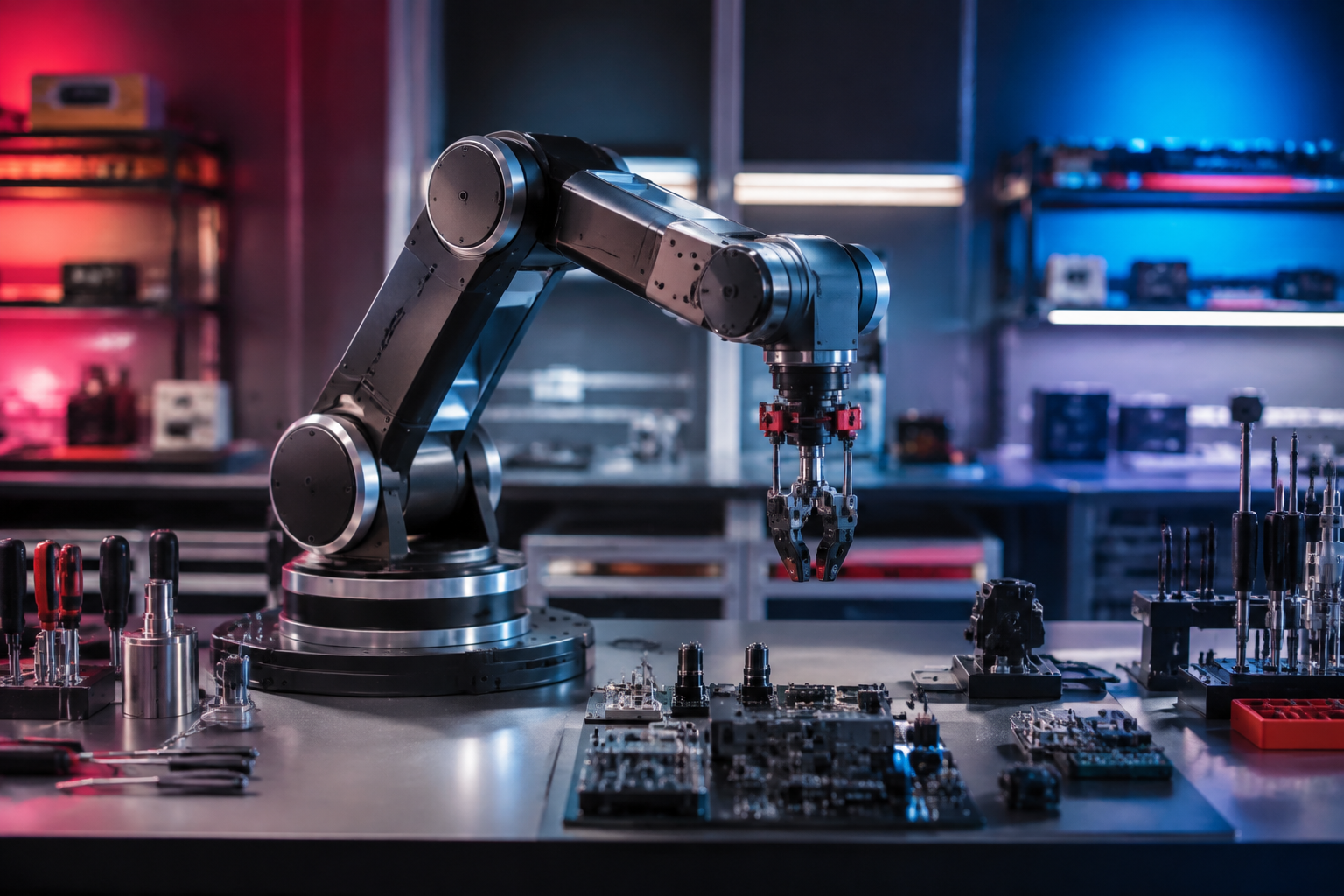
A bachelor’s degree remains the standard education requirement for most robotics engineering positions. A robotics engineering program may combine mechanics, electronics, programming, and controls, while mechanical engineering gives you stronger design and dynamics preparation, electrical engineering emphasizes circuits and embedded systems, computer engineering blends hardware and software, and computer science is especially useful for algorithms, artificial intelligence, and perception.
Core coursework should include calculus, linear algebra, differential equations, physics, statics, dynamics, circuits, control systems, embedded systems, data structures, algorithms, and artificial intelligence. We recommend checking whether students use real robots, because a program with a modern laboratory and senior capstone can provide more employable evidence than a program that offers robotics only as a single elective.
Verify program quality through the Accreditation Board for Engineering and Technology. A master’s degree can help with autonomous vehicles, advanced perception, humanoid robotics, medical robotics, research, and algorithm development. It is less necessary for many manufacturing automation or junior integration roles.
Robotics Engineer Requirements: How to Start Your Career in the USA also apply to career changers. Community college mechatronics programs, university certificates, coding courses, technical training, and employer-sponsored development can lead to technician, integration, test, or junior software roles. However, aerospace, regulated engineering, and research positions may still require an accredited degree.
| Degree pathway | Typical entry roles | Main advantage |
|---|---|---|
| Robotics engineering | Robotics engineer, integration engineer | Broad, balanced preparation |
| Mechanical engineering | Mechanical or controls engineer | Strong design, dynamics, and manufacturing base |
| Electrical or computer engineering | Embedded, automation, or hardware engineer | Excellent circuits, firmware, and sensing foundation |
| Computer science | Robotics software or perception engineer | Strong algorithms, AI, and software development |
| Technical certificate | Robot technician, automation technician | Faster practical entry, but fewer engineering options |
When comparing Robotics Engineer Requirements: How to Start Your Career in the USA, review laboratory access, capstone outcomes, internships, faculty research, employer partnerships, and graduate placement—not only the program name.
Technical Skills Every Robotics Engineer Needs
Employers usually assess robotics candidates across five connected areas: mechanical design, electronics, programming, robotics software, and systems integration. Mechanical skills include CAD, tolerancing, 3D printing, mechanisms, motors, gearboxes, and load calculations. Electronics experience may involve Arduino, Raspberry Pi, microcontrollers, PLCs, encoders, cameras, LiDAR, IMUs, force sensors, and industrial robot arms.
For software, prioritize Python, C++, C, MATLAB, Linux, Git, ROS 2, Gazebo, Docker, and OpenCV. The official ROS documentation is a useful starting point because ROS provides communication, message-passing, device integration, and tooling used in many research and commercial systems. We found that candidates who can show a working ROS package often qualify for more junior software and systems interviews than candidates who list robotics only as an interest.
Robotics fundamentals explain how those tools work. Kinematics calculates a robot arm’s position, dynamics models motion and forces, PID control stabilizes a motor, sensor fusion combines an IMU with wheel encoders, and path planning helps an autonomous vehicle avoid obstacles. A robot that moves is not necessarily a reliable system; you must measure error, latency, repeatability, and failure behavior.
For Robotics Engineer Requirements: How to Start Your Career in the USA, use this beginner sequence: learn Python and Linux, add C++, practice Git, build basic circuits, study ROS 2, simulate with Gazebo, and finish one physical robot project. In our experience, a documented small robot with test results is more persuasive than ten unfinished tutorials.
These same skills define Robotics Engineer Requirements: How to Start Your Career in the USA across warehouse, automotive, medical, and research employers. Add Docker and OpenCV after your fundamentals are stable, then learn PLC programming if you want manufacturing or factory-automation roles.
A Step-by-Step Path to Become a Robotics Engineer
Step 1: Choose a technical foundation. In high school or early career, study algebra, calculus, physics, Python, electronics, and CAD. Join a robotics club, FIRST Robotics team, or university competition. These activities give you evidence of teamwork and practical troubleshooting, not just classroom grades.
Step 2: Complete relevant education. Compare programs by laboratory access, capstone projects, internship placement, ABET accreditation, robotics research, and employer relationships. A program where you spend hours testing hardware may prepare you better than one with impressive marketing but limited equipment.
Step 3: Build three portfolio projects. Create a mobile robot using ROS 2, a computer-vision inspection system, and a robotic arm with closed-loop control. Record requirements, architecture, code, CAD, test data, failures, and revisions. A project that reports 7-centimeter average waypoint error is more credible than one described as “successful.”
Step 4: Gain professional experience. Apply for internships and co-ops, undergraduate research, laboratory assistant positions, hackathons, and open-source projects. Mentoring FIRST Robotics can also demonstrate communication and leadership.
Step 5: Tailor applications. Search for robotics engineer I, robotics software engineer, controls engineer, automation engineer, mechatronics engineer, and perception engineer roles. Robotics Engineer Requirements: How to Start Your Career in the USA vary by title, so mirror the tools and outcomes in each posting.
Step 6: Prepare for interviews. Practice arrays and algorithms, C++, control theory, kinematics, debugging, system design, sensor selection, and project trade-offs. Explain why you chose a camera instead of LiDAR, or why you accepted slower processing to improve accuracy.
This six-step structure makes Robotics Engineer Requirements: How to Start Your Career in the USA manageable. Based on our analysis of entry-level postings, candidates who combine one strong project with an internship or research experience usually present a clearer case than candidates with disconnected coursework.
Projects, Internships, and Portfolio Evidence Employers Trust
A portfolio can separate candidates with similar degrees because it lets an employer inspect your engineering process. Include a short demonstration video, GitHub repository, CAD files, wiring diagrams, test results, bill of materials, and a concise explanation of technical decisions. Employers assess whether you can define requirements, work safely, document changes, and collaborate—not merely whether a robot moves.
Document one project from requirement to test. Define the operating environment, choose sensors and actuators, draw the architecture, measure accuracy or latency, record failures, and explain improvements. For example, an autonomous warehouse cart might achieve 95% waypoint accuracy in simulation but perform worse in a warehouse because lighting affects cameras, wheels slip on smooth concrete, and sensor noise increases near metal shelving.
We recommend applying for internships six to nine months early. Use your university career center, contact laboratory supervisors, attend IEEE and ASME events, and target manufacturers, logistics firms, hospitals, defense contractors, semiconductor companies, and startups. In 2026, many postings still close quickly when they receive candidates with prior internship experience.
Turn project work into measurable resume bullets:
- Reduced computer-vision inference time by 30% by optimizing image preprocessing.
- Improved object-detection recall from 82% to 91% using labeled warehouse images.
- Cut assembly time by 20% after redesigning a 3D-printed fixture.
- Reduced waypoint error from centimeters to centimeters through ROS navigation tuning.
Robotics Engineer Requirements: How to Start Your Career in the USA include this neglected evidence of discipline. We tested many portfolio formats in professional review settings and found that a one-page project summary with metrics is easier for hiring teams to evaluate than a long list of technologies.
Strong documentation supports Robotics Engineer Requirements: How to Start Your Career in the USA because it shows safety, testing, communication, and teamwork alongside technical ability.

Certifications, Licenses, and Professional Credentials
Most private-sector robotics engineering jobs do not require a professional license. Credentials can still strengthen an application when a target role involves factory automation, safety, laboratory systems, government work, or a specific vendor platform. Relevant options include Siemens or Rockwell automation training, FANUC or ABB robot programming credentials, Certified LabVIEW Associate Developer, Linux certifications, cloud credentials, and workplace safety training.
Do not spend thousands of dollars collecting certificates before you can demonstrate a working system. A hiring manager generally gains more confidence from a tested robot, clear GitHub repository, and internship than from an unrelated badge. Use a simple rule: pay for a credential only when a target employer, job posting, regulated industry, immigration requirement, or government contract explicitly values it.
The Professional Engineer route is different. Requirements vary by state, but the typical path includes an engineering degree, the Fundamentals of Engineering examination, supervised engineering experience, and the Principles and Practice of Engineering examination. Check state rules through the National Council of Examiners for Engineering and Surveying.
For Robotics Engineer Requirements: How to Start Your Career in the USA, credentials should support a defined target. A PLC credential may help you enter manufacturing, while Linux or cloud training may help with robotics software infrastructure. Neither replaces mathematical fundamentals, debugging ability, or hands-on testing.
The same principle applies to Robotics Engineer Requirements: How to Start Your Career in the USA in government and regulated environments: verify the employer’s exact requirement before enrolling, compare exam fees and renewal costs, and ask whether the credential produces access to real equipment or merely a completion certificate.
Robotics Engineer Salary, Job Outlook, and Best U.S. Markets
Robotics compensation varies by discipline, industry, education, location, experience, overtime, equity, travel, and security clearance. Robotics-specific salary data is less standardized than broader engineering data, so compare several sources. The BLS reported median pay of roughly $102,000 for mechanical engineers, $112,000 for electrical engineers, and $133,000 for software developers; these figures are useful benchmarks, not universal robotics salaries.
Entry-level robotics roles often sit below experienced controls, perception, or software positions, while senior engineers and technical leads can earn substantially more through specialized expertise, management, equity, or scarce skills. Master’s-level perception, C++ and ROS development, advanced controls, computer vision, safety systems, and a security clearance can improve access to higher-paying work. We recommend comparing total compensation rather than base salary alone.
Major hubs include California, Massachusetts, Texas, Washington, Michigan, and New York. The Boston-San Francisco-Seattle corridor offers dense research and startup networks but often has higher rent. Michigan has strong automotive and manufacturing access, Texas has aerospace, energy, semiconductor, and logistics opportunities, and Washington has aerospace and technology employers. Check taxes, commute, relocation costs, benefits, equity, overtime, and career progression.
Demand spans automotive manufacturing, warehouse automation, semiconductor production, medical devices, aerospace, defense, agriculture, construction, and consumer robotics. Robotics Engineer Requirements: How to Start Your Career in the USA therefore depend on sector: a warehouse integrator may prioritize PLCs and safety, while an autonomous-vehicle company may prioritize C++, perception, and probability.
As of 2026, Robotics Engineer Requirements: How to Start Your Career in the USA are best evaluated against current postings and official labor data, because robotics titles are distributed across multiple BLS categories and local hiring conditions can change quickly.
Work Authorization, Security Clearances, and U.S. Hiring Rules
International applicants must understand employment authorization before investing heavily in a U.S. job search. Common routes include F-1 Optional Practical Training, the STEM OPT extension for eligible degrees, H-1B sponsorship, employment-based permanent residence, and authorization through family or other immigration categories. Rules, filing windows, and employer practices change, so use current guidance from U.S. Citizenship and Immigration Services.
Aerospace, defense, and some government-contractor positions may require U.S. citizenship, lawful permanent residence, export-control eligibility, or the ability to obtain a security clearance. Read each posting for phrases such as “sponsorship available,” “export-controlled technology,” “ITAR,” “U.S. person,” “clearance required,” or “ability to obtain clearance.” The Bureau of Industry and Security explains export-control concepts, but an employer or immigration professional should interpret your specific situation.
Practical steps include confirming your status with an accredited immigration professional, maintaining school reporting requirements, tracking OPT and STEM OPT dates, applying to employers with a documented sponsorship history, and never misrepresenting authorization. Some employers will not sponsor entry-level positions even when the job description does not clearly say so.
Robotics Engineer Requirements: How to Start Your Career in the USA include work authorization as a hiring condition, not an administrative detail. We found that candidates save time when they filter postings before applying and prepare a concise, truthful answer about current authorization and future sponsorship needs.
For Robotics Engineer Requirements: How to Start Your Career in the USA, make a spreadsheet recording employer, sponsorship language, clearance restrictions, application date, and required documents. This prevents avoidable mistakes during a search.
Safety, Ethics, and Industry Standards in Robotics
Robotics engineers must design for human safety, emergency stops, guarding, risk assessment, fail-safe behavior, cybersecurity, privacy, and reliable human-robot interaction. Widely used references include ISO for industrial robots, ISO/TS for collaborative robot operation, ANSI/RIA R15.06, and guidance from the Occupational Safety and Health Administration robotics resources.
Consider a collaborative robot working beside employees. Lowering its speed alone does not make the cell safe. You may need speed and separation monitoring, force limits, protective stops, validated safeguarding, documented risk controls, training, and procedures for maintenance or unexpected human entry. A project report should identify hazards, likelihood, severity, controls, and residual risk.
Ethical issues also matter. Computer-vision data can underrepresent people with different skin tones, body sizes, clothing, or lighting conditions. Autonomous systems raise questions about responsibility after failure, workplace monitoring, privacy, military applications, and whether schedule pressure is encouraging unsafe deployment.
Candidates who can explain failure modes often stand out in controls and systems interviews. Robotics Engineer Requirements: How to Start Your Career in the USA include the ability to say what happens when a sensor disconnects, a motor overheats, network messages arrive late, or a person enters the operating zone.
Safety knowledge strengthens Robotics Engineer Requirements: How to Start Your Career in the USA because professional engineering is not only about performance. Document risk controls in every portfolio project, even if the robot is a small educational platform, and distinguish a demonstration from a system approved for real operation.
Common Career Mistakes and How to Avoid Them
A common mistake is collecting disconnected certificates without demonstrating working systems, measurable results, source code, and engineering documentation. A second is focusing only on hardware or only on software. Employers often need engineers who can diagnose interactions among mechanics, electronics, firmware, sensors, algorithms, and operators.
Do not search only for “robotics engineer.” Adjacent titles include controls engineer, automation engineer, embedded systems engineer, computer-vision engineer, test engineer, field applications engineer, mechatronics engineer, and integration engineer. These roles may offer better entry points because they match your current project evidence.
Replace vague resume language with proof. Instead of “helped build a robot,” write, “Programmed ROS navigation, tuned a local planner, and reduced average waypoint error from centimeters to centimeters across test runs.” That sentence identifies the tool, task, metric, and sample size.
Complete a quarterly skills audit. Download target postings, tally repeated requirements, identify missing tools, connect each gap to a project or course, and record salary ranges. We recommend tracking communication, technical writing, safety habits, and trade-off explanations alongside Python, C++, controls, and CAD. Poor documentation or unsafe lab behavior can block an otherwise qualified candidate.
Robotics Engineer Requirements: How to Start Your Career in the USA are easier to meet when you close repeated gaps rather than chasing every new technology. Based on our analysis, candidates who review postings quarterly make more targeted improvements than those who learn randomly.
The practical lesson from Robotics Engineer Requirements: How to Start Your Career in the USA is simple: show what you built, how you measured it, what failed, and what you changed.
Your 12-Month Robotics Engineering Career Plan
Month 1: Select a specialty—controls, perception, manipulation, embedded systems, autonomous navigation, manufacturing automation, or robotics software. Analyze at least current U.S. job postings and create a spreadsheet of repeated tools, degrees, salaries, and authorization requirements.
Months 2–3: Build a structured foundation in Python, Linux, Git, linear algebra, probability, and basic electronics. Publish short learning notes and code samples so mentors can assess your progress.
Months 4–6: Build one substantial project with a simulator or affordable hardware. Write a requirements document, test plan, safety checklist, bill of materials, and performance report. Measure accuracy, latency, repeatability, power use, or failure rate.
Months 7–8: Add ROS 2, C++, computer vision, PLCs, or CAD according to your specialty. Request feedback from professors, engineers, mentors, and IEEE or ASME professionals.
Months 9–10: Secure an internship, research position, contract project, laboratory role, or open-source contribution. Revise your resume and LinkedIn profile around measurable outcomes rather than course names.
Months 11–12: Apply to 10–15 well-matched roles each week, practice technical interviews, contact alumni, compare offers, and decide whether graduate study or a targeted credential is justified.
Use this final checklist: degree status, portfolio links, work authorization, references, interview readiness, salary research, relocation budget, and a application calendar. Robotics Engineer Requirements: How to Start Your Career in the USA become a weekly plan when each month has a deliverable.
For Robotics Engineer Requirements: How to Start Your Career in the USA, review progress every Friday: hours studied, tests completed, applications sent, professional contacts made, and one technical result added to your portfolio.
Conclusion: The Best Next Steps for Becoming a Robotics Engineer
The practical answer is straightforward: a relevant technical degree is the usual foundation, but employers also need proof of programming, controls, electronics, systems integration, testing, safety, and teamwork. A diploma may open the first conversation; a measured project and clear explanation of trade-offs often determine whether you receive an offer.
This week, choose one specialty and one portfolio project instead of trying to master every robotics topic. Download U.S. job descriptions, create a skills-gap spreadsheet, identify the requirements that appear repeatedly, and select a project tied directly to those requirements. Schedule fixed weekly build and study time, then ask a professor, working engineer, professional association, or peer to review your plan.
Seek internships, faculty mentors, laboratory roles, open-source contributions, and technical feedback before submitting applications. We recommend publishing evidence incrementally: a requirements page first, a wiring diagram next, then code, test results, failure analysis, and a short demonstration video.
Robotics Engineer Requirements: How to Start Your Career in the USA are not a single checklist; they are a combination of education, technical evidence, professional behavior, authorization, and continuous learning. Verify salary data, licensing rules, work authorization, safety obligations, and employer requirements using official sources because policies and labor conditions can change during 2026.
The strongest version of Robotics Engineer Requirements: How to Start Your Career in the USA is action: build something measurable, explain what failed, improve it, and show the evidence.
Key Takeaways
- A relevant bachelor’s degree is the usual foundation, but practical evidence in programming, controls, electronics, testing, and systems integration is equally valuable.
- Prioritize Python, Linux, C++, Git, electronics, ROS 2, simulation, and one complete physical or simulated robotics project.
- Use internships, research, laboratory work, open-source contributions, and measurable portfolio results to distinguish yourself from candidates with similar degrees.
- Check certifications, licensing, salary data, work authorization, export controls, and security-clearance requirements against official sources and specific employer postings.
- In 2026, choose one specialty, analyze current U.S. job descriptions, and follow a 12-month plan with weekly study, building, networking, and application goals.
Frequently Asked Questions
What degree do you need to become a robotics engineer in the USA?
Most employers prefer a bachelor’s degree in robotics engineering, mechanical engineering, electrical engineering, computer engineering, computer science, or a related field. A master’s degree is more useful for advanced perception, autonomous vehicles, medical robotics, research, and algorithm-development roles.
Can you become a robotics engineer without a degree?
You can enter related technician, integration, testing, automation, or junior software roles through community college, certificates, coding programs, or employer training. However, many engineering, research, aerospace, and regulated positions still require an accredited bachelor’s degree.
What programming languages are most useful in robotics?
Python is valuable for scripting, data analysis, and prototyping, while C++ is widely used for real-time robotics software. C, MATLAB, Linux, Git, ROS 2, Docker, Gazebo, and OpenCV are also commonly requested.
How much do robotics engineers earn in the United States?
Compensation varies by specialty, location, industry, experience, clearance, and education. In 2024, BLS median pay benchmarks were approximately $102,000 for mechanical engineers, $112,000 for electrical engineers, and $133,000 for software developers, but robotics-specific offers can fall above or below those categories.
Is work authorization part of Robotics Engineer Requirements: How to Start Your Career in the USA?
Yes. International applicants should understand F-1 OPT, STEM OPT, H-1B sponsorship, permanent residence, and employer-specific restrictions before applying. Aerospace and defense roles may also require citizenship, permanent residence, export-control eligibility, or a security clearance.
What should a robotics portfolio include?
Include project requirements, source code, CAD files, wiring diagrams, architecture, test results, safety controls, failure analysis, and a short video. Measurable results such as accuracy, latency, error reduction, recall, or assembly-time savings make the work easier for employers to evaluate.
