Ship Captain Career Overview in the USA: What the Job Involves
Many people searching for a Ship Captain Career Overview in the USA want clear answers about qualifications, licensing, salary, daily duties, career paths, and the realistic timeline to reach the wheelhouse. The job is not simply steering a vessel. You are responsible for the safety of the ship, crew, passengers, cargo, navigation, regulatory compliance, and emergency decisions.
A master mariner holds a professional credential authorizing command at a stated tonnage and route. A boat captain may operate a smaller inspected or uninspected vessel; a yacht captain manages private or charter operations; a tugboat master handles towing and maneuvering; a cruise ship master oversees thousands of people; and a merchant ship captain commands cargo vessels on domestic or international voyages. A harbor pilot is different: that specialist guides vessels through a particular port or waterway and may board ships that already have their own master.
Based on our research, the U.S. Coast Guard (USCG) credential is the central professional document. You may also need a Merchant Mariner Credential (MMC), Transportation Worker Identification Credential (TWIC), medical approval, drug testing, and training under the International Maritime Organization’s STCW standards. The U.S. Coast Guard National Maritime Center manages credential evaluation.
This Ship Captain Career Overview in the USA explains the pathway as it exists in 2026, while reminding you that endorsements and forms can change. Your vessel, tonnage, route, and intended duties determine the correct starting point.
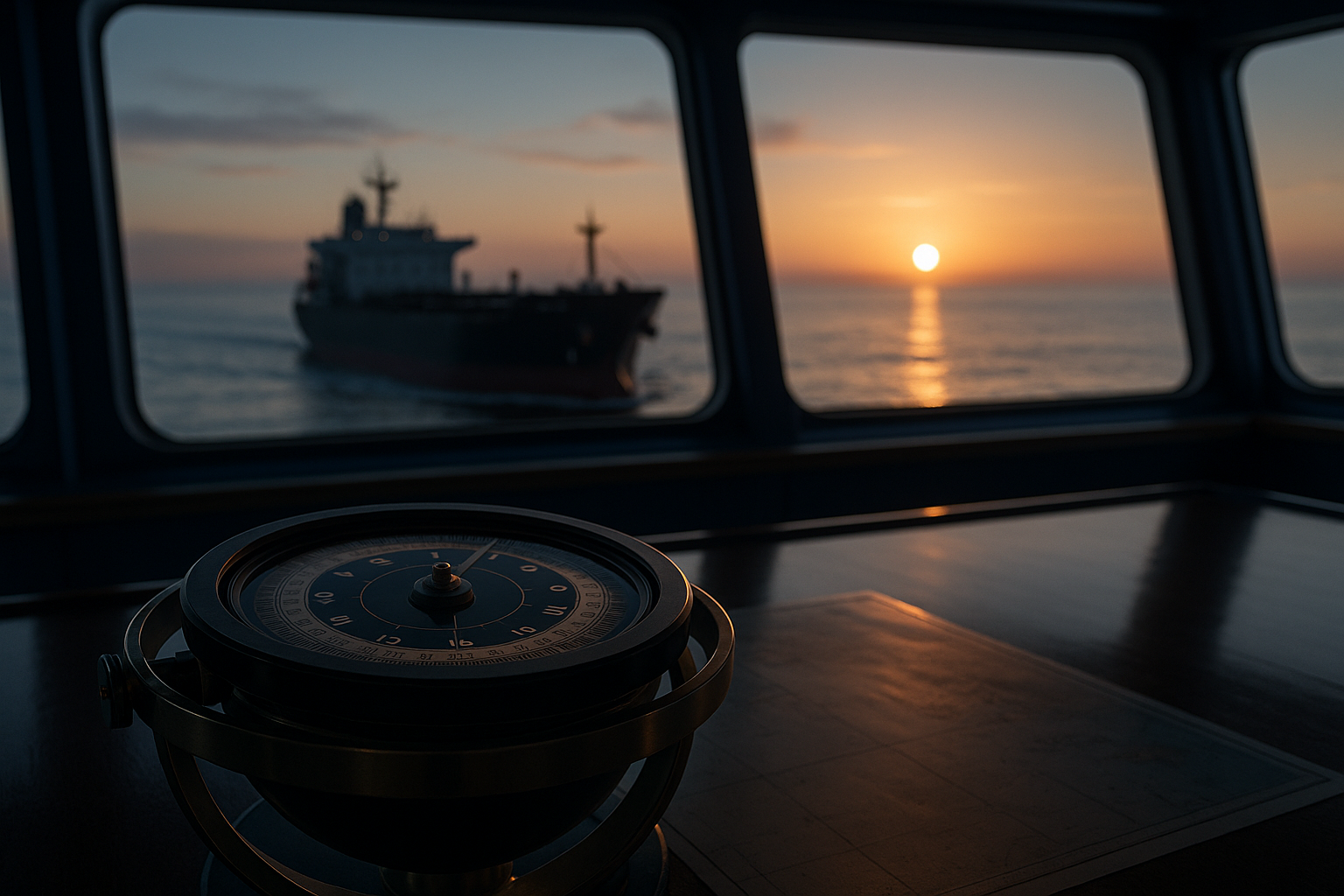
What Does a Ship Captain Do Each Day?
A typical Ship Captain Career Overview in the USA must begin before departure. You review weather and notices to mariners, confirm the voyage plan, check stability and loading information, inspect critical equipment, brief the crew, verify certificates, and ensure required logbooks and cargo documents are complete. On a container ship carrying 8,000 or more TEU, cargo securing and stability calculations demand a different level of planning than a 65-foot harbor tug.
Underway, you oversee navigation, bridge-resource management, radio communication, collision avoidance, fuel consumption, watch schedules, and coordination with pilots and terminals. A common arrangement is a 4-hours-on/8-hours-off bridge watch, although small commercial vessels may use different schedules. A coastal tug with to crew members may make frequent short moves, while a 300-meter container ship may carry to crew and spend days between ports.
The captain has legal authority over operations, crew assignments, passengers, cargo acceptance, and emergency action. A ferry master might manage passengers on a scheduled crossing; a fishing-vessel captain may make rapid weather and catch decisions; a cruise master may coordinate hundreds of crew and several thousand guests. International vessels also follow SOLAS, the International Convention for the Safety of Life at Sea, while purely domestic operations may have different inspection and route requirements.
We found that the Ship Captain Career Overview in the USA changes sharply by vessel type: a harbor tug prioritizes maneuvering and tow integrity, whereas a cruise ship emphasizes passenger safety, evacuation readiness, hotel operations, and port coordination. After an accident, near miss, pollution event, or injury, you may have to preserve evidence, notify authorities, and complete formal reports.
Ship Captain License Requirements in the United States
The licensing part of a Ship Captain Career Overview in the USA is best handled as a sequence rather than a single application. First choose the vessel and route: an inland 25-ton operation has very different requirements from an unlimited master credential for international cargo service. Then obtain a TWIC, document your sea service, complete a medical evaluation and drug test, take required courses, pass USCG examinations, and apply for the correct MMC endorsement.
- Identify the credential: OUPV, commonly called a six-pack, permits certain uninspected passenger operations; master credentials may cover 25, 50, or tons.
- Confirm route: inland and near-coastal endorsements are not interchangeable with unlimited international authority.
- Gather evidence: obtain signed sea-service letters showing vessel, tonnage, dates, route, and duties.
- Complete screening: meet age, citizenship or immigration, medical, background, and drug-testing requirements.
- Finish training and exams: radar, firefighting, first aid, survival, and STCW courses may apply.
- Submit to the NMC: use the current forms and checklist, not an old school handout.
Many entry-level credentials require applicants to be at least 18, while some endorsements or officer positions may impose additional conditions. The National Maritime Center evaluates sea service and credentials, and requirements can change during 2026. We recommend checking the official U.S. Coast Guard National Maritime Center pages for current forms, examination guides, medical forms, and approved-course information.
Your Ship Captain Career Overview in the USA should therefore be tailored to the exact endorsement. Confirm the vessel’s gross tonnage, route, passenger status, and inspection category before enrolling in a course.
How Much Sea Time Does a Future Captain Need?
Sea time is the foundation of a Ship Captain Career Overview in the USA, but the USCG does not treat every day aboard every vessel as equivalent. Evaluators consider documented calendar days, vessel gross tonnage, route, watchkeeping duties, and whether your service matches the endorsement requested. A signed letter stating only “worked on a boat” is not enough.
Common routes include starting as an Ordinary Seaman or Able Seaman, moving into mate or officer duties, and eventually qualifying as master. A small-vessel operator may build service toward an OUPV or 25-, 50-, or 100-ton master credential. An unlimited merchant route generally requires progressive service and examinations at each officer level. One day is generally recorded as one calendar day of service rather than simply a number of hours, although the precise credit depends on the applicable rules and vessel operation.
A realistic example might look like this: you spend year one as a deckhand on a coastal tug, years two and three qualifying as an able seafarer, years four and five serving as mate, and years six or seven pursuing master authority. That is an illustration, not a guarantee; seasonal work, vessel availability, route limitations, and endorsement requirements can extend the timeline.
- Keep a running sea-service log after every trip.
- Save discharge papers and employer letters in two locations.
- Record vessel name, official number, gross tonnage, propulsion, route, dates, and position.
- Request corrections while former supervisors can still verify them.
In our experience, careful records prevent more delays than difficult examination questions. The Ship Captain Career Overview in the USA becomes much easier when your sea-time evidence is complete before you apply.
Training, Exams, and Medical Standards for Captains
Training requirements in a Ship Captain Career Overview in the USA depend on the endorsement, but basic safety subjects commonly include personal survival techniques, firefighting, first aid or CPR, security awareness, and safe working practices. Radar observer training is highly useful and may be required for certain routes or duties. GMDSS training is relevant to marine radio communications on vessels operating under international standards, while bridge resource management teaches officers to share information and challenge unsafe decisions.
USCG examinations commonly test navigation, chart work, deck general safety, deck operations, rules of the road, environmental protection, and practical decision-making. You may encounter written questions and chart problems involving bearings, tides, set and drift, compass work, lights, shapes, and sound signals. The International Maritime Organization STCW Convention establishes international training and watchkeeping standards; an overseas employer may require additional STCW certificates beyond a domestic credential.
Medical review can include vision, hearing, color vision, medication disclosures, physical limitations, and drug testing. A medical waiver or additional documentation may be possible, but you should disclose conditions early rather than risk a rejected application or unsafe assignment. Schedule the medical examination before booking expensive courses.
- Download the current USCG examination guide.
- Complete an approved maritime-school review course.
- Practice chart problems until you can explain each step.
- Schedule medical and drug testing early.
- Submit one complete, consistent application package.
We recommend treating the Ship Captain Career Overview in the USA as a preparation project: certificates, medical records, exam results, and identity documents should all match your legal name and target endorsement.
Ship Captain Salary, Benefits, and Job Outlook
Salary figures in a Ship Captain Career Overview in the USA should be separated by vessel and work pattern. Small-vessel captains may earn roughly $45,000 to $90,000, harbor tug and ferry masters commonly fall around $80,000 to $150,000, and experienced offshore or deep-sea masters may exceed $150,000 when overtime, bonuses, and rotation pay are included. These are planning ranges, not guarantees.
The U.S. Bureau of Labor Statistics water transportation data groups several maritime occupations, so its figures should not be mistaken for a universal captain salary. Pay depends on experience, vessel size, union status, route, overtime, cargo type, and whether you receive paid leave between rotations. Union contracts may add health insurance, retirement contributions, travel arrangements, and defined wage scales.
Compare annual pay with day rates. A tug master earning $550 per day on a 14-days-on/14-days-off schedule works about assigned days before leave, producing approximately $100,100 in base rotation pay. A deep-sea master may earn a higher daily rate but spend four to six months aboard, followed by substantial unpaid or partially paid time at home.
Benefits can include medical insurance, retirement plans, room and board aboard, paid travel, hazard pay, training support, and union protections. Tax treatment, travel costs, overtime rules, and unpaid home time matter. Based on our analysis, two captains with similar annual totals can have very different family time and expenses. This Ship Captain Career Overview in the USA should help you compare the whole package, not just the advertised wage.
Choosing a Ship Captain Career Path
Your Ship Captain Career Overview in the USA should lead to a specific sector decision. Inland towboats offer domestic routes and strong hands-on maneuvering experience; harbor tugs provide frequent port work; ferries emphasize passenger safety and schedules; offshore supply vessels often use rotational employment; and cruise ships combine navigation with large-scale passenger operations. Container ships and tankers may offer international advancement but extended voyages, while fishing, research, and private-yacht work have different seasonal and lifestyle demands.
Tonnage and route determine the license. Tanker work may require specialized cargo training, and passenger operations can require additional safety or crowd-management qualifications. Experience transfers best when the underlying skills match: bridge watchkeeping, heavy-weather decisions, cargo safety, electronic navigation, and crew leadership are useful across sectors, although a tug master may need substantial additional training before commanding a large tanker.
A four-year college degree is not required for many operational captain roles. Documented sea time, licenses, training, and competence usually carry greater weight on smaller commercial vessels. Maritime academy degrees can provide a structured officer route, academic credit, internships, and access to unlimited-tonnage employment.
- Do you prefer local home-port work or months overseas?
- Do you want passengers, cargo, towing, research, or private clients?
- Can you tolerate night work, weather, and physical deck duties?
- Is income, predictable time off, or rapid advancement your priority?
- Does the employer provide union coverage, training, and relief officers?
We found that the best Ship Captain Career Overview in the USA is personal: choose a vessel and schedule you can sustain for five years, not merely a job with the highest advertised day rate.
The Real Lifestyle: Work Schedule, Stress, and Safety
The lifestyle described in a Ship Captain Career Overview in the USA includes long absences, irregular sleep, weather exposure, confined accommodation, and responsibility for decisions that cannot be postponed. Common schedules include 7-on/7-off, 14-on/14-off, and 28-on/28-off rotations. Deep-sea contracts may last several months, and a port call can turn a planned rest period into a 16-hour operational day.
Fatigue management is a safety obligation, not a personal preference. Watchkeepers need protected rest, realistic relief coverage, and clear alcohol and drug policies. Near-miss reporting helps identify unsafe equipment, poor procedures, or communication failures before someone is injured. Mental-health support also matters because isolation, family separation, and cumulative stress can affect judgment.
Imagine a tug captain receiving an engine-room alarm at 2:00 a.m. while a squall reduces visibility and the tow approaches a bridge. You would stabilize the vessel, call the engineer and deck crew, assess propulsion redundancy, notify traffic services, slow or alter course, and decide whether to abandon the maneuver. That decision requires calm prioritization rather than automatic reliance on a checklist.
Before accepting a position, ask about crew size, rotation, relief coverage, vessel maintenance, training budget, insurance, union status, accommodation, and the company’s injury and near-miss record. In our experience, these questions reveal more about a job than the posted salary. The Ship Captain Career Overview in the USA is ultimately a safety-and-lifestyle decision as much as a career decision.
How Technology and Environmental Rules Are Changing the Role
Modern duties in a Ship Captain Career Overview in the USA increasingly involve electronic chart display and information systems (ECDIS), automatic identification systems (AIS), integrated bridge systems, satellite communications, remote monitoring, electronic logbooks, and simulator-based training. AIS can display nearby vessel identity and movement, while ECDIS supports route planning and chart updates. Neither system removes the need to verify information visually, by radar, and through sound judgment.
Technology can fail, provide conflicting data, or be affected by poor visibility and cyber incidents. A captain must know how to shift to paper or backup electronic charts, validate GPS position by independent means, control access to networks, and keep the crew operating safely during outages. Digital competence is becoming a hiring advantage as fleets modernize through 2026.
Environmental duties include emissions compliance, ballast-water management, fuel transitions, port-state inspections, waste controls, and accurate data reporting. The U.S. Environmental Protection Agency regulates important aspects of vessel emissions and maritime operations; consult its U.S. Environmental Protection Agency maritime transportation resources for current requirements. IMO rules can also affect sulfur limits, energy efficiency, and ballast-water procedures on international vessels.
We recommend building skills in cyber safety, environmental compliance, electronic records, and data quality. The Ship Captain Career Overview in the USA now includes the ability to explain why a digital recommendation is safe, identify when it is wrong, and document compliance accurately.
Common Mistakes That Delay a Captain’s License
Small paperwork errors can derail a Ship Captain Career Overview in the USA for weeks or months. Frequent problems include incomplete sea-service letters, mismatched vessel tonnage, expired training certificates, missing medical documents, unresolved driving or criminal records, and applying for the wrong route or tonnage endorsement. A school may teach the right subject but still provide a certificate that has expired or does not meet the exact credential requirement.
Create a credential file containing government identification, TWIC documentation, medical forms, drug-test results, training certificates, sea-service evidence, examination results, photographs if required, and every letter or email exchanged with the USCG. Scan the file, name documents by date, and keep a physical backup.
Before submitting an employer letter, check the vessel name, official number, gross tonnage, propulsion type, route, dates served, position, duties, and authorized signature. Correct errors immediately. A mismatch between a letter stating gross tons and official records showing tons can affect the service credit or endorsement.
- Confirm the exact credential and route.
- Recalculate qualifying sea time.
- Check medical eligibility and disclosures.
- Review every training expiration date.
- Test your examination readiness with current materials.
Use the current National Maritime Center checklist rather than an old forum post or school handout. In our analysis, applicants who audit documents before filing avoid many preventable requests for additional information. That discipline makes the Ship Captain Career Overview in the USA more predictable.
A Practical 12-Month Plan to Start the Career
A realistic Ship Captain Career Overview in the USA can begin with a 12-month action plan, although sea-time requirements may extend beyond one year. During months and 2, choose a vessel sector, speak with at least two working captains, review USCG credential options, apply for a TWIC, and identify an approved maritime training provider. Write down the tonnage and route you ultimately want.
During months through 5, secure entry-level deck work or enroll in a maritime academy program. Begin documenting service immediately, complete medical screening, and take basic safety courses. During months through 9, build qualifying service, complete radar or other endorsement courses, study navigation and rules of the road, and organize your application evidence.
During months through 12, submit the MMC application, complete examinations, pursue an entry-level officer or mate position, and create a two- to five-year advancement plan. Budget for TWIC fees, medical examinations, drug testing, training, travel, textbooks, examination fees, and lost workdays. Prices vary; confirm current costs directly with the USCG and training providers.
- Months 1–2: target sector, TWIC, interviews, provider.
- Months 3–5: first job or academy, medical, basic safety.
- Months 6–9: sea service, radar, study, documentation.
- Months 10–12: MMC application, exams, mate pathway, career plan.
Based on our research, the strongest Ship Captain Career Overview in the USA is supported by a written budget and a backup sector if your preferred vessel is not hiring.
Conclusion: Your Next Steps Toward the Wheelhouse
The Ship Captain Career Overview in the USA points to a profession built step by step: choose a specific credential, verify sea time, complete safety training, meet medical standards, pass examinations, and progress through increasingly responsible positions. A single course cannot replace documented competence, and an impressive job title cannot correct incomplete records.
Take three actions within the next seven days: identify the vessel and route you want, download the relevant current USCG checklist, and contact two maritime employers or training schools. Ask each contact about entry-level openings, qualifying sea service, course approval, typical rotations, and advancement requirements.
Then create a written timeline with target endorsements, required sea days, estimated costs, training dates, examination dates, and a backup pathway. For example, you might target a 25-ton near-coastal master credential first, gain commercial experience, and later pursue a larger tug, ferry, offshore, or unlimited route endorsement.
We recommend verifying every requirement against official USCG rules in before paying for training or submitting an application. The best Ship Captain Career Overview in the USA ends with a practical principle: the wheelhouse is reached through accurate records, disciplined preparation, and repeated proof that you can keep people and vessels safe.
Key Takeaways
- Choose the vessel type, tonnage, and route before selecting a USCG credential or training course.
- Document every calendar day of qualifying service with signed letters containing vessel, tonnage, route, dates, and duties.
- Budget for TWIC, medical screening, drug testing, training, travel, exams, and possible lost workdays.
- Compare salary with rotation, benefits, travel, tax treatment, and time away from home.
- Verify all requirements through the USCG National Maritime Center before submitting an application.
Frequently Asked Questions
What license do you need to become a ship captain in the United States?
You typically need a Merchant Mariner Credential issued by the USCG, documented sea service, medical clearance, required safety training, and successful examinations. The exact endorsement depends on vessel tonnage, route, duties, and whether you work domestically or internationally.
How long does it take to become a ship captain?
There is no single timeline. A small-vessel master credential may be possible after several seasons of documented service, while an unlimited merchant-mariner master route can require many years progressing from ordinary seaman or able seaman to mate and then master.
Do you need a college degree to become a ship captain?
Yes. A four-year degree isn’t mandatory for many operational captain jobs, particularly on smaller commercial vessels, tugs, ferries, and yachts. Maritime academy degrees can make officer-track advancement more direct, especially for unlimited-tonnage international service.
How much do ship captains make in the USA?
Pay varies substantially by vessel, route, union status, rotation, and experience. Small-vessel captains may earn tens of thousands of dollars annually, while experienced tugboat, offshore, ferry, and deep-sea masters may earn well into six figures when overtime, rotation pay, and benefits are included.
How is sea time counted for a captain's license?
The USCG generally evaluates documented service by calendar day, vessel tonnage, route, and the duties performed. You should keep signed employer letters, discharge documents, vessel details, and route information because incomplete or inconsistent records can delay an application.
What is the best first step toward becoming a captain?
The Ship Captain Career Overview in the USA depends on the credential you want, the vessels you plan to operate, and the route you will sail. Start by checking the current National Maritime Center requirements before paying for training or submitting forms.
