Introduction: Is an Elevator Mechanic Career Right for You?
An elevator mechanic career can offer paid technical training, strong earnings, and long-term work, but it also demands physical stamina and careful judgment. If you are Exploring a Career as an Elevator Mechanic in the USA, you probably want clear answers about daily responsibilities, pay, training, job stability, licensing, and the best way to enter the trade in 2026.
An elevator mechanic installs, maintains, repairs, modernizes, and inspects elevators, escalators, moving walks, and related vertical-transportation equipment. The work combines electrical troubleshooting, mechanical repair, hydraulics, controls, rigging, code compliance, and customer communication. Based on our research, the strongest attractions are paid apprenticeships, union and nonunion pathways, specialized technical work, and demand in dense cities where buildings cannot function without reliable vertical transportation.
Picture a mechanic in a Chicago high-rise responding to a traction elevator that stops between floors. The mechanic secures the equipment, reviews controller fault codes, checks the door circuit and safety chain, tests voltage, and communicates with the building manager before returning the car to service. That is very different from simply resetting a button.
In this guide, we compare apprenticeships, education, licensing, compensation, safety, lifestyle, union options, technology, and long-term advancement. If you are Exploring a Career as an Elevator Mechanic in the USA, the goal is to help you decide whether the trade fits your interests, health, schedule preferences, and appetite for continual learning.
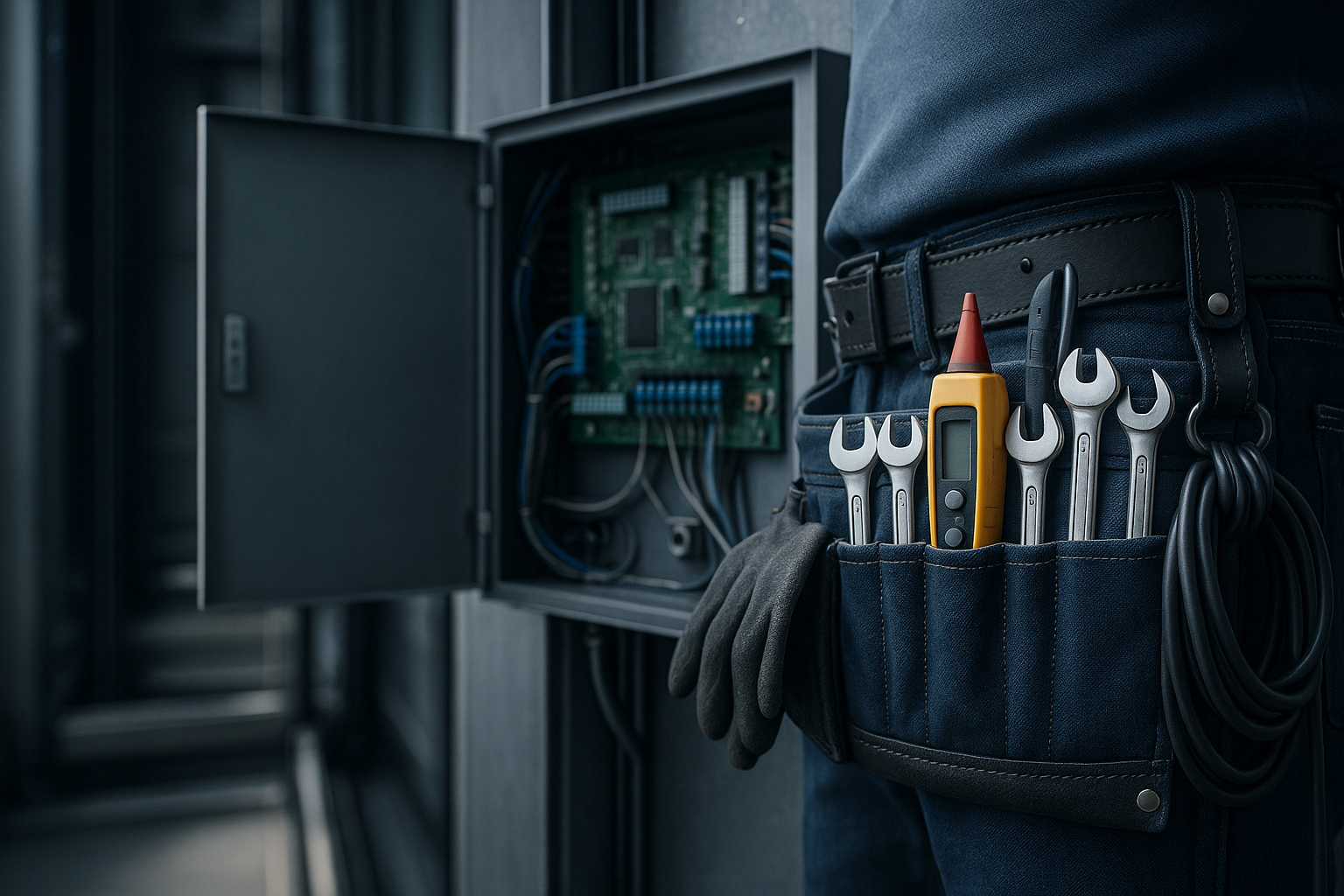
What Does an Elevator Mechanic Do?
If you are Exploring a Career as an Elevator Mechanic in the USA, expect work that is both mechanical and electrical. A typical day may include preventive maintenance, door adjustments, cable and sheave inspections, lubrication, hydraulic-system repairs, electrical testing, controller diagnostics, safety-device checks, and emergency callouts. Mechanics work in hospitals, apartment buildings, office towers, factories, airports, retail centers, and transit stations.
The trade includes passenger and freight elevators, hydraulic and traction elevators, escalators, dumbwaiters, platform lifts, and moving walks. An elevator constructor installs equipment; a maintenance mechanic performs scheduled service; a repair technician corrects failures; an inspector verifies compliance; and a modernization specialist replaces older controllers, drives, machines, doors, or fixtures.
Consider an elevator that repeatedly stops between floors. A competent response is to:
- Secure the equipment and apply required lockout/tagout controls.
- Review fault codes, service history, and passenger reports.
- Test circuits and inspect door locks, limit switches, sensors, and safety components.
- Repair the underlying cause rather than repeatedly resetting the controller.
- Run required tests, document the work, and notify building personnel.
Precision matters because one elevator in a hospital or office tower may carry hundreds or thousands of passengers daily. Customer contact is usually limited compared with office work, but you still need to explain delays, write accurate reports, and remain calm during emergencies. Our analysis of the trade shows that the best mechanics are comfortable moving between physical diagnosis, electrical theory, documentation, and human communication. Exploring a Career as an Elevator Mechanic in the USA means accepting responsibility for equipment where small errors can have serious consequences.
Why Explore a Career as an Elevator Mechanic in the USA in 2026?
Exploring a Career as an Elevator Mechanic in the USA is worth considering because the occupation combines a specialized skill set with essential infrastructure. The U.S. Bureau of Labor Statistics reports a median annual wage of $106,580 for elevator and escalator installers and repairers in May 2024. BLS projects approximately 5% employment growth from to and about 2,800 openings per year from replacement needs and growth.
Demand does not depend only on new skyscrapers. Aging equipment requires modernization, hospitals are expanding, accessibility upgrades affect public buildings, and older apartment blocks need reliable service. New York, California, Texas, Florida, Illinois, and Washington offer large markets, while smaller metropolitan areas may provide steadier competition levels and shorter commutes. Major elevator manufacturers, independent contractors, building owners, public agencies, and the International Union of Elevator Constructors (IUEC) all employ or support skilled workers.
We researched registered training routes through the U.S. Department of Labor Apprenticeship.gov and recommend checking local openings rather than assuming a national hiring schedule. A practical decision test is simple: do you enjoy hands-on troubleshooting, variable worksites, safety-critical responsibility, and continuous technical learning? If yes, Exploring a Career as an Elevator Mechanic in the USA may offer better alignment than a desk-based career. If you dislike heights, confined areas, irregular calls, or detailed procedures, investigate the daily reality before applying.
In 2026, connected controllers and building upgrades are adding technical complexity, not removing the need for people who can inspect, repair, test, and make safe decisions on site.
How to Become an Elevator Mechanic: The Apprenticeship Path
For most beginners, the clearest route when Exploring a Career as an Elevator Mechanic in the USA is a paid apprenticeship. Start by earning a high school diploma or GED, confirming age and physical requirements, and obtaining a driver’s license if local employers require one. Then identify IUEC locals, contractor-sponsored programs, community-college partnerships, and state-registered apprenticeships.
- Gather proof of education, work history, references, identification, and any military or trade records.
- Apply during the official intake window and complete aptitude testing or interviews.
- Prepare for algebra, geometry, mechanical reasoning, electrical basics, and timed test questions.
- Complete classroom instruction alongside supervised on-the-job training.
- Earn required safety credentials, field hours, and examinations before mechanic advancement.
Many programs last approximately four years, but wages, classroom hours, selection rules, and progression vary by local and employer. Apprentices are paid because they contribute under supervision while developing productive skills. Instruction commonly covers electrical theory, blueprint reading, hydraulics, rigging, welding, code compliance, workplace communication, and emergency procedures.
We recommend reviewing Apprenticeship.gov’s job finder, then contacting each program office directly. Keep copies of your diploma or GED, driver’s license, resume, references, math coursework, and relevant experience. If you are Exploring a Career as an Elevator Mechanic in the USA, do not wait for perfect qualifications: strengthen algebra, practice mechanical reasoning, and apply to every credible program within practical commuting distance.
Education, Certifications, and Licensing Requirements by State
Exploring a Career as an Elevator Mechanic in the USA usually does not require a four-year college degree. Employers commonly expect a diploma or GED, technical training, verified field experience, safe work habits, and the ability to understand electrical and mechanical systems. Useful additions include OSHA or OSHA 30, CPR and first aid, confined-space training, rigging, welding qualifications, electrical coursework, and manufacturer-specific instruction.
Licensing is local. Some jurisdictions license individual mechanics; others focus on contractors, permits, continuing education, inspections, or combinations of those controls. New York has state and local rules that can differ by location, Massachusetts regulates hoisting and related work through state requirements, and California requirements can involve contractor licensing, local permitting, inspection procedures, and employer qualifications. These examples do not create one national rule.
Mechanics must understand ASME A17.1/CSA B44 safety requirements, local building codes, inspection rules, and permit procedures. Consult OSHA regulations for workplace requirements and ASME A17.1 information for code context. Before accepting work, identify the authority having jurisdiction and confirm the current rule.
- Identify the state or municipal licensing agency.
- Confirm apprentice-hour and supervision rules.
- Check examination, background, and documentation requirements.
- Record license renewal dates and continuing-education obligations.
- Keep training certificates and field-hour records organized.
Based on our analysis, this verification step prevents expensive misunderstandings. Exploring a Career as an Elevator Mechanic in the USA requires checking the exact jurisdiction where equipment is installed, repaired, or inspected—not relying on advice from another state.
Elevator Mechanic Salary, Benefits, and Career Growth
The national wage picture is attractive, but your actual result depends on location, overtime, union status, specialization, emergency work, and experience. BLS reported a $106,580 median annual wage in May 2024, with the occupation’s highest-paid workers earning substantially more than the median. Apprentices typically earn a percentage of the mechanic rate and receive scheduled increases as they complete classroom and field milestones.
If you are Exploring a Career as an Elevator Mechanic in the USA, compare total compensation rather than hourly pay alone. Union packages may include health insurance, pension or retirement contributions, paid training, negotiated wage schedules, and defined overtime rules, although every local agreement differs. Night work, emergency callouts, travel, hazardous locations, modernization expertise, controls knowledge, and the ability to read complex schematics can materially change earnings.
A realistic five-year progression might look like this:
- Year 1: supervised apprentice work, safety training, tools, basic maintenance, and classroom algebra.
- Year 2: electrical testing, door systems, hydraulics, and more independent service tasks.
- Year 3: advanced troubleshooting, rigging, code study, and greater responsibility on modernization projects.
- Year 4: completion of required hours, examinations, and mechanic-level qualification where applicable.
- Year 5: licensed mechanic work, adjustment, foreperson duties, estimating, inspection, or specialist training.
We recommend asking about overtime rates, travel time, tool allowances, vehicle policy, retirement benefits, health coverage, and scheduling predictability. Exploring a Career as an Elevator Mechanic in the USA is financially sensible only when you understand the complete package, not just a promised top hourly figure.
Safety, Physical Demands, and Working Conditions
Exploring a Career as an Elevator Mechanic in the USA means accepting real physical demands: climbing ladders, working in hoistways and machine rooms, lifting components, kneeling, reaching overhead, and working in heat, noise, or confined spaces. You may also face construction dust, weather exposure, early starts, night shifts, weekend work, standby rotations, urgent breakdowns, and occasional travel.
Core controls include lockout/tagout, fall protection, electrical arc-flash precautions, confined-space procedures, rigging controls, adequate hoistway clearance, and clear communication with building personnel. Safety systems must never be bypassed merely to save time. OSHA’s rules and employer procedures should guide every test, and a qualified supervisor must determine how equipment is placed into a safe condition.
In an entrapment, the mechanic should first communicate calmly with passengers, obtain the elevator location and condition, secure the site, restrict unauthorized access, and coordinate with emergency personnel or building management. A controlled release follows approved procedures; forcing doors or improvising a rescue can create greater danger.
Practical injury-prevention habits include inspecting harnesses and tools, using team lifts for heavy parts, maintaining three points of contact, rotating demanding tasks, taking fatigue seriously, and reporting near misses. We found that candidates who can explain a safe response usually stand out in interviews. If you are Exploring a Career as an Elevator Mechanic in the USA, assess your comfort with heights, enclosed areas, pressure, medical restrictions, and detailed procedures before committing. In 2026, safety culture should be a deciding factor, not an afterthought.
Tools, Technology, and Skills That Set Mechanics Apart
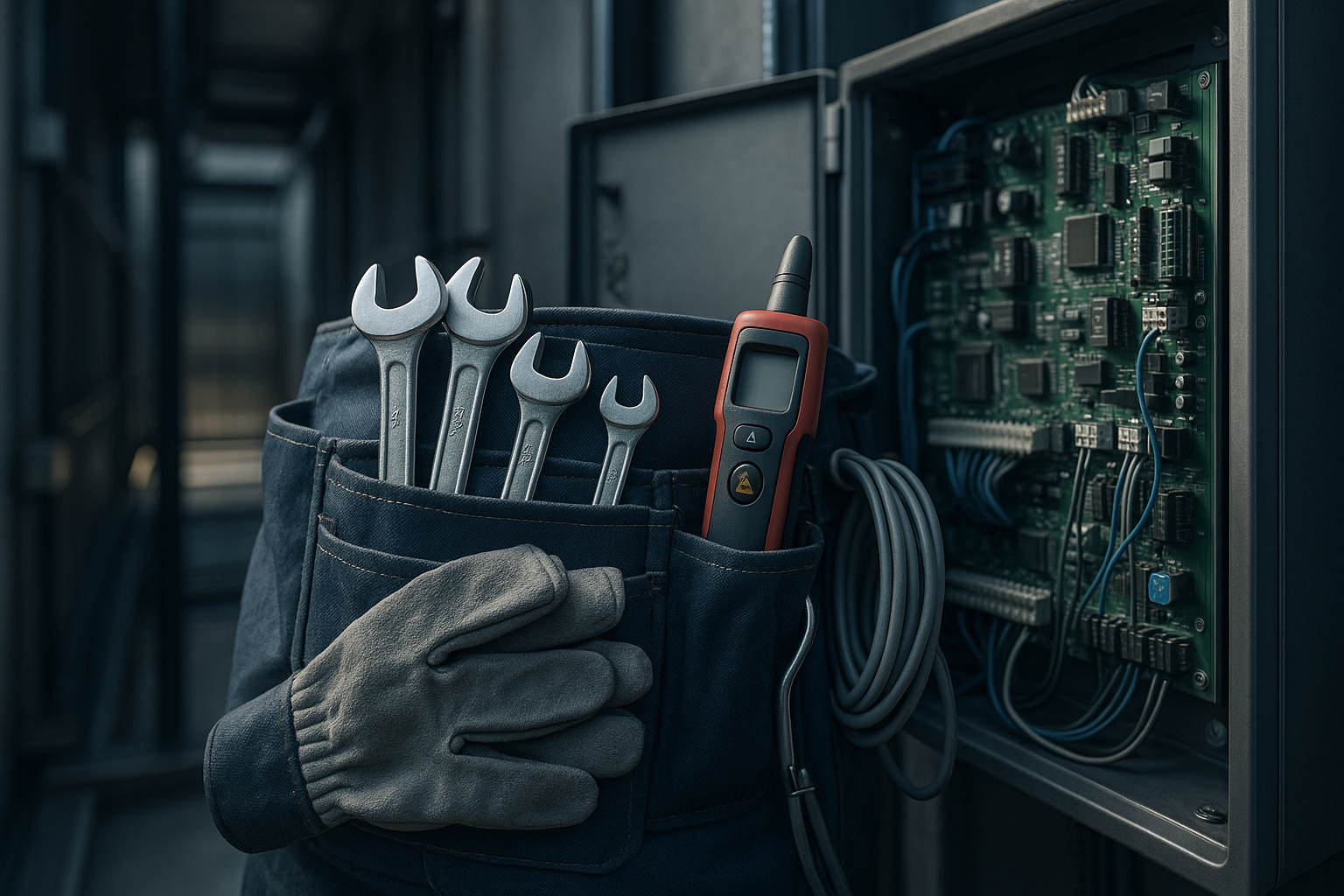
When Exploring a Career as an Elevator Mechanic in the USA, you will encounter both traditional tools and sophisticated controls. Core equipment includes multimeters, insulation testers, noncontact voltage detectors, hand tools, torque wrenches, alignment tools, rigging equipment, laptops, diagnostic interfaces, and personal protective equipment. Tool accuracy matters: a poor meter reading or incorrectly torqued connection can create a repeat failure.
Modern systems may use variable-frequency drives, microprocessor controllers, destination dispatch, remote monitoring, regenerative drives, and accessibility technology. A mechanic may interpret error logs, test sensors, update approved parameters, verify communication between devices, and consult a manufacturer’s technical-support team. Software knowledge now complements mechanical ability, although safe physical inspection remains essential.
High-value professional habits include clear documentation, customer communication, teamwork, calm decision-making, time management, and careful handoffs between shifts. We recommend a three-stage development plan:
- Strengthen algebra, electrical fundamentals, schematic reading, and measurement.
- Build safe hands-on experience under supervision through maintenance, construction, HVAC, or industrial work.
- Add controls, diagnostics, networking, and manufacturer training after mastering core maintenance.
Connected building systems also create cybersecurity and data-privacy concerns because equipment data may travel to remote platforms. Do not connect unauthorized devices or share credentials. Exploring a Career as an Elevator Mechanic in the USA can lead to stronger options if you combine trade fundamentals with controls, networking, accessibility, and building-automation knowledge—a skill combination employers increasingly need.
Union Versus Nonunion Elevator Mechanic Careers
Exploring a Career as an Elevator Mechanic in the USA may lead through the IUEC or a nonunion contractor. Union pathways often provide standardized apprenticeship instruction, negotiated wage scales, pension or retirement benefits, broad contractor access, and defined promotion structures. Nonunion employers may offer company-specific training, direct hiring, different entry requirements, or greater flexibility in assignments.
Neither route is automatically superior. Compare local demand, recognition of prior experience, overtime rules, travel requirements, licensing support, job assignments, mobility, benefits, and safety culture. Hiring access can vary with application windows, aptitude testing, geographic barriers, and local labor demand. Monitor official local announcements rather than relying on informal claims that a program is always open.
Use this checklist when comparing offers:
- Starting wage and apprentice raise schedule
- Health insurance, retirement, and pension contributions
- Classroom hours, paid training, tools, and tuition
- Safety metrics, supervision, and incident reporting
- Job security, dispatch or hiring practices, and geographic mobility
- Mechanic promotion criteria, examinations, and licensing assistance
Veterans can translate equipment maintenance, discipline, and safety documentation. Electrical, HVAC, welding, millwright, industrial-maintenance, construction, and customer-service workers should describe specific results rather than only job titles. Based on our research, applicants who show reliable teamwork and safe problem-solving often compete well. If you are Exploring a Career as an Elevator Mechanic in the USA, contact both union locals and credible contractors so you can compare actual local terms.
Challenges, Myths, and Long-Term Outlook
The idea that elevator work means fixing buttons is inaccurate. Exploring a Career as an Elevator Mechanic in the USA involves electrical circuits, mechanical tolerances, hydraulic pressure, controls, safety devices, code requirements, diagnostics, documentation, and human judgment. A mechanic may spend an hour interpreting a schematic before touching a component, then perform precise tests under time pressure.
Risks include equipment movement, fatigue, confined spaces, weather, inconsistent schedules, and emergency pressure. Training, supervision, lockout/tagout, proper equipment, and a strong safety culture reduce those risks; they do not make them disappear. Automation is changing tasks rather than eliminating the trade because connected systems still need installation, inspection, physical repair, code compliance, and decisions that account for unusual site conditions.
Aging populations, high-rise housing, hospitals, transit systems, accessibility rules, and older building stock support long-term work. In 2026, useful future skills include energy-efficient drives, regenerative systems, destination dispatch, remote diagnostics, cybersecurity awareness, and accessibility upgrades.
Burnout prevention requires sleep planning around standby work, ergonomic habits, realistic on-call expectations, mentoring, and clear boundaries around overtime. Ask yourself five questions:
- Do I enjoy diagnosing technical problems?
- Can I follow safety procedures when under pressure?
- Can I tolerate physical work and variable sites?
- Am I willing to keep learning after qualification?
- Can my health and personal life accommodate occasional irregular hours?
Our analysis suggests that an honest answer to those questions is more valuable than a salary headline. Exploring a Career as an Elevator Mechanic in the USA can be rewarding, but only when responsibility, physical work, and continual learning fit your priorities.
How to Start Your Elevator Mechanic Career: A 30-Day Action Plan
If you are Exploring a Career as an Elevator Mechanic in the USA, use the next days to replace uncertainty with specific applications and conversations.
- Days 1–7: Confirm your diploma or GED, research state and city licensing rules, review BLS wage information, and list IUEC locals, registered apprenticeships, contractors, community colleges, and public employers within commuting distance.
- Days 8–14: Refresh algebra, mechanical reasoning, and electrical basics. Collect your education record, driver’s license, resume, references, military records, certifications, and work-history documentation.
- Days 15–21: Apply to every suitable apprenticeship or entry-level maintenance opening. Attend information sessions, contact program offices, and prepare examples of safe problem-solving and reliable teamwork.
- Days 22–30: Practice aptitude questions, prepare interview responses, obtain useful basic safety training, arrange transportation, and create a calendar for application deadlines and follow-ups.
A practical resume should lead with a short profile, then list safety record, electrical or mechanical work, construction, welding, HVAC, industrial maintenance, military equipment, customer service, licenses, and measurable results. Ask recruiters: How long is the apprenticeship? What are the wage steps? Who pays for tools and classes? What license is required? How are overtime and travel handled? What safety metrics are tracked?
We recommend submitting at least one application before the days end. If you are Exploring a Career as an Elevator Mechanic in the USA and are not selected immediately, improve math skills, gain related maintenance experience, apply during the next intake, and request feedback when available. A rejection can identify the exact gap to fix rather than ending the plan.
Conclusion: Build a Practical Path Into the Trade
Exploring a Career as an Elevator Mechanic in the USA means evaluating more than salary. Training quality, safety culture, licensing, schedule, physical demands, benefits, local demand, and long-term technical growth all affect whether the career works for you.
For most beginners, the strongest route is practical: earn or verify a diploma or GED, strengthen math and mechanical fundamentals, research local requirements, apply to registered apprenticeships, and compare union and nonunion offers carefully. Use BLS, Apprenticeship.gov, OSHA, state licensing agencies, and IUEC local offices to verify current requirements in rather than trusting outdated social-media advice.
Complete the action plan instead of waiting for a perfect opening. Identify three local programs, submit at least one application, and schedule one informational conversation with a working mechanic or training coordinator. Ask what the job is really like during winter callouts, modernization projects, emergency responses, and ordinary maintenance days.
Based on our research, the people who succeed usually begin with curiosity, preparation, and respect for safety—not with a complete technical skill set. Exploring a Career as an Elevator Mechanic in the USA becomes a real career path when you turn those three actions into a calendar entry, an application, and a conversation. The first step is not knowing everything; it is entering the trade ready to learn correctly.
Key Takeaways
- Elevator mechanics combine electrical, mechanical, hydraulic, controls, safety, and customer-service skills across essential transportation equipment.
- Most beginners enter through a paid apprenticeship lasting approximately four years, although local requirements and progression rules vary.
- BLS reported a $106,580 median annual wage in May 2024, but overtime, location, specialization, union benefits, and experience strongly affect total compensation.
- Licensing is controlled by states and municipalities, so verify requirements with the authority having jurisdiction before accepting work.
- Start now by identifying three local programs, preparing your documents and math skills, submitting an application, and speaking with a working mechanic or training coordinator.
Frequently Asked Questions
What qualifications do you need to become an elevator mechanic?
Most entry-level candidates need a high school diploma or GED, a valid driver’s license, mechanical aptitude, and the ability to meet physical and safety requirements. A four-year college degree is usually not required because paid apprenticeships provide the core technical training.
How long does it take to become an elevator mechanic?
Most elevator apprenticeships take approximately four years, although the exact length depends on the union local, employer, state requirements, classroom hours, and field experience. Apprentices generally receive wage increases as they complete training milestones.
How much does an elevator mechanic make in the USA?
According to the U.S. Bureau of Labor Statistics, elevator and escalator installers and repairers had a median annual wage of $106,580 in May 2024. Actual earnings vary with location, overtime, union status, specialization, emergency work, and experience.
Is elevator mechanic work physically demanding?
Yes. Elevator work can be physically demanding because you may climb ladders, work in hoistways, lift components, kneel, reach overhead, and work in heat or confined spaces. Strong safety procedures, team lifting, ergonomic habits, and appropriate medical guidance help manage these demands.
Do elevator mechanics need a license?
No single national license covers every elevator mechanic in the USA. Requirements vary by state and municipality; some jurisdictions license individual mechanics, while others regulate contractors, inspections, permits, continuing education, or combinations of these requirements.
Is it better to become a union or nonunion elevator mechanic?
Both union and nonunion routes can lead to a successful career. The best choice depends on your local wage scale, training quality, benefits, job availability, licensing support, overtime rules, mobility, and how prior experience is recognized.
