Introduction: What to Know About Nuclear Engineering Careers in 2026
If you need to understand what nuclear engineers do, how much they earn, which degrees and licenses they need, and whether the profession offers strong long-term prospects, this Nuclear Engineer Career Overview in the USA gives you the practical answer. Nuclear engineering applies physics, mathematics, materials science, and engineering principles to nuclear energy, radiation, medical technology, defense, and research.
Based on our research, your career options extend far beyond operating reactors. You could work at a nuclear power plant, national laboratory, U.S. Navy facility, medical technology company, university, regulatory agency, or private engineering firm. The U.S. Bureau of Labor Statistics reported approximately 15,000 nuclear engineering jobs in 2024 and projects employment to change by about 1% from to 2034.
That modest projection does not tell the whole story. According to the U.S. Energy Information Administration, nuclear power supplied roughly 19% of U.S. electricity in 2024. Plant life extensions, advanced reactors, radioactive-waste management, national security, and medical isotopes keep the field relevant in 2026. This Nuclear Engineer Career Overview in the USA will help you compare education, specialties, compensation, licensing, and practical entry steps.
What Does a Nuclear Engineer Do?
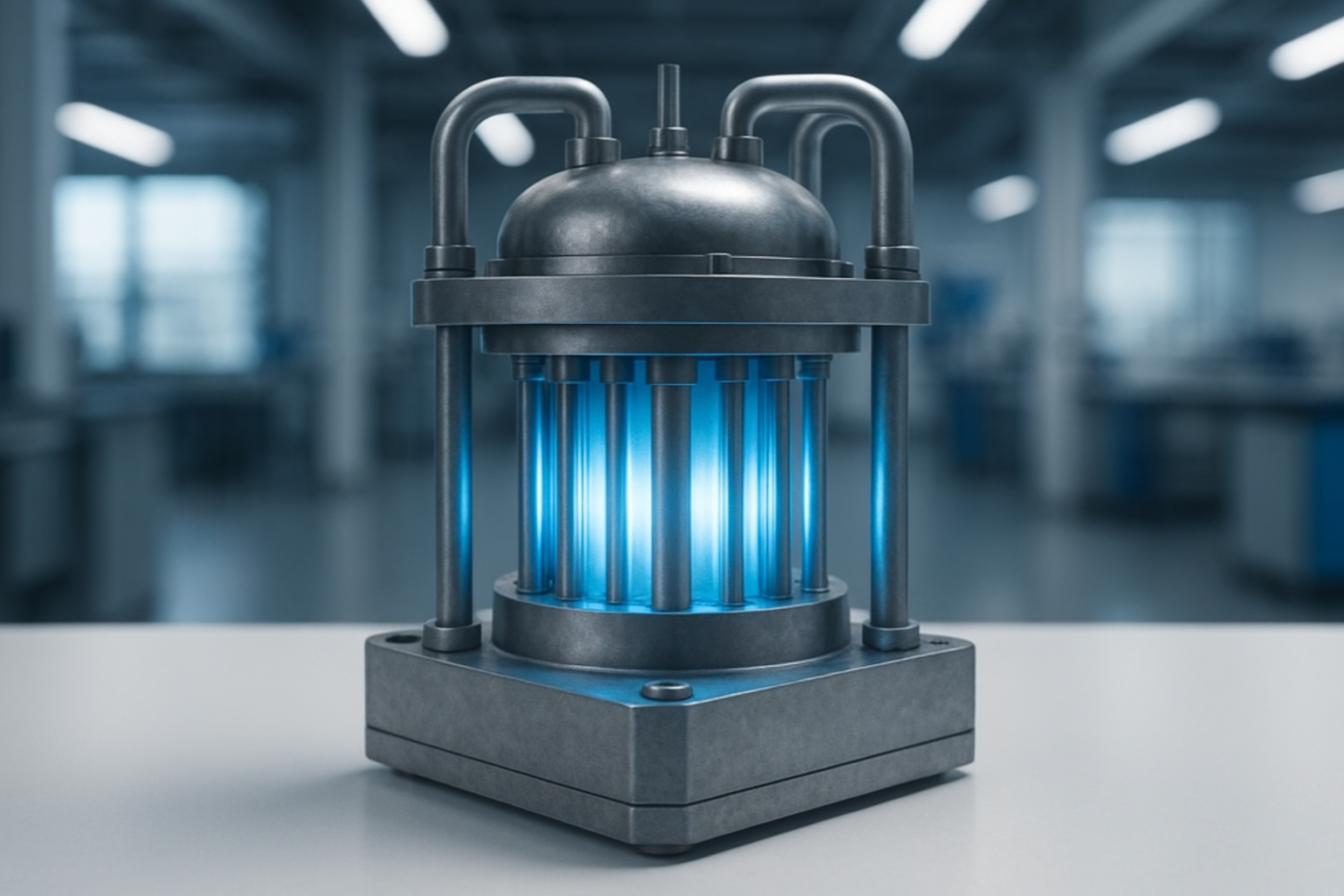
A nuclear engineer designs, operates, tests, maintains, and improves nuclear systems while protecting workers, the public, and the environment. Your work may involve a reactor core, radiation-producing equipment, fuel, shielding, control systems, or a safety case supporting a regulatory decision.
Typical duties include reactor-core analysis, fuel management, radiation-shielding calculations, equipment inspections, computer modeling, technical reports, probabilistic risk assessments, and incident prevention. A plant engineer might review sensor data showing an unusual coolant-temperature trend; a national-laboratory analyst may run thermal-hydraulic simulations; a hospital radiation engineer may verify shielding around a linear accelerator.
In a realistic day, you could compare control-room readings with operating limits, investigate an abnormal value, update a safety model, document assumptions, and brief plant leadership. Naval nuclear engineers may perform similar analysis aboard submarines or aircraft carriers, where disciplined procedures and rapid communication are essential.
You will collaborate with mechanical, electrical, chemical, materials, software, health-physics, operations, and regulatory professionals. Common tools include MATLAB, Python, Monte Carlo radiation transport, computational fluid dynamics, SQL, probabilistic risk assessment, and nuclear codes and standards. We found that successful candidates explain both the calculation and the safety decision it supports. The Nuclear Engineer Career Overview in the USA therefore includes technical analysis, field work, writing, and responsible judgment—not just theoretical physics.
For this Nuclear Engineer Career Overview in the USA, treat every model as a decision aid that requires verification, quality control, and clear communication.
Nuclear Engineer Education Requirements and Best Degrees
The standard entry requirement is a bachelor’s degree in nuclear engineering, although mechanical, electrical, chemical, materials, and other closely related degrees can qualify you. Core subjects usually include calculus, differential equations, physics, thermodynamics, fluid mechanics, materials science, reactor physics, radiation protection, engineering design, and laboratory work.
We recommend choosing an ABET-accredited program because accreditation confirms that the curriculum meets recognized engineering standards and supports later licensure. Representative programs include the University of Michigan, Texas A&M University, the University of Tennessee, North Carolina State University, and Purdue University. Verify current program status directly through ABET and each university; offerings can change.
- Compare ABET accreditation, reactor laboratories, faculty research, tuition, and internship pipelines.
- Complete laboratory and senior-design courses rather than relying only on lecture grades.
- Build Python, MATLAB, statistics, and technical-writing ability.
- Prioritize paid internships or co-ops at utilities, laboratories, defense firms, or engineering companies.
- Prepare for technical interviews using thermodynamics, fluid flow, radiation, and systems examples.
A master’s degree can help with advanced reactors, fuel-cycle development, fusion, radiation oncology, and national-laboratory research; a Ph.D. is often expected for independent research or university teaching. Public tuition may be substantially lower than private tuition, so compare total debt against likely starting pay. A senior-design project that models reactor heat removal, or reactor-operator training that demonstrates procedural discipline, can strengthen an entry-level application.
Engineers who began in mechanical, electrical, materials, or chemical engineering can move into nuclear work through graduate study, plant experience, professional training, or a project involving radiation, thermal systems, controls, or reliability. Our Nuclear Engineer Career Overview in the USA analysis found that employers often value relevant systems experience as much as the degree title. The same Nuclear Engineer Career Overview in the USA applies to career changers: show credible nuclear knowledge through coursework, projects, and supervised experience.
Licenses, Certifications, and Security Requirements
Most entry-level nuclear engineers do not need a professional license immediately. A Professional Engineer credential becomes more valuable when you approve designs, manage work affecting public safety, offer consulting services, or pursue senior technical leadership. Requirements vary by state, so check the relevant licensing board before planning your timeline.
The usual PE pathway includes an ABET-accredited degree, passing the Fundamentals of Engineering exam, qualifying engineering experience, and passing the Nuclear or another applicable engineering examination. Some employers also provide structured development programs that help you document experience and prepare for the exam.
Do not confuse an engineer’s credentials with a reactor operator license. The U.S. Nuclear Regulatory Commission issues operator licenses through separate training, examinations, medical standards, simulator work, and continuing requirements. An engineer may support licensed operators without holding an operator license.
Employer training may include radiation-worker qualification, emergency-response drills, quality-assurance procedures, OSHA-related safety training, confined-space awareness, and site access orientation. Department of Energy laboratories, defense contractors, naval nuclear programs, and certain federal positions may require citizenship, a background investigation, or a security clearance.
We recommend checking the National Society of Professional Engineers, the NRC, state boards, and individual job descriptions. In this Nuclear Engineer Career Overview in the USA, the practical lesson is to treat credentials as role-dependent. Our Nuclear Engineer Career Overview in the USA research also found that clearance eligibility and willingness to complete site training can materially widen your options.
Nuclear Engineer Salary in the USA
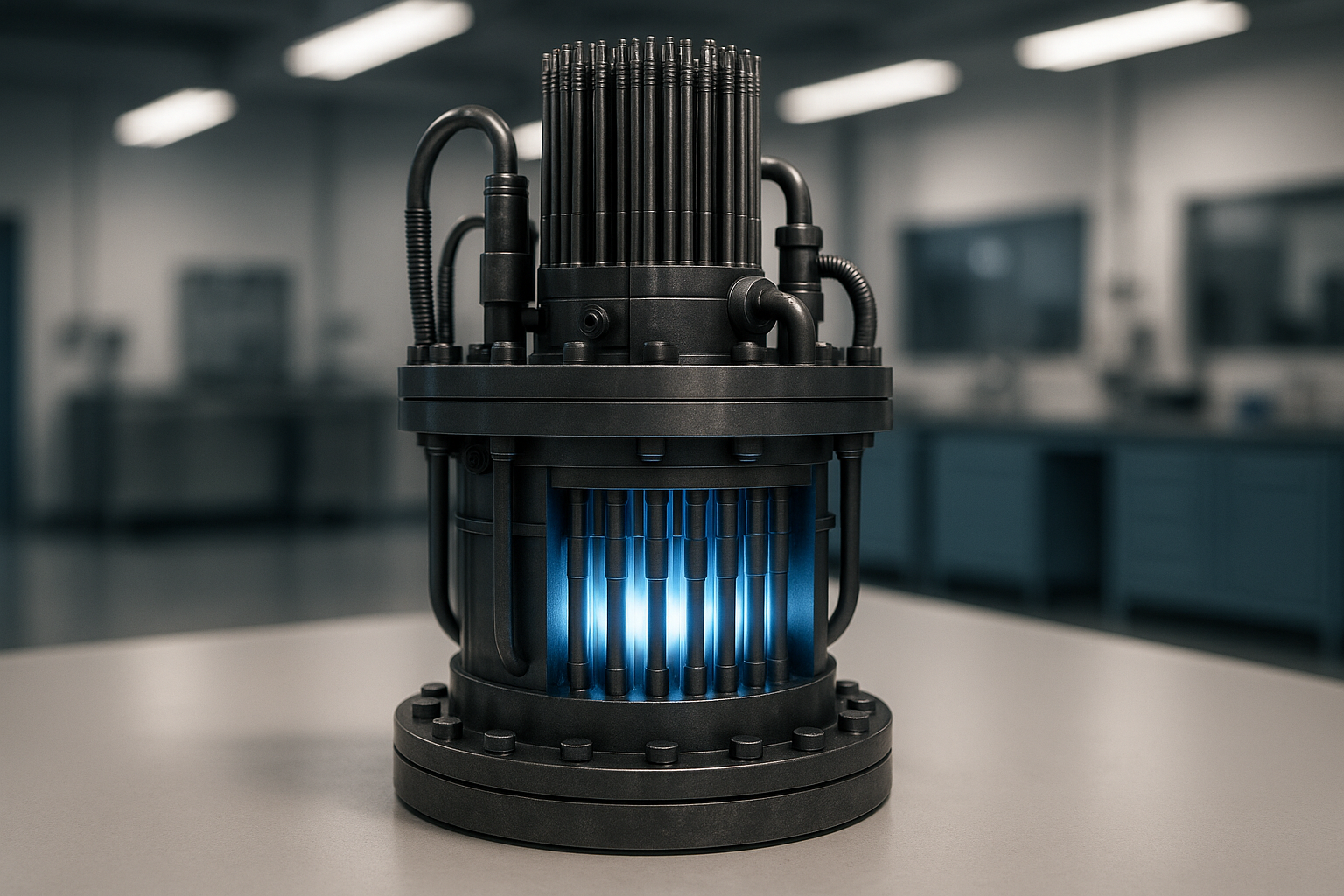
The U.S. Bureau of Labor Statistics is the most reliable starting point for salary research, but exact compensation depends on industry, location, clearance, overtime, travel, shift work, union status, supervisory responsibility, and graduate education. Use the latest figures on the U.S. Bureau of Labor Statistics nuclear engineer page and compare them with official employer postings.
| Career stage | Typical responsibilities | Approximate pay range | Factors that can raise compensation |
|---|---|---|---|
| Entry level | Analysis, field support, calculations, documentation | $70,000–$95,000 | Clearance, location, paid rotations, advanced software |
| Mid-career | Independent analysis, projects, licensing support | $95,000–$135,000 | PE eligibility, outage work, scarce specialty, overtime |
| Senior or lead | Safety cases, design authority, management, regulatory work | $130,000–$190,000+ | Supervision, clearance, travel, high-consequence expertise |
These planning ranges are not substitutes for current BLS or employer data. Utilities may pay well for outage, shift, or plant responsibilities; federal laboratories often offer strong retirement and research benefits; defense contractors may add clearance premiums; medical technology companies may reward software and systems experience. Academia commonly trades higher research autonomy for lower base pay.
Employment centers include Washington, D.C., Virginia, South Carolina, Georgia, Illinois, Tennessee, New York, and states with operating reactors or national laboratories. Total compensation may include health insurance, retirement contributions, paid training, relocation assistance, tuition support, bonuses, clearance premiums, and shift differentials. As of 2026, our Nuclear Engineer Career Overview in the USA comparison recommends evaluating the full package, not just salary. The Nuclear Engineer Career Overview in the USA also shows why two engineers with the same degree can receive very different offers.
Nuclear Engineer Job Outlook and Where Jobs Are Found
The BLS projects approximately 1% employment change from through 2034, so you should not expect explosive growth in conventional reactor construction. Yet plant life extensions, decommissioning, advanced reactors, fusion, medical applications, radioactive-waste programs, and national security create distinct demand. A small occupation can still provide durable opportunities when your skills match a specialized need.
Potential employers include nuclear utilities, reactor vendors, the NRC, the Department of Energy, Idaho National Laboratory, Oak Ridge National Laboratory, Argonne National Laboratory, Los Alamos National Laboratory, Westinghouse, GE Vernova, and the Tennessee Valley Authority. You may also find work at shipyards, hospitals, universities, specialty consultancies, and federal contractors.
Jobs cluster near operating reactors, research campuses, naval shipyards, federal facilities, and technology centers rather than distributing evenly across the country. Before applying, decide whether you can relocate to a plant, laboratory, shipyard, or defense center. Search titles such as reactor physicist, nuclear systems engineer, radiation protection engineer, fuel engineer, probabilistic risk analyst, decommissioning engineer, and nuclear safety engineer.
Is it a good career? It can be, if you value technical depth, mission-driven work, and strong accountability more than maximum geographic flexibility. Advanced fission and small modular reactors may create design and licensing work; fusion needs plasma, materials, magnets, and systems expertise; waste management needs long-term compliance and project control; medical-isotope production supports diagnosis and treatment. In 2026, we recommend researching all four paths instead of judging the field only by conventional power-plant hiring. This Nuclear Engineer Career Overview in the USA identifies a small but varied market, while the Nuclear Engineer Career Overview in the USA evidence points toward specialization as the best strategy.
Nuclear Engineering Specialties and Career Paths
Your specialty determines the problems you solve, the places you work, and whether graduate education is expected. Power-generation roles emphasize reliable operation, maintenance, licensing, and outages; research roles emphasize experiments, simulation, publications, and novel systems.
| Specialty | Typical work | Common setting |
|---|---|---|
| Reactor physics | Core neutronics, fuel loading, criticality | Utilities, vendors, laboratories |
| Thermal hydraulics | Flow, heat transfer, accident analysis | Plants, research, vendors |
| Nuclear materials | Radiation damage, corrosion, fuel cladding | Laboratories, manufacturers |
| Fuel-cycle engineering | Fuel fabrication, enrichment, waste | Industry, DOE, contractors |
| Radiation protection | Dosimetry, shielding, contamination control | Plants, hospitals, laboratories |
| Nuclear safety | Risk assessment, defense-in-depth, licensing | Utilities, NRC, consultants |
| Controls and instrumentation | Sensors, control logic, digital systems | Plants, vendors, defense |
| Decommissioning and waste | Dismantling, remediation, disposal planning | Sites, contractors, government |
| Fusion engineering | Plasma systems, magnets, materials, heat loads | Laboratories, universities, startups |
Medical paths include radiation-oncology equipment, diagnostic imaging, medical isotopes, dosimetry, and shielding design. You may work beside medical physicists, physicians, technicians, and hospital safety staff. Defense and naval paths involve propulsion systems, submarine and carrier operations, shipyard engineering, weapons-related research, and federal contractors; eligibility requirements can be strict.
Advancement can move from junior engineer to technical specialist, project engineer, lead engineer, engineering manager, plant manager, laboratory program manager, or regulatory expert. Transferable skills—data analysis, reliability, risk assessment, technical writing, project management, programming, and cross-functional communication—make movement between sectors easier. Our Nuclear Engineer Career Overview in the USA review found that mobility often depends more on these capabilities than on one narrow title. The Nuclear Engineer Career Overview in the USA is therefore best viewed as a network of paths, not one job.
Skills Employers Want in Nuclear Engineers
Build skills in two groups. Technical priorities include reactor physics, radiation transport, thermodynamics, fluid flow, heat transfer, materials degradation, control systems, statistics, reliability, and nuclear safety analysis. Professional priorities include safety culture, written communication, teamwork, disciplined documentation, and the confidence to challenge an unsafe condition.
Practical software experience makes your evidence stronger. Use Python for data analysis, MATLAB for modeling, SQL for plant or laboratory databases, Git for version control, and a simulation tool used in a university or employer project. You do not need every package; you need to show that you can define a problem, validate inputs, test results, and explain uncertainty.
Prepare an employer-ready portfolio containing:
- One modeling project with assumptions, validation, and results.
- One laboratory, reactor, materials, controls, or design project.
- A concise technical report with figures and a clear recommendation.
- Code that demonstrates readable structure and version control.
- A short presentation explaining complex results to a non-specialist.
Internships, co-ops, undergraduate research, American Nuclear Society student chapters, and reactor-operator training can provide evidence before graduation. We recommend a simple self-assessment: rate yourself from to in mathematics, programming, communication, safety, and industry knowledge. If mathematics scores 2, complete differential-equation practice; if programming scores 2, build a Python data project; if communication scores 2, present your analysis and ask for critique.
This Nuclear Engineer Career Overview in the USA emphasizes proof over credential collecting. In our experience, candidates who can discuss one project in technical depth perform better than candidates who list ten tools without examples. The Nuclear Engineer Career Overview in the USA also rewards careful writing because assumptions and decisions must remain traceable.
How to Become a Nuclear Engineer: A 7-Step Plan
Step 1: Prepare early. Take calculus, physics, chemistry, and computer programming in high school or early college. Research ABET-accredited programs, laboratory access, tuition, graduation outcomes, and employer partnerships.
Step 2: Select and plan your degree. Choose nuclear engineering or a related discipline with relevant electives. Map courses in reactor physics, thermodynamics, fluids, radiation, materials, controls, and design. Seek undergraduate research and laboratory experience by your second year.
Step 3: Secure practical experience. Apply early—often six to nine months before the start date—to utilities, national laboratories, defense companies, engineering firms, hospitals, and government agencies. Quantify what you did: reduced model runtime by 20%, analyzed 50,000 records, or completed a validated heat-transfer experiment.
Step 4: Choose a direction. Compare power, research, medicine, defense, decommissioning, advanced reactors, fusion, and waste management. Consider the daily work and location, not only the subject name.
Step 5: Build your application. Name software, explain safety decisions, describe technical tradeoffs, and prepare for physics, thermodynamics, fluid-flow, programming, and behavioral questions. Bring a project you can explain from assumptions through results.
Step 6: Start responsibly. Choose a first job with supervised work, structured onboarding, continuing education, and clear progression. Consider the FE exam early; pursue the PE after meeting experience requirements and confirming that it supports your target role.
Step 7: Use a 90-day plan. Identify three target employers, complete two informational interviews, finish one technical project, and submit five tailored applications. Based on our research, this Nuclear Engineer Career Overview in the USA approach is more effective than sending generic applications. The Nuclear Engineer Career Overview in the USA pathway becomes clearer when each action produces evidence, contacts, or applications.
Challenges, Benefits, and Safety Responsibilities
Nuclear engineering offers technical depth, public-service value, competitive compensation, and varied specialties. The tradeoffs include extensive regulation, long qualification periods, shift or site work, background checks, limited geographic flexibility, and a smaller number of openings than mechanical engineering.
Nuclear safety differs from ordinary engineering risk management because low-probability events can have severe consequences. Defense-in-depth, conservative decision-making, independent verification, configuration control, and strict documentation are routine expectations. You may work in controlled areas, wear a dosimeter, participate in emergency drills, follow detailed procedures, support an outage, or travel to a plant or laboratory.
Radiation risk is managed through time, distance, shielding, monitoring, contamination controls, training, and exposure limits. Ordinary background exposure differs from occupational exposure, and your employer will establish monitoring and access rules. Review the U.S. Environmental Protection Agency radiation resources and World Health Organization guidance for reliable context.
Your ethical duties include reporting unsafe conditions, protecting public health, communicating uncertainty honestly, refusing to falsify records, and following professional codes under schedule or budget pressure. Decommissioning and radioactive-waste careers provide long-term work in project planning, environmental compliance, stakeholder communication, and specialized safety knowledge.
Our Nuclear Engineer Career Overview in the USA assessment found that safety discipline is a career advantage, not merely a compliance burden. The Nuclear Engineer Career Overview in the USA also includes people who prefer cleanup, remediation, and public communication to reactor operation. If you accept accountability and learn to document decisions carefully, those responsibilities can become your strongest differentiator.
Conclusion: Your Next Steps Toward a Nuclear Engineering Career
Choose this field by weighing education difficulty, technical interests, preferred work setting, location, security requirements, compensation, and your tolerance for regulation and accountability. Nuclear engineering can suit you if you enjoy physics-based systems, careful analysis, public-service work, and decisions that must withstand technical and regulatory review.
Students should compare five ABET-accredited programs, contact two nuclear engineering departments, apply for internships, join the American Nuclear Society, and complete one programming or reactor-physics project. Working engineers should identify a specialty, take a relevant graduate course, review NRC and DOE job descriptions, document transferable experience, and investigate FE or PE eligibility.
Use this 12-month schedule:
- Months 1–2: Compare programs or specialties and shortlist five employers.
- Months 3–4: Conduct two informational interviews and join a professional group.
- Months 5–7: Complete a Python, reactor-physics, safety, materials, or reliability project.
- Months 8–9: Revise your resume, request feedback, and submit tailored applications.
- Months 10–11: Practice technical interviews and investigate FE, PE, clearance, or graduate-study requirements.
- Month 12: Compare offers, training plans, location, total compensation, and advancement paths.
This Nuclear Engineer Career Overview in the USA points to a realistic conclusion: the field has a smaller job market than mechanical engineering, but strong opportunities remain for people who combine engineering ability, safety discipline, communication, and willingness to work in regulated environments. The Nuclear Engineer Career Overview in the USA is not a promise of easy entry; it is a path where preparation earns trust, and trust creates responsibility.
Key Takeaways
- A bachelor’s degree in nuclear or a related engineering discipline is the usual entry point, while graduate study helps with research, fusion, advanced reactors, and medical applications.
- The field employed approximately 15,000 nuclear engineers in 2024, with BLS projecting about 1% employment change through 2034.
- Your strongest opportunities may come from specialized areas such as nuclear safety, decommissioning, waste management, defense, advanced reactors, fusion, and medical technology.
- PE licensure, security-clearance eligibility, programming, technical writing, and documented safety experience can materially improve career mobility.
- Start with three target employers, two informational interviews, one technical project, and five tailored applications within days.
Frequently Asked Questions
What degree do you need to become a nuclear engineer?
A bachelor’s degree in nuclear engineering is the most direct route, but mechanical, electrical, chemical, and materials engineering degrees can also lead to nuclear roles. Graduate study becomes especially useful for reactor research, fusion, medical physics, advanced fuels, and university teaching.
Is nuclear engineering a good career in 2026?
The U.S. Bureau of Labor Statistics reported about 15,000 nuclear engineering jobs in and projects employment to change by approximately 1% between and 2034. The market is relatively small, but opportunities continue in plant life extension, decommissioning, advanced reactors, defense, laboratories, and medical technology.
Do nuclear engineers need a license?
Most entry-level nuclear engineers do not need a PE license immediately. A Professional Engineer license can become valuable when you approve designs, manage public-safety work, provide consulting services, or pursue senior engineering responsibility.
Where do nuclear engineers work?
Nuclear engineers work in electric utilities, national laboratories, defense companies, naval shipyards, hospitals, universities, reactor vendors, government agencies, and specialist engineering firms. Common job titles include reactor engineer, nuclear safety engineer, radiation protection engineer, fuel engineer, and decommissioning engineer.
How much does a nuclear engineer earn in the USA?
BLS salary data should be your primary benchmark because pay varies substantially by sector, location, clearance, shift schedule, overtime, and experience. In general, experienced engineers in utilities, defense, federal laboratories, and specialized consulting can earn considerably more than entry-level engineers or academic researchers.
Is nuclear engineering difficult?
The Nuclear Engineer Career Overview in the USA is favorable for people who enjoy physics, systems engineering, safety analysis, and highly regulated work. You should expect a smaller job market than mechanical engineering, along with strong accountability, detailed procedures, and possible geographic limits.
