A Comprehensive Guide to Becoming an Optometrist in the USA: What to Expect
Choosing optometry means committing to a demanding health-professions pathway, but the destination is clear: you become a Doctor of Optometry (OD) who examines eyes, diagnoses and treats many vision conditions, prescribes glasses and contact lenses, and manages selected ocular disease. This A Comprehensive Guide to Becoming an Optometrist in the USA explains education, admissions, clinical training, licensing, costs, timeline, and career options.
After high school, plan on approximately 7 to years: about four years of undergraduate study or equivalent prerequisite coursework, followed by a four-year OD program. Major checkpoints include science prerequisites, the Optometry Admission Test (OAT), OptomCAS, an accredited optometry school, the National Board of Examiners in Optometry (NBEO), and state licensure.
Based on our research for 2026, the profession offers strong but varied prospects. The U.S. Bureau of Labor Statistics lists median pay of approximately $134,830 and projects about 9% employment growth from to 2033. The Association of Schools and Colleges of Optometry (ASCO) reports 23 accredited colleges of optometry in the United States and Canada. This A Comprehensive Guide to Becoming an Optometrist in the USA will help you turn those checkpoints into a practical plan.
What Does an Optometrist Do?
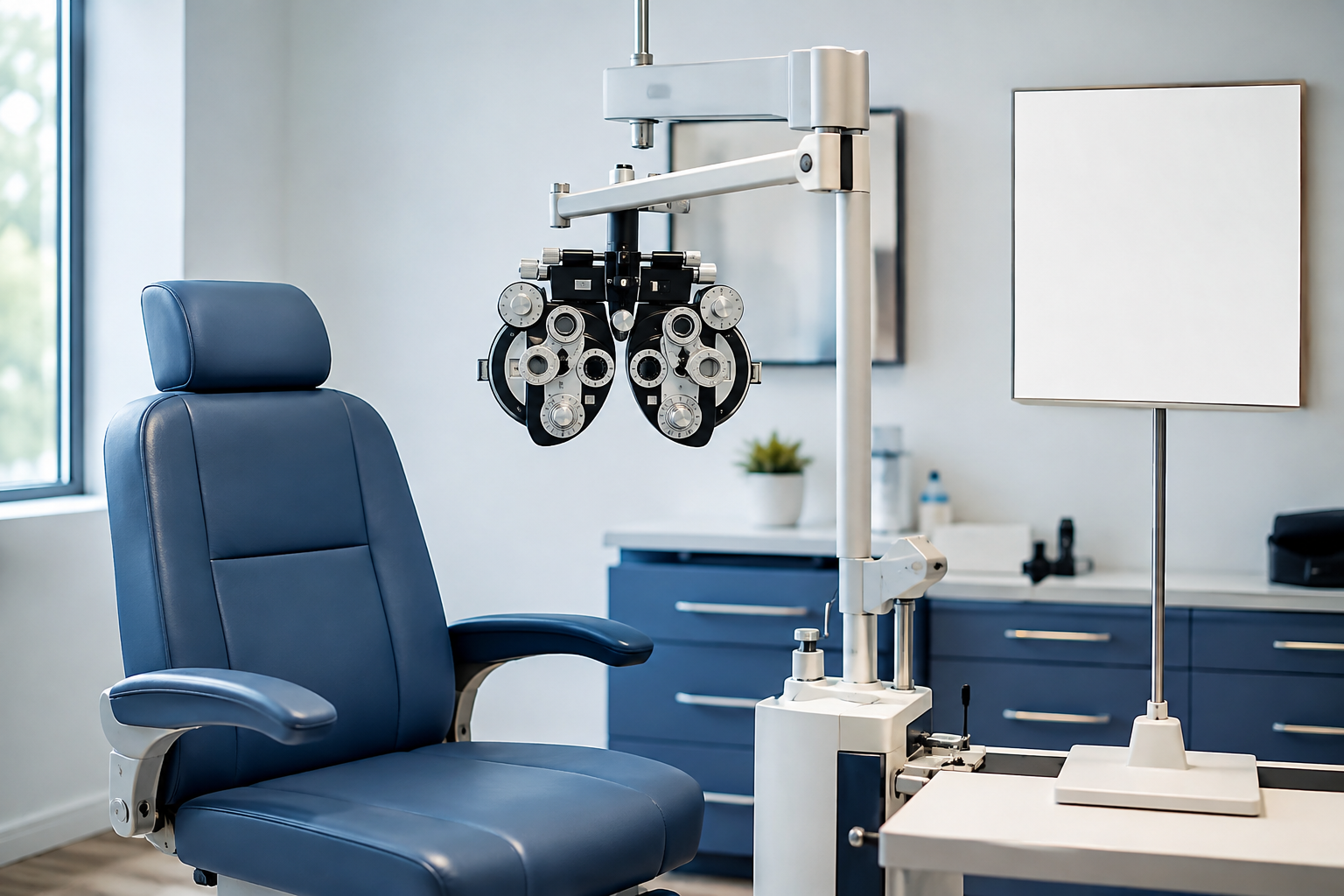
An optometrist may begin the day with a comprehensive eye examination, measuring visual acuity, refraction, binocular function, eye pressure, and ocular health. The schedule may also include contact-lens fittings, glaucoma and retinal screening, myopia management, dry-eye treatment, and patient education. A child with progressive myopia, for example, might receive specialized lenses or treatment designed to slow progression rather than simply stronger glasses.
Optometrists, ophthalmologists, and opticians have different roles. An OD completes a four-year professional doctorate and provides primary and medical eye care within state law. An ophthalmologist is a physician who completes medical school and residency and can perform eye surgery. An optician generally completes technical training to interpret prescriptions, fit, adjust, and dispense eyewear; opticians do not diagnose eye disease.
Scope differs considerably by state. An OD may prescribe medications, manage ocular disease, or co-manage cataract surgery in one jurisdiction while facing narrower authority elsewhere. During an examination, an optometrist could detect diabetic retinopathy or signs associated with hypertension and refer the patient appropriately. The American Optometric Association describes common professional duties, but your state licensing board determines the legal limits. In our analysis, this distinction is central to A Comprehensive Guide to Becoming an Optometrist in the USA, because the same OD degree can lead to different permitted services depending on location. Use A Comprehensive Guide to Becoming an Optometrist in the USA as a reminder to verify local rules before planning a career.
Step 1: Complete High School and College Prerequisites
Your prerequisite record establishes whether you can handle the scientific demands of an OD program. Common courses include general biology, microbiology, general and organic chemistry, physics, calculus or statistics, English composition, psychology, and social sciences. Requirements vary among the 23 accredited colleges, so check every admissions page before registering; one school may require biochemistry while another may accept a different advanced biology course.
Most applicants complete a bachelor’s degree, although schools may evaluate equivalent undergraduate study. Ask about laboratory sections, minimum grades, online or community-college coursework, AP or IB credit, and prerequisite expiration rules. A practical four-year plan should protect your GPA while leaving time for shadowing, volunteering, research, employment, and leadership. A difficult science schedule filled with too many extracurricular commitments can weaken rather than strengthen your application.
Use this checklist: (1) create a spreadsheet for every school, (2) record each prerequisite and laboratory requirement, (3) confirm AP, IB, and community-college policies in writing, (4) calculate your science and overall GPA each term, and (5) schedule missing courses before applying. A post-baccalaureate program can repair prerequisite gaps or raise a low science GPA without automatically requiring a second bachelor’s degree. We recommend comparing its credits, advising, linkage arrangements, and cost before enrolling. This A Comprehensive Guide to Becoming an Optometrist in the USA approach prevents a missing chemistry lab from delaying you by a full application cycle. Keep A Comprehensive Guide to Becoming an Optometrist in the USA beside your planning spreadsheet as you verify each requirement.
Step 2: Build a Competitive Optometry School Application
Admissions committees review the whole applicant, but academic preparation remains the foundation. They consider overall GPA, science GPA, OAT results, recommendation letters, personal statements, optometric experience, service, employment, leadership, and interview performance. OptomCAS is the centralized application service: you submit transcripts, evaluator references, essays, school-specific questions, and supporting information, then monitor each program’s supplemental requirements.
Research schools during your junior year and, when possible, take the OAT before applying. Submitting early in the cycle gives programs more time to review your file, although early submission cannot compensate for incomplete documentation. Shadow in at least two settings, such as private practice, hospital-based optometry, retail vision care, or a community clinic. Record dates, hours, responsibilities, and what you learned about patient communication, billing, referrals, and clinical decision-making.
Your personal statement should show a specific observation rather than a generic claim that you love science. Explain how watching an optometrist help a nervous child, an older adult with low vision, or a patient struggling to afford care changed your understanding of the profession. Common mistakes include incomplete transcripts, weak recommenders who barely know you, ignoring residency policies, and applying to too few programs. In our experience, a spreadsheet of deadlines and document status prevents avoidable errors. This A Comprehensive Guide to Becoming an Optometrist in the USA strategy also helps you compare mission fit instead of treating every school as interchangeable. Use A Comprehensive Guide to Becoming an Optometrist in the USA as a framework for presenting evidence, not merely enthusiasm.
How to Prepare for the OAT and Optometry School Interviews
The OAT tests natural sciences, reading comprehension, physics, and quantitative reasoning. Scores are reported on a standardized scale commonly ranging from 200 to 600, and schools evaluate section performance as well as the academic record. Check current policies because testing rules and score-validity periods can change.
A disciplined 10- to 12-week plan is more useful than passive reading. In weeks and 2, take a diagnostic exam and identify weak areas. During weeks through 7, review biology, general and organic chemistry, physics, and mathematics while completing targeted questions. In weeks through 10, use timed mixed sets and maintain an error log explaining why each answer was wrong. Finish with two or three full-length exams under realistic conditions. The American Dental Association’s official OAT resources should anchor your materials; commercial question banks can add practice.
Retake the exam when the score is materially below your target and you have a credible plan to improve, not simply because anxiety remains. Schools may consider the highest, most recent, or all scores differently. A stronger OAT cannot fully offset weak prerequisite grades or limited clinical exposure. Interviews may be traditional or multiple mini interviews, covering informed consent, cultural competence, teamwork, difficult patients, access to eye care, artificial intelligence in diagnosis, and scope-of-practice debates. Based on our research, applicants improve fastest when they practice concise answers with concrete examples. This A Comprehensive Guide to Becoming an Optometrist in the USA recommends speaking answers aloud weekly. Treat A Comprehensive Guide to Becoming an Optometrist in the USA as preparation for both scientific testing and humane patient care.
Step 3: Earn a Doctor of Optometry Degree
A four-year OD curriculum usually begins with anatomy, physiology, optics, microbiology, neuroscience, systemic disease, pharmacology, public health, and clinical methods. Later work becomes more applied: ocular disease, primary-care examinations, contact lenses, pediatrics, binocular vision, low vision, specialty clinics, and supervised patient care. Each institution sets its own rotation structure and competency thresholds, so graduation requires more than passing written examinations.
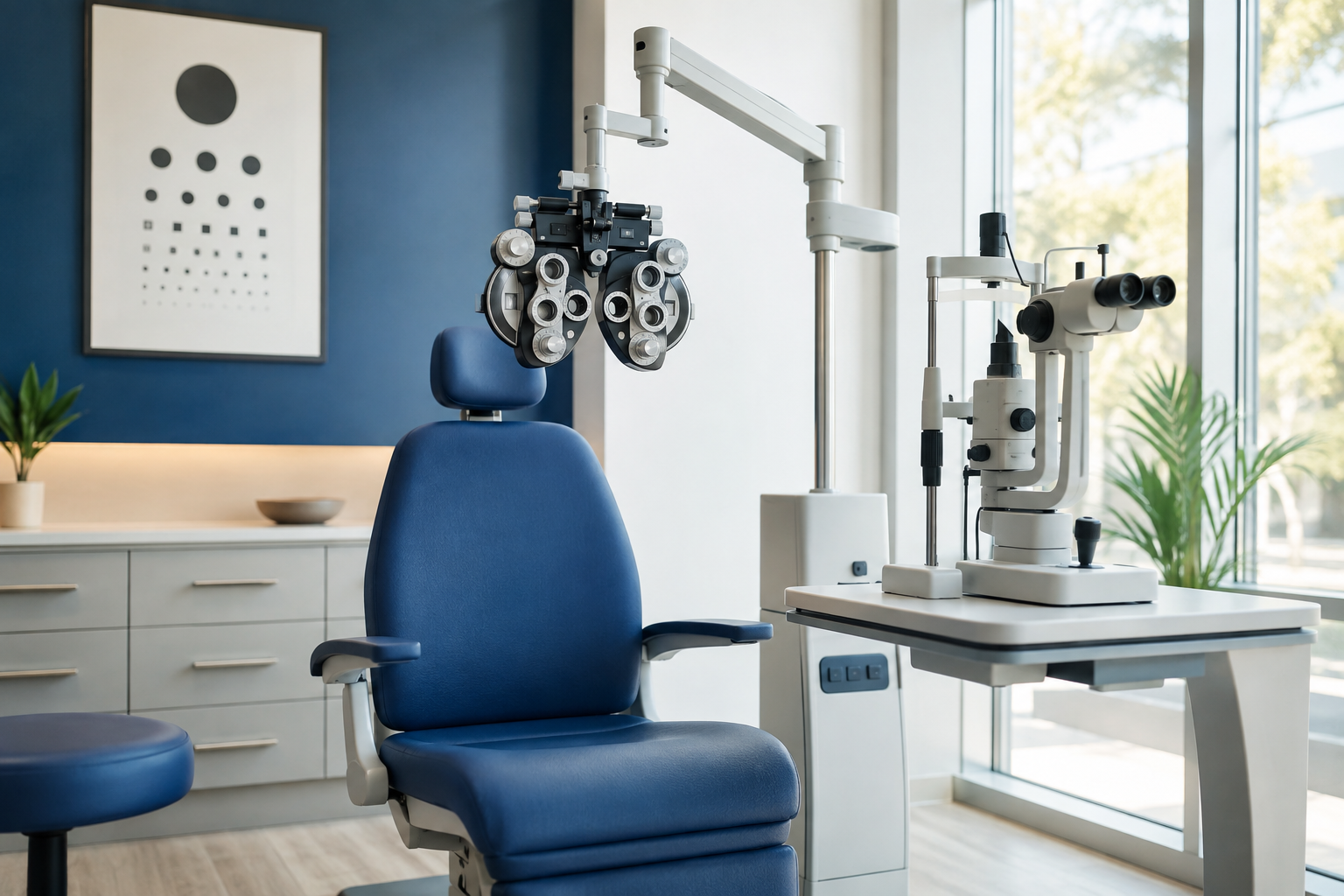
Clinical training may include electronic health records, diagnostic imaging, optical coherence tomography (OCT), retinal photography, visual fields, and telehealth-supported triage. Artificial intelligence can help flag possible diabetic retinopathy or glaucoma, but it does not replace history-taking, examination quality, differential diagnosis, or patient consent. A student should ask: What population trained the algorithm? What are its sensitivity and specificity? Does it perform equally across races, ages, and disease stages?
Protect privacy by using approved systems, limiting access, and never placing identifiable patient information into consumer tools. Look for validation studies rather than marketing claims, recognize algorithmic bias, and preserve your own clinical judgment when automated results conflict with the examination. To succeed, form study groups early, practice explaining findings in plain language, track clinical competencies weekly, and request faculty feedback after difficult cases. We found that students who document feedback immediately are less likely to repeat the same clinical error. This A Comprehensive Guide to Becoming an Optometrist in the USA treats technology as a support for careful care. A Comprehensive Guide to Becoming an Optometrist in the USA also requires you to remain accountable for every decision made with or without software.
How Much Does Optometry School Cost?
Tuition is only one part of the price. Total cost of attendance includes institutional fees, books, equipment, housing, transportation, health insurance, board preparation, technology, and lost income during full-time study. Some public programs can exceed $150,000 for four years, while some private programs surpass $250,000, before interest. For planning, use each school’s published cost-of-attendance budget rather than a national estimate.
Compare financial aid by calculating net price, total borrowing, interest accrual, origination fees, and projected monthly payments. Funding may include federal loans, scholarships, institutional grants, service-based awards, military programs, and public-health programs. Private loans can fill gaps but may carry variable rates and fewer borrower protections. We recommend building three models: a low-borrowing scenario, a likely scenario, and a worst-case scenario that includes a fifth year or relocation expense.
Estimate four years of borrowing, add projected interest, test conservative and optimistic income assumptions, and preserve an emergency fund. An employed OD may prioritize predictable payments and benefits; a practice owner may accept business risk for control and equity. Rural service or nonprofit work may qualify for loan support, income-driven repayment, or Public Service Loan Forgiveness when the employer and loan type meet current requirements. Verify details with Federal Student Aid. This A Comprehensive Guide to Becoming an Optometrist in the USA treats debt as a career decision, not an afterthought. Use A Comprehensive Guide to Becoming an Optometrist in the USA to compare the financial consequences of every offer.
Step 4: Pass the NBEO and Meet State Licensure Requirements
The sequence is straightforward but not automatic: graduate from an accredited OD program, pass required NBEO examinations, complete state-specific testing or training, submit documentation, and maintain the license. The NBEO structure includes foundational biomedical science, patient assessment and management, and clinical skills components. Because policies can change, verify eligibility, scheduling, scoring, and retake rules directly through the National Board of Examiners in Optometry.
Every state has its own optometry board, renewal cycle, continuing-education rules, background-check requirements, jurisprudence examination, and scope-of-practice law. Passing the NBEO is therefore only one part of authorization. A doctor moving from Texas to California or New York to Florida may need additional exams, coursework, credential verification, or state-law training. Licensure portability is limited because states regulate professional practice independently.
Use this checklist: (1) identify the target state board, (2) download its initial-license application, (3) confirm NBEO scores and school transcripts, (4) complete background checks and jurisprudence requirements, (5) submit fees and documentation, and (6) calendar renewal and continuing-education deadlines. The Association of Regulatory Boards of Optometry is another useful starting point. In our analysis, candidates who investigate state rules before accepting a job avoid expensive surprises. This A Comprehensive Guide to Becoming an Optometrist in the USA makes state authorization explicit. Remember that A Comprehensive Guide to Becoming an Optometrist in the USA ends with legal permission to practice, not merely a diploma.
Step 5: Decide Whether to Complete an Optometry Residency
A residency is generally optional for general optometric practice, but it can deepen training in ocular disease, primary care, pediatrics, geriatrics, low vision, contact lenses, or community health. A resident may manage more complex cases under close supervision, teach students, participate in grand rounds, and build relationships with ophthalmology and medical-center teams.
Compare that experience with direct employment. A new OD who starts work immediately earns a full doctor salary and gains practical independence, while a resident usually accepts a lower stipend for advanced exposure, mentorship, teaching, and specialty credibility. Residency can be particularly valuable for Veterans Health Administration positions, academic careers, medical-center roles, specialty clinics, or highly competitive urban practices. It is less necessary when a local employer already offers strong mentorship and the desired case mix.
Applications commonly use the Optometry Residency Match and request transcripts, recommendations, essays, interviews, and clinical evaluations. Before applying, investigate stipend levels, health benefits, relocation costs, call expectations, and whether loan payments remain manageable for the year. A residency does not replace state licensure, and its value depends on your specialty goal and local job market. We recommend comparing at least three job descriptions against three residency descriptions before deciding. This A Comprehensive Guide to Becoming an Optometrist in the USA frames residency as a targeted investment rather than a universal requirement. For some graduates, A Comprehensive Guide to Becoming an Optometrist in the USA points directly to employment after graduation.
Career Paths, Salary, and Job Outlook for Optometrists
Employment options include private practice, corporate or retail optometry, ophthalmology groups, hospitals, Veterans Health Administration facilities, community health centers, schools, academia, research, and military service. According to BLS data available for planning, optometrists had median pay of approximately $134,830, with roughly 43,000 jobs and projected growth of about 9% from to 2033. These figures describe a national occupation, not a guaranteed starting salary.
Compensation changes with geography, ownership, patient volume, specialty services, experience, benefits, and hours. An employed doctor may value a predictable schedule, retirement contributions, paid leave, and limited administrative risk. A practice owner has control over clinical services and may build long-term equity, but must manage payroll, rent, equipment, compliance, marketing, and fluctuating revenue.
Demand is supported by aging populations, diabetes, childhood myopia, chronic eye disease, and uneven rural access. A rural or underserved practice can offer broad clinical responsibility, professional autonomy, loan-support programs, and faster leadership for a new graduate. The Centers for Disease Control and Prevention identifies vision health as a public-health concern, while telehealth-supported screening may extend specialist access without replacing in-person examinations. Based on our analysis, compare offers using total compensation, patient volume, mentorship, scope, schedule, and ownership terms—not salary alone. This A Comprehensive Guide to Becoming an Optometrist in the USA presents several viable destinations. Ultimately, A Comprehensive Guide to Becoming an Optometrist in the USA is a career-building process shaped by the setting you choose.
A Practical 12-Month Action Plan for Aspiring Optometrists
Months 1–3: Confirm eligibility, audit prerequisites, calculate overall and science GPA, research accredited programs, contact optometrists, and arrange initial shadowing. Ask each doctor about patient flow, referrals, technology, and the business realities that students rarely see. Create a spreadsheet with prerequisites, deadlines, average academic metrics, estimated total cost, interview format, board outcomes, and residency opportunities.
Months 4–6: Begin structured OAT preparation, complete missing coursework, request recommendation letters, document service hours, and draft a personal statement. Choose recommenders who can describe your reliability and growth with specific examples. Months 7–9: Sit for the OAT, finalize school selection, submit OptomCAS materials, complete supplemental applications, and practice interviews covering ethics, teamwork, access, and patient communication.
Months 10–12: Compare admission offers, review tuition and clinical training, apply for financial aid, create a relocation budget, and build a first-year study plan. Rate each school from to for academic fit, clinical exposure, residency opportunities, total cost, location, board outcomes, student support, and graduate employment data. If you are in high school, prioritize strong science and communication foundations; if you are in college, audit requirements now; if you are changing careers, identify a post-baccalaureate route and shadow before leaving paid work. This A Comprehensive Guide to Becoming an Optometrist in the USA turns a long pathway into weekly actions. Keep A Comprehensive Guide to Becoming an Optometrist in the USA visible while you update your matrix.
Conclusion: Your Next Steps Toward Becoming an Optometrist
Your sequence is clear: complete prerequisites, gain patient-facing exposure, prepare for the OAT, apply through OptomCAS, earn the OD, pass required examinations, obtain state licensure, and choose a career setting. The strongest applicants do more than collect grades; they demonstrate clinical curiosity, communication skills, ethical judgment, financial planning, and consistent follow-through.
This week, create a personalized application spreadsheet containing every school’s prerequisites, deadlines, average academic metrics, estimated total cost, interview requirements, and licensure considerations. Schedule conversations with at least two practicing optometrists and one admissions adviser before committing to a program. Ask practicing doctors what surprised them, which skills new graduates lack, and how their setting affects income and autonomy.
Verify every deadline, cost, examination rule, and scope-of-practice detail with official sources because policies can change. We recommend revisiting the spreadsheet monthly and recording the date of each confirmation. A strong A Comprehensive Guide to Becoming an Optometrist in the USA plan is not simply a list of credentials; it is a decision system that protects your time, money, and professional goals. Use A Comprehensive Guide to Becoming an Optometrist in the USA as your starting point, then take one verified step today: audit your prerequisites, arrange shadowing, or calculate the real cost of attendance. Preparation turns ambition into patient care.
Key Takeaways
- Plan for approximately to years after high school, including prerequisite undergraduate study and a four-year Doctor of Optometry program.
- Audit each school’s prerequisites, laboratory rules, AP or IB policies, GPA expectations, deadlines, and cost of attendance before applying.
- Build an evidence-based application through OAT preparation, meaningful shadowing, strong recommendations, patient-centered writing, and complete OptomCAS documentation.
- Passing the NBEO does not automatically authorize practice; you must also meet the licensing and scope-of-practice requirements of your state.
- Compare career and education decisions using total debt, clinical training, mentorship, location, residency options, employment data, and your desired patient population.
Frequently Asked Questions
How long does it take to become an optometrist in the USA?
Most students need approximately to years after high school: about four years of undergraduate study or prerequisite coursework and four years in a Doctor of Optometry program. Additional time may be needed for a post-baccalaureate program, a delayed application, residency, or unsuccessful board examinations.
Do you need a bachelor’s degree to apply to optometry school?
Many applicants complete a bachelor’s degree, but admission requirements differ by school and may allow equivalent undergraduate coursework. You must complete the required science, mathematics, writing, and social-science prerequisites, including laboratories where required, and should verify policies with each program.
What OAT score do you need for optometry school?
There is no single score that guarantees admission because schools evaluate OAT sections alongside GPA, experience, recommendations, essays, and interviews. OAT scores are commonly reported on a 200-to-600 scale, so review each school’s recent class profile and aim for balanced performance rather than relying on one strong section.
Is passing the NBEO enough to practice optometry?
No. Passing the NBEO is a national examination milestone, but you must also satisfy the licensing requirements of the state where you intend to practice. The state may require jurisprudence training, additional testing, background checks, documentation, fees, and continuing education.
How much does optometry school cost?
Total four-year costs can exceed $150,000 at some public programs and surpass $250,000 at some private programs before interest. Compare tuition, fees, equipment, housing, insurance, transportation, board preparation, borrowing costs, and lost income using each school’s cost-of-attendance budget.
Is an optometry residency required?
Residency is generally optional for general optometric practice. It can be valuable for ocular disease, pediatrics, low vision, community health, Veterans Health Administration roles, academic careers, medical centers, and specialty clinics, but it does not replace state licensure.
What is the difference between an optometrist and an ophthalmologist?
An optometrist earns a Doctor of Optometry degree and provides examination, vision correction, and medical eye care within state scope-of-practice rules. An ophthalmologist is a physician who completes medical school and residency and can perform eye surgery; an optician fits and dispenses eyewear based on prescriptions.
What does A Comprehensive Guide to Becoming an Optometrist in the USA include?
A Comprehensive Guide to Becoming an Optometrist in the USA includes prerequisite coursework, OAT preparation, OptomCAS applications, OD education, clinical rotations, NBEO examinations, state licensure, costs, residency decisions, salary, and career planning.
