Steps to Become a Paramedic in the USA: What the Career Requires
The fastest reliable answer is this: earn EMT certification, complete an accredited paramedic program, finish clinical and ambulance field experience, pass the National Registry of Emergency Medical Technicians (NREMT) examination, and obtain a state paramedic license. These Steps to Become a Paramedic in the USA typically take to years after high school when prerequisites, work experience, and scheduling are included.
Paramedics assess patients during cardiac arrests, strokes, overdoses, childbirth, vehicle crashes, and severe allergic reactions. Their work may include advanced airway management, intravenous access, medication administration, 12-lead ECG interpretation, trauma stabilization, cardiac care, and transport to an appropriate hospital. You must make time-sensitive decisions while communicating with patients, families, firefighters, nurses, and physicians.
Based on our research, the practical route includes approximately months of EMT preparation followed by to months of paramedic education. Costs can range from several thousand dollars to more than $20,000, depending on the school and degree. The U.S. Bureau of Labor Statistics reports a median annual wage of $58,410 for EMTs and paramedics in May and projects 5% employment growth from to 2034. In 2026, remember that NREMT certification is national recognition; it is not the same as permission to practice, which comes from your state.
The Steps to Become a Paramedic in the USA also demand physical stamina, emotional control, accurate documentation, and willingness to work nights, weekends, holidays, and overtime. A license opens the door, but dependable judgment and patient-centered communication determine whether you thrive.
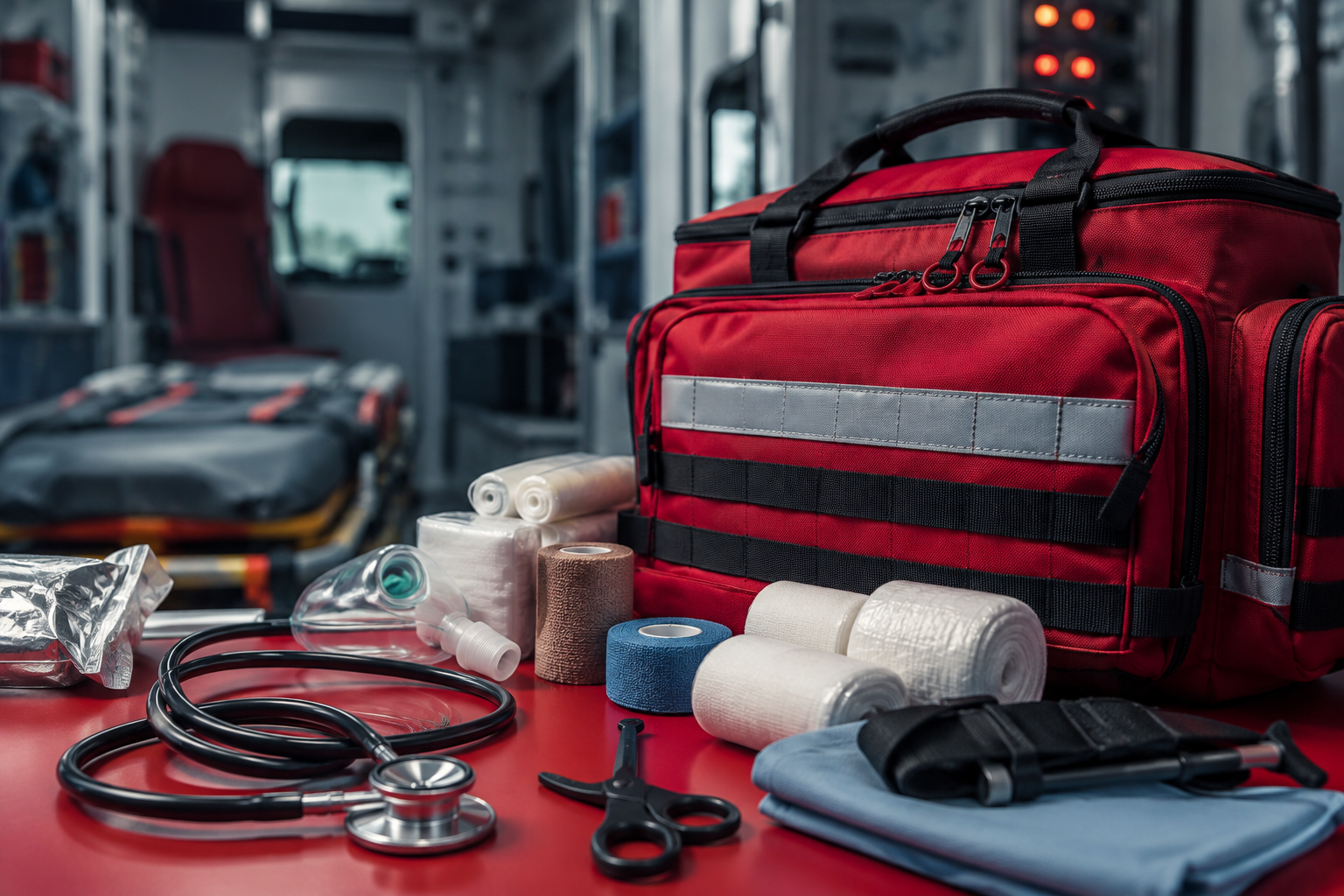
Step 1: Check Paramedic Requirements and Decide Whether EMS Fits You
Before paying an application fee, check your state EMS office and the specific school. Common entry requirements include a high school diploma or GED, minimum age of 18, a valid driver’s license, CPR or BLS certification, immunizations, background screening, drug testing, and readiness for college-level reading and math. Some programs also require EMT employment, ride-along experience, anatomy and physiology, or a minimum EMT license period.
Requirements differ substantially. A state may accept a certificate graduate after NREMT certification, while a school may require hours of documented EMT work. We recommend downloading the current application checklist from your state regulator rather than relying on an old forum post; this is one of the most important Steps to Become a Paramedic in the USA.
Work settings include private ambulance companies, municipal fire departments, hospital-based EMS, industrial response teams, event medicine, and rural systems. Urban crews may handle multiple calls in a shift, whereas rural paramedics may drive longer distances with fewer backup resources. You may not need a four-year college degree: a certificate is usually faster, an associate degree in applied science adds general education and transfer value, and a bachelor’s degree can support leadership, education, or health-administration goals.
Ask yourself whether you can safely lift and move patients, tolerate blood and infection exposure, make high-stakes decisions, accept criticism, work as part of a crew, and explain difficult situations to families. If two or more answers concern you, volunteer with an EMS agency before enrolling. These Steps to Become a Paramedic in the USA should confirm that the work fits your temperament, not merely your career interests.
Step 2: Become a Certified EMT Before Paramedic School
EMT certification is the standard entry point because paramedic education assumes you already understand basic assessment and emergency care. EMT courses commonly cover scene safety, patient assessment, bleeding control, airway support, CPR, medical emergencies, trauma, childbirth, ambulance operations, and communication. Most programs require roughly to instructional hours plus clinical or field experience, although state-approved hours vary.
The National Registry of Emergency Medical Technicians administers the EMT cognitive examination and establishes certification requirements that include CPR or BLS training and practical competency assessment. Confirm exactly how your state handles the psychomotor or skills portion because schools and state offices may use different processes. A certificate from a class alone does not always equal state authorization to work.
Compare programs using a written checklist: state approval or accreditation, recent first-attempt pass rates, clinical placements, ride-along access, evening scheduling, total tuition, equipment costs, refund rules, and eligibility for state certification. A $900 course that requires unpaid weekday clinical shifts may cost more financially than a $1,500 evening course for someone working full time.
How long does it take to become a paramedic? Separate the stages. EMT training may take about to months, while paramedic education commonly adds to months. Our analysis of these Steps to Become a Paramedic in the USA shows why quoting one short timeline can mislead applicants: prerequisite delays, clinical placement, retesting, and employment experience often extend the total.
Start by requesting each school’s calendar, state approval documentation, graduate outcomes, and complete fee schedule. Then schedule CPR training and submit only after confirming that your background and immunization records meet admission rules.
Step 3: Complete Prerequisites and Choose an Accredited Paramedic Program
Common prerequisites include anatomy and physiology, medical terminology, English composition, psychology, college mathematics, CPR/BLS, and a current EMT license. Some schools require documented EMT work or volunteer experience; others accept recent graduates. Anatomy matters because you will connect assessment findings to airway, cardiac, neurological, and medication decisions.
Evaluate community colleges, technical schools, fire academies, and private EMS programs through the Committee on Accreditation of Educational Programs for the Emergency Medical Services Professions (CoAEMSP). Check institutional accreditation, hospital and ambulance partnerships, simulation resources, graduation rates, graduate employment, and first-attempt NREMT results. We found that a low advertised tuition can become expensive when the program has weak clinical access or poor scheduling.
A certificate may take about months and usually minimizes general education. An associate degree in applied science may take to months, cost more, and require English, math, and science courses, but it may provide federal financial-aid eligibility, transfer options, and a stronger platform for promotion or future nursing education. These Steps to Become a Paramedic in the USA should match your budget and long-term plan.
Before enrolling, ask six direct questions: Is the program CoAEMSP accredited or pursuing accreditation? Are graduates eligible for the NREMT exam? What are first-attempt pass rates for the last three cohorts? How many simulation hours and patient contacts are required? Which hospitals and ambulance agencies host students? What are commuting, childcare, uniform, and missed-work costs?
For example, a 12-month intensive certificate may suit a student with savings and flexible employment. A 24-month associate route may be better for a full-time worker who needs evening classes and financial aid. The best Steps to Become a Paramedic in the USA are practical choices, not prestige choices.
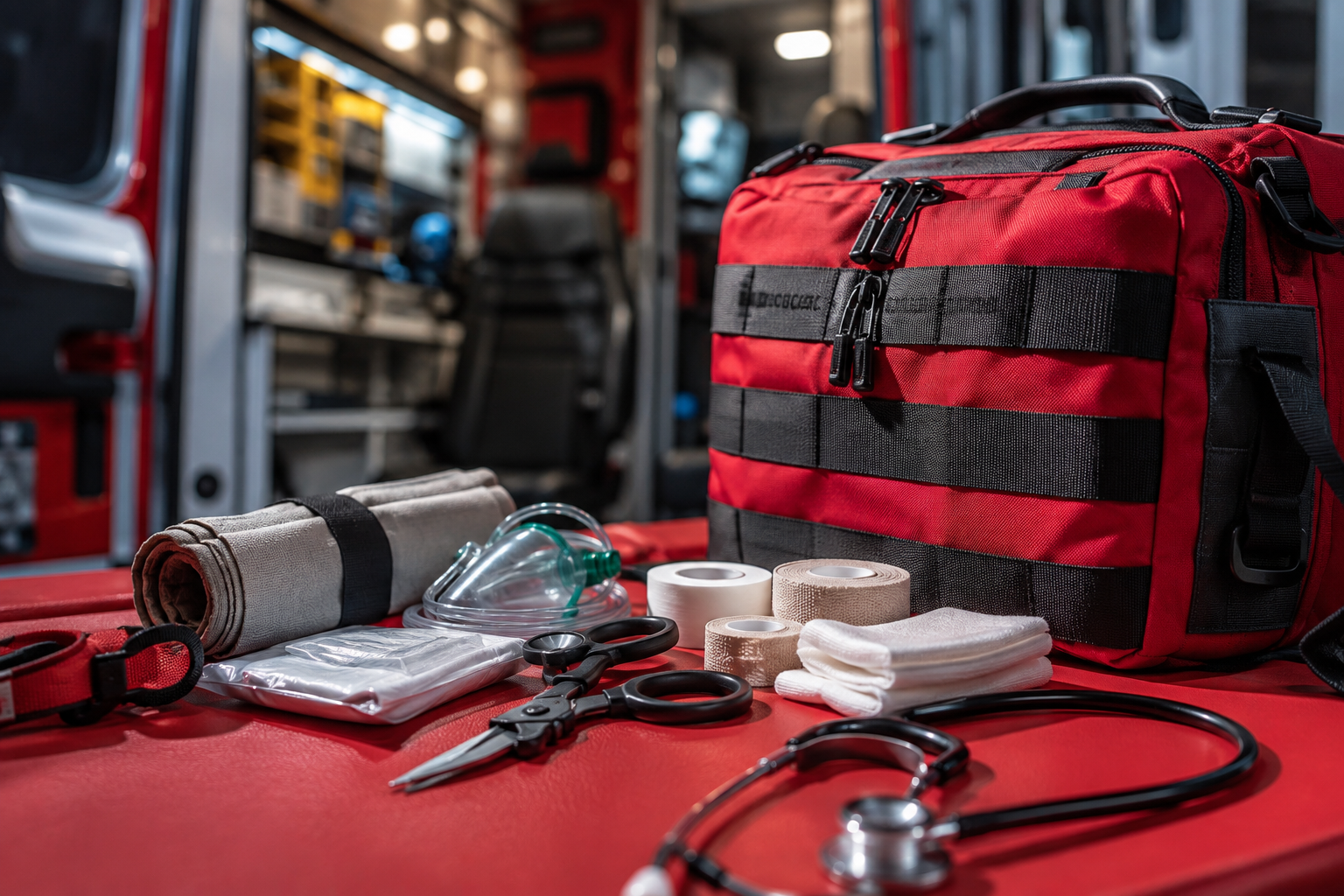
Step 4: Finish Paramedic Coursework, Skills Lab, and Clinical Training
Paramedic coursework moves beyond basic first aid into advanced patient management. Expect advanced assessment, cardiology, pharmacology, airway management, trauma, obstetrics, pediatrics, geriatrics, medical emergencies, operations, ethics, and documentation. You will learn indications, contraindications, dosing, reassessment, and when a treatment is not appropriate.
Skills laboratories and high-fidelity simulation let you practice endotracheal intubation, supraglottic airways, IV and intraosseous access, medication administration, ECG interpretation, synchronized cardioversion, defibrillation, and cardiac-arrest leadership. A realistic scenario may require recognizing ventricular fibrillation, assigning crew tasks, delivering shocks, documenting times, and communicating with medical control within minutes.
Most programs require BLS/CPR and commonly include or recommend Advanced Cardiac Life Support (ACLS), Pediatric Advanced Life Support (PALS), and Prehospital Trauma Life Support (PHTLS) or an equivalent trauma course. The American Heart Association publishes widely used resuscitation education standards, but your school and medical director set the actual certification policy.
Plan for to hours of study outside class during demanding weeks. Practice medication math several times weekly, interpret at least to ECGs per study session, and keep a checklist of every skills sign-off and written exam. In our experience, students who wait until the week of testing struggle more with dosage calculations and cardiology than with memorization.
Among the most useful Steps to Become a Paramedic in the USA is building a remediation habit: record missed concepts, ask an instructor to demonstrate them, practice under supervision, and retest before the weakness reaches clinical care.
Step 5: Complete Ambulance Field Internship and Graduate Competencies
Hospital clinical rotations and the ambulance field internship serve different purposes. Hospital placements may include the emergency department, operating room, labor and delivery, pediatrics, psychiatric care, intensive care, and other departments. Field internship places you on an ambulance, where you must manage unpredictable scenes, limited equipment, traffic, family stress, and transport decisions.
Under a preceptor, you gradually lead assessments, create treatment plans, perform procedures, contact medical control, give radio reports, document care, and work within local protocols. Programs may require hundreds of clinical and field hours and minimum patient contacts, but exact numbers depend on the school, state, and accreditation standards. Never assume that a listed hour total includes every required rotation.
Use this readiness checklist before graduation:
- Airway assessment and rescue procedures
- 12-lead ECG acquisition and interpretation
- Cardiac medication selection and reassessment
- Weight-based pediatric dosing
- Trauma triage and destination decisions
- Clear radio reports and medical-control communication
- Accurate electronic patient-care reports
- Scene safety, PPE, lifting, and crew positioning
The hardest part is balancing speed with judgment, documentation accuracy, emotional control, and respectful communication. A cardiac-arrest call may require rapid treatment, but the patient’s family still needs a calm explanation. We recommend asking your preceptor for one clinical strength and one improvement target after every shift; this makes the Steps to Become a Paramedic in the USA measurable rather than abstract.
By graduation, you should be able to explain not only what you did, but why you did it, what changed afterward, and what you would do next if the patient deteriorated.
Step 6: Pass the NREMT Paramedic Exam and Obtain State Licensure
Follow the process in order:
- Graduate from a state-approved and NREMT-eligible paramedic program.
- Create or update your NREMT account and submit eligibility documentation.
- Schedule and pass the cognitive examination.
- Complete any required psychomotor or program-based skills assessment.
- Apply for a paramedic license through your state EMS regulator.
- Complete fingerprints, background screening, fees, medical-director requirements, and local orientation if required.
NREMT certification demonstrates national competence; it does not automatically authorize practice in every state. State licensure may require a separate application, fingerprints, background checks, protocol testing, county or regional EMS registration, and affiliation with an approved medical director. These distinctions are central to the Steps to Become a Paramedic in the USA.
Prepare with the current NREMT content outline, timed practice examinations, daily cardiology and pharmacology review, and scenario-based questions. After a failed attempt, read the performance report, schedule targeted remediation, and avoid repeating the same broad study routine. Your application may also be affected by incomplete documentation, an expired CPR card, or a transcript that has not arrived.
Reciprocity and EMS compact rules can change. In 2026, verify current requirements directly with the destination state rather than trusting a social-media post from 2021. We recommend saving screenshots or PDFs of the regulator’s instructions, recording application deadlines, and asking whether your current license, NREMT status, and criminal-history record meet that state’s rules.
Once licensed, keep copies of your NREMT card, state license, CPR credentials, immunizations, and background-check documents in both paper and secure digital form.
Step 7: Apply for Paramedic Jobs and Build a Strong First-Year Career Plan
Entry-level options include private ambulance services, municipal fire departments, hospital-based EMS, industrial response teams, event medicine, rural agencies, and positions that build experience before flight or critical-care work. Employers assess more than licensure: they review driving history, clinical references, report-writing quality, interview scenarios, attendance, teamwork, and comfort with agency protocols.
Your application packet should include a state license, NREMT card, BLS/ACLS/PALS credentials, immunization records, clinical log, references, clean driving record, and tailored résumé. List real competencies, such as 12-lead ECG interpretation or pediatric medication calculations, rather than vague claims that you are hardworking.
Consider a new paramedic named Jordan. During the first year, Jordan chooses an agency with a formal 12-week preceptorship, asks for feedback after a difficult overdose call, and tracks exposure to airway procedures, cardioversion, pediatric calls, trauma, and cardiac arrests. That record helps Jordan identify gaps and request focused training instead of waiting for an annual review.
Scheduling varies sharply. Urban EMS may produce high call volume and frequent late meal breaks; rural work may involve fewer calls but longer transports, limited backup, and broader clinical responsibility. Review night shifts, overtime rules, union contracts, probationary periods, mandatory holdovers, vacation bidding, and retirement benefits before accepting an offer. Based on our analysis, supportive supervision during the first to months often matters more than a small starting-pay difference.
These Steps to Become a Paramedic in the USA continue after hiring: arrive prepared, know your agency’s protocols, request a skills review, protect patient privacy, and treat every report as a clinical document that another professional may rely on.
Paramedic Costs, Timeline, Salary, and Financial Aid
Costs vary by state and school, so build a full budget instead of comparing tuition alone. Typical planning ranges include:
| Expense | Planning range or issue |
|---|---|
| EMT tuition | $500–$3,000 or more |
| Paramedic certificate | $4,000–$15,000 or more |
| Associate-degree program | $10,000–$25,000 or more, depending on residency |
| Books, uniform, stethoscope, supplies | $500–$2,000 |
| Immunizations, screening, background check | $100–$600 |
| Exam and state-license fees | Varies by NREMT and state rules |
| Transportation and lost work hours | Often the largest hidden cost |
Allow approximately months for EMT education and to months for paramedic school. Retesting, delayed clinical placements, prerequisite courses, or childcare problems can add several months. These Steps to Become a Paramedic in the USA are financially manageable when you price every required item before enrollment.
Complete the FAFSA and ask community colleges about Pell Grants, institutional aid, scholarships, workforce grants, employer tuition reimbursement, fire-department sponsorships, and paid EMT-to-paramedic programs. A $2,000 employer benefit can reduce borrowing significantly, while a paid internship may offset lost wages.
The BLS reports a May median annual wage of $58,410 for EMTs and paramedics and projects 5% growth from to 2034. Actual earnings depend on location, overtime, fire-service rank, specialty credentials, union contracts, and cost of living. A rural agency may pay less but offer housing or hiring incentives; a metropolitan fire department may pay more after probation but require a competitive civil-service process.
In 2026, compare total compensation, not hourly pay alone: health insurance, retirement, shift differentials, education support, overtime availability, and paid time off can change the value of an offer.
Maintain Certification and Advance Beyond Entry-Level Paramedic Work
Certification maintenance is an ongoing responsibility. NREMT recertification generally follows a two-year cycle, while state licenses have their own renewal deadlines, continuing-education hours, skills verification, and CPR requirements. Track expiration dates in a spreadsheet or calendar at least days ahead; an expired ACLS card can create a scheduling problem even when your paramedic license remains active.
Review standards from the NREMT recertification program, your state EMS office, and your employer’s medical director each year. Protocols, medication concentrations, cardiac-arrest procedures, and documentation systems can change during 2026. Do not assume a course completed last year satisfies a new employer or state requirement.
Advancement options include critical-care paramedic, community paramedic, tactical EMS, flight paramedic, emergency management, EMS educator, field training officer, supervisor, and eventually physician-assistant or nursing education. Most specialty roles require substantial field experience, additional courses, and strong clinical references.
Burnout prevention needs concrete boundaries: protect sleep after night shifts, hydrate during calls, exercise regularly, use peer support, seek counseling after critical incidents, and limit overtime when judgment or family life suffers. Occupational health is frequently missed. Ask about hepatitis B vaccination, respiratory protection, needlestick reporting, safe lifting, PPE fit, and post-exposure procedures.
We recommend treating health and recertification as part of the Steps to Become a Paramedic in the USA, not administrative chores after the career starts. A paramedic who reports an exposure immediately and follows occupational-health instructions protects both personal health and future patients.
Your Action Plan for Becoming a Paramedic in the USA
Start with a 30-day plan. Identify your state licensing authority, shortlist three EMT programs, confirm age and education prerequisites, calculate tuition plus transportation and lost wages, schedule CPR training, and speak with two working paramedics. Ask one about urban EMS and one about rural, fire-based, or hospital-based work. Their schedules and frustrations will make the career more concrete.
Use this 6- to 24-month checklist:
- Months 1–3: apply to EMT school, arrange immunizations, and budget for equipment.
- Months 3–9: complete EMT coursework, skills testing, clinical work, and certification.
- Months 6–12: seek EMT employment or volunteer experience and complete anatomy and physiology if required.
- Months 9–18: compare and apply to qualified paramedic programs.
- Months 12–24: complete coursework, simulation, hospital clinicals, ambulance internship, and graduation requirements.
- After graduation: pass NREMT requirements, apply for state licensure, and begin a structured first-year job plan.
Request written answers from every school about accreditation, graduation rates, first-attempt NREMT pass rates, clinical hours, refund policies, total fees, and graduate employment. Save those answers with your application records. A community-college associate degree may suit someone seeking financial aid and future advancement, while an accredited certificate may be better for someone who needs a faster route.
The best Steps to Become a Paramedic in the USA depend on your budget, schedule, state rules, family responsibilities, and career goals. Based on our research, waiting for perfect certainty creates more delay than protection.
Verify current requirements through your state EMS office and NREMT, then submit one qualified EMT program application. Take the next informed step; confidence usually follows action, not the other way around.
That final decision captures the practical Steps to Become a Paramedic in the USA: verify, prepare, apply, practice, test, license, and keep learning. Your first patient deserves a professional who chose the path deliberately.
Key Takeaways
- Plan for EMT training first, followed by to months of paramedic education, clinical rotations, and ambulance field internship.
- Verify school approval, CoAEMSP status, NREMT eligibility, first-attempt pass rates, clinical hours, and complete costs before enrolling.
- NREMT certification and state licensure are different requirements; confirm current rules with your state EMS office in 2026.
- Compare certificate and associate-degree routes based on schedule, financial aid, transfer goals, childcare, commuting, and long-term advancement.
- Start now by contacting your state regulator, speaking with two working paramedics, and applying to one qualified EMT program.
Frequently Asked Questions
How long does it take to become a paramedic in the USA?
Most students need about to years after high school, including to months of EMT training and to months of paramedic education. Prerequisites, clinical-placement delays, retesting, and work requirements can extend the timeline.
Do you need a college degree to become a paramedic?
Not always. You may qualify through an accredited paramedic certificate, while an associate degree in applied science can provide broader general education, financial-aid access, transfer options, and advancement value.
What is the difference between NREMT certification and a state paramedic license?
NREMT certification verifies national-level competence after you meet examination and program requirements. A state paramedic license is the legal authorization to practice in a specific state, and it may require separate fees, fingerprints, background checks, and medical-director or local registration steps.
How much does paramedic school cost?
Paramedic education may cost several thousand dollars for a certificate and more than $20,000 for some associate-degree programs. Add books, uniforms, equipment, immunizations, background checks, examination fees, transportation, and lost work hours before deciding which program is affordable.
What certifications do paramedics commonly need?
BLS or CPR is commonly required, and many programs or employers require ACLS and PALS. PHTLS or equivalent trauma training is also common, although the exact certifications depend on the school, state, employer, and medical director.
What are the Steps to Become a Paramedic in the USA?
The usual sequence is EMT certification, prerequisites, an accredited paramedic program, skills and hospital clinical training, ambulance field internship, NREMT testing, and state licensure. After hiring, you maintain credentials through continuing education, renewal, skills verification, and employer training.
