Exploring a Career as a Petroleum Engineer in the USA: Is It Right for You?
A petroleum engineer combines mathematics, physics, geology, and engineering to discover, extract, and produce oil and natural gas. If you are researching Exploring a Career as a Petroleum Engineer in the USA, you probably want direct answers about education, daily responsibilities, salary, job outlook, work locations, and long-term stability.
Our research shows that the decision is more nuanced than a simple choice between “oil” and “no oil.” U.S. operators still produce millions of barrels of crude daily, while automation, emissions rules, LNG demand, and lower-cost development are changing the work. Upstream petroleum engineering focuses on wells and reservoirs; broader energy careers may include carbon storage, geothermal systems, hydrogen, and environmental compliance.
Consider a recent graduate comparing petroleum, chemical, mechanical, and environmental engineering. Petroleum may offer earlier field responsibility and higher bonus potential, while mechanical engineering provides wider manufacturing and design options. Chemical engineering fits process plants, and environmental engineering aligns more directly with water, remediation, and compliance. Exploring a Career as a Petroleum Engineer in the USA makes sense when you enjoy subsurface problem-solving and accept commodity-cycle risk.
- Best fit: applied mathematics, field teamwork, technology, and high-consequence decisions.
- Main trade-off: compensation can be attractive, but travel, remote sites, and industry cycles require flexibility.
What Does a Petroleum Engineer Do?
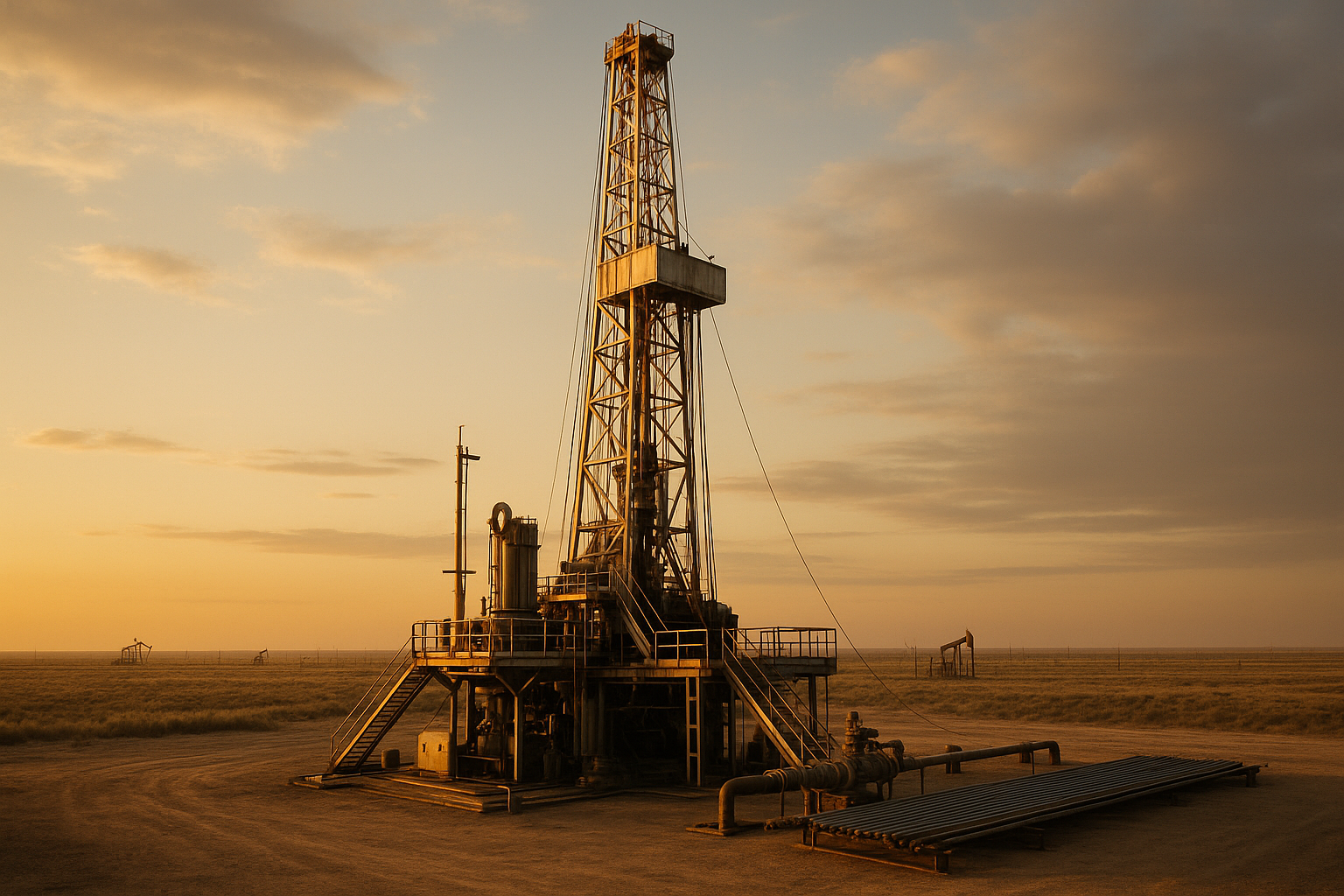
Exploring a Career as a Petroleum Engineer in the USA means choosing among several technical paths. Drilling engineers design well trajectories and select drilling fluids; reservoir engineers estimate reserves and model pressure behavior; production engineers optimize flow and artificial lift; and completion engineers design the equipment that connects a reservoir to the wellbore.
A typical assignment may involve analyzing pressure-transient data, reviewing production rates, selecting casing, checking fracture designs, reducing water production, or identifying a well-integrity risk. You may work with geologists, geophysicists, drilling contractors, landmen, safety teams, facilities engineers, and data scientists. Our analysis found that communication is not a soft extra: a technically correct recommendation can fail if field crews cannot execute it safely.
Imagine a production engineer beginning at a Houston office at a.m. They review overnight flow rates, notice a pressure decline, and compare it with downhole sensor data. By midday, the engineer speaks with a Midland field team, participates in a safety review, and recommends adjusting artificial lift only after confirming that the change will not damage the formation. Exploring a Career as a Petroleum Engineer in the USA may place you in Houston, Dallas, Denver, Midland, Oklahoma City, an offshore platform, or a corporate research office.
- Office work: simulation, economics, reporting, and planning.
- Field work: equipment checks, contractor coordination, troubleshooting, and safety observations.
- Core decision: balance recovery, cost, reliability, and risk.
Education Requirements and Skills for Petroleum Engineers
Most entry-level roles require a bachelor’s degree in petroleum engineering or a closely related field such as mechanical, chemical, or civil engineering. Exploring a Career as a Petroleum Engineer in the USA is easier when your program includes calculus, differential equations, physics, chemistry, thermodynamics, fluid mechanics, geology, rock properties, drilling, reservoir engineering, and well completion.
We recommend comparing ABET-accredited programs rather than judging schools only by reputation. The ABET accreditation database helps you verify program quality standards. Seek internships, cooperative placements, senior design projects, and laboratory work. Employers increasingly value experience with reservoir simulation, production analysis, spreadsheets, Python, SQL, and visualization tools, even when a job posting names a proprietary platform.
Your technical toolkit should include data interpretation, uncertainty analysis, programming, technical writing, teamwork, project management, and safety decision-making. A master’s degree can help with advanced reservoir modeling, carbon capture and storage, geothermal systems, or energy analytics. In our experience, one documented project—such as history matching a public reservoir dataset or analyzing artificial-lift performance—can demonstrate more ability than a long list of software names. Exploring a Career as a Petroleum Engineer in the USA rewards candidates who connect classroom theory to measurable operating results.
- Complete at least one programming or data-analysis project.
- Ask professors about research assistantships and industry-sponsored work.
- Keep a portfolio showing assumptions, calculations, results, and safety considerations.
How to Become a Petroleum Engineer in the USA: Steps
A practical route for Exploring a Career as a Petroleum Engineer in the USA is a seven-step plan:
- Build mathematics and science skills: strengthen algebra, calculus, physics, chemistry, and statistics before college.
- Choose an accredited degree: compare ABET status, tuition, laboratories, employer partnerships, location, and graduation outcomes.
- Gain internship experience: apply to operators, oilfield-service companies, consultancies, research laboratories, and government agencies.
- Develop software skills: learn Python, spreadsheets, data visualization, reservoir simulation concepts, and production-analysis workflows.
- Pursue entry-level work: target field engineer, drilling, production, reservoir, and rotational graduate roles.
- Pass the FE exam: the Fundamentals of Engineering exam can qualify you for Engineer-in-Training status, depending on state rules.
- Plan professional licensure: after education and documented experience, pursue the Professional Engineer license through your state board.
The National Council of Examiners for Engineering and Surveying administers the FE examination. A PE license may matter for public-facing engineering work, formal approval authority, and advancement, although not every upstream role requires it.
During college, join the Society of Petroleum Engineers, enter technical competitions, assist with research, and complete a field-related project. During your first days after graduation, update your technical resume, contact alumni, apply to rotational programs, practice technical interviews, and document two software projects. Exploring a Career as a Petroleum Engineer in the USA becomes more achievable when you treat the job search as a weekly process rather than a single application event.
Petroleum Engineer Salary, Benefits, and Career Progression
According to the U.S. Bureau of Labor Statistics, petroleum engineers had a median annual wage of $141,280 in May 2024. That figure is not an entry-level promise: compensation varies by experience, basin, employer, specialization, schedule, offshore exposure, bonuses, and commodity prices. The BLS reports wage percentiles, while professional surveys and employer postings may include bonuses or total compensation, so compare definitions carefully.
Exploring a Career as a Petroleum Engineer in the USA may produce different results in Texas, Oklahoma, Colorado, Alaska, Louisiana, and Pennsylvania. Houston offers corporate, technical, and services roles; Midland can provide stronger field exposure; Alaska may add remote-site premiums; and Louisiana can offer offshore access. None of these markets guarantees the same pay. A base salary of $100,000 with a 15% bonus and strong retirement contribution may outperform a higher salary with no travel allowance or weak benefits.
A common progression runs from field engineer or junior reservoir engineer to senior engineer, asset manager, drilling superintendent, technical director, or consultant. Benefits can materially change the package: health insurance, retirement contributions, relocation support, housing allowances, travel pay, paid leave, and performance bonuses. Our analysis recommends requesting the written bonus formula and asking whether historical payouts were 50%, 100%, or 150% of target. Exploring a Career as a Petroleum Engineer in the USA requires evaluating total compensation, not just the headline salary.
- Separate base pay, guaranteed pay, bonus target, and overtime.
- Ask whether travel time is paid and how offshore rotations are scheduled.
- Model after-tax income against housing, commuting, and relocation costs.
Where Petroleum Engineers Work and What the Job Is Like
Exploring a Career as a Petroleum Engineer in the USA can lead to five very different working environments. Office roles usually follow Monday-to-Friday schedules and emphasize simulation, economics, reporting, and meetings. Field roles may involve early starts, protective equipment, weather exposure, contractor supervision, and rotational assignments. Offshore positions can require extended periods away from home, while laboratories and hybrid teams focus on testing, modeling, and remote operations.
Major hubs include Houston and Midland in Texas, Denver in Colorado, Oklahoma City in Oklahoma, Anchorage in Alaska, and New Orleans in Louisiana. A field engineer may work a 14-days-on, 14-days-off rotation; another professional may travel two days each month. The work can be physically demanding at remote sites, although many engineers spend most of their careers in offices or control rooms.
Safety culture is a deciding factor. You may need flame-resistant clothing, hard hats, eye protection, hearing protection, gas monitors, emergency-response training, and strict permit-to-work procedures. Exploring a Career as a Petroleum Engineer in the USA is difficult when you dislike mathematics, uncertainty, or accountability, but structured training and experienced mentors make the work learnable. We found that asking about stop-work authority, incident reporting, and supervisor accessibility reveals more about a workplace than a polished recruiting presentation.
- Confirm the rotation, travel, accommodation, and emergency arrangements in writing.
- Ask how new engineers are trained before they make independent decisions.
- Assess whether safety targets reward reporting problems rather than hiding them.
Petroleum Engineering Job Outlook and Industry Trends Through 2026
The BLS projects petroleum-engineer employment to decline by approximately 2% from to 2033, while still anticipating about 1,200 openings annually from replacement needs and movement between occupations. That forecast does not mean every year will be weak. U.S. crude production reached roughly 13.2 million barrels per day in 2024, according to the U.S. Energy Information Administration, and natural-gas demand and LNG exports continue to influence engineering work.
Shale development, horizontal drilling, hydraulic fracturing, enhanced oil recovery, and improved subsurface imaging create demand for specialists, but commodity-price cycles, mergers, capital spending, policy, and global production decisions can quickly reduce hiring. In 2026, you should expect selective recruiting rather than a guaranteed boom. Oilfield-service companies may hire earlier than producers, while independent operators may offer broader responsibility with greater financial volatility.
Automation is changing the job rather than eliminating every engineer. Digital twins, artificial intelligence, sensors, predictive maintenance, and remote operations can flag pressure anomalies, optimize artificial lift, and reduce unnecessary site visits. Adjacent opportunities include carbon capture and storage, geothermal energy, hydrogen, subsurface storage, environmental compliance, and energy consulting. Exploring a Career as a Petroleum Engineer in the USA is stronger when you build portable skills in data, economics, emissions, and project execution. Exploring a Career as a Petroleum Engineer in the USA should therefore be judged against both current production and your ability to adapt.
Environmental Responsibility, Ethics, and the Energy Transition
Modern petroleum engineering includes methane-emissions control, produced-water management, well integrity, spill prevention, flaring reduction, land disturbance, decommissioning, and groundwater protection. Federal and state agencies shape this work. The Environmental Protection Agency regulates emissions and environmental programs; the Bureau of Safety and Environmental Enforcement oversees offshore safety; the Bureau of Land Management manages federal onshore resources; and state oil and gas agencies issue permits and enforce local rules.
Consider a production team managing wells. It may install continuous leak detection, electrify compressors, tune artificial lift, capture methane that would otherwise be flared, and redesign future wells to reduce surface disturbance. If leak detection cuts venting by 30% and efficient lift reduces electricity use by 10%, the team can reduce emissions and operating costs, but it still must verify results through transparent measurement. Exploring a Career as a Petroleum Engineer in the USA should include questions about actual performance, not only sustainability slogans.
Professional ethics require honest reporting, public-safety protection, defensible risk assessment, and the courage to challenge unsafe or misleading practices. We recommend reviewing an employer’s safety record, emissions reporting, training quality, whistleblower protections, and transition strategy before accepting an offer. This is a gap in many career discussions: Exploring a Career as a Petroleum Engineer in the USA involves deciding what standards you are willing to defend when schedules, budgets, and production targets conflict.
How to Choose the Best Petroleum Engineering Program and First Job
Use this comparison table before committing to a program. We recommend scoring each factor from to and asking for evidence rather than relying on brochure language.
| Factor | What to verify | Strong evidence |
|---|---|---|
| Accreditation | ABET status and curriculum | Current ABET listing |
| Cost | Tuition, housing, aid, debt | Four-year net-price estimate |
| Career access | Internships and employer recruiting | Recent placement data |
| Facilities | Labs, core analysis, simulation | Student project access |
| Outcomes | Graduation rate and alumni roles | Named employers and roles |
| Location | Proximity to basins and offices | Internship travel feasibility |
| Community | SPE chapter and competitions | Active events and mentors |
For a first job, ask recruiters about layoffs, travel, overtime, offshore rotations, technology platforms, professional development, and how performance is measured. Compare an integrated oil company, independent producer, oilfield-service company, engineering consultancy, government agency, and research institution on compensation, learning, stability, location, values, and long-term mobility. A 1-to-5 matrix prevents salary from dominating your decision.
Exploring a Career as a Petroleum Engineer in the USA should include employer due diligence. Ask how many graduates finish the rotation, how often mentors meet them, when promotion normally occurs, and whether relocation support is repayable. Exploring a Career as a Petroleum Engineer in the USA is a better choice when the role builds skills that remain useful after your first employer changes direction.
Alternatives and Transferable Careers for Petroleum Engineers
Petroleum engineering skills transfer to reservoir characterization, data science, drilling services, project management, geothermal development, carbon storage, mining, water resources, and energy finance. Your knowledge of fluid flow, pressure, uncertainty, economics, and field execution can be valuable outside conventional oil and gas. Exploring a Career as a Petroleum Engineer in the USA does not have to be a permanent commitment to one industry.
Compared with petroleum engineering, chemical engineering usually offers stronger process-plant and materials coverage; mechanical engineering provides broader equipment and design flexibility; environmental engineering emphasizes remediation, water, and regulation; geology focuses on earth materials and interpretation; and data analytics centers on statistics, coding, and models. Petroleum often offers more direct field exposure and potentially higher cyclical compensation, while the alternatives may provide wider industry flexibility.
Useful additions include data-analytics certificates, project-management training, environmental-compliance coursework, geographic information systems, and graduate study. For example, a production engineer moving into carbon capture and storage could build experience in subsurface modeling, well integrity, monitoring, reporting, and verification, then join a storage developer or engineering consultancy. Based on our research, long-term employability improves when you pair domain expertise with portable skills in Python, economics, technical communication, and regulatory documentation. Exploring a Career as a Petroleum Engineer in the USA is safest when you maintain two professional options: one tied to your current specialty and one that travels with you.
Exploring a Career as a Petroleum Engineer in the USA: Your Next Steps
Exploring a Career as a Petroleum Engineer in the USA is most suitable for people who enjoy applied mathematics, problem-solving, field operations, teamwork, technology, and high-consequence decisions. It is less suitable if you need predictable work location, dislike technical documentation, or want to avoid commodity-cycle uncertainty. Our recommendation is to test the work through conversations, projects, and internships before committing to substantial education debt.
High school students: take calculus, physics, chemistry, and computer science; visit engineering departments; and complete a small coding or energy project. College students: compare three ABET-accredited programs, join the Society of Petroleum Engineers, seek research, and apply for at least five internships or rotational programs. Recent graduates: pass or schedule the FE exam, contact alumni, practice technical interviews, and apply across operators, services firms, consultancies, and government employers. Career changers: map transferable skills, complete a subsurface or data project, and interview two working petroleum engineers before enrolling in graduate school.
Verify salary, licensing, employment, and industry information through the U.S. Bureau of Labor Statistics, ABET, NCEES, and the Society of Petroleum Engineers. Your 30-day plan is simple: review degree prerequisites, build a skills-gap list, update LinkedIn and your resume, schedule two informational interviews, and identify one technical project to finish. Exploring a Career as a Petroleum Engineer in the USA becomes a real decision when you replace assumptions with evidence, conversations, and measurable work. Exploring a Career as a Petroleum Engineer in the USA can open doors—but your adaptability will determine how long they stay open.
Key Takeaways
- A bachelor’s degree, preferably from an ABET-accredited program, is the usual entry point; internships, software skills, and FE preparation strengthen your profile.
- Petroleum engineering pay can be high, but BLS median compensation is not the same as entry-level pay, and bonuses and commodity cycles create substantial variation.
- Work ranges from Houston office analysis to remote, offshore, and rotational field assignments, so evaluate schedule, safety culture, and travel before accepting a role.
- Automation, emissions controls, carbon storage, geothermal energy, and data analytics are expanding the skills that protect long-term employability.
- Start with a 30-day plan: compare three programs or employers, interview two professionals, update your materials, and complete one technical project.
Frequently Asked Questions
What degree do you need to become a petroleum engineer?
Most entry-level petroleum engineering positions require a bachelor’s degree in petroleum engineering or a related discipline such as mechanical, chemical, or civil engineering. An ABET-accredited program, internship experience, and strong mathematics and programming skills can improve your prospects.
How much does a petroleum engineer earn in the USA?
According to the U.S. Bureau of Labor Statistics, petroleum engineers had a median annual wage of $141,280 in May 2024. Actual pay varies considerably with experience, bonuses, location, offshore work, employer, and commodity-price conditions.
Is petroleum engineering difficult?
Yes, the work can be academically and operationally demanding because it combines calculus, fluid mechanics, geology, economics, and safety-critical decisions. Structured training, mentoring, internships, and specialization can make the transition manageable.
Where do petroleum engineers work?
The strongest U.S. employment hubs include Houston and Midland, Texas; Denver, Colorado; Oklahoma City, Oklahoma; Anchorage, Alaska; and New Orleans, Louisiana. Some engineers also work offshore, at remote drilling sites, in laboratories, or at corporate research centers.
Do petroleum engineers need a Professional Engineer license?
The FE exam is the first major step toward engineering licensure. After passing it and meeting experience requirements, you may apply for a Professional Engineer license through your state board; licensing matters most when your work affects public safety or requires formal engineering authority.
Is petroleum engineering still a good career choice in 2026?
Exploring a Career as a Petroleum Engineer in the USA can be a strong option if you enjoy applied mathematics, subsurface science, field operations, technology, and decisions with measurable commercial and safety consequences. You should also consider adjacent careers in carbon storage, geothermal energy, environmental compliance, and energy analytics.
